A person in my team asked me: if AI keeps scaling, what's left for knowledge workers?
I rambled. Spent a week on it.
Landed on seven traits.
https://t.co/e4mXDdtmwx
Termius + Tailscale + tmux
You don't need your laptop to build with Claude Code, Codex, or any other AI coding agent:
→ Run your agent inside tmux to keep the session alive
→ Use @Tailscale for secure access to your laptop
→ Connect with Termius over SSH from iPhone, iPad, or Android
Start coding at your desk. Continue on the go.
There’s still so much opportunity in the diffusion of AI into the real world. Most enterprises are going to need a ton of support to be able to apply the model breakthroughs to their workflows.
Intelligence alone is not enough to transform most processes because you need to bridge that intelligence with real world feedback loops. That requires connecting to various enterprise systems, getting the right data to the AI, enabling humans to make decisions at different steps in a process through the right UX, having workflows that improve the underlying data and models over time, dealing with regulatory and compliance challenges, and more.
The way you implement AI agents for doing client onboarding in a bank is entirely different from contract review in a legal team. In life sciences, financial services, legal, manufacturing, and many other critical industries, AI is only valuable if it makes contact with the real world in a contextual way.
The way that interaction is going to happen is through an applied AI layer. Some of that will come from the labs directly, but lots of the opportunity will necessarily come from independent companies that can go deep in each industry.
And counter to some beliefs, this need isn’t reduced even as AI model capability improves over time. In fact, the better the models get, the more ambitious you can be in the workflows you can automate, which generally requires even more of this applied layer. Tons of opportunity right now.
Owning your AI stack means routing through portable middleware. But that costs the native features that make the frontier worth paying for.
Where's the line between portability and quietly capping your own ceiling? Still don't have a clean rule.
https://t.co/CpFIM9hzyd
The heuristic I keep seeing in client work: democratize experimentation, govern production.
The top half tends to land. The bottom half is where most orgs either go too soft (every team ships unreviewed) or too hard (a central CoE that nobody wants)
https://t.co/JqP1xY2wQA
Scale an ASML mirror up to the size of Germany and its largest bump would stand a millimeter high. That is the tolerance for printing a 3nm chip.
How that light gets made, and why it caps AI compute:
https://t.co/HGHKoPL5YG
Hosted a dinner last night with a group of IT leaders of large enterprises around agent adoption in the enterprise. Some quick notes:
* Change management remains one of the biggest topics for driving workflow transformation. Still most processes need to be upgraded to modern operating models to work with agents, which is a mix of technology, data, and human process change. Lots of emphasis on getting data (structured and unstructured) into a setup that can work with agents properly.
* IT teams are finding increasing success embedding full engineers into the business functions (essentially internal FDE) that go and implement agents into the internal workflows. There’s so much technical work to be done to make agents successful, that they can accelerate months or quarters of failed experiments by having someone technical in the workflow early.
* Consensus that the tech function is becoming more important than ever. It’s clear that the business could only expect automation to affect a minority of the business before (e.g. ERP) but now it can impact all of knowledge work. This means IT is becoming a more central role to the workflows across the company.
* Workflows are cross functional, and getting agents to work cross functionally is a complicated data modeling and permissions issue. Single users don’t have access to this. Which means you need to have agentic systems take on their own roles and have their own privileges, which is non-trivial given agents can’t keep things secure on their own.
* Huge variance in budgets between coding work and the rest of knowledge work. Some companies had a $1,000 a month budget for developers, and others had much higher amounts (like $5,000) that were merely triggers to notify the team vs. block them. Far smaller budgets for non-coding work at the moment.
* More companies are building their own multimodel systems for routing workloads by task to frontier and lower cost models. Lots of energy around open weights models, but still more in experimentation instead of at scale usage (some companies can’t due to perceived Chinese issue).
* Clear sense that all enterprise software must be headless in the future. Relief that they don’t need to train employees on hundreds of different apps. However, clear frustration with the traditional vendors that don’t play extremely nice (technically or cost wise) with agents in a headless fashion. Huge warning for existing software vendors.
* Mythos or mythos level-models are finding more and more sophsiticated security risks. The chaining together of vulnerabilities is what’s novel right now, and companies are coming up with long backlogs of what they need to go patch quickly.
Even more discussed, but just a few of the hottest topics.
The faster technology moves, the more I think about Bezos' question
What won't change in the next 10 years?
Things I've been writing down over time:
- Humans will always need shelter, food, energy, and healthcare.
- The desire for ownership and the accumulation of wealth.
- The physical world will move more slowly than the digital one.
- Every increase in technological capability, especially AI, will require more energy.
- People and businesses will continue to need access to capital.
- Capital will continue to seek returns that exceed inflation.
- Underwriting methods evolve, but demand for credit (loans) is persistent.
- Trust remains scarce and becomes increasingly valuable as content, code, and fraud become cheaper.
- Verified identities and reputation becomes more important as information becomes abundant and synthetic.
- Long-term wealth creation and dynastic (multi-generational) thinking predate modern technology, and will persist.
- Coordination and transaction costs never fully disappear; market friction will continue to justify the existence of firms and intermediaries.
- People will continue to compete for status.
- Consumers will pay a premium for products and services that confer status.
- Time remains fixed at 24 hours per day.
- But attention is a finite resource and an enduring constraint.
- Products that credibly save time (or enable delegation) have a perpetual market.
- Inaccessible, proprietary data will be a persistent moat. The more inaccessible and difficult to aggregate, the deeper the moat.
- People want accountability, recourse, and clearly identifiable responsibility when things go wrong.
- Regulation consistently lags technological innovation.
- Compliance requirements, licensing, and regulatory moats persist even when machines can perform the underlying task.
- Local knowledge remains valuable and difficult to replicate.
- Heterogeneous markets (like real estate) continue to reward people with deep contextual understanding.
- Incumbent organizations tend to underinvest in disrupting their own businesses, which always creates opportunities for challengers.
Bezos' insight on what wouldn't change in 10 years was "Customers will always want lower prices and faster delivery."
It's boring/ true, but I think that's the point.
Everything we build today can and will be rebuilt more cheaply, faster by someone else.
Build on the invariants, not the trends.
What have I missed?
"Own the routing and the floor. Keep the frontier on a lease."
The entire defense against the next model shutdown fits in one line. The hard part is the build order, which is what the essay lays out, layer by layer.
https://t.co/4rgR2Q6y6i
"The frontier intelligence we built our workflows around was never ours at all."
The lesson from the Fable 5 shutdown: three days live, then gone by government order. New essay on what to own instead.
https://t.co/4rgR2Q6y6i
PRAGMA produces no text, answers no prompts, holds no conversation. It reads your financial history and returns one vector: who you are with money. That vector is the perception layer banking agents act on. Full piece:
https://t.co/MhIt0ve70I
A Revolut author framed it in one question: "can we beat the data science team by taking a pre-trained model and pressing a button?" The lifts say largely yes. Two days on 16 GPUs, one backbone. Full piece:
https://t.co/MhIt0ve70I
"clarity compounds. Ambiguity doesn't." At least 80% of what we call change management is just being honest about the strategy, even the hard parts like downsizing. My piece on accelerating AI diffusion makes the case:
https://t.co/1ZYnaEC3fj
"MCP gives agents hands. A2A gives agents the ability to talk to other agents."
Two protocols, a year and a half apart, both now at the Linux Foundation. Agent-to-agent plumbing is standardizing fast. My field map:
https://t.co/yFFVotjW9i
🪤 You're paying frontier-model prices for a search problem.
Roughly 85% of an agent's effort today goes into finding knowledge, not reasoning.
The fix is a layer between the model and your data with five jobs
https://t.co/vsXd8VHoX5
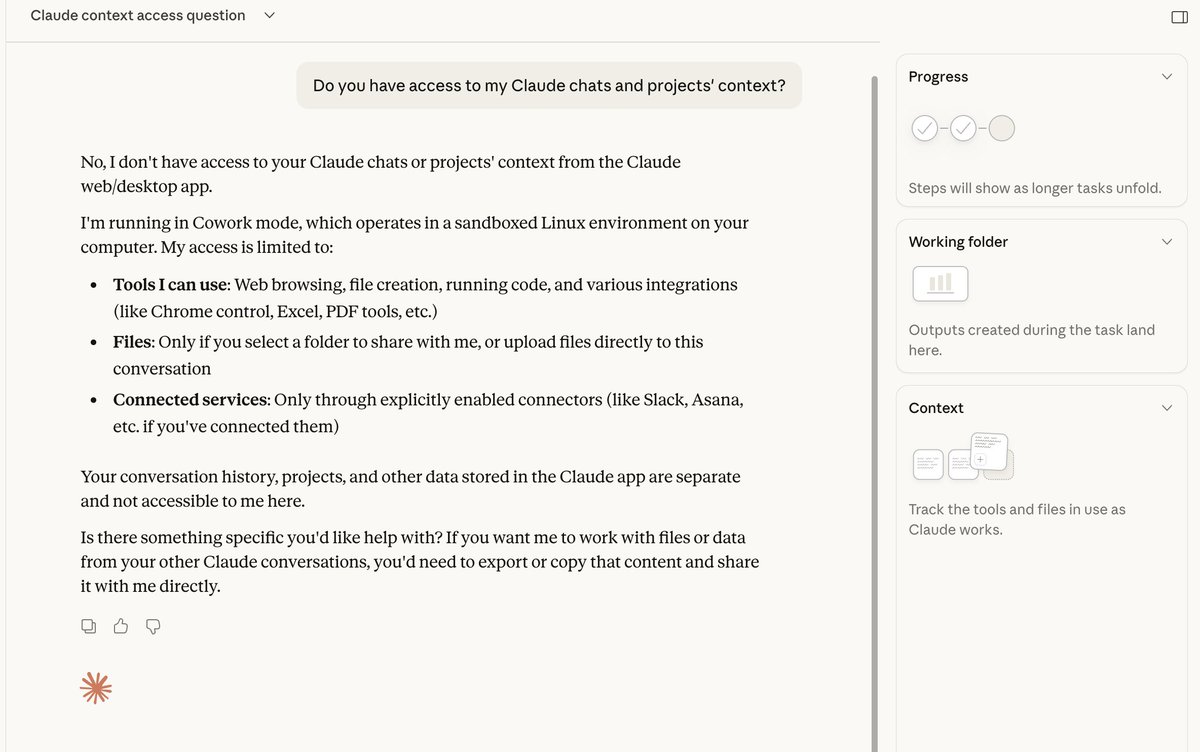
Seriously @claudeai?
I invested a lot of time creating projects and crafting their instructions and contexts.
Why would you halt the flywheel and not let Cowork use them?
Read our newest, freshest paper on Agentic Commerce.
WHAT to know and HOW to prepare when your customer never sleeps, never forgets, and never makes impulse purchases.
Full report: https://t.co/5HrZEApz6I
The early data is here:
1,200% increase in traffic from AI apps to merchants
47% of consumers ready to let agents handle their shopping
Every major AI lab building payment capabilities
Your chatbot shows products today. Tomorrow it buys them for you.
We mapped the evolution:
Stage 1: AI Recommends ← we're mostly here
Stage 2: AI Initiates ← we're seeing examples now.
Stage 3: AI Transacts Stage 4: AI Orchestrates entire workflows.
The companies building for non-human customers today may own commerce tomorrow.