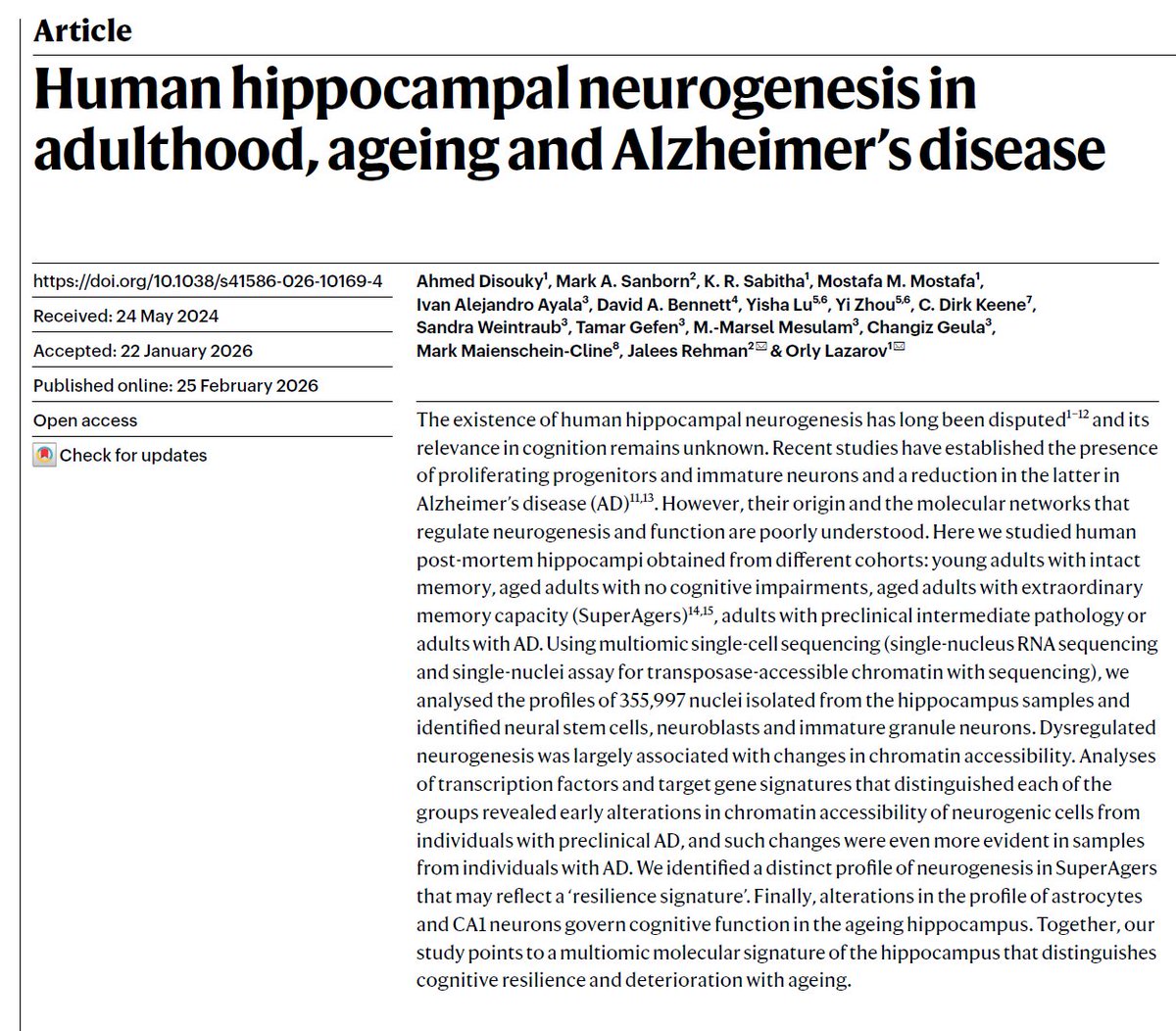
Estudios de los que me gustan... se demuestra que cuando imaginamos, nuestro cerebro está activando muchas (no todas) de las mismas neuronas que cuando percibimos el objeto físicamente
Y voy a contar algo que se ha pasado en una investigación que realizamos sobre "motor mental imagery", y es que el proceso electrofisiológico (el de las ondas) para imaginar un movimiento, realmente planifica el movimiento, pero no lo ejecuta. Los que no podían imaginar bien el movimiento presentaban dicha planificación "alterada"...
Pero lo que yo aprendí con la muestra y el análisis de los datos, es que la imaginación involucra todo lo que involucraría "hacerlo de verdad", solo que en la última fase, cuando tiene que llegar a la conciencia o darse el movimiento, se detiene...
Y si me pongo romántico, la imaginación es un eco mental de lo real... 🥰
Bueno, os dejo el artículo de la neurona de Science y el que publiqué con un maravilloso equipo...
ONE OF THE THREE PEOPLE WHO WON THE TURING AWARD FOR INVENTING MODERN AI IS NOW BETTING A BILLION DOLLARS THAT LLMs ARE A DEAD END. NOT A SKEPTIC ON X -- THE MAN WHOSE WORK EVERY CHATBOT IS BUILT ON TOP OF
37 minutes on Yann LeCun -- Turing Award winner, and the loudest insider saying the thing you are all building on will not reach real intelligence.
-> His claim: today's LLMs are just extremely good next-word predictors. They have no model of the physical world, cannot plan, and cannot truly reason -- they only sound like they can.
A house cat understands gravity, objects and cause-and-effect better than any frontier model, because a cat learned the world. An LLM only ever learned text about it.
His bet is on world models: systems that learn how reality works by watching it, the way a baby does, instead of swallowing the whole internet.
The uncomfortable part for builders: if he is right, stacking more LLM agents is climbing a taller and taller ladder to reach the moon.
You assumed scaling LLMs was the road to real AI. This is the case, from the very top, that it is a detour.
Save this. It is the sharpest bear case on your entire timeline ↓
We are what we don't eat:
Did you know β-hydroxybutyrate (BHB) produced when fasting is an epigenetic regulator that promotes immune T-cell development during a viral infection
Maybe our grandmothers knew something when they said "Starve a fever"!
A NOBEL WINNING PHYSICIST ARGUED THAT NO AI, NO MATTER HOW POWERFUL, WILL EVER TRULY UNDERSTAND A SINGLE THING IT SAYS. HIS REASON IS NOT COMPUTE OR DATA -- IT IS A MATH THEOREM FROM THE 1930s THAT SAYS SOME TRUTHS CAN BE SEEN BUT NEVER COMPUTED
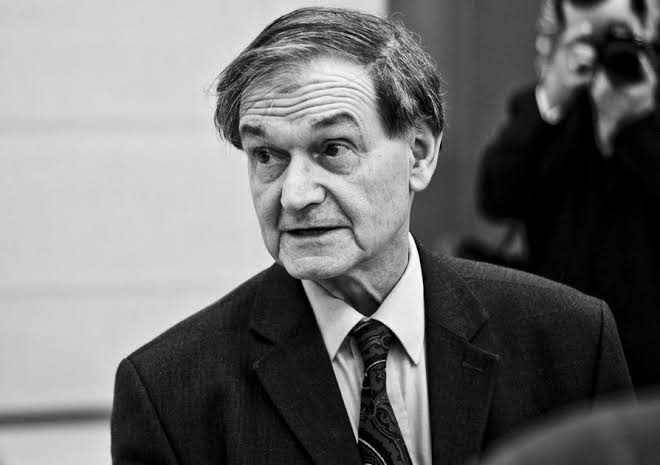
81 minutes with Roger Penrose -- the Oxford physicist who won a Nobel for his work on black holes and general relativity.
-> His claim: whatever consciousness is, it is not a computation. A machine following rules can imitate understanding, but never actually have it.
He builds it on Gödel: a human can just "see" that certain statements are true, even though no algorithm can ever prove them. That seeing, he argues, is non-computational.
If he is right, understanding is not something you scale into. You can stack a trillion parameters and still have zero awareness underneath.
Which cuts straight through the AI moment. Everyone assumes bigger models will eventually "wake up". Penrose says that is a category error -- more computation is still just computation.
You thought intelligence and understanding were the same thing. This is the conversation that pulls them apart.
Save this. It is the sharpest case against the hype ↓
PhD Students – Will your next paper be accepted or rejected?
Find out in these 3 simple steps.
1. Go to https://t.co/o2WfciCp8u and upload your paper.
2. Thesify will assess your paper & generate results.
3. Click on resources and then on journals.
This is the list of journals most suitable for your paper.
This list is ranked based on the match with the paper.
The list also shows the details of the journals.
These details include:
→ Match percentage
→ Impact factor of the journal
→ Link to the journal website
→ H-index of the journal
→ Total citations of the journal
→ Total articles published by the journal
If you want to submit your paper to a conference:
Click on the conference button at the top.
Now you will see the list of most suitable conferences
Here you will find the following
→ Match score of your paper
→ Country of the conference
→ Date of the conference
→ Deadline for the conference
→ Link to the conference
Try Thesify. It literally is very awesome and simple to use.
Anything you'd like to add?
Without changes, plastic pollution will keep pushing health-related economic losses even higher.
But #GEO7 shows it doesn’t have to be this way.
See the solutions that can help us #BeatPlasticPollution and build a healthier planet: https://t.co/VY0tgZ18uu
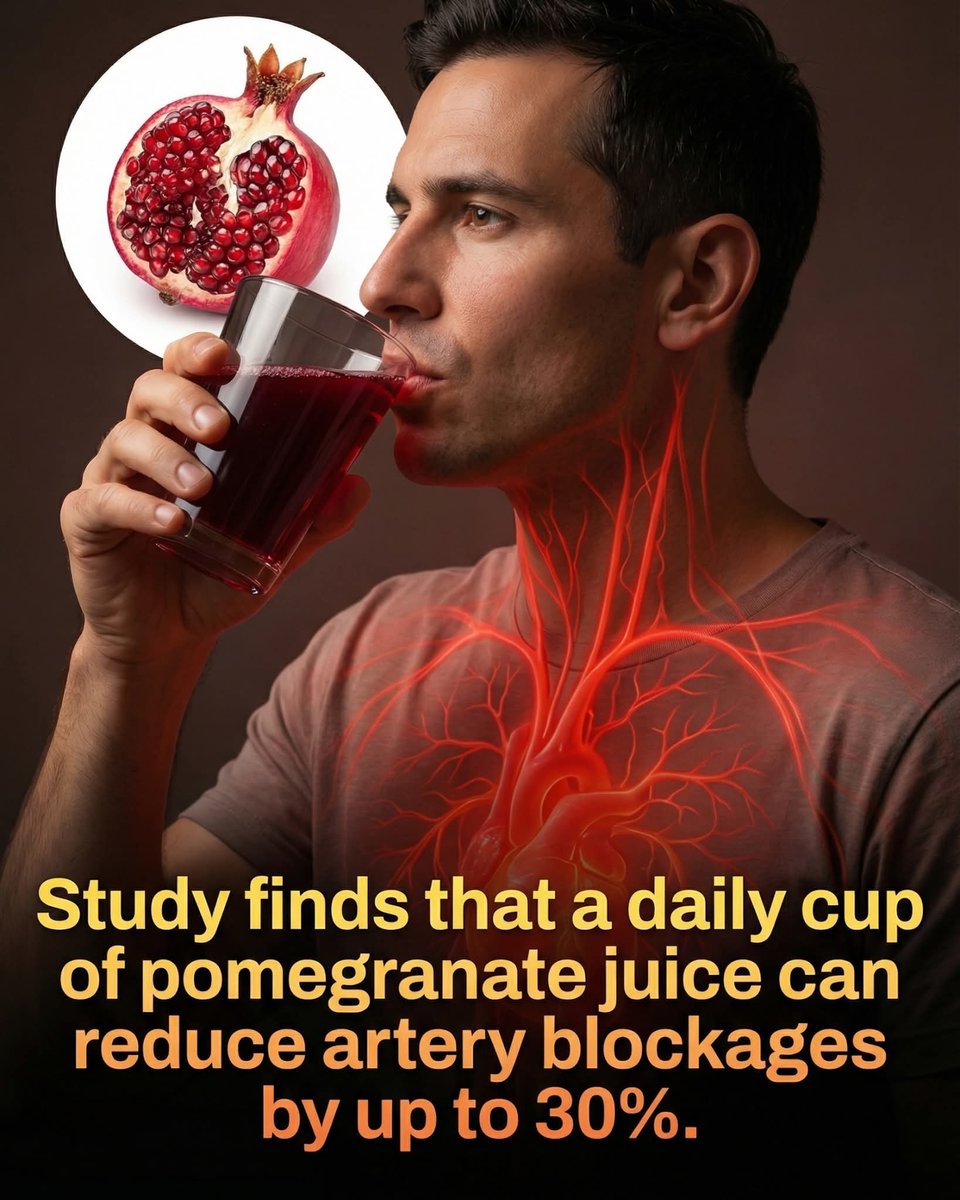
Research shows pomegranate juice could slash artery blockages by up to 30%, offering a potent natural defense for heart health.
Recent clinical research has uncovered a powerful link between daily pomegranate juice consumption and a significant boost in heart health.
Scientists found that participants who enjoyed a single cup of the juice each day experienced up to a 30% reduction in arterial blockages. This impressive outcome is driven by punicalagins, unique antioxidants found in pomegranates that aggressively combat oxidative stress and inflammation within the blood vessels. By clearing these pathways, the juice serves as a natural defense mechanism against the buildup of plaque that leads to serious cardiovascular issues.
These findings suggest that simple dietary choices can have a profound impact on long-term wellness and disease prevention. Beyond improving blood flow, the regular intake of pomegranate juice supports overall vascular integrity, offering an accessible way to manage heart health without complex medical interventions. For anyone looking to optimize their cardiovascular system, adding this nutrient-dense beverage to a balanced diet provides a scientifically backed advantage. As the medical community increasingly recognizes the power of functional foods, the pomegranate is solidifying its reputation as a vital ally for a healthy heart.
source: Clinical Nutrition. Pomegranate juice consumption and its effects on cardiovascular health markers. Clinical Nutrition.
🧠 Could Flashing Lights Help Fight Alzheimer's?
It sounds unbelievable, but scientists are testing whether 40 Hz light and sound can help the brain clear harmful Alzheimer-related changes. Early studies show promising results, but it's still experimental and not an approved treatment. Could this simple idea become a future breakthrough?
Source : Martorell, A. J., et al. Nature.
New research reveals that listening to music can slash dementia risk by 40%.
A landmark Monash University-led study involving more than 10,800 participants has discovered a powerful connection between music and cognitive preservation in seniors. Researchers found that consistently listening to music after age 70 is associated with a staggering 39 percent reduction in dementia risk. For those who play an instrument, the risk is lowered by 35 percent, indicating that both active and passive musical engagement can serve as a potent shield against brain decline.
Lead researchers Emma Jaffa and Professor Joanne Ryan emphasize that these findings offer a vital, accessible strategy for maintaining brain health in an aging global population. Beyond reducing dementia risk, regular musical engagement was linked to sharper episodic memory and improved overall cognition. As medicine continues to extend human lifespans, integrating music into daily life represents a simple yet transformative lifestyle choice that may delay the onset of neurodegenerative conditions where cures remain elusive.
source: Jaffa, E., & Ryan, J. (2025). What is the association between music-related leisure activities and dementia risk? A cohort study. International Journal of Geriatric Psychiatry.
From groceries to fashion and from transport to tourism,
sustainable production and consumption depend on healthy
ecosystems and thriving biodiversity.
Find out how the Global Biodiversity Framework can help:
https://t.co/NU1ZaBp9pY @UNBiodiversity
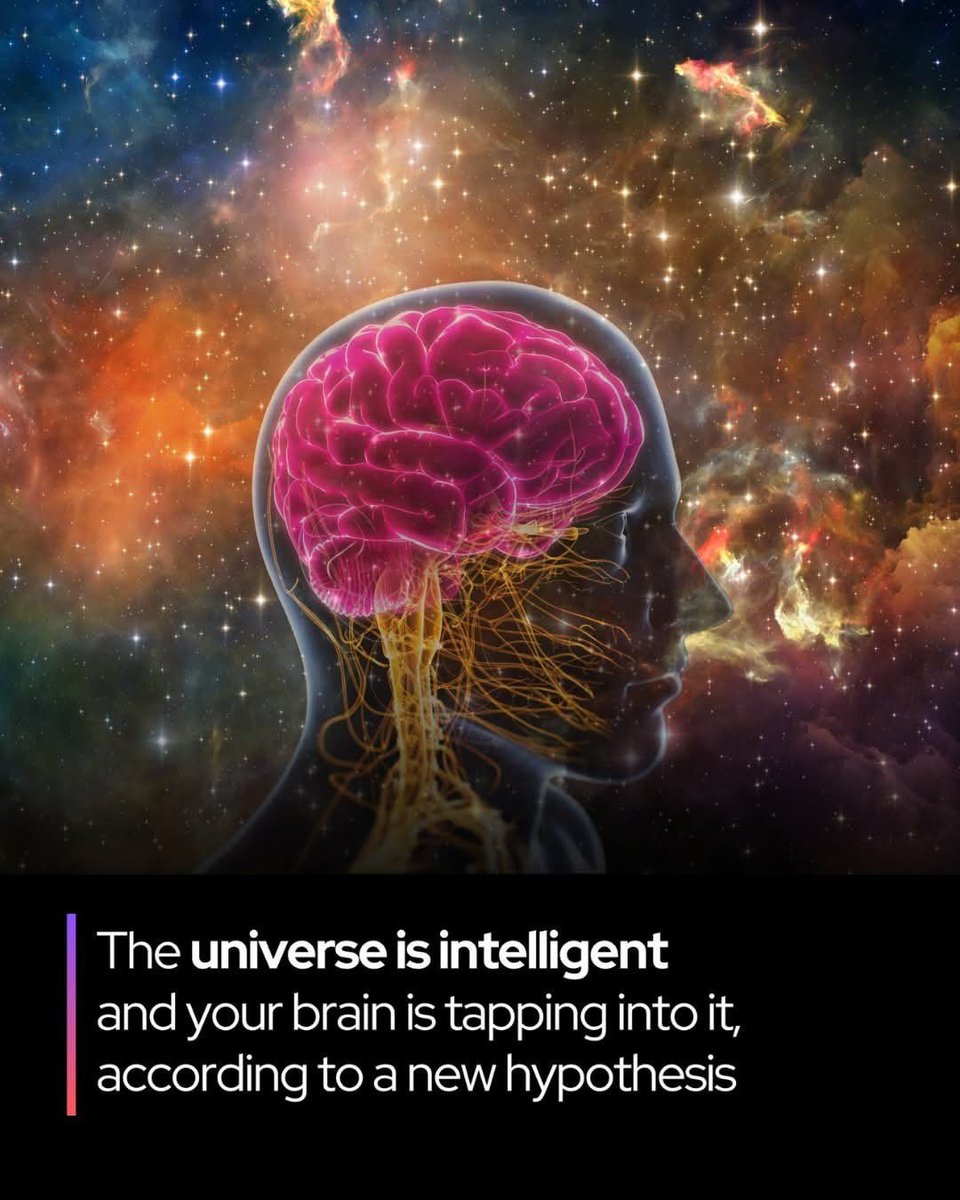
🧠 Your Brain May Be Tapping Into the Universe’s Hidden Intelligence
What if your brain is less like a computer... and more like an antenna?
Biophysicist and mathematician Douglas Youvan proposes that intelligence may be a fundamental property of the universe, with the brain simply tuning into a hidden "informational substrate" woven into space-time. According to his idea, our thoughts may come from accessing this deeper layer of reality rather than being created by neurons alone.
It's a fascinating—but highly speculative—hypothesis that challenges how we think about consciousness, intelligence, and even AI. It is not an established scientific theory, but an idea that has sparked discussion and debate.
Source:
Youvan, D. (2025). Interview featured in Popular Mechanics: “Is the Universe the True Source of Intelligence?”
One of the most fascinating and controversial ideas about consciousness is the Penrose-Hameroff Orch OR theory.
Proposed in the 1990s by Roger Penrose and Stuart Hameroff, it begins with a radical question:
Is consciousness more than computation?
Instead of emerging solely from neurons, Orch OR suggests that tiny structures inside neurons called microtubules may briefly sustain quantum coherence.
When these quantum states undergo what Penrose calls objective reduction, a gravity-related and non-computational collapse, each event is proposed to produce a moment of conscious experience.
It is a bold idea, but also one of the most criticized in science.
Most neuroscientists argue that the brain is simply too warm, wet, and noisy for fragile quantum states to survive long enough to influence thought. As a result, Orch OR remains speculative and is not accepted as a mainstream model of consciousness.
Still, its influence has been significant. It encouraged researchers to seriously explore whether quantum physics could play a role in the mind and drew attention to the growing field of quantum biology.
Even if Orch OR is ultimately wrong, it leaves us with a profound question:
Is consciousness merely computation, or does it reveal something deeper about the fabric of reality?
20 min de actividad física prepara el terreno biológico para codificar nueva información
Estudio clave de 2026 (Univ. de Iowa) demuestra que una sola sesión optimiza la conexión entre el hipocampo y la corteza, facilitando el aprendizaje inmediato
https://t.co/mG0qQPIGCO
No one country can deal with #AI on its own.
The AI Scientific Panel is calling for a multilateral solution to AI governance — one that shares the benefits of AI equally.
The Panel will present its first report at the Global Dialogue on AI Governance in Geneva on 6 and 7 July.
Lakes contain most of the liquid fresh water on the planet, but they are also among the most rapidly degrading ecosystems.
Here’s how you can take #GenerationRestoration action to safeguard these vital freshwater bodies: https://t.co/FYy8wE4W2y
A new study indicates that water is actually two distinct liquids — not a single, uniform substance.
For decades, physicists theorized that water has a microscopic "dual personality." Proving it, however, has been notoriously difficult due to how quickly water molecules shift. Now, an international team of researchers utilizing unsupervised AI has uncovered the clearest evidence yet that liquid water is not a one uniform substance.
Instead, it is a dynamic blend of two distinct structures: a dense, disordered "high-density liquid" (HDL) and a looser, more ordered "low-density liquid" (LDL) that continuously swap configurations.
This rapid, molecular-level shuffling is the secret behind water’s most anomalous behaviors. Unlike most liquids that contract as they cool, water reaches its peak density at 4 degrees Celsius and then expands as it approaches freezing—which is why ice floats.
By mapping this constant transformation, researchers have opened a new door in chemistry, helping to explain not only how water behaves in extreme environments but also how it maintains the delicate, thermal balance necessary to sustain life on Earth.
source: Li, L., & Zeng, X. C. (2026). Evidence for the generic existence of two local structures in liquid water. Nature Physics.
PhD Students - How to create a diagram in seconds?
1. Go to https://t.co/DtAQB3QKgr
2. Describe the diagram you want to create
3. ResearchViz will create the diagram
4. Edit it as per your need
5. Download it in any format you want
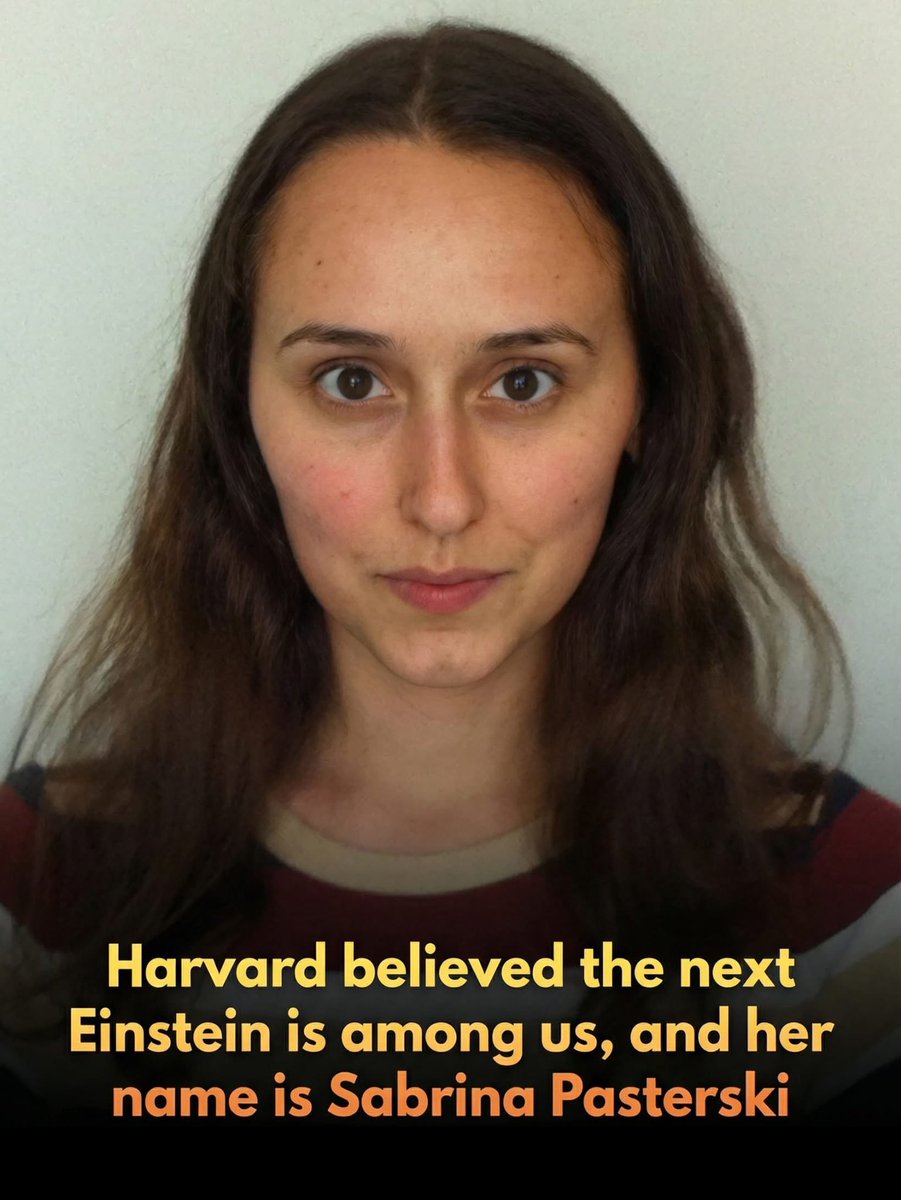
Meet the 'next Einstein' who turned down a $1.1 million university offer to lead a groundbreaking quest to decode the mysteries of the universe.
Sabrina Gonzalez Pasterski is redefining the image of a modern genius, possessing a brilliant mind that has earned her frequent comparisons to Albert Einstein. Her extraordinary journey began at just 12 years old when she built her own airplane, a feat that foreshadowed a stellar academic career. After graduating at the top of her physics class at MIT with a perfect GPA, she moved on to Harvard for her doctoral studies. Her groundbreaking research on the 'spin memory effect' even caught the attention of the late Stephen Hawking, who cited her work in his own papers. This meteoric rise made her one of the most sought-after scientists in the world, leading her to famously decline a $1.1 million offer from Brown University to pursue her specific intellectual passions.
Today, Pasterski leads the Celestial Holography Initiative at the Perimeter Institute for Theoretical Physics. Her work sits at the absolute frontier of science, focusing on an ambitious project to encode the universe as a hologram in an effort to reconcile the long-standing divide between spacetime and quantum theory. Unlike her historical predecessors, she leverages modern digital platforms to share her research and journey with a global audience, proving that the next generation of genius is as much about communication as it is about calculation. By standing on the shoulders of giants while solving mysteries that have stumped generations, Pasterski is proving that the future of physics is being written by those bold enough to forge their own path.
source: Harker, J. (2026). Next Albert Einstein is 32-year-old woman who turned down $1.1m offer from university. UNILAD.
🚨 Scientists May Have Found a New Way to Reverse Hair Loss!
A team of researchers in Spain has developed a stem cell-based treatment that produced impressive hair regrowth in laboratory studies. By combining stem cells from fat tissue with a natural energy molecule called ATP, they were able to stimulate new hair growth in subjects affected by alopecia.
While the treatment is still in the research stage and not yet available for people, the findings are giving new hope to millions who struggle with hair loss.
Could this be the breakthrough scientists have been searching for?
Source
López Bran, E., Pozo Pérez, L., Tornero Esteban, P., & González Morales, M. Hair growth stimulated by allogenic adipose-derived stem cells supplemented with ATP in a mouse model of dihydrotestosterone-induced androgenetic alopecia. Stem Cell Research & Therapy.