In Britain, women are more undecided than men about their vote choice. Why?
In our new @BritJPIR article, @RosieShorrocks and I find this is partly explained by gender gaps in:
i) political engagement
ii) perceptions of representation
iii) conflict
https://t.co/ACiqz7nUi8
Our Special Issue in Parliamentary Affairs has been published:
'Instability and Inequality in the British State'
🔗 https://t.co/NBVnxVdZcf
SI Editors: @jacknewmanHE & @PatrickDiamond1
Journal Editors: @LouiseVThompson & @ClarkAlistairJ
Here's a 🧵 of the papers
@LotteHargrave presenting our paper on gender gaps in don't know survey responses. Women more likely to say don't know on political opinion and knowledge, no gaps on social/cultural or personal value questions
(with @cerifowler, @_HannahBunting and @AnnaKSanders)
Our @The_JOP paper, now with page numbers!
Focusing on 🇫🇷we show that living in deprived neighborhoods depresses electoral registration. Yet, among the most discriminated ethnic minorities, living in proximity to coethnics boosts registration
https://t.co/vJORGWQmCe
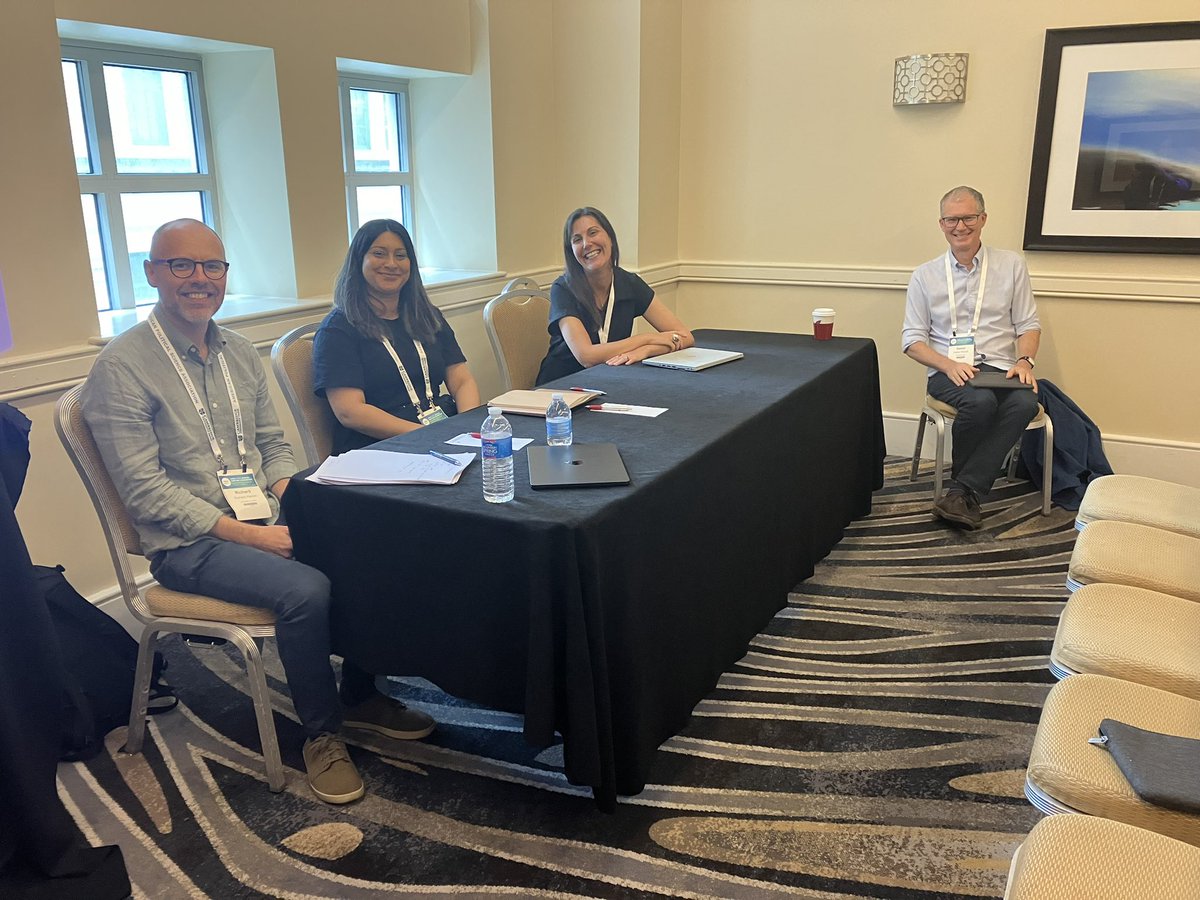
So farewell to Philly PA from @AnnaKSanders & me - as @APSAtweets draws to a close - the City is gearing up for the mother of all debates Tue night in this ��swingiest’ of all the swing states
Coming soon!!!
On Monday, @PatrickDiamond1 and I sent off the manuscripts for a new Special Issue for Parliamentary Affairs.
We have a stellar cast of 24 authors accross 8 papers reflecting on instability and inequality in British politics after 14 years of Conservative rule.
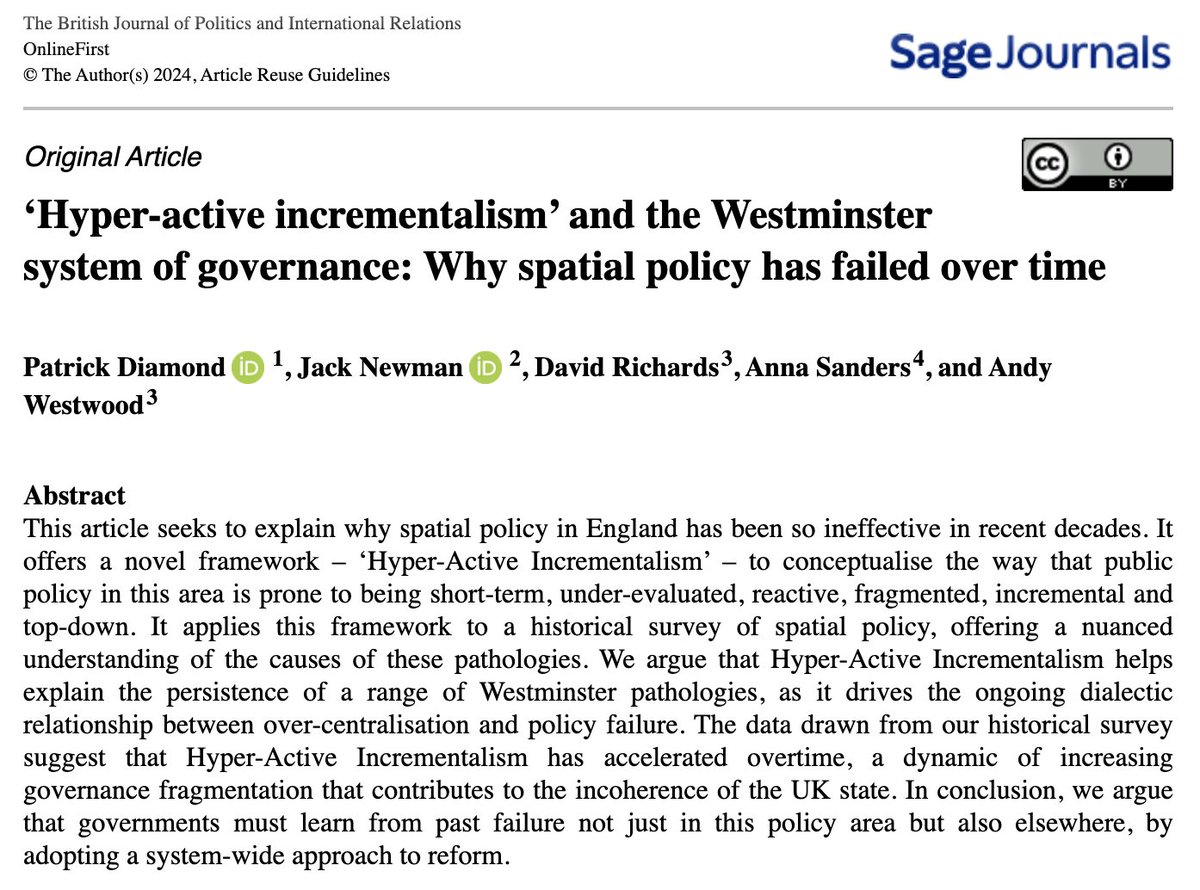
🔓ICYMI - '‘Hyper-active incrementalism’ and the Westminster system of governance: Why spatial policy has failed over time' by @PatrickDiamond1,
@jacknewmanHE, @profdrichards, @AnnaKSanders & @AndyWWestwood is available now in #OpenAccess.
https://t.co/rb5nlNYP47…
tl;dr : Men more likely to vote Reform; women more likely to vote Labour. BUT (!) much more variation on whether Labour have more support from women and by how much from poll to poll. Women are consistently less likely to support Reform - very few polls don't show this.
🗣️ NEW BLOG: "Traditionally, women in the UK were more likely than men to vote Conservative, whilst men were more likely than women to vote Labour".
👉 But what will happen at the 2024 election?
✖️ @cerifowler and @AnnaKSanders unpick the data.
https://t.co/c8gGDK2xFM
"Women are not a monolithic block." Discover how gendered policies influence women's voting in Dr. @AnnaKSanders' research. Despite being a few years old, it offers valuable insights for the current election.
#GeneralElection2024
🔗 https://t.co/RWQS3scNw9
🆕New Paper with @PatrickDiamond1 @profdrichards@AnnaKSanders @AndyWWestwood
Why has Westminster failed to tackle spatial inequality?
Hyper-active incrementalism: policy is short-term, under-evaluated, reactive, fragmented, incramental, & top-down.
https://t.co/NMt7EJsjlc
Really exciting being part of #BBCQT last night, which we hosted at @UniOfYork! Enjoyed chatting to BBC News’ @BBCRosAtkins and BBC Look North about what to expect from party leaders, and whether TV debates can influence voting intention