Targeted vitamin D supplementation and major adverse cardiovascular events after myocardial infarction.
Read the results of the TARGET-D trial in #EHJ
https://t.co/iYAcFu3m09
@escardio@ESC_Journals#myocardialinfarction
MASLD/MASH: from “fatty liver” to a new era of targeted therapy. 🫀🔬
The therapeutic landscape is rapidly expanding beyond lifestyle intervention:
→ GLP-1–based agonists: weight loss, ↓ inflammation, metabolic reprogramming
→ FGF21 analogues: ↓ liver fat and fibrosis
→ THRβ agonists: improved lipid metabolism
→ PPAR agonists and DNL inhibitors: targeting hepatic metabolic dysfunction
→ Lifestyle remains the essential foundation.
The paradigm is changing: treat obesity, metabolic dysfunction, inflammation and fibrosis together.
MASLD is not only a liver disease—it is a systemic cardiometabolic disease requiring multidisciplinary care.
#MASLD #MASH #GLP1 #Obesity #Cardiometabolic #Diabetes #Hepatology #Cardiology
https://t.co/7VuYItdyF6
Empagliflozin in De Novo vs Acute Decompensated CHF : A Prespecified Analysis EMPULSE
In-hospital initiation of empagliflozin produced similar clinical benefits in NHF and ADHF despite the reduced diuretic response in participants with ADHF and was well
https://t.co/YP10Fr2pg7
Clopidogrel monotherapy was associated with lower risks of MACE and major bleeding compared with aspirin monotherapy among stable patients post #PCI, according to a nationwide cohort study published in #JACCAsia.
Learn more: https://t.co/QDar4mTyFP #CardioX@JACCJournals
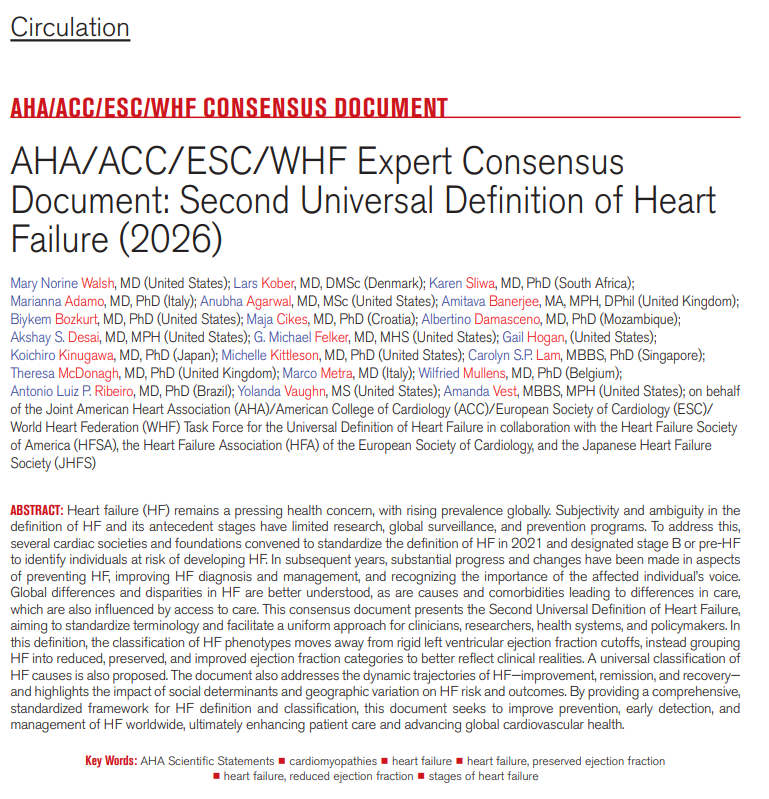
Building on the First Definition of Heart Failure, the Second Definition refines HF staging with sharper stage criteria, emphasizing early detection and individualized risk reduction and introduces the universal classification of HF causes, with explicit acknowledgment of geographic variation in HF risk and outcomes. https://t.co/YDuE4stb5s
This updated document provides a unified, internationally harmonized framework intended to standardize terminology. It addresses changes in disease manifestations, diagnostic strategies, and understanding of pathophysiology.
✍🏼 @MinnowWalsh@KarenSliwa@amibanerjee1@BiykemB@akshaydesaimd@DukeHFDoc@MKIttlesonMD@lamcardio@WilfriedMullens@NutritionHF
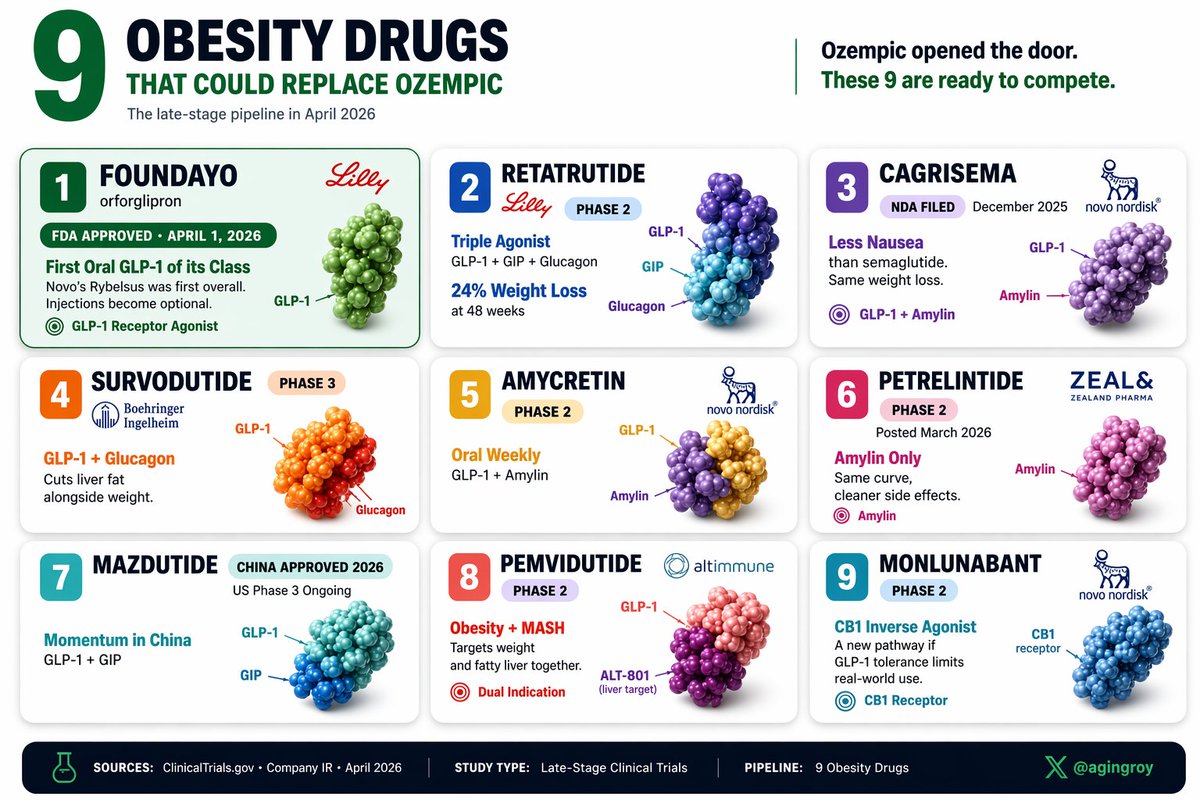
3 years ago, the obesity drug market was basically Ozempic.
Today, it's 9 drugs deep in late-stage. Here's what each one actually adds:
1. Foundayo: latest oral GLP-1. @US_FDA approved April 1, 2026. Injections become optional.
2. Retatrutide: 24% weight loss at 48 weeks (Phase 2). Triple agonist.
3. CagriSema: less nausea than semaglutide. NDA filed December 2025.
4. Survodutide: GLP-1 + glucagon. Cuts liver fat alongside weight.
5. Amycretin: oral weekly. GLP-1 + amylin. Phase 2.
6. Petrelintide: amylin only. Phase 2 posted March 2026.
7. Mazdutide: China approved 2026. US Phase 3 ongoing.
8. Pemvidutide: obesity + MASH dual indication.
9. Monlunabant: CB1 inverse agonist. Phase 2.
The next pharma cycle may not be Novo vs Lilly. It's shaping up as mechanism vs mechanism.
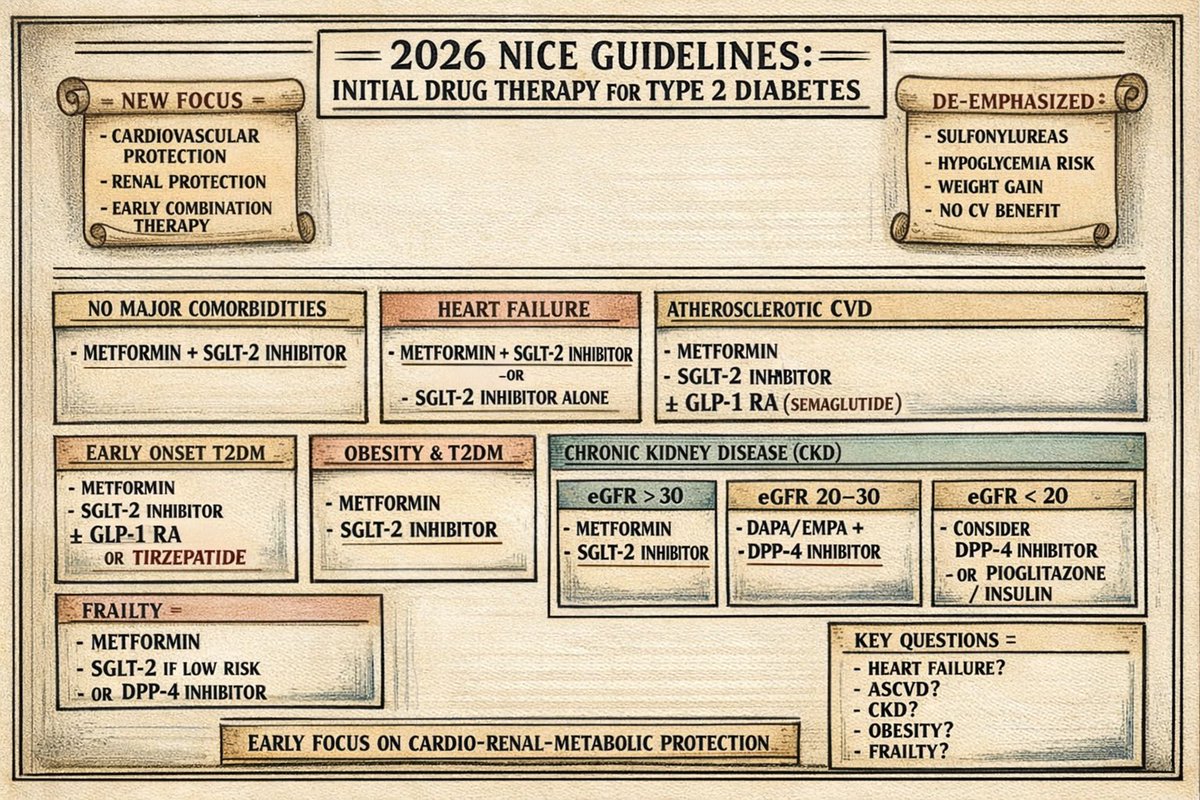
🧵 New 2026 NICE Update on Initial Drug Therapy in Type 2 Diabetes Detailed Thread
1️⃣ Big Shift in Philosophy
This is no longer just about lowering HbA1c.
The new guidance prioritises:
• Cardiovascular protection
• Renal protection
• Individualised treatment
• Early combination therapy
Glucose control is important but outcomes matter more.
2️⃣ First-Line Therapy (No Major Comorbidities)
For most adults:
✅ Modified-release metformin
PLUS
✅ An SGLT-2 inhibitor
If metformin cannot be used → start SGLT-2 inhibitor alone.
➡️ This is a major shift from traditional “metformin first, add later.”
3️⃣ Why SGLT-2 So Early?
Because evidence now strongly supports:
• Reduction in heart failure hospitalization
• Slowing CKD progression
• Cardiovascular mortality benefit
• Weight reduction
• Low hypoglycaemia risk
This class is now foundational therapy.
4️⃣ If the Patient Has Heart Failure
Start immediately:
✅ Metformin
✅ SGLT-2 inhibitor
If metformin contraindicated → SGLT-2 alone.
HF benefit drives this decision independent of HbA1c.
5️⃣ If Atherosclerotic CVD Is Present
Initial therapy can include:
✅ Metformin
✅ SGLT-2 inhibitor
✅ Subcutaneous semaglutide (GLP-1 RA)
If Yes 👉🏻 GLP-1 RA can now be started upfront in ASCVD.
This reflects strong CV outcome trial data.
6️⃣ Early-Onset Type 2 Diabetes
(Younger patients, aggressive phenotype)
Start:
✅ Metformin
✅ SGLT-2 inhibitor
Consider adding:
• GLP-1 receptor agonist
• Tirzepatide
This group often needs earlier intensification.
7️⃣ Obesity + Type 2 Diabetes
Initial therapy:
✅ Metformin
✅ SGLT-2 inhibitor
Weight-neutral or weight-reducing strategies are preferred.
Avoid agents that promote weight gain unless necessary.
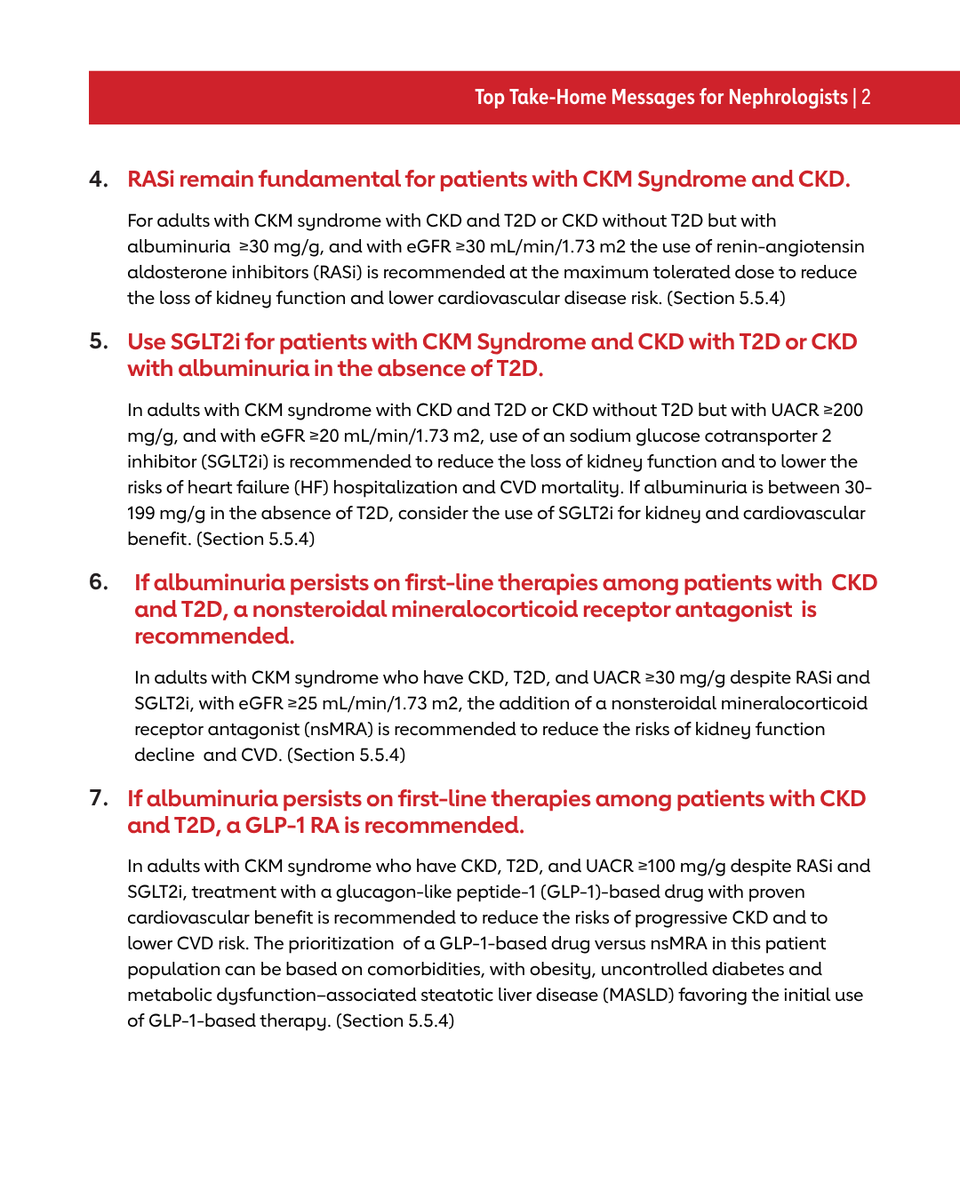
8️⃣ Chronic Kidney Disease (CKD)
Treatment depends on eGFR:
🔹 eGFR >30 → Metformin + SGLT-2
🔹 eGFR 20–30 → Dapagliflozin or Empagliflozin + DPP-4 inhibitor
🔹 eGFR <20 → Consider DPP-4 inhibitor
If DPP-4 not suitable → consider pioglitazone or insulin.
Renal protection is central in this update.
9️⃣ Frailty
Be cautious.
Offer:
✅ Metformin
Consider SGLT-2 only if risk of:
• Hypotension
• Dehydration
• Falls
If risk is high → DPP-4 inhibitor may be safer.
Individualisation is critical here.
🔟 What’s Clearly De-emphasised?
Sulfonylureas are no longer early go-to drugs.
Reasons:
• Hypoglycaemia risk
• Weight gain
• No cardiovascular benefit
They are now secondary options.
1️⃣1️⃣ Key Takeaway
The 2026 update moves us from:
“Glucose-centric diabetes care”
➡️ to
“Cardio-renal-metabolic protection from day one.”
Early combination therapy is now the norm, not the exception.
1️⃣2️⃣ Practical Clinical Message
When starting treatment in Type 2 Diabetes, now ask:
• Does this patient have HF?
• ASCVD?
• CKD?
• Obesity?
• Frailty?
The comorbidity determines the drug choice not just HbA1c.
https://t.co/mlP4dTeHVp
#MedTwitter #MedX
🗞️A major new guidance document on steatotic liver disease has just been published online, providing a global, multidisciplinary framework for screening and patient management across the entire disease spectrum.
With SLD affecting more than 1 in 3 adults worldwide, the document uses the patient trajectory as its anchor, providing practical recommendations on case finding, risk stratification, referral pathways and stage specific care, from early disease to advanced fibrosis and cirrhosis.
All recommendations are categorised as must have or nice to have, enabling adaptation across different healthcare systems and resource settings.
👉Read it now: https://t.co/G0ZpjKmgP0
@FrancqueSven
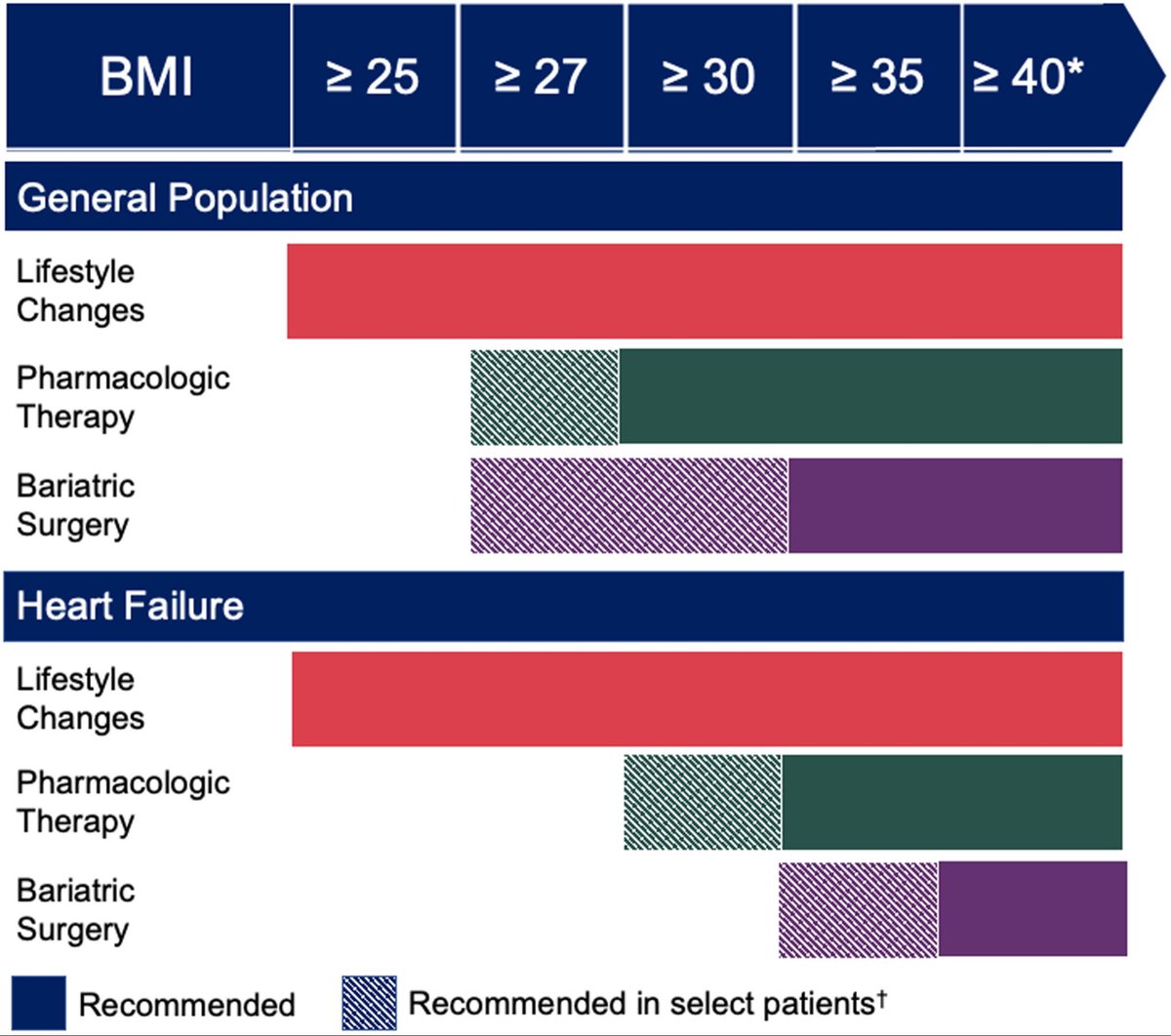
Anti-Obesity Medications in Patients With Heart Failure: Current Evidence and Practical Guidance
Despite compelling evidence that patients with obesity are at higher risk for HF and that, once HF develops, patients with obesity face higher symptom burdens, lower quality of life and higher rates of HF hospitalization, little is known about the impact of intentional weight loss on HF outcomes
#Cardiology #MedTwitter #CardioTwitter #HeartHealth #Healthcare
@DLBHATTMD@CMichaelGibson@DrMarthaGulati@hvanspall@gcfmd@SJGreene_md@hfcollaboratory@HFA_President@ShelleyZieroth@CircAHA@VerwerftJan@JavedButler1
https://t.co/pJs63dKg3n
Among patients hospitalized for community-acquired pneumonia, vitamin D deficiency was linked to a more than threefold increased risk for 90‑day mortality and a similar increase in risk for 180‑day mortality compared with sufficient vitamin D levels. https://t.co/B463dATvlH
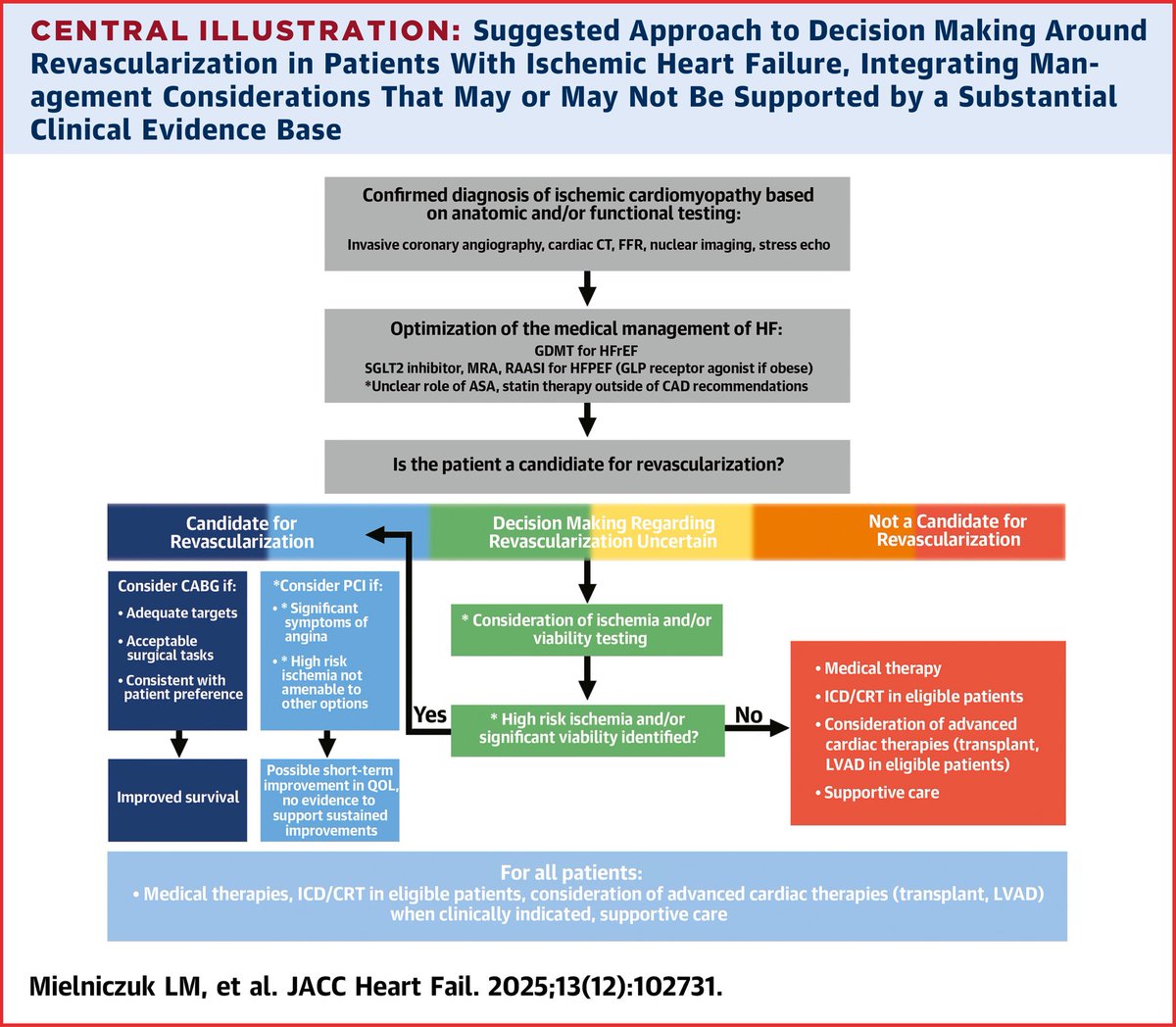
Management of Ischemic Heart Disease in Patients With Heart Failure: JACC: Heart Failure Position Statement
GDMT is an essential part of management for all patients with HF and should include beta-blocker, ARNI (preferred) or ACEI or ARB, MRA, and SGLT2 inhibitor in patients with HFrEF and for patients with HFpEF with a history of ischemic cardiomyopathy, SGLT2 inhibitor should be utilized
#Cardiology #MedTwitter #CardioTwitter #HeartHealth #Healthcare
@gcfmd@SJGreene_md@DrMarthaGulati@hvanspall@JACCJournals@ACCinTouch@AndrewJSauer@ankeetbhatt@hfcollaboratory@biljana_parapid@AnastasiaSMihai@Hragy
https://t.co/uOzlbIqowV
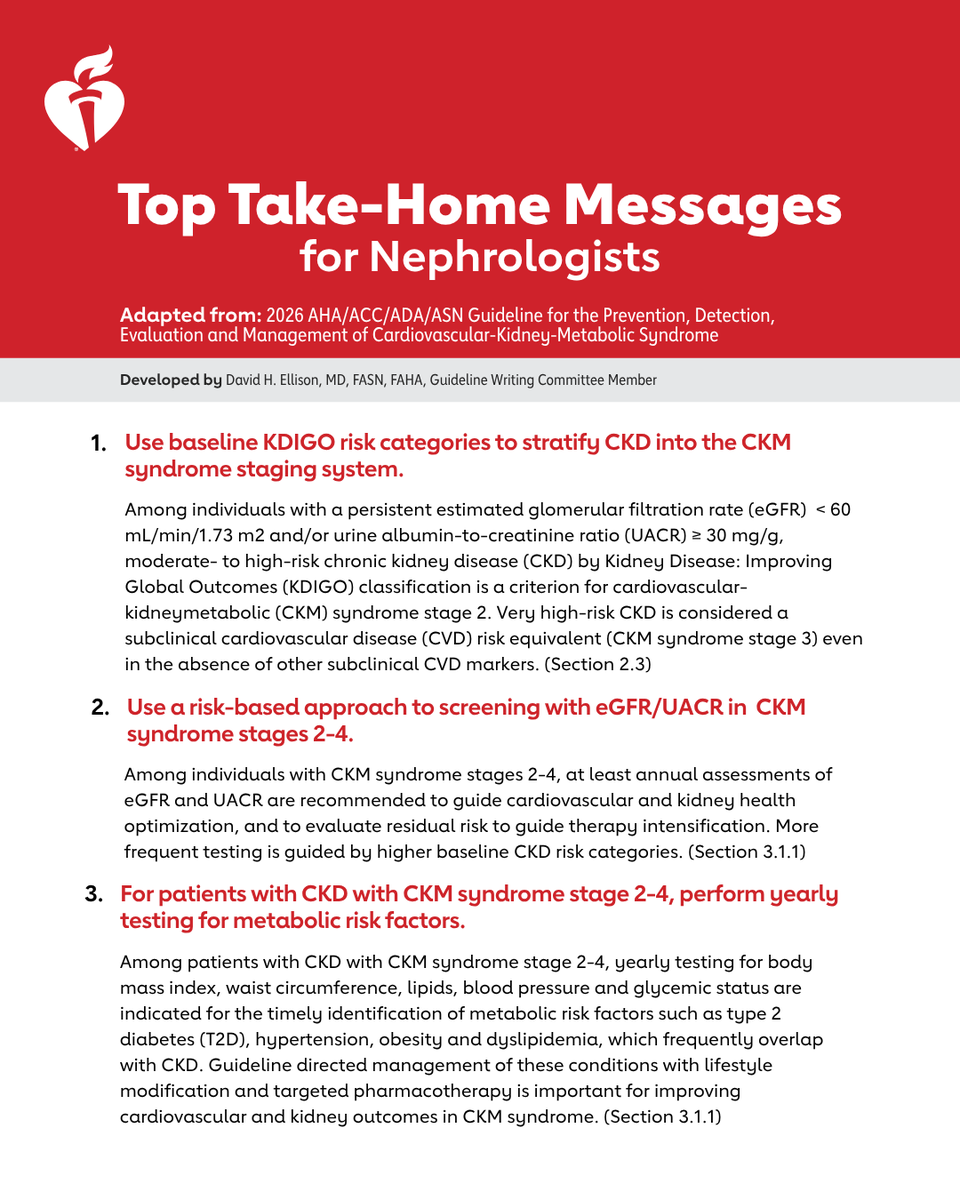
ADA Standards of Care 2026: The New Algorithm for Glucose-Lowering Therapy in Type 2 Diabetes
The ADA 2026 reinforces a priorities-first approach:
1️⃣ Reduce cardiovascular & kidney (CVKD) risk
2️⃣ Manage weight
3️⃣ Achieve glycemic goals
4️⃣ Address MASLD/MASH risk
All built on a foundation of healthy lifestyle + DSMES + addressing SDOH.
🔶 1. FIRST PRIORITY: Cardiovascular & Kidney Risk Reduction
A. ASCVD or Indicators of High CV Risk
Preferred: GLP-1 RA with proven CV benefit
Alternative / Add-on: SGLT2i with proven CV benefit
If HbA1c above target → combine GLP-1 RA + SGLT2i
B. Heart Failure (HFpEF or HFrEF)
Preferred: SGLT2 inhibitor
Add GLP-1 RA (proven benefit) if glycemia not controlled or if comorbid obesity
C. CKD (eGFR <60 OR ACR ≥30 mg/g)
Preferred: SGLT2i with primary evidence of CKD protection
If eGFR <45 → GLP-1 RA with proven renal benefit
If glycemia above goal → combine SGLT2i + GLP-1 RA
If more CVKD risk reduction is needed
➡️ Add agents with proven benefit, treat lipids/BP aggressively, and reassess every 3–6 months.
🔶 2. SECOND PRIORITY: Weight Management
ADA 2026 clearly states:
Weight reduction itself is a therapeutic target in T2DM.
Weight-loss efficacy of medications (ADA 2026)
Very High: Semaglutide, Tirzepatide
High: Dulaglutide (high dose), Liraglutide
Intermediate: GLP-1 RA (others), SGLT2i
Neutral: DPP-4 inhibitors
Use GLP-1 RA / dual GIP-GLP-1 RA early in patients with obesity or weight-related complications.
🔶 3. THIRD PRIORITY: Glycemic Control
Efficacy for glucose lowering (ADA 2026)
Very High: Semaglutide, Tirzepatide, insulin combination therapy
High: GLP-1 RA, SGLT2i, Metformin, TZD, Sulfonylureas
Intermediate: DPP-4 inhibitors
If HbA1c remains above target → Stepwise intensification without delay.
🔶 4. NEW FOCUS 2026: MASLD/MASH (Metabolic Liver Disease)
ADA now adds a dedicated pathway:
Drugs with proven / potential benefit
GLP-1 RA
Dual GIP–GLP-1 RA
Pioglitazone
GLP-1 RA + Pioglitazone combination
⚠️ Use insulin in decompensated cirrhosis only.
🔶 5. When Treatment Goals Are Not Reached
Reassess every 3–6 months
Evaluate:
Barriers to care
Hypoglycemia risk
Adherence
Affordability
SDOH (social determinants of health)
⭐ CME INDIA Take-Home Messages
1️⃣ ADA 2026 is no longer “HbA1c-first”—it is “Heart–Kidney–Weight–Glycemia” in that order.
2️⃣ GLP-1 RA & SGLT2i dominate all therapeutic pathways due to CVKD & weight benefits.
3️⃣ Obesity is treated as a biological disease—not a lifestyle failure.
4️⃣ MASLD/MASH enters mainstream diabetes management for the first time.
5️⃣ Reassessment every 3–6 months is mandatory—clinical inertia is unacceptable.
https://t.co/wRp6gaKDvK
Lipids simplified!
🧱 Cholesterol – is the material needed for building cell walls, making hormones etc
🛻 Lipoproteins - are basically Trucks transporting Cholesterol along with other things through blood. Depending on size they are of many types.
⛽ Triglycerides – are portable Fuel containers that trucks are carrying along.
🚛 HDL – They are the Recycling Trucks the patrol the roads collecting leftover cholesterol bricks from tissues & arteries, & bringing it back to the liver’s recycling center. HDL- C in your reports is the total leftover bricks in circulation currently.
🚚 LDL – They are the Delivery Trucks that deliver cholesterol bricks from the liver warehouse to construction sites (cells) around the body. LDL- C in your reports is the total unused bricks in circulation currently.
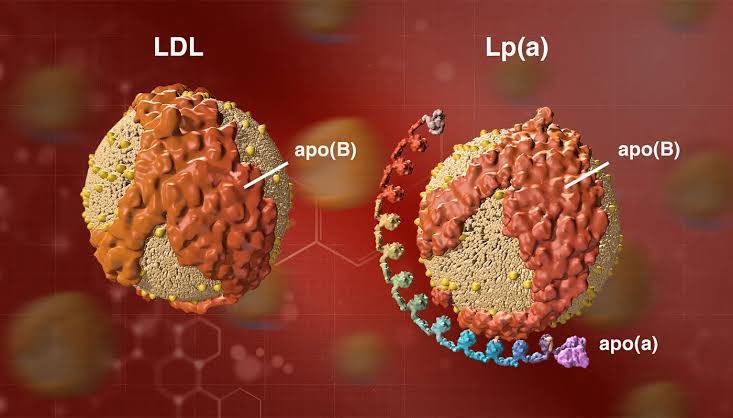
🚨 Lp(a) - Some of these LDL delivery trucks have an extra problem. They are wheel that are extra sticky.
🚛📦 VLDL – They are the Fat Cargo Trucks that mainly transports big boxes of triglycerides (fat) from the liver to storage sites.
🪪♦️ApoB (Apolipoprotein B) - All the main delivery trucks (LDL, Lpa, VLDL..) have a common license plate called ApoB. Counting them gives an idea of the no of trucks on road currently. More means too many cholesterol bricks & extra fuel (Tg) are being transported
🪪🔹ApoA1 (Apolipoprotein A1) - The recycling trucks have a different license plate called ApoA1. If more of these license plates are in action means more cleanup is done.
—————
What to Target?
▶️ Total Cholesterol:
This number is important, but the break up is more important (usually high means more LDL, VLDL… hence a problem)
- Total Cholesterol of around 200 with the right breakup is ideal 🟢
- Too Low & Too High is not ideal 🔴
▶️ HDL-C:
More cleaned up bricks is always better
- For men > 40 mg/dL 🟢
- For women > 50 mg/dL 🟢
▶️ Triglyceride:
Lot of portable Fuel being transported means excess energy/calories in the system.
- Ideal: < 100 mg/dL 🟢
- High Risk: > 150 mg/dL 🔴
▶️ VLDL:
More of portable fuel trucks is indirectly saying more portable fuel is produced.
Hence It is not directly measured, but estimated as 20% of triglycerides
- VLDL < 20 mg/dL 🟢
▶️ LDL-C
More unused bricks in circulation is a concern as more delivery trucks can cause a traffic jam (plaque)
- Ideal: < 130 mg/dL 🟢
- High Risk: > 160 mg/dL 🔴
▶️ Lp(a):
The more unused bricks in circulation especially inside those trucks with sticky tired is a big cause of concern. But it’s not under your control.
- Optimal: < 20 🟢
- SubOptimal: 20- 50🟡
- High risk: 50- 100🟠
- Very high risk > 100🔴
▶️ ApoB:
You want less of trucks with these license plate on the road. They are either carrying unused bricks or extra portable fuel, either way not good.
- Optimal: < 80 mg/dL (high risk patients)
: < 90 mg/dL (general population) 🟢
- High: > 120 mg/dL 🔴
▶️ ApoA1:
You want more of cleanup trucks with these license plate on the road.
- Optimal: < 0.6 🟢
- Acceptable: < 0.8 🟡
- High risk: > 0.9 (men), > 0.8 (women) 🔴
▶️ ApoB / ApoA1 Ratio:
This ratio reflects the balance between Delivery trucks & Clean up trucks. More clean up trucks is always better
- Optimal: < 0.6 🟢
- Acceptable: < 0.8 🟡
- High risk: > 0.9 (men), > 0.8 (women) 🔴
▶️ Triglycerides / HDL Ratio:
This ratio reflects the balance between large Cargo trucks specifically & Clean up trucks. Again more clean up trucks & less portable fuel on the road is always better
- Excellent: < 1 🟢
- Good: < 2 🟡
- At risk: > 2 🟠
- High risk: > 4 🔴