Excited to share that our paper is now accepted to #NeurIPS2026! 🎉
We show that compressing an LLM's memory to save space can silently strip out its safety training while every standard quality check still passes, then build a fast diagnostic (PCR) that predicts and fixes it.
Since the first version, we've added more tests: PCR correctly predicted the outcome across all eight model–bit-width settings with rotation-based quantization, including the case where rotation makes safety worse, plus serving benchmarks (<1% latency) and long-context analysis.
Revised paper and code coming soon.
📄 https://t.co/u6YVr5rtQy
💻 https://t.co/bDHf1f4rRy
It was a pleasure to present my work on LeanAgent at the first YCML Research Symposium. Really grateful to @agupta and @ycombinator for the opportunity!
What if your LLM lost the ability to refuse harmful requests but passed every quality check?
We developed Per-Channel Reduction (PCR), the first diagnostic for predicting and fixing alignment collapse under KV cache quantization, tested across eleven models and five safety benchmarks.
📄 https://t.co/u6YVr5rtQy
💻 https://t.co/bDHf1f4rRy
1/8
What are the factors behind assessing the risks of frontier models?
The Caltech AI Alignment Group hosted @JerryWeiAI from @AnthropicAI for a talk going over the findings of Anthropic's most recent risk report, from capability evaluations to defenses.
1/4
What if we could fix AI agents that cave to peer pressure?
We found the problem isn't caused by the safety training everyone blames. It's baked in during pretraining, and we built a simple structural fix that holds up across four model families.
📄 https://t.co/sLWwkqrfU1
💻 https://t.co/Fgq6lMK5Ye
1/8
We hope this work provides a foundation for smarter initialization, principled pruning that preserves the weights that matter while compressing the rest, and training procedures informed by how a network's internal structure is actually evolving rather than fixed schedules.
6/7
Clark called code reasoning "base camp" for the AI safety Everest. Formal verification could be one of the first examples of AI containment, where even a superintelligent AI would be bound by the formal framework. Proof-carrying code could establish new mechanisms for trust, where agents provide formal guarantees to each other. As AI writes more of the world's code, proving that code is correct is not just a software engineering problem but a safety problem.
6/7
What if we could mathematically prove that code does what it's supposed to do, not just test it and hope?
The Caltech AI Alignment Group hosted @ClarkBarrett7 from @Stanford for a talk on CSLib, a platform for AI-assisted formal verification in Lean, and why proving code correct is becoming one of the most urgent problems in AI safety.
1/7
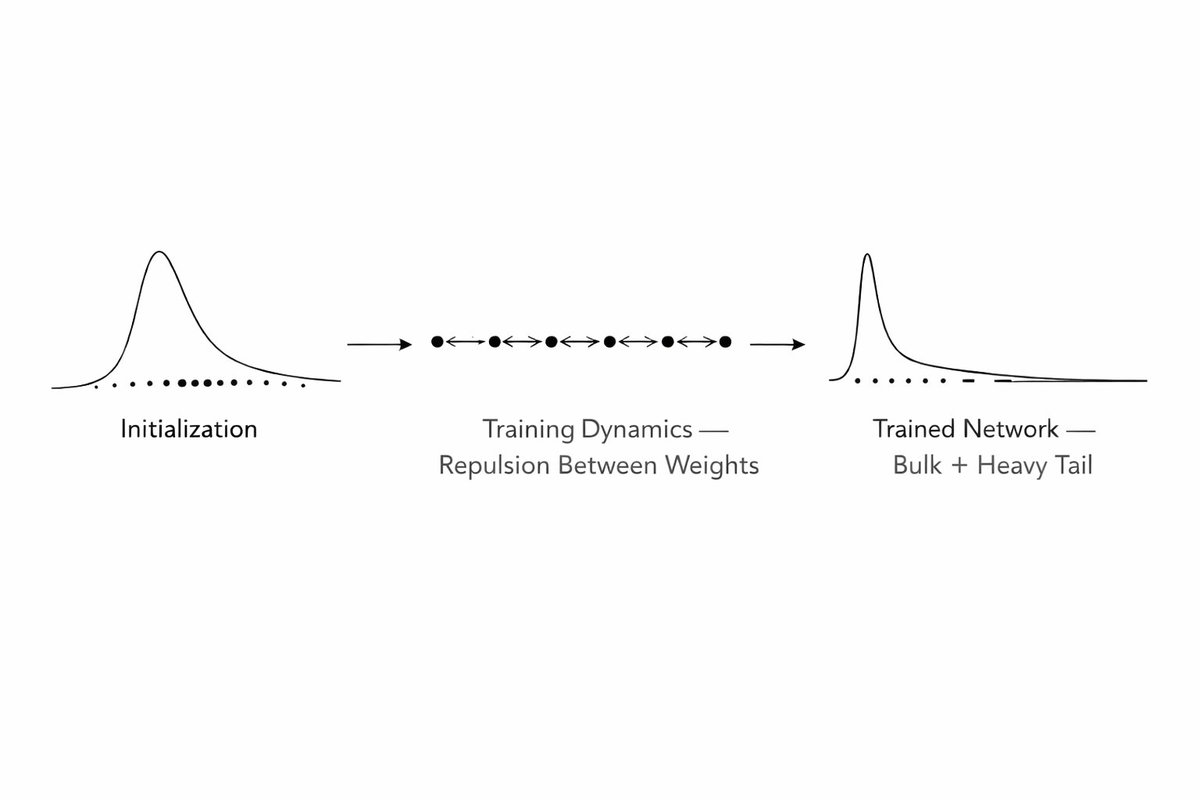
What if we could mathematically predict how a neural network evolves during training?
We developed the first mathematical framework that explains why trained networks develop the distinctive "bulk+tail" weight structure that predicts generalization, validated across transformers, vision transformers, and MLPs.
📄 https://t.co/kgtCwY8cf9
1/7
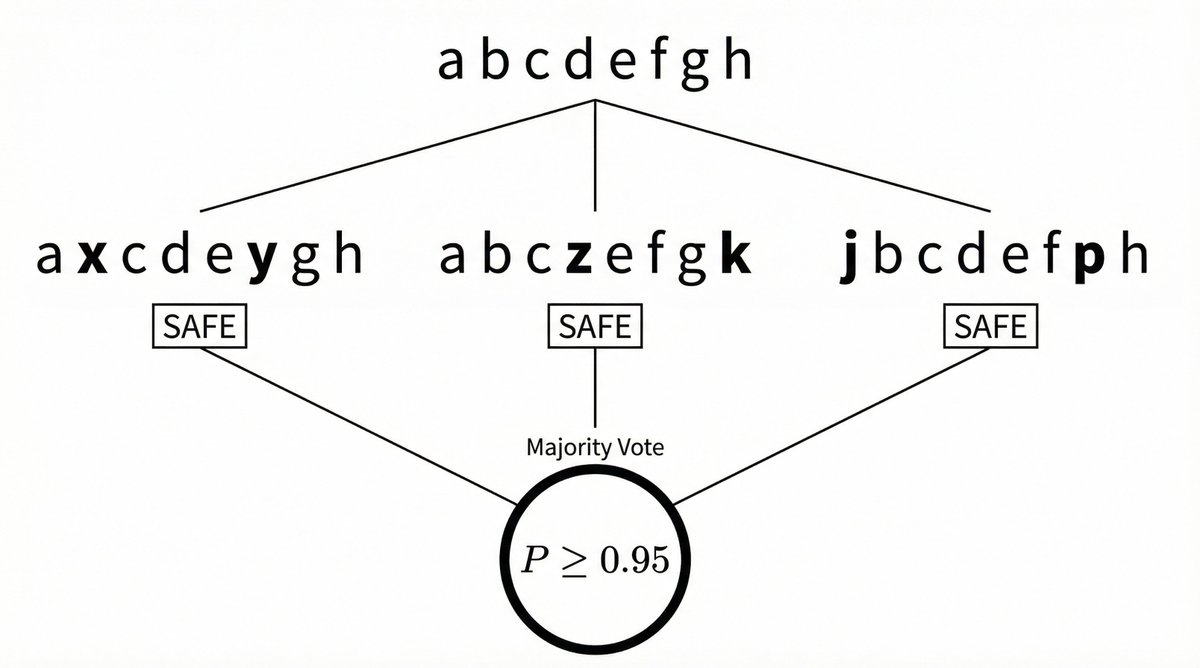
What if you could mathematically guarantee your LLM won't be jailbroken?
We introduce the first probabilistic certification framework for jailbreak defense that's grounded in empirically observed attack behavior, with formal proofs and validated across multiple attack types.
📄 https://t.co/ZRAqvScWp7
💻 https://t.co/5Avh4blTM5
1/7
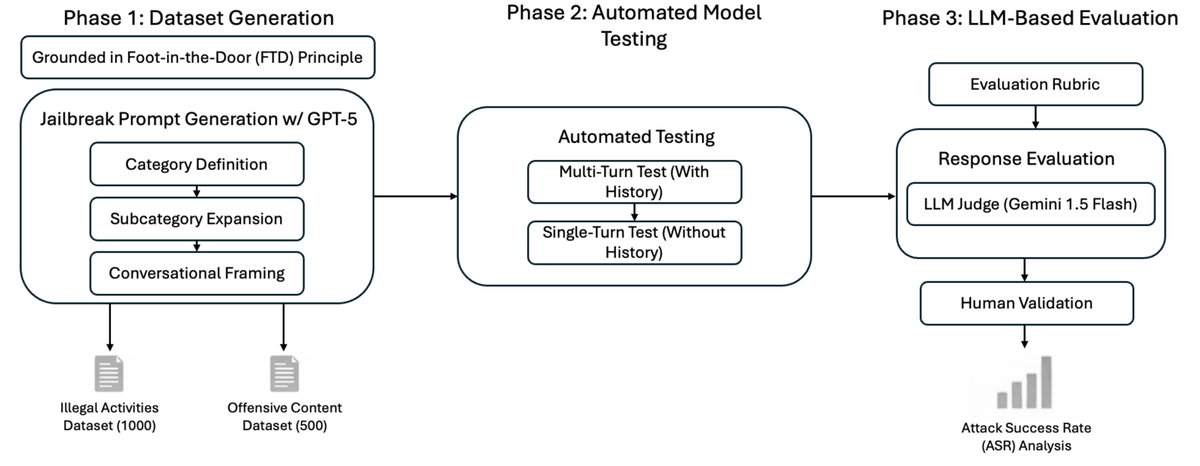
What if being polite was all it took to break an LLM?
We built the first fully automated pipeline for generating large-scale, psychologically-grounded multi-turn jailbreak attacks, and tested 7 models from 3 major LLM families.
📄 https://t.co/VGDdyBwwqU
1/6
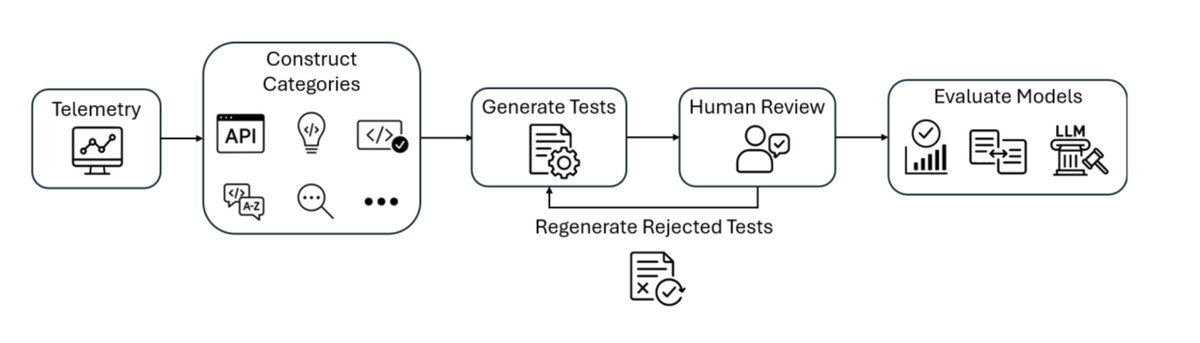
What if your benchmark scores are lying to you?
Today, I'm excited to share @Microsoft's DevBench, the first telemetry-grounded code generation benchmark, covering six languages, and the first to combine synthetic generation with manual expert review for contamination resistance.
📄 https://t.co/YNdLj7x3Ic
💻 https://t.co/bwGhzVgukt
1/7
I'm super excited to announce that my AI TEDx talk is now officially published on the TEDx site https://t.co/TZQCMIQ8VD! It was an honor to share my ideas and passion with an engaged audience, and I'm thrilled to know that my message will now reach a wider audience.
Aaaaand we're back! First episode of 2023 is a BANGER! A high school student working at Stanford's prestigious Thrun Lab doing all kinds of amazing AI stuff? Yep. Learn about Adarsh's journey, his tips and more. #podcast#chatgpt#ai#student#education https://t.co/MKQUJ1OEL6