New preprint alert🚀 Using TrackerSci, we quantified the birth rate of each cell type across the whole organism, and how these rates are rewired with age.
Huge congrats to the incredible Dr. Lu @ziyu__lu from @RockefellerUniv, who just defended today!
https://t.co/h50Swm03Lh
@deltaVee42@silvirouskin Technically pure protein or fat is also food and could be made in a way that won't have any meaningful quantities of sugars. But then again, it's not meaningful in chicken either so..
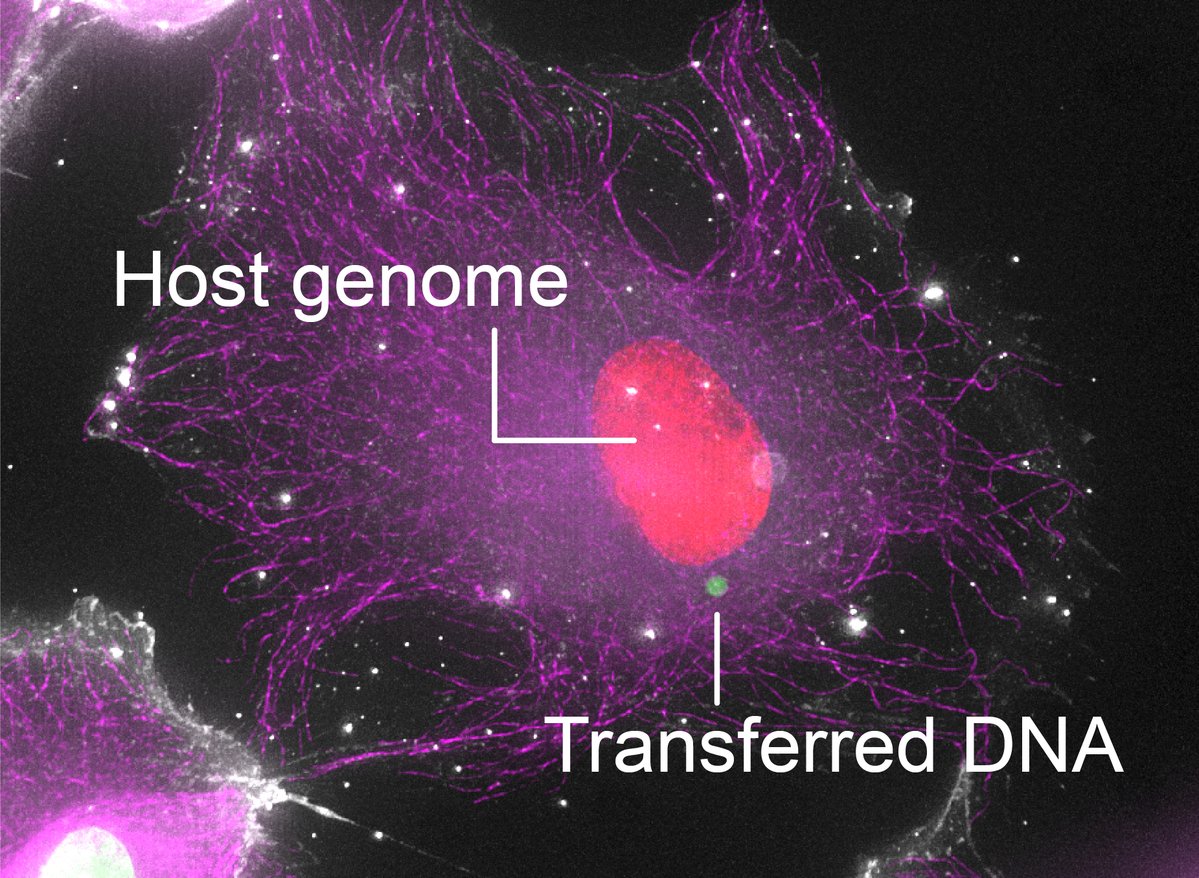
Excited to share our latest paper, out today @CellCellPress. We found that large pieces of the human genome can transfer between cells upon direct contact, endowing recipient cells with heritable phenotypic changes. (1/7)
https://t.co/SbshGhofN0
I'll tell you why so many people upset about the "no hallucinated citations" ban on the arxiv: because they've all been copying citation lists from each other without checking them since the beginning of time.
And why did they do this? Because half of the citations in scientific papers are politics and not to the benefit of the reader. If you don't list the right papers, your paper doesn't look 'right' and reviewers will complain that you didn't cite this-and-that other unrelated work.
For what I am concerned, these are all bullshit citations that shouldn't be in the papers in the first place. They can easily be automated by "related papers" links, that are (wait for it) provided by... AI...
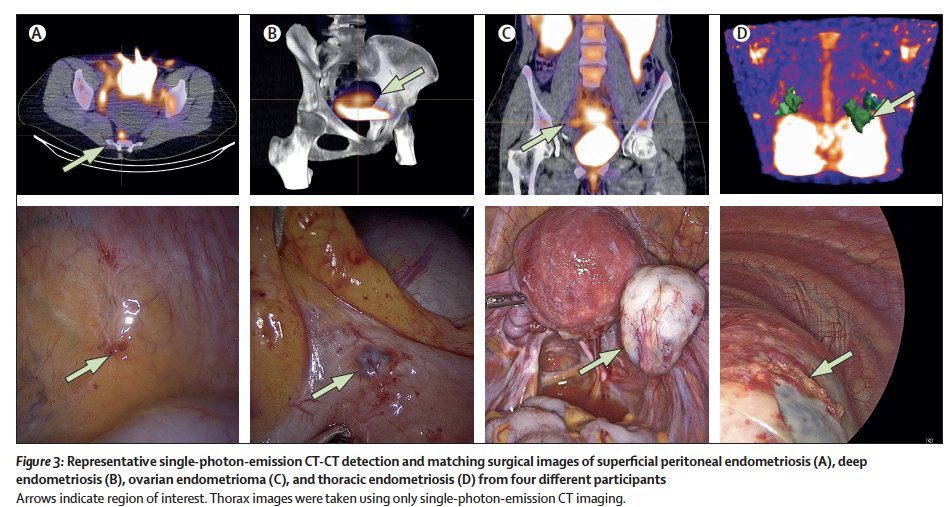
It's finally published, today in Lancet! The long-awaited outcome of the maraciclatide-enabled imaging of endometriosis by the dedicated Oxford team! Yes, you can see superficial lesions! And the activity aligns with lesion type, less signal in "white" lesions. Tour de force!
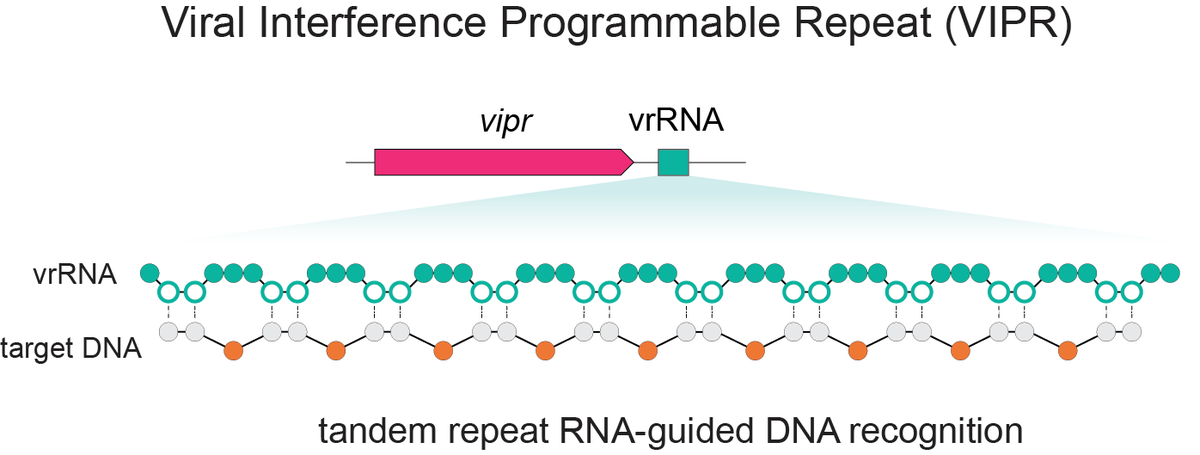
Excited to share our discovery of a new programmable RNA-guided DNA-targeting system hiding inside bacteriophages that predates CRISPR.
We call it VIPR (Viral Interference Programmable Repeat), and it uses an entirely new logic to find its targets.
Thread + link below.
@beateasy@Blutman27 Always felt that really dark or black jerseys hide the puck visually, so if your style is grind with lots of redirects, it will work in your favour. Definitely remember thinking it about LA in 2012
NEW: Astronaut Reid Wiseman shares a video of ‘Earthset’ that was taken with his iPhone
“This is uncropped, uncut with 8x zoom which is quite comparable to the view of the human eye…” Wiseman said.
This has to be the greatest iPhone video of all time.
@komposterov Ну понятно что на разные эндпойнты и разные выборки лучше делать отдельно, да! Но я рад, что доверяют. Мне всегда казалось, ч��о если сделать прозрачно и хорошо, должно быть норм, но не удивился бы и обратному, конечно
1/ Annbatch unlocks terabyte-scale training of biological data in anndata 🚀
Check out our preprint here: https://t.co/vAjSo4S4GJ 📄
Grab the code on GitHub: https://t.co/c1DssS7peF
Massive shoutout to project leads @felix_f0097 and Ilan Gold for driving this home! 🧵👇
A novel argument to do a PhD in 2026 is to expand the training set of AI models by a unique 100-pager. Before, only a few experts in the world would read it — now, every single model can do so & benefit from reusing it in unexpected contexts. It all happened so fast…
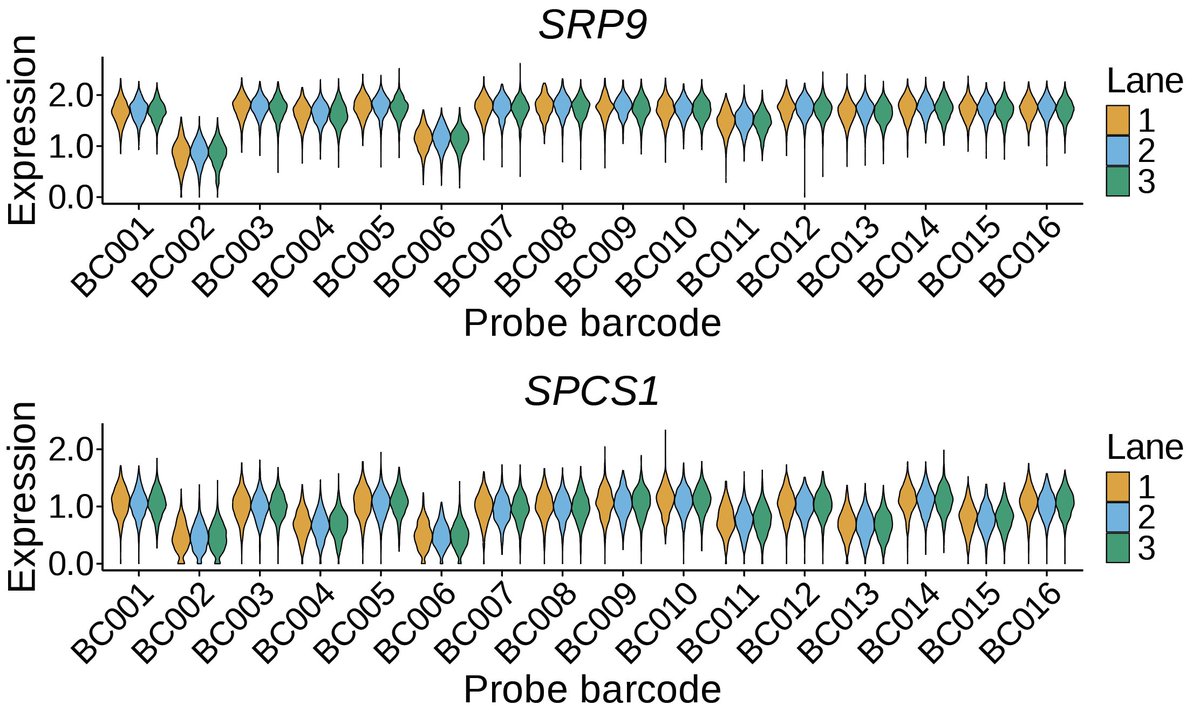
We found a surprisingly large technical artifact hiding in a widely-used scRNA-seq technology.
In all Flex v1 datasets we’ve analyzed, we see hundreds of DE genes between probe set barcodes.
More on why this matters and what to do about it below:
https://t.co/BUdKnQ98lN
(1/n)
Single-cell technologies now let us profile entire transcriptomes in individual cells. But how do we make sense of this complexity in a biologically meaningful way? Many methods summarise cells into a single embedding, but this often comes at the cost of interpretability, especially when multiple gene programs are active at once.
We developed Tripso, a self-supervised transformer model that represents cells through multiple gene program-specific embeddings, while also uncovering new programs directly from the data. Instead of collapsing biology into a single vector, Tripso decomposes cell state into multiple representations, each reflecting a different gene program.
We explored this across multiple systems.
In human hematopoiesis, spanning development to aging, Tripso identified distinct age-associated program activity, including stronger JAK-STAT signalling in early life and dynamic IKZF1-related changes during B cell maturation.
By comparing in vitro culture conditions with in vivo hematopoietic stem cell states, Tripso suggested that targeting the SEC61 translocon could enhance stem cell maintenance ex vivo, a prediction that we subsequently validated experimentally. In parallel, we identified a previously uncharacterised tissue-resident memory T-cell program associated with atopic dermatitis and mapped it to distinct spatial immune niches
Together, these results show how modelling cells through gene programs can lead to interpretable and experimentally testable insights. More broadly, this work points toward a more interpretable and biologically grounded models of cell state. As single-cell datasets continue to grow, we hope approaches like Tripso will help bridge the gap between data-driven representations and biological insight.
This work wouldn’t have been possible without the contributions of an amazing team. Thank you to co-first authors @mariemoullet, @Tomo_Isobe, @AmirhVahidi, @CarloLeonardi7, and everyone from @roserventotormo's Lab, @HaniffaLab, Nicola Wilson and @BertieGottgens's Lab, bringing together expertise across @SCICambridge, @OpenTargets, @sangerinstitute and @Cambridge_Uni.
@mariemoullet is one of the very best PhD students I have ever supervised. She is truly a force of nature, exceptionally resourceful, deeply innovative, and one of the most impressive scientists I have worked with. I am immensely proud of her and all that she has accomplished. As she begins her internship at @genentech , I have no doubt she will do amazing work there and continue to make her mark.
paper:https://t.co/jkQagOPNxE
code: https://t.co/2xnQWMcqbA