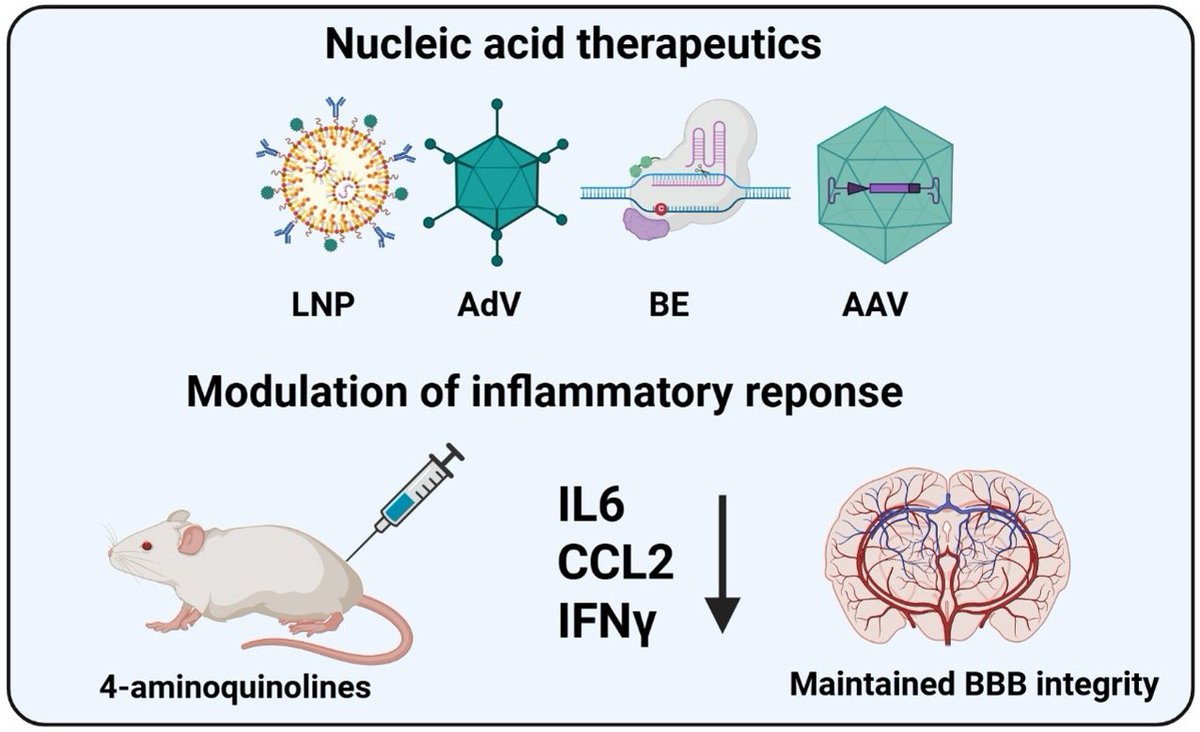
Raziskovalci Kemijskega inštituta so pokazali, da lahko nova uporaba že odobrenega, široko klinično preizkušenega zdravila v predkliničnih modelih zmanjša vnetje ob naprednih terapijah – brez zmanjšanja njihovih ključnih učinkov. Več: https://t.co/XhEoT55Yfd #mRNA#GeneTherapy
Get out your calendars, because the new 2027 EMBL Annual Poster has arrived: https://t.co/y4VFlGe9Mf
Whether you'd like to enhance your skills in a practical course or engage with the latest research at one of our conferences, we've got you covered. See you at @embl in 2027! 🙌
#EMBL #EMBLEvents #LifeSciences #LifeScienceTraining #MolecularBiology
India's first privately developed orbital-class rocket, successfully launching from the Satish Dhawan Space Centre in Sriharikota! What a moment! Vikram-1 🇮🇳
We’ll be watching this ignition on loop all day.
Kalam-1200 — Vikram-1's first stage, named for Dr. A.P.J. Abdul Kalam — roaring to life and lifting Vikram-1 off the pad, on a flight that reached orbit.
#Vikram1#MissionAagaman
🌍 Raziskovalka Kemijskega inštituta, 𝗔𝗿𝗰𝗵𝗶𝘀𝗺𝗶𝘁𝗮 𝗞𝘂𝗻𝗱𝘂, se je udeležila 𝟳𝟱. 𝘀𝗿𝗲𝗰̌𝗮𝗻𝗷𝗮 𝗡𝗼𝗯𝗲𝗹𝗼𝘃𝗶𝗵 𝗻𝗮𝗴𝗿𝗮𝗷𝗲𝗻𝗰𝗲𝘃 𝘃 𝗟𝗶𝗻𝗱𝗮𝘂𝘂, kjer je izmenjevala znanje z mladimi znanstveniki in Nobelovimi nagrajenci z vsega sveta.
Prejela je tudi simbolično priznanje za predlog o ozaveščanju mladih o nevarnostih jedrske vojne.
Več: https://t.co/p2BWbiLshS
#KemijskiInštitut #LindauNobelMeeting
“I was born and raised in Amman, Jordan to a refugee family. We were ten kids plus our parents. We lived in a humble home. We didn’t have the usual conveniences of running water or electricity. In addition to that, we shared the space with our livestock that we lived off. So, I would say it was not an easy childhood. And my parents worked very hard to send us to these nice, strong schools.”
In our official interview, Omar Yaghi – chemistry laureate and son of Palestinian refugees – described his childhood. He was a quiet yet diligent student who became captivated by chemistry at an early age. Recognising his son's potential, his father gave him the entirety of their savings at 15 and pushed him to continue his studies in the United States. Yaghi told us, "I’m sure this is a story that repeats itself in many families where the parents are absolutely dedicated to their children’s education, because education is the gateway to better life and potentially happiness."
It's safe to say that his parent's dedication and Yaghi's personal work ethic paid off. He was awarded the 2025 Nobel Prize in Chemistry jointly with Susumu Kitagawa and Richard Robson "for the development of metal-organic frameworks."
Learn more about Yaghi's journey to the Nobel Prize by watching our interview: https://t.co/4GYxM1WAvC
David Baker's lab (Institute for Protein Design) just designed genetically encoded miniproteins that directly control kinase activity — a target class notoriously hard to hit precisely because kinase catalytic domains are so structurally conserved that most inhibitors leak onto off-target kinases.
96 designs built to bind and stabilize distinct conformational states of FAK (focal adhesion kinase), targeting the kinase domain itself rather than an allosteric side pocket. 33 modulated activity. The 4 most potent: two inhibit FAK at low-nanomolar IC50, two potentiate it by more than 2×.
Expressed in living cells, the designs preserved the same inhibitory/activating effects seen in vitro — these rewire signaling inside real cells, not just in a test tube. Then the team exploited kinase structural similarity to redesign the FAK inhibitors into Src kinase inhibitors — a blueprint for genetically encoded, selective control across the entire kinase family.
https://t.co/oZJ6GcLjO2
For decades, biology textbooks have enshrined a simple rule: DNA is made by copying a template. After one enzyme unzips a DNA double helix into separate strands, another called a polymerase builds a complementary sequence, base by base, for each strand. Presto: two copies of the original DNA.
But new research into how bacteria defend themselves from viruses now shows this synthesis rule isn’t absolute.
Now, a team describes a bacterial enzyme that synthesizes DNA without a nucleic acid template, using its own structure as a guide.
Learn more: https://t.co/TeUWvyO0OD @NewsfromScience
𝗔𝗿𝗲 𝘆𝗼𝘂 𝗰𝗼𝗻𝘀𝗶𝗱𝗲𝗿𝗶𝗻𝗴 𝗱𝗼𝗰𝘁𝗼𝗿𝗮𝗹 𝘀𝘁𝘂𝗱𝗶𝗲𝘀 𝗶𝗻 𝗰𝗵𝗲𝗺𝗶𝘀𝘁𝗿𝘆 𝗼𝗿 𝗿𝗲𝗹𝗮𝘁𝗲𝗱 𝘀𝗰𝗶𝗲𝗻𝗰𝗲𝘀?
We are inviting applications for the 𝗝𝗮𝗻𝗸𝗼 𝗝𝗮𝗺𝗻𝗶𝗸 𝗗𝗼𝗰𝘁𝗼𝗿𝗮𝗹 𝗦𝗰𝗵𝗼𝗹𝗮𝗿𝘀𝗵𝗶𝗽 𝗳𝗼𝗿 𝗽𝗿𝗼𝗺𝗶𝘀𝗶𝗻𝗴 𝗲𝗮𝗿𝗹𝘆-𝘀𝘁𝗮𝗴𝗲 𝗿𝗲𝘀𝗲𝗮𝗿𝗰𝗵𝗲𝗿𝘀.
Applications are open to candidates who will complete their Master’s-level studies by the 𝗲𝗻𝗱 𝗼𝗳 𝗦𝗲𝗽𝘁𝗲𝗺𝗯𝗲𝗿 𝟮𝟬𝟮𝟲 𝗶𝗻 𝗰𝗵𝗲𝗺𝗶𝘀𝘁𝗿𝘆 𝗼𝗿 𝗿𝗲𝗹𝗮𝘁𝗲𝗱 𝘀𝗰𝗶𝗲𝗻𝗰𝗲𝘀 and have not yet enrolled in doctoral studies.
👉Application deadline: 𝟯𝟭 𝗠𝗮𝘆 𝟮𝟬𝟮𝟲
More information: https://t.co/w17pAj00tE
#PhDOpportunity #DoctoralScholarship #science #chemistry
🔬𝗧𝗵𝗲 𝗡𝗮𝘁𝗶𝗼𝗻𝗮𝗹 𝗜𝗻𝘀𝘁𝗶𝘁𝘂𝘁𝗲 𝗼𝗳 𝗖𝗵𝗲𝗺𝗶𝘀𝘁𝗿𝘆 𝗶𝘀 𝗼𝗽𝗲𝗻𝗶𝗻𝗴 𝗶𝘁𝘀 𝗱𝗼𝗼𝗿𝘀 𝘁𝗼 𝗮 𝗻𝗲𝘄 𝗴𝗲𝗻𝗲𝗿𝗮𝘁𝗶𝗼𝗻 𝗼𝗳 𝘆𝗼𝘂𝗻𝗴 𝗿𝗲𝘀𝗲𝗮𝗿𝗰𝗵𝗲𝗿𝘀
In 2026, we are announcing 𝟭𝟰 𝗬𝗼𝘂𝗻𝗴 𝗥𝗲𝘀𝗲𝗮𝗿𝗰𝗵𝗲𝗿 𝗽𝗼𝘀𝗶𝘁𝗶𝗼𝗻𝘀 with selected mentors in the fields of Chemistry, Biochemistry and Molecular Biology, Materials, Biotechnology and Immunology, Chemical Engineering, and Computationally Intensive Methods and Applications.
📅 Applications are open from 𝟭𝟲 𝗠𝗮𝗿𝗰𝗵 𝟮𝟬𝟮𝟲 𝘁𝗼 𝟯𝟭 𝗠𝗮𝘆 𝟮𝟬𝟮𝟲 here ➡ https://t.co/LgLaOxlvNq
#NationalInstituteOfChemistry #YoungResearchers #PhDOpportunity #ResearchCareers #science #WeAreHiring
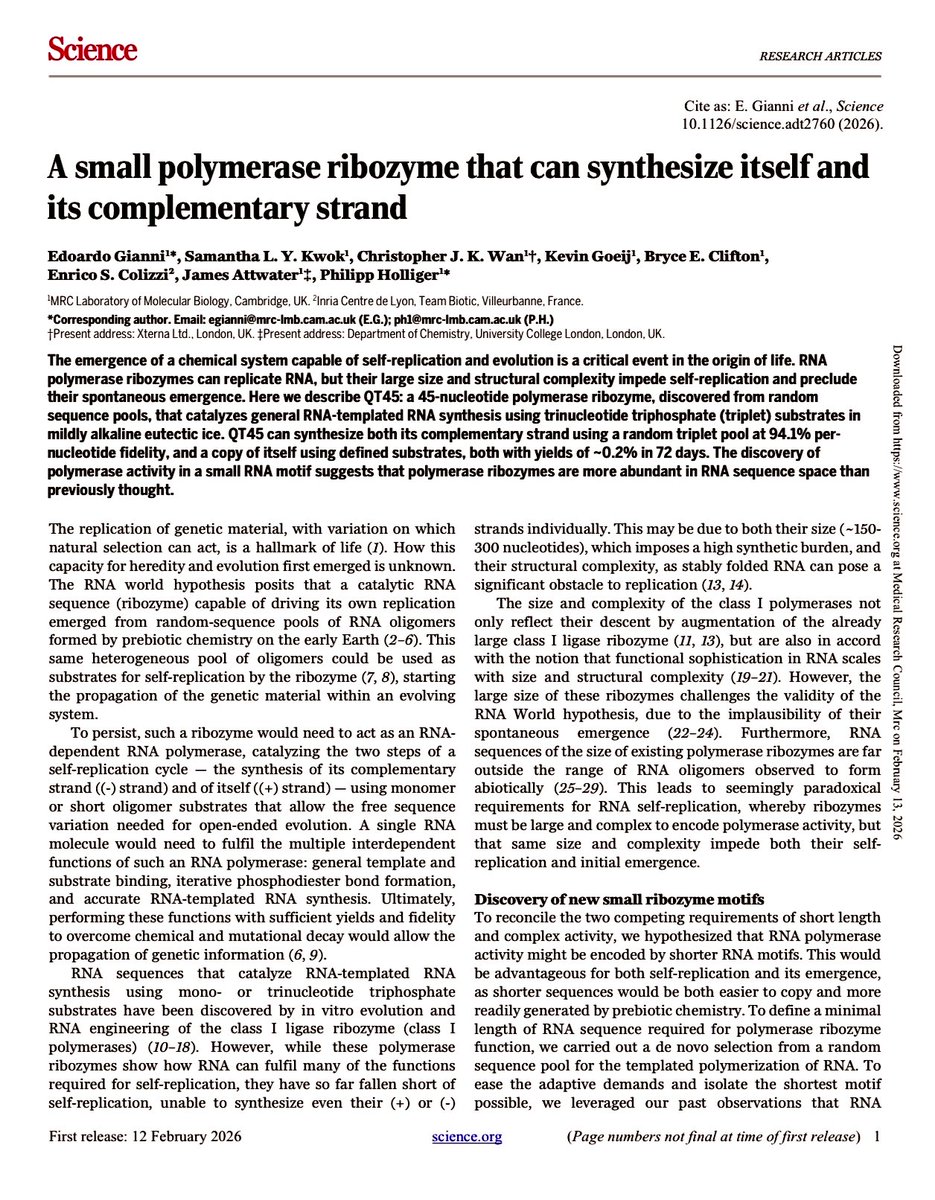
A major work from our lab is out in Science! @ScienceMag, another key step towards a true demonstration of RNA self-replication. https://t.co/2Fe8XonYst (1/6)
Cells already use hormones to control gene expression, so why not reuse that machinery?
We repurposed human nuclear receptors as ligand-responsive protein switches and synthetic liquid condensates that amplify transcription by >200×.🧬 🧵
Happy to share our recently published review paper about the evolution of miR-based synthetic gene circuits over time 🧬
Big thanks to my mentor, @rjerala for the guidance and for giving me the opportunity to work on this review!
Read the whole article at https://t.co/XOHmFSulI5
Nucleic acids are programmable drugs, able to encode any protein, regulator, or genome editor directly in vivo.
But their power is limited by reactogenicity, which limits clinical application.
We found a way to suppress it without losing efficacy.
https://t.co/CY6sKZ7Syn 🧵
We previously built programmable RNA sensors based on editing by housekeeping ADAR enzymes. But they can't sense arbitrary sequences due to design constraints (analogous to PAM for CRISPR). With our new "modulADAR", we overcome that constraint by leveraging ADAR's modularity.