Love the Agentic MapReduce approach. First learned about it in DocETL and it works well across many kinds of tasks even beyond security. Check out this git repo for more details https://t.co/CGokMbJmAB
i'm obsessed with what's happening in AI reforestation right now
this Franco-Brazilian startup called MORFO took a patch of land in Brazil that was rock-hard and compacted from years of cattle farming. they replanted it using a single drone. months later the ground was covered in grass, bushes, and small trees. the land came back to life.
here's how the whole thing works.
1. drones scan the terrain with high-resolution cameras and sensors
2. AI analyzes the imagery alongside soil samples, moisture levels, slope, and surrounding vegetation
3. the system picks from a catalog of 300+ native species, deciding exactly which plants will thrive in which specific spot
4. the drone fires biodegradable seed pods packed with seeds, nutrients, and moisture at 180 capsules per minute
5. satellite and drone imagery monitors regrowth over time, with AI tracking vegetation cover and biodiversity
6. two people and one drone cover 50 hectares a day. a person planting by hand manages about one hectare.
and MORFO isn't alone. AirSeed in Australia drops 250,000 seed pods per day into bushfire-scarred koala habitat, replanting swamp mahogany that koalas depend on to survive. Flash Forest in Canada fires 50,000 pods daily into wildfire-destroyed boreal forest, planning the replanting alongside Cree Indigenous communities. re-green won Prince William's Earthshot Prize after planting 6 million seedlings across 30,000 hectares of Amazon and Atlantic Forest.
five companies across four continents built this same approach independently. nobody coordinated. the physics of the problem demanded it.
knowing which seeds belong in which soil used to require years of ecological fieldwork, manual planting crews, and budgets that made large-scale restoration nearly impossible. now two people with a drone and an AI model trained on local soil data can replant 50 hectares before lunch.
this is the AI work that'll still matter in 50 years.
Here’s my current thesis
Most companies won’t need to post-train anything. With the right prompts + evals, LLMs are capable enough
There are even prompt optimization frameworks like GEPA which get you very far (@Shopify used it to optimize Qwen)
I’m a huge open-source advocate but I really don’t see companies getting into the complexity of RL.
What about self-hosting? Self-hosting on GPUs start to make sense when you’re operating at a huge scale for cost reasons OR when data privacy is an issue.
Initially, API-based pricing is a lot cheaper, but at a certain (pretty huge) data volume, self-hosting becomes cheaper. Start with an API and move to self-hosting when the scale justifies it
In 1960, Ghanaians gathered at Kwame Nkrumah Circle, firing old muskets, beating drums, and raising banners to celebrate Ghana’s boycott of South African goods — a bold protest against apartheid and racial discrimination in South Africa, in solidarity with Black South Africans.
.@elonmusk says that no one can name a person who died from his aid cuts. In fact, I've met the kids who are dying, and I've talked to the families who lost children. In my columns, I've cited many, many names of people who have died because of Musk's aid cuts. A few examples:
*Yamah Freeman was a 23-year-old woman who died in childbirth because Musk cut funding for the diesel for ambulances in her part of Liberia. She couldn't get to a hospital and died as people were carrying her there. I talked to her parents and sister in their village.
*Gbessey Kiadu, age 1, died of malaria because of his cuts to malaria medication in Liberia. I talked to his mom in her village.
*Ibrahim Koroma, an infant, died of AIDS in Sierra Leone after he interrupted HIV supplies. I talked to health workers who cared for him.
*Achol Deng was an 8-year-old girl with HIV in South Sudan who died when Musk cut funding for the health care worker who provided her medicines. I talked to the healthcare workers.
I could go on and on. In almost every village you go to in South Sudan, Uganda, Liberia, Sierra Leone or other countries I reported in, you find people dying because of aid cuts. I challenge Musk: Come with me on a reporting trip, and we'll talk to these moms and dads, and you'll see the dying children themselves. I think if you see the kids whose lives are at stake, maybe you'll change your mind.
AI is widespread because it gives uncreative people the delusion that they’re creative. It lets them skip straight to the part where they get validation for doing absolutely nothing. It’s not just rotting their brains, it’s also making them narcissistic.
PP-OCRv6 is now on @HuggingFace! 🎉
Not just better accuracy— PaddleOCR 3.7 also adds transformers & ONNX Runtime backends.
Huge thanks to @mervenoyann for championing this integration, and the amazing @HuggingFace team for making it happen! 🙌
https://t.co/h55j7IGeA5
Refine your home electrification prospecting with a bird’s-eye view. 🦅 Try the demo ➡️ https://t.co/vjBsL6J5pb
Our new Solar API dataset instantly identifies existing solar installations across the US, EU, and Australia, so you can streamline site assessments and optimize grid infrastructure.
#Sustainability #GoogleMapsPlatform
Ghana are probably the worst African nation heading to the World Cup.
But if there was ever a nation that could come into a World Cup at a low point and surprise everyone, it would be the Black Stars.
My preview on why you should support the Black Stars.
https://t.co/8u6sw2MVdp
we need to get real and move fast about training our own agents. orgs, teams, and individuals all need to be improving their agent. not waiting for the next API to be released (or not).
this is a practical hands-on session where I'll show you how to train (and improve) your own agent based on traces.
it's supported by tutorials and a repo, starts ofs simple, and works today.
over the coming weeks, I'll add more advanced classes working up to RL environments and harnesses.
If you're building around training agents, jump on stream, and demo your work.
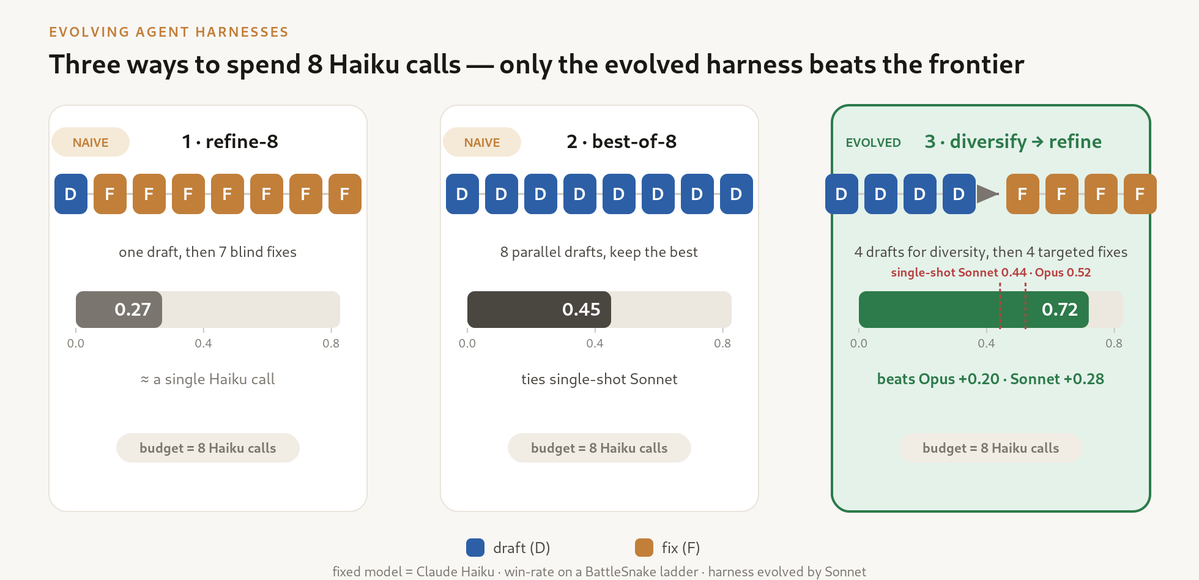
Small language models with test-time scaling (N calls) beat larger models, but not all test-time scaling harnesses are the same!
We evolve test-time scaling harness and prompts with @gepa_ai and 8x Haiku beats Opus by ~20%.
"the real opportunity is not in picking the best model but instead in building a learning loop on top of the model [and allowing them to] grow stronger on real traces from inside the organization"
the only framework for doing nothing but this since 2022 is right here😁
@giffmana we will see so much of the established processes in computer vision systems orchestration being reinvented in the LLM space. from model training, to evals, to systems architecting.
and remembering we were all gpu poor by today's standards back then. lol
@dbreunig love how the llm agent builders are relearning all the stuff the computer vision agent builders figured out ages ago from trial and error as well. task complexity decomposition and semi deterministic orchestration into harness engineering.
what @karpathy called software 2.0
LLM community slowly rediscovering what we in vision found out over half a decade ago. MY SCHMIDHUBER MOMENT IS COMING!
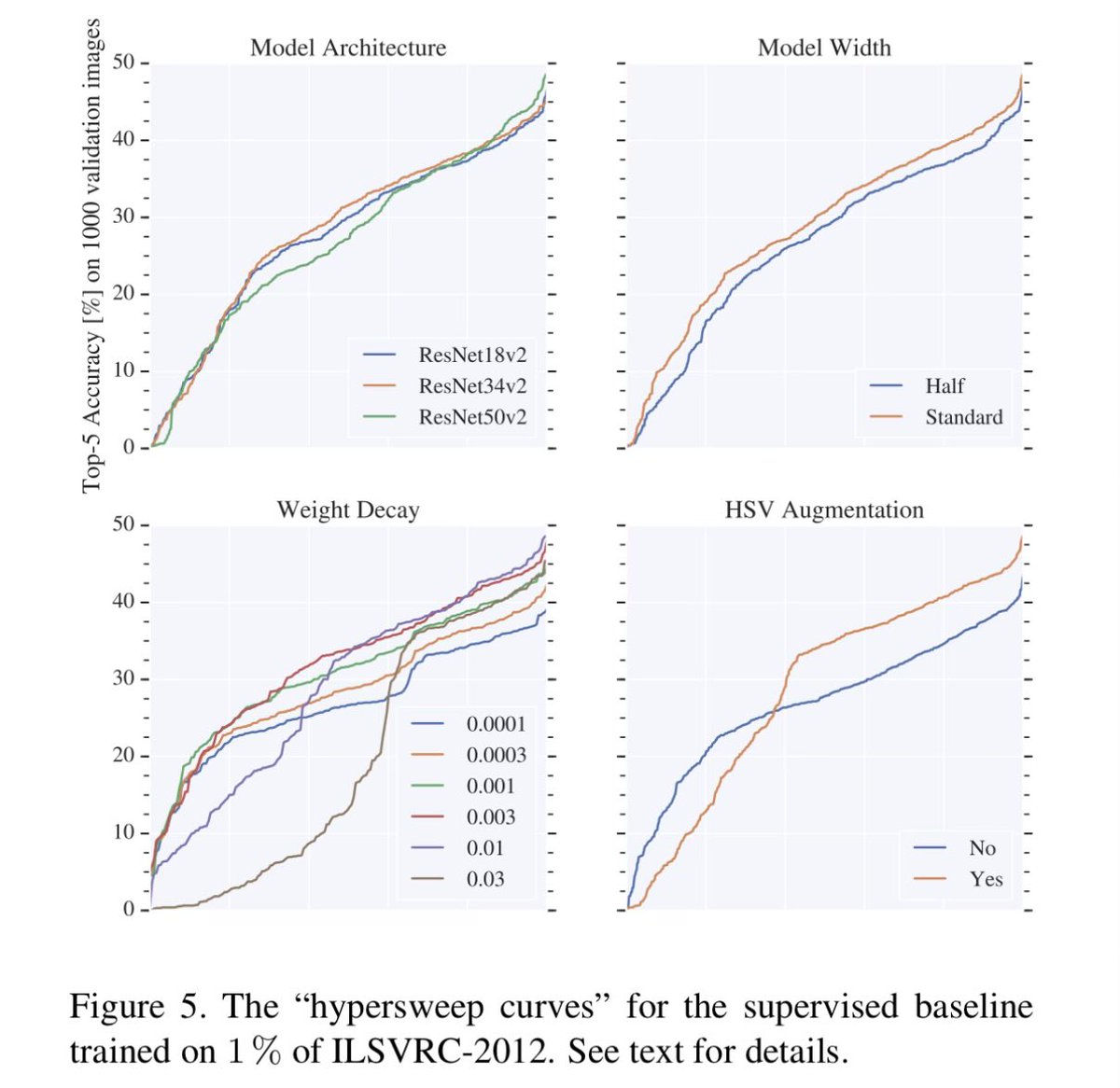
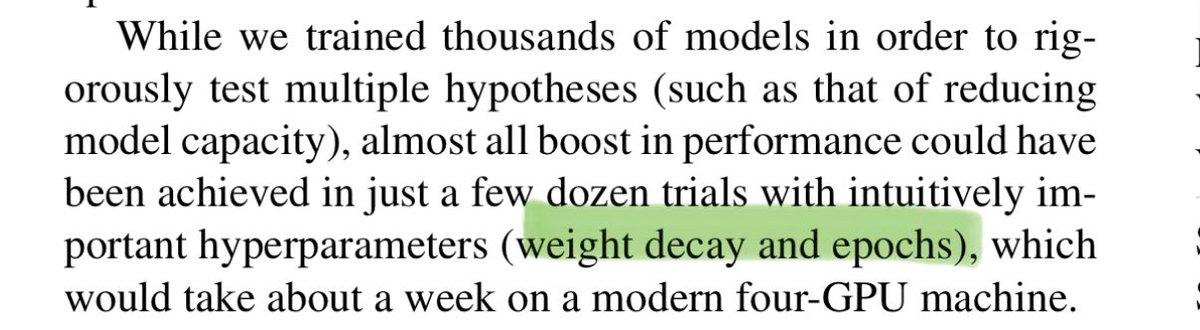
Source: S4L paper where i tuned the most sota 10% and 1% ImageNet baselines ever, by far.
https://t.co/Cj10TYvpOP
@LakshyAAAgrawal@satyanadella DSPy + GEPA was absolutely the first thing I thought of after reading that, & even though most of my experience comes from the computer vision space, I see a lot of transferable smart practices where the value of the system is in the architecting, and the AI is just one component
Our paper on optimize_anything has been accepted to CAIS 2026, and is out on Arxiv with expanded experiments and details!
A unified API to optimize agents (with architecture), CUDA kernels, cloud scheduling policies, or even graphics!
https://t.co/HlWwS77skg