I read The Rational Optimist at a time when it would’ve been easy to believe the world was broken beyond repair. Instead, it gave me a new lens: one where progress is real, and where ordinary people shape the future, bit by bit and day by day.
As such, I couldn't be more excited to share this reflection from Matt Ridley on his book. I especially recommend his closing about not giving young people a "counsel of despair" and our moral responsibility to share our hope for a better world.
For 50 years, pessimists have been wrong.
In this interview, The Rational Optimist author @mattwridley walks us through the miracle of human advancement, from lighting a room to transforming entire economies.
This is the story you’ve never been told about how the modern world came to be and why there’s every reason to believe it can keep getting better.
“The answer is neither mysterious nor politically impossible.”
We can solve it and we will solve it, because the cost of solving it is cheap compared to the cost of not solving it.
“At this point, the solution is to just make conservation more attractive than consumption.”
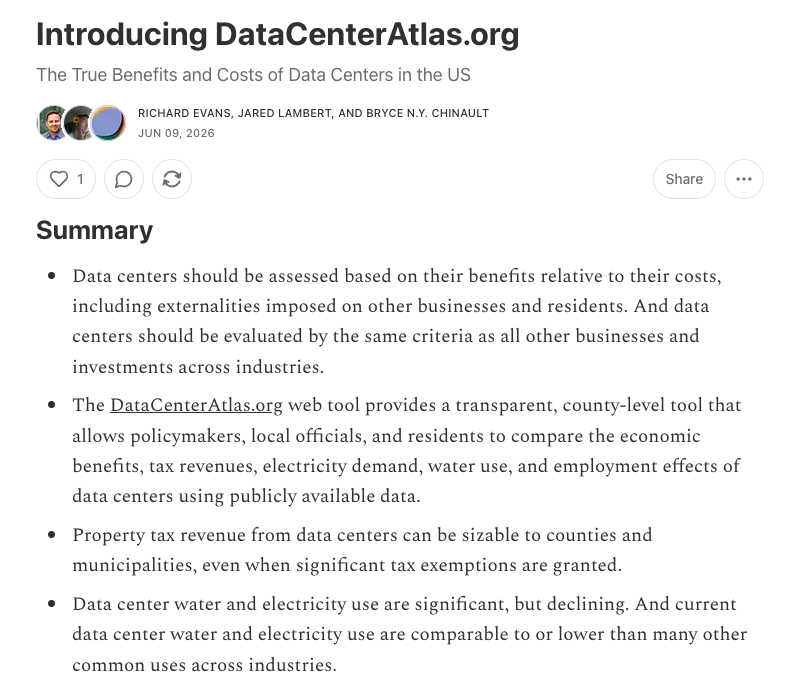
A new cool project from some great folks.
It will eventually show the benefits and costs of data centers for all US counties.
The model suggests Cache County:
- $9M tax revenue
- 168 local jobs
- 1,809 construction jobs
👏👏👏 @RickEcon@BryceTheNoble and @jared__lambert
look, i'm not humorless so i can get behind jokes looking back on the hipster era just as much as the next girl who spent too much money at american apparel. But people have GOT to stop associating that scene with stomp clap lumineers shit. it's inaccurate!
We're excited to announce the launch of Everyday Abundance—the podcast that explores the hidden histories behind everyday activities and the technologies we don’t even know are technologies!
How did we get the most liberating technology—electric washing machines? How did we get so many of them? What about the family dinner? Exercise? These are all new inventions in the course of human history. But they're everywhere!
@vpostrel and @CharlesCMann dive into the surprising stories behind everything from brushing your teeth to driving your car.
Check out this clip from cooking dinner on how the family meal began:
Our culture has lost confidence in the future. During the Obama years, new technology was supposed to usher in abundance. Instead, housing is scarce. Infrastructure is slow. Costs are up. The institutions creating those problems remain largely unchanged.
Now visible symbols of technological progress, AI, data centers, etc., are absorbing frustrations they didn’t create. The debate is really a referendum on whether people believe the future is still being built for them.
I wrote a quick rant about why I'm landing so hard in the skeptical corner of the data center debate, this is more just letting off steam and trying to make it clear why my hair's a little on fire about it.
We're looking for a Policy & Research Associate (Contract) to help advance housing, land use, transportation, and local governance policy across the Wasatch Region.
Remote • $25+/hr • Flexible schedule
Apply: [email protected] with Resume, cover letter and references.
A year ago, a vision. This week, a room full of people building it. Thanks to everyone who came together in Utah to push forward a more abundant American energy future.
Later this month, WALC is hosting “YIMBY Placemaking: Architecture of Global Events."
Join us for a conversation on how global events shape housing, infrastructure, walkability, and the future of our communities.
May 27 | Kiln | 5:30 PM
RSVP https://t.co/FZiroxxi5g
oh no, you used the camera to shoot the film.
oh no, you used editing software to cut the film.
oh no, you used CGI.
oh no, you used VFX.
oh no, you used dubbing.
oh no, you created fake sets.
oh no, you used green screens.
oh no, you used stunt doubles.
oh no, you used makeup and prosthetics.
oh no, you color graded the footage.
oh no, you used motion capture.
oh no, you recorded Foley sounds.
oh no, you used background scores.
oh no, you used autotune on vocals.
oh no, you used wire rigs for action scenes.
oh no, you used drones for aerial shots.
oh no, you used miniatures instead of real cities.
oh no, you used matte paintings.
oh no, you used body doubles.
oh no, you used teleprompters.
oh no, you used render farms.
oh no, you used sound mixing.
oh no, you used ADR to replace dialogue.
oh no, you used stock footage.
oh no, you used smoke machines.
oh no, you used fake blood.
oh no, you used lenses to manipulate perspective.
oh no, you used filters to change the mood.
oh no, you used playback monitors.
oh no, you used digital de-aging.
oh no, you used face replacement.
oh no, you used animation pipelines.
oh no, you used Unreal Engine virtual production.
oh no, you used render engines.
oh no, you used storyboards.
oh no, you used previs animatics.
oh no, you used sync sound technology.
oh no, you used stabilization rigs.
oh no, you used cranes and dollies.
oh no, you used subtitles for global audiences.
oh no, you compressed the movie for streaming.
oh no, you used digital projection instead of film reels.
oh no, you used software to simulate explosions.
oh no, you used compositing to combine shots.
oh no, you used LUTs to create cinematic looks.
oh no, you used virtual cameras inside 3D scenes.
Traditional cinema mocking AI filmmaking while forgetting it was built on every fake technology before it.
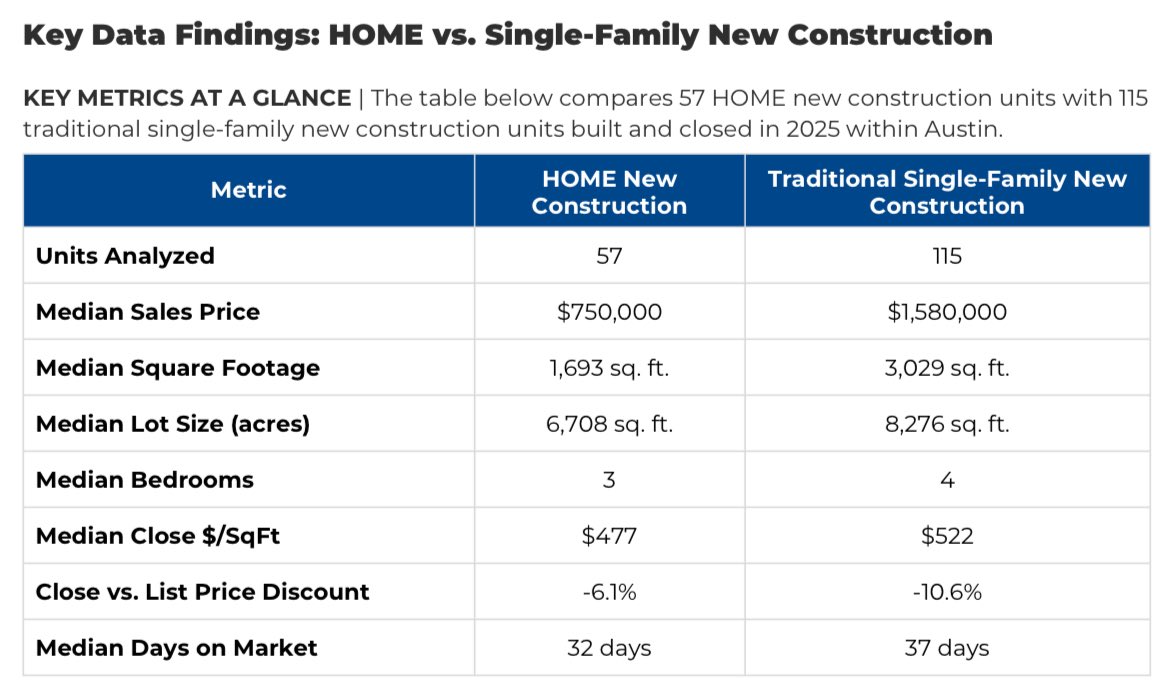
A couple years ago, Austin made it possible to build 3 units on any single family home lot via the HOME initiative.
The Austin Board of Realtors just did a study on the impact and found it’s yielding homes with 75% of the bedrooms, for HALF the cost.
THAT’S REAL PROGRESS!!!