It’s underappreciated that @cognition created the concept of cloud agents. Increasingly consensus that most code will be written in an isolated environment with its own browser, desktop etc.
Just imagine what they’re cooking next…
@skeptrune I love a good cuck tranche meme as much as the next guy but @TaliaGold has been invested for years and the company is multiples larger than they were during the Series E
Unbelievable year from @fal.
- Released the 2 top video models post trained on MiniMax and BFL, both orders of magnitude faster than the next best models.
- Announced their World Models inference engine
- Established generative media as the only market outside of coding with token-market-fit (power users spending >$10K/month)
- Raised lots of $$ for more GPUs
And we are still in inning 1 of generative media. Let's go fal 🚀
Today, we’re announcing we raised our Series E & F rounds for a combined total of $1.65B. Our Series E was led by @sequoia and our Series F was led by @BessemerVP with continued investment from @nvidia.
We’re excited to push the boundaries of what’s possible even more next year and this funding will enable the team to build the way we want to.
In AI, there are certain use cases where good enough is good enough, and others where it’s frontier or bust. The most extreme examples are cybersecurity, biotech, and trading.
If the opposing side is .01% better, you’re screwed. There are few other corporate use case that can definitionally never plateau.
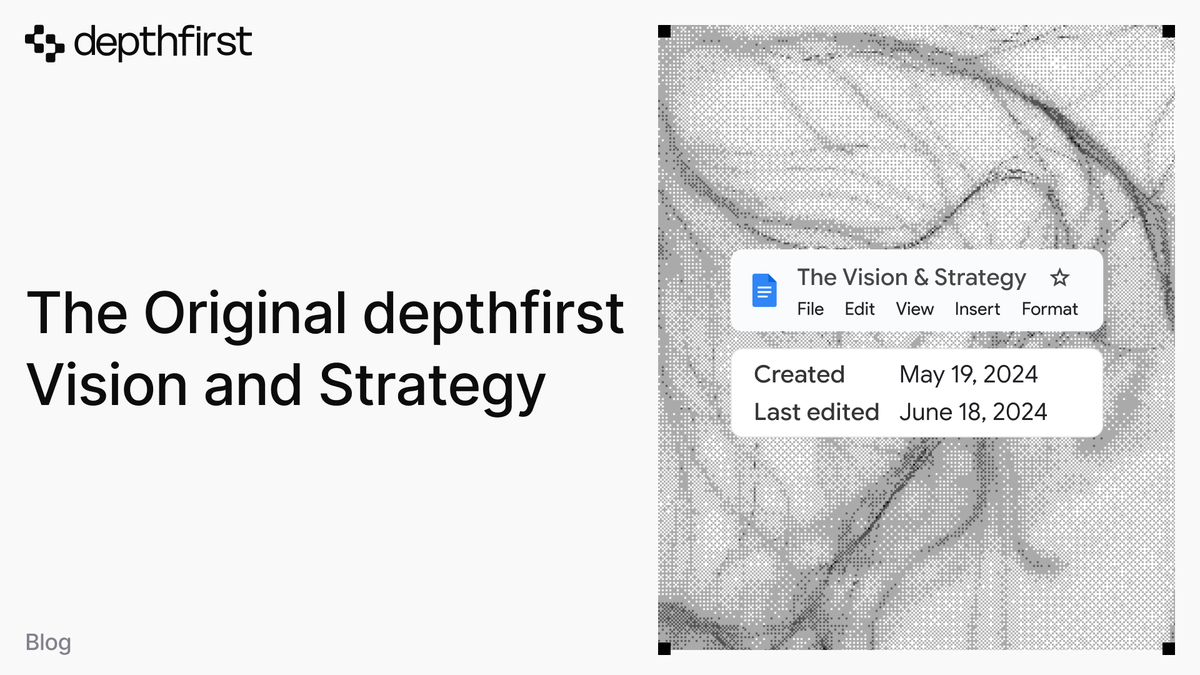
Every @depthfirstlabs board meeting starts with the mission. Secure the World’s Software. It sounds obvious now but no one was talking about that in June 2024, which is when this artifact was written.
And they’ve been ahead of the curve ever since!!
When @andreamichi, Daniele, and I started planning on founding @depthfirstlabs, we wrote a document outlining our vision for the future of cybersecurity and our company’s strategy. Today, 2.5 years later, cybersecurity has become one of the most important areas of AI development and beyond.
I recently reread the document and thought it would be interesting to share how our predictions held up and how we have executed on our plan. I’m sharing the text from the original Google Doc we wrote, last modified on June 18th, 2024.
https://t.co/HH2t64llli
Our original thesis was that AI would fundamentally change the economics of vulnerability discovery and exploitation. Finding sophisticated vulnerabilities had historically required scarce expertise and considerable time. We believed AI would dramatically reduce those constraints, giving attackers the ability to find and exploit vulnerabilities at a scale that existing defenses would struggle to keep up with. Today, increasingly capable AI models are discovering vulnerabilities that have gone undetected for years, and powerful open-weight models are making these capabilities accessible to virtually anyone.
One passage from the document feels particularly prescient today: “In a world of abundance intelligence, this situation will not be tenable and will lead to catastrophic consequences if not addressed. The company’s mission is to identify and patch all the vulnerabilities in the software running the world.”
We also believed that AI would make it possible (and necessary) to build defensive systems capable of finding and fixing vulnerabilities at a scale that had never been economically feasible, and set the objective of building “computer-security artificial general intelligence”.
Two years in, we have raised $120m, built a growing team of 70, trained a SOTA cybersecurity model, found vulnerabilities in the biggest open-source projects and major enterprises, and have an eight-figure revenue run rate. AI startups, Fortune 500 companies, and government agencies use depthfirst to reduce risk across their systems and meet today’s security challenges.
We’re growing our team and are looking for excellent, mission driven people across engineering, GTM, and ops. If you’re excited about our mission, consider applying.
Can’t stop won’t stop. @fal’s post training team makes other models feel unusable. We’ll see more and more labs partner with fal to keep pace.
Media labs create a killer base model - fal takes care of the rest. Congrats @bfl_ai and @fal!
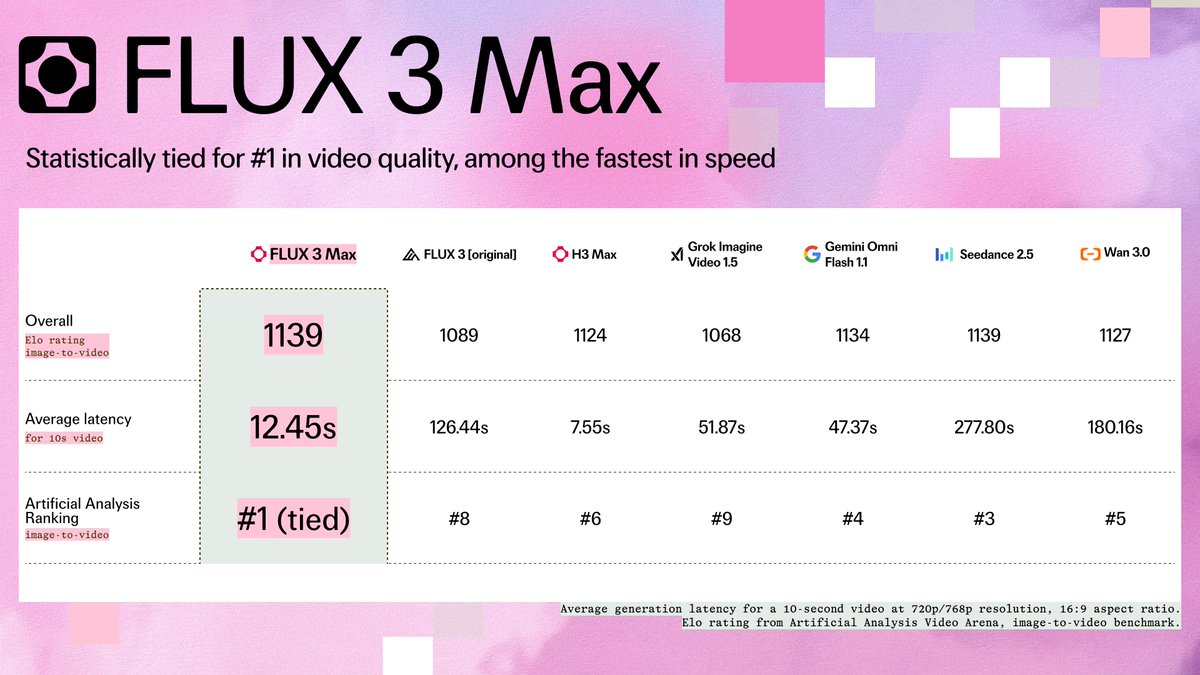
Introducing FLUX 3 Max, the latest post-trained video model from fal Research in partnership with @bfl_ai.
FLUX 3 Max is tied for #1 in image-to-video quality on independent third-party benchmarks, generating a 10-second, 720/768p video in ~12 seconds.
For the next three weeks, FLUX 3 Max is 75% off, making it the most affordable frontier video model at its quality level.
Agentic pen testing alone is nice, but it's supercharged when combined with a broader appsec platform to 1) validate whether vulnerabilities found elsewhere are exploitable and 2) verify patches did, in fact, patch.
depthfirst executing early on building a compound startup! Well done @hohnjeyer
Today, we’re excited to introduce Agentic Pentesting on the depthfirst platform.
Agentic Pentesting involves autonomous agents that attack your running application like a team of elite security researchers.
Security teams can:
- Find complex vulnerabilities in systems and running applications, with or without source code access
- Confirm whether findings from code scans and other sources can be exploited at runtime
- Run ad hoc agentic pentests or integrate them into CI/CD for new feature releases
- Create tickets in Jira or Linear, or use depthfirst to autonomously remediate vulnerabilities
- Replay an attack after remediation to verify that the vulnerability has been fixed
We built Agentic Pentesting in close collaboration with our customers. We’re grateful to every security and engineering team that helped shape the product and to the depthfirst team that brought it to life.
Learn more from the links in the comments.
Today, @washingtonpost covered critical vulnerabilities @depthfirstlabs found in TikTok. These vulnerabilities allowed hackers to access anything on a user’s device that TikTok itself could access, including the camera, microphone, payment information, photos, and the user’s entire TikTok account.
Read more in the thread 🧵
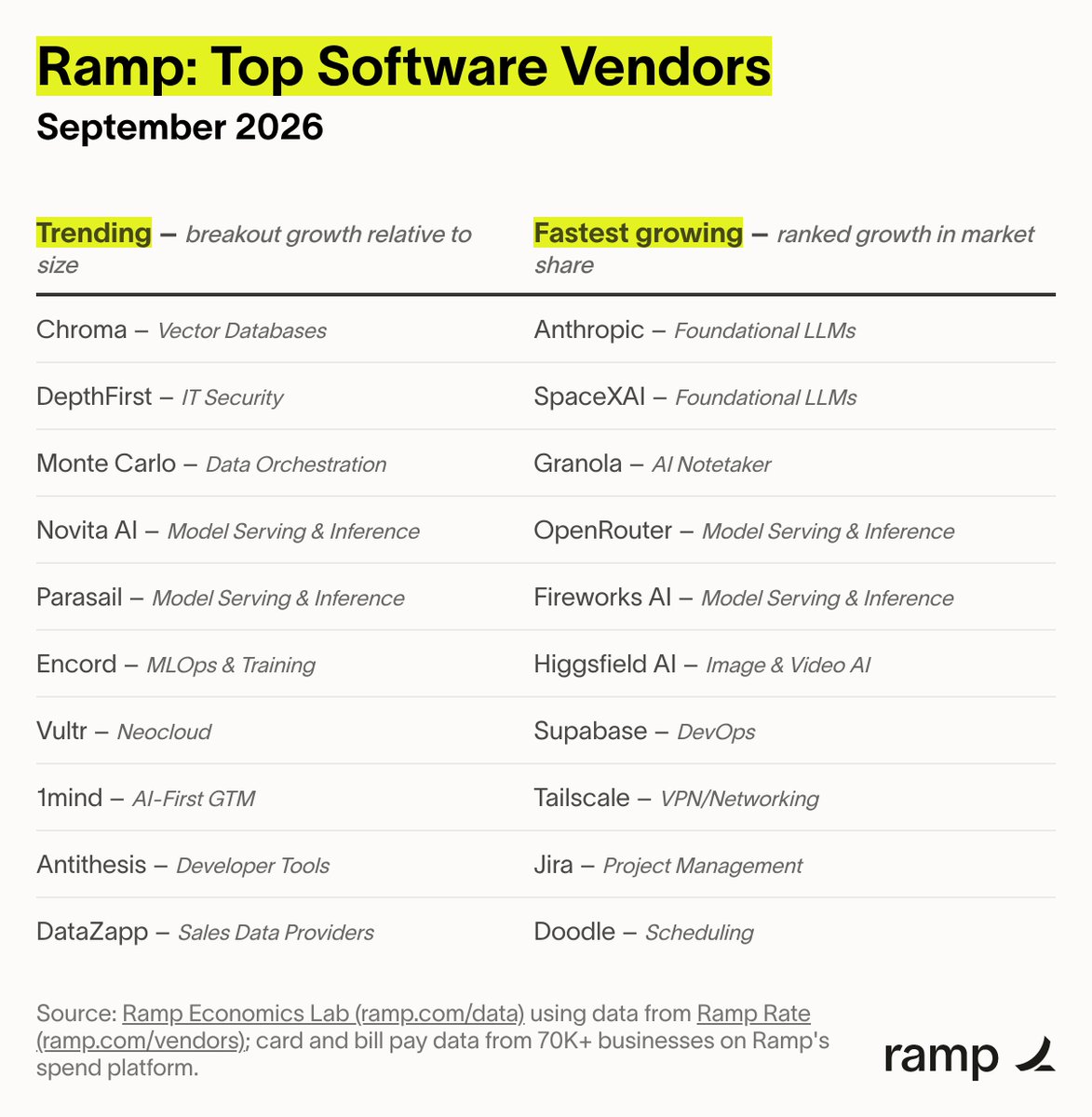
NEW from Ramp data. Despite cost-cutting on AI overall, one area companies are increasing their spend: AI security software.
In the wake of the Hugging Face hack, three of our trending software vendors (depthfirst, Monte Carlo, Antithesis) make software specifically designed to monitor agents in production.
Unclear as to whether any of them would have stopped the Hugging Face attack, which was so hard to track and identify because the agents covered their tracks with falsified logs.
I expect AI security will become a strong headwind to deeper enterprise adoption, at the short-term expense of OpenAI and Anthropic and at the long-term benefit of vertical-specific security software cos.
EA AI safetyism increasingly looks like Marxism-Leninism for the algorithmic age.
The old vanguard claimed privileged knowledge of the inevitable course of History. The new one claims privileged knowledge of the probabilistic course of Humanity.
Both use an elaborate intellectual framework to reach the same political conclusion: a small group of enlightened people must constrain everyone else for their own good.
That has never lead to anything except monumental human suffering.
Excited to be backing @ScottWu46, @russelljkaplan, and the rest of the brilliant @cognition team in their Series E.
Coding agents are the fastest growing market in AI, and Devin is leagues ahead in asynchronous work driven by their cloud agents primitive. And best part is they’re just getting started.
The world needs far more software than it can build. Cognition exists to change that.
We’ve just raised over $2B at a $48B valuation, led by a16z, Accel, Founders Fund, General Catalyst, and Avenir.
Since our round in May, run-rate revenue has grown from $492 M to almost $900 M.
Some milestones move a leaderboard. A rare few change how you see the future.
MiniMax H3 Max did both.
We released MiniMax H3 as an open-weight model with the hope that the community would adapt it, challenge it, and take it further than we could alone.
@fal did exactly that.
With its own post-training and inference expertise, pushed the frontier on both quality and latency, and created experiences that simply weren't possible before. Faster-than-real-time video is no longer just an idea. It is opening the door to perpetual streams, interactive worlds, real-time storytelling, and experiences we are only beginning to imagine.
They made the value of open weights feel real to our team in a way it hadn't before.
Advancing technology together has always been a core belief at MiniMax. H3 Max made that belief tangible.
It showed that the frontier no longer belongs to a few, it belongs to everyone willing to build, experiment, and share what they discover.
We hope H3 Max is the first of many breakthroughs shaped by different teams. To every builder ready to push video forward: our weights are open, our door is open, and we're ready to stand behind you.
Let's build, together. ✨
Will Instinct et al accelerate GDP growth?
Credit cards increased consumption by disassociating people from physically parting ways with their savings.
Consumer AI agents further disassociate from cards by auto recommending and purchasing products/experiences, and thus will drive the creation and consumption of more products.