“Priority” is such a slippery term. I never use it. Instead:
- Is it “in” or “out” of a given scope?
- If it’s in, what’s the sequence. Is it first, second, third, early, later?
Sequence is sometimes due to urgency. But can also be interdependence or progressive enhancement.
I stole this idea and now use it with every single employee.
It’s the best illustration I’ve seen of teaching someone to be high agency.
It says there are 5 levels of work:
Level 1: “There is a problem.”
Level 2: “There is a problem, and I’ve found some causes.”
Level 3: “Here’s the problem, here are some possible causes, and here are some possible solutions.”
Level 4: “Here’s the problem, here’s what I think caused it, here are some possible solutions, and here’s the one I think we should pick.”
Level 5: “I identified a problem, figured out what caused it, researched how to fix it, and I fixed it. Just wanted to keep you in the loop.”
Using this framework, here’s what I say to every new employee…
You will live at Level 4 from Day 1 and as we build trust you will rise to Level 5.
Being high agency doesn’t just mean tackling problems in this way. It means your entire way of working should be oriented to being a Level 4+ employee.
Plz feel free to steal it as well.
And ty @stephsmithio for the framework!
A rule that will accelerate your career: If you bring a problem, bring context. If you bring context, bring options. If you bring options, bring a recommendation. People trust people who help them think. Anyone can spot an issue, few can actually help move things forward.
DOUBLE PODIUM FINISH! 🏁
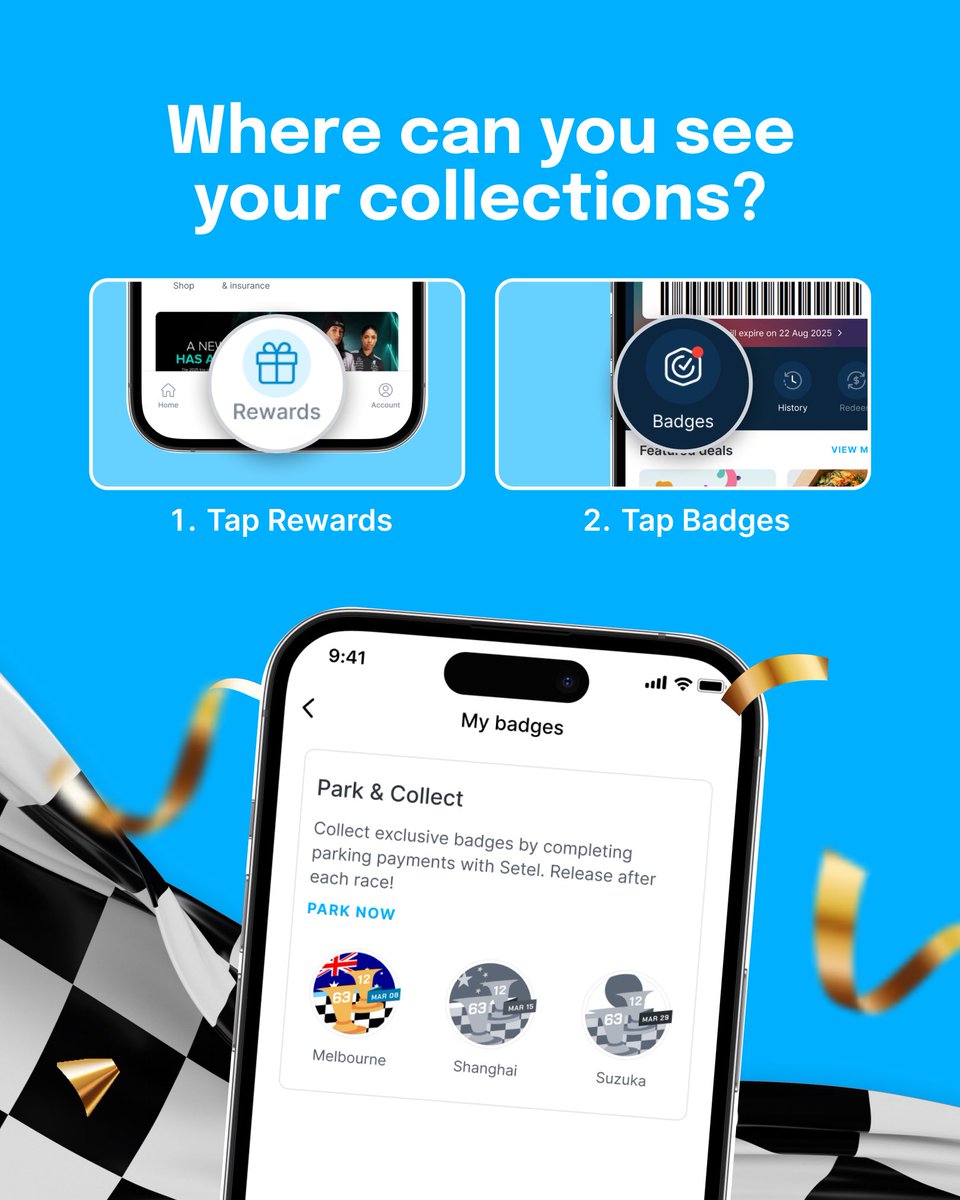
🔥 Victory never felt so good! Celebrate this momentous occasion… park and pay with Setel before 15 March to grab your exclusive Australian Race Badge and kickstart your collection.
More badges are dropping at the next races… collect them all and build the ultimate race badge collection! ✨
*This campaign is independently created by Setel and is not affiliated with, endorsed by, sponsored by, or officially associated with any motorsport events, organisers, or rights holders.
1. Define the problem and solution
2. Design the workflow and decision logic
3. Break the build into manageable steps
4. Pivot based on real-world output (and failures)
The result? An internal tool that analyses, critiques, and optimises content drafts in under 60 seconds.
A year ago, this would have required a full team and several sprints.
Recently, I built it over a 4-day weekend using Gemini and Google AI Studio. This experience completely changed how I think about product building. 🧵
We’re in an era where aspiring PMs or enthusiasts no longer need to wait for permission, resources, or “perfect timing” to ship value. It was classic product thinking.
Junior PM: "The CPO just killed my roadmap. Again. Three months of research and she wants us building something completely different."
Senior PM: "What did she actually say when she made that call?"
Junior: "She said the board wants to see faster growth in enterprise. So now we're pivoting to enterprise features nobody asked for."
Senior: "Did anyone ask you why your roadmap would drive enterprise growth?"
Junior: "...No. They just announced the change in the all-hands."
Senior: "Walk me through the last month. How many times did you present your strategy to leadership?"
Junior: "I mean, I shared the roadmap doc. And presented at the quarterly review."
Senior: "And between those moments?"
Junior: "I was heads down executing. That's my job, right?"
Senior: "Here's what I learned the hard way. When leadership overrides you, it rarely means your strategy was wrong. It usually means you were invisible during the decision-making window."
Junior: "But I shouldn't have to constantly sell my own work."
Senior: "You're not selling. You're building shared context. Big difference."
Junior: "So you're saying if I had talked to the CEO more, she would have kept my roadmap?"
Senior: "I'm saying she made a decision with the information she had. You weren't part of that information. The board meeting happened. You weren't there. The strategy conversations happened. You weren't there either."
Junior: "That feels political. I got into PM to build products, not play politics."
Senior: "Influence isn't politics. It's making sure decision-makers understand the tradeoffs before they decide. Politics is manipulating after the fact. Influence is informing before."
Junior: "So what should I have done differently?"
Senior: "Before your roadmap was finalized, did you know what the board was worried about?"
Junior: "Not really."
Senior: "That's the gap. You built a strategy in isolation. Leadership built theirs in a different room. Both were probably reasonable. Yours just wasn't in the room when it mattered."
First time founder vs Second time founder:
first time founder: guards idea like state secret
second time founder: shares idea freely, knows execution is everything
first time founder: hires fast to look like a real company
second time founder: stays skeleton crew until absolutely necessary
first time founder: gets office space to feel legitimate
second time founder: works from apartment until bursting at seams
first time founder: chases TechCrunch coverage
second time founder: chases revenue and user growth
first time founder: panics when competitor raises money
second time founder: sees competition as market validation
first time founder: romantic about original vision
second time founder: pivots on weak signals
first time founder: raises maximum possible at highest valuation
second time founder: raises what’s needed with clean terms
first time founder: hides problems from investors
second time founder: radically transparent in updates
first time founder: takes every meeting request
second time founder: ruthlessly protects calendar
first time founder: tracks vanity metrics
second time founder: obsesses over 2-3 metrics that actually matter
first time founder: messy cap table with advisors getting equity
second time founder: clean cap table, minimal parties
first time founder: optimizes for highest valuation
second time founder: optimizes for control and favorable terms
first time founder: waits for perfect product
second time founder: ships broken and iterates
first time founder: recruits on vision and potential
second time founder: recruits on traction and momentum
first time founder: overengineers for scale
second time founder: duct tapes until product-market fit
first time founder: tries to boil the ocean
second time founder: dominates tiny niche first
first time founder: seeks consensus on decisions
second time founder: decides and moves fast
first time founder: takes all advice equally
second time founder: filters advice through own framework
first time founder: splits equity equally with cofounders
second time founder: splits by contribution with vesting cliffs
first time founder: comfortable until 3 months runway left
second time founder: raises next round at 12 months runway
Jeff Bezos explains the “releasing the work” framework he used to build Amazon
In the early days of Amazon, Jeff Bezos had too many ideas.
Then Jeff Wilke, a new Amazon executive at the time, told his boss, “Jeff, you have enough ideas to destroy Amazon.”
“This was just a shocking idea for me,” Bezos recalls. “As a founder, I had the great luxury of always being able to hire my tutors. I would hire these experienced, senior executives . . . And I would listen to them and they would teach me.”
When Bezos asked Wilke what he meant by this, Wilke responded, “You have to release the work at the right rate so that the organization can accept it.”
Bezos reflects on this point:
“Every time I released an idea, I was creating a backlog of work in process. And because it was just stacking up, it was adding no value. In fact, it was creating distraction . . . This sounds so obvious, but it was not obvious to me at the time. And this was a profound insight for me. So I started prioritizing the ideas better, keeping lists of them, and keeping ideas to myself until the organization was ready for the ideas.”
He continues:
“I also started figuring out how to build an organization that can be ready for more ideas. That’s about having the right senior team and leadership and giving those people the executive bandwidth so they could do more ideas per unit of time. And that is what we built. We built a company that’s very good at inventing and doing more than one thing at a time. And as the company gets bigger, you do want to be able to do more than one thing at a time. But that idea of ‘releasing the work’ was very profound for me. It made us operationally more effective while still being inventive.”
Video source: @Reuters (2025)
Diagnose with data. Treat with design.
One is the yin and the other the yang. They follow each other in an infinite cycle.
Data is the process of deeply understanding reality as it *is*.
Design is the process of designing future reality as it *could be*.