Standard conformal prediction methods for trajectories are typically prone to miss safety-critical blind spots.
Our work addresses this by providing guarantees for continuous-time trajectories! https://t.co/7SnLPAwydO
✍️ Joint with M. Sesia, J.V. Deshmukh and @LarsLindemann2
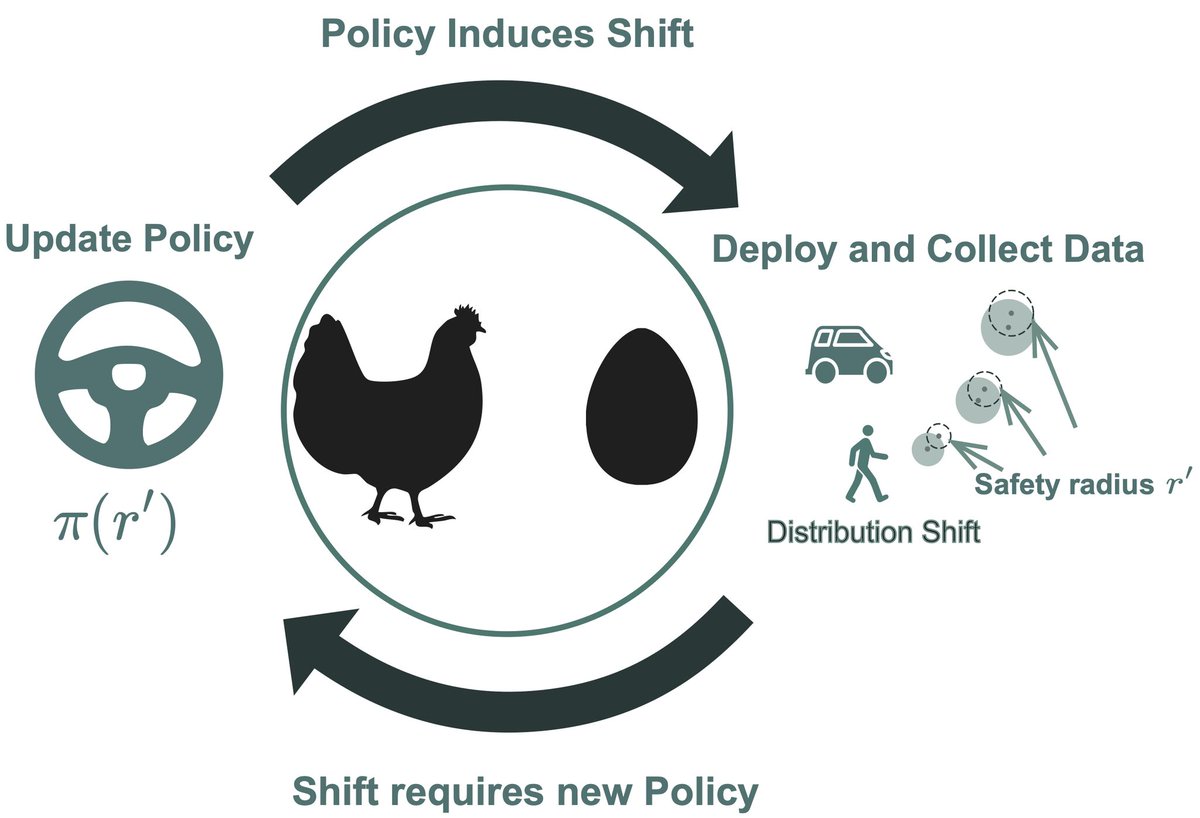
@ult_flymachine just joined my new lab at ETH and directly dropped an absolute brick of a paper: https://t.co/NkzSFetMjn 🚀The paper addresses interaction-induced distribution shifts in interactive environments via iterative policy updates and adversarial conformal prediction.
I gave an in-depth tutorial on "Formal Verification and Control with Conformal Prediction" at KTH today 🚀 Since I got positive feedback, I wanted to share the presentation, in the hope that others can also benefit from it 🙂 Find the recording here: https://t.co/WWsb64l7eO
We have made an update on our paper "Conformal Predictive Programming" available at https://t.co/tebr6Gf76Y. The updates include more detailed comparison to existing Chance Constrained Optimization Methods and generalization to conditional guarantees, etc.
Our 2025 RSS workshop on "Statistical Uncertainty Quantification in the Era of AI-Enabled Robots" got accepted. We have an amazing lineup of tentative speakers, see https://t.co/TiTnu8pYAp 🚀 The workshop will be held at USC on June 25th (and we guarantee excellent weather 🏖️🌴)
🚨 New Textbook on Conformal Prediction 🚨
https://t.co/n2gcyiOM7k
“The goal of this book is to teach the reader about the fundamental technical arguments that arise when researching conformal prediction and related questions in distribution-free inference.
Many of these proof strategies, especially the more recent ones, are scattered among research papers, making it difficult for researchers to understand where to look, which results are important, and how exactly the proofs work.
We hope to bridge this gap by curating what we believe to be some of the most important results in the literature and presenting their proofs in a unified language, with illustrations, and with an eye towards pedagogy.”
We are looking for feedback — and this is only a draft, with Part 4 coming soon! Please reach out!
With Rina Foygel Barber and @stats_stephen
Machine learning has led to predictive algorithms so obscure that they resist analysis. Where does the field of traditional statistics fit into all of this? Emmanuel Candès asks the question, “Can I trust this?” Tune in to this week’s episode of “The Joy of Why” with co-host Steven Strogatz. https://t.co/Euw15rCDwy Or read the transcript: https://t.co/CDEf2XNX2i
Excited to share that our paper "Self-Calibrating Conformal Prediction" with @_ahmedmalaa is accepted at #NeurIPS2024! 🚀
We combine model calibration and prediction intervals by integrating Venn-Abers into conformal prediction. #conformal#calibration
https://t.co/u25RGnPWmQ
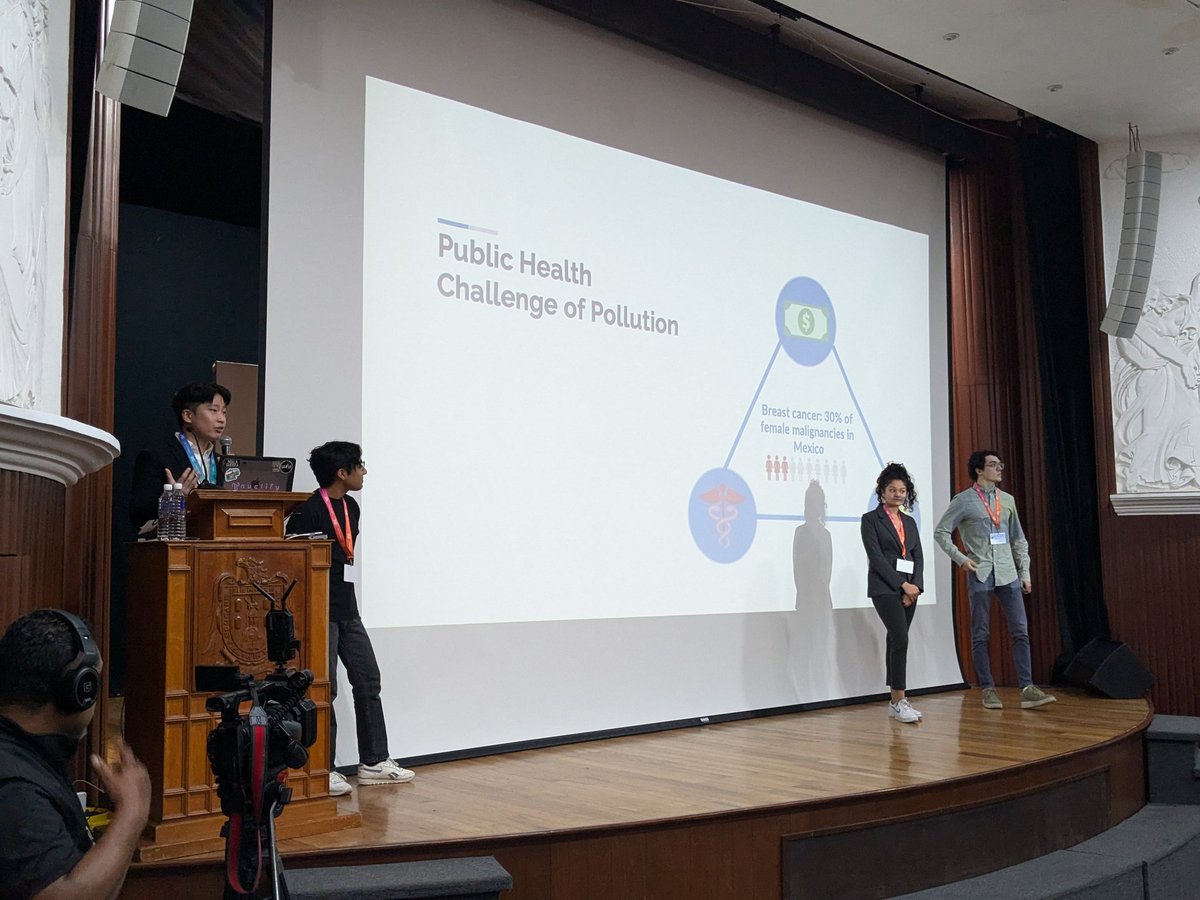
First up, Team ALMA 💝! Presenting are a team of undergraduate researchers from @Harvard who propose a holistic, community-centered approach, addressing gaps in education, access, and support for early detection in underserved areas. 💡
@MIT_CSAIL Loved the final part where Katherine talks about the importance of staying true to oneself, despite what’s trendy if that doesn’t align to your genuine interests :)
📈 Online Conformal Prediction with Decaying Step Sizes 📈
Come to the ICML morning poster session, Hall C 4-9 #1414, to learn about:
✅ long-run coverage guarantees for adversarial sequences
✅ simultaneous probabilistic coverage guarantees for iid sequences
see you there!
NeuralGCM is a method that combines traditional physics-based modeling with ML to accurately and efficiently simulate Earth's atmosphere. Learn how NeuralGCM marks a significant step towards developing more powerful and accessible climate models. → https://t.co/85cmhUjPfv
Excited to share new work from @GoogleDeepMind / @GoogleResearch on improving LLM evals using ML predictions together with a simple but effective stratified sampling approach that strategically divides the underlying data for better performance.
Paper: https://t.co/RQ7zSFbqyS
It is interesting to see that the log-likelihood in that case is the negative of a binary cross-entropy loss. Kind of duality in optimization. 🤩. Maximizing the likelihood is equivalent to minimizing the binary cross-entropy