I’m happy to share that our paper, "InfoQ: Mixed-Precision Quantization via Global Information Flow" of which I am the first author, has been accepted to AAAI-26!
I look forward to presenting this work in Singapore 🇸🇬 Let's chat if you'll be there!
https://t.co/yJjyAlwg7l
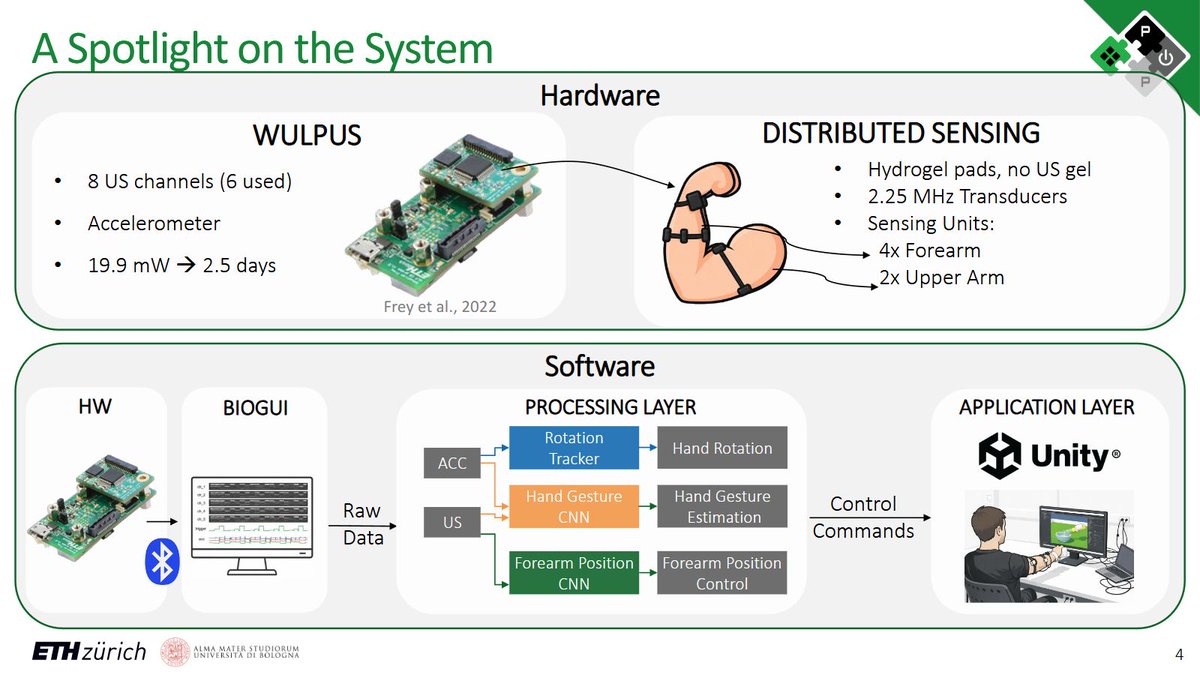
Giusy's #IEEESMC2026 slides "A Wearable Multimodal Ultrasound+Inertial System for Real-Time Virtual Reality Interaction" are now online: https://t.co/hczNHEYyZg See also https://t.co/6MVMHoVIbN & https://t.co/2BpGkF3bBC & https://t.co/gAkXEPDv1T
MemFLoRA: Memory-Floor LoRA for CNN Adaptation at the Edge
https://t.co/sLrAC1bYDg [𝚌𝚜.𝙻𝙶 𝚌𝚜.𝙰𝙸]
💬Accepted at the 32nd Asia and South Pacific Design Automation Conference (ASP-DAC 2027), January 25-28, 2027, Tokyo, Japan. Code: https://t.co/HeQXf5b5RU
@bxhdir burs olması çoğu kişinin fikrini değiştiriyor biraz da. almanya'da aile desteği olmadan okumak, hadi iş bulacağım diye gitmek de çok iddialı, o sebepten soranlarla önermiyorum. Ama akademi işi biraz farklı o alan isteniyorsa X alanındaki Y hocası için bir üni seçilebilir bence.
@bxhdir kendi alanımdan verebileceğim en basit örnek PuLP platformu energy-efficient computing architectures için. Bologna'dan çıkma open source bir proje.
@bxhdir Yl sonrası çalışmak için tatmin eden ücretler ve fırsatlar yok. Ama başarılı akademileri, labları ve o labların grantları var. Akademi odaklı, PhD vb. düşünülüyorsa bu dediklerinize katılmıyorum. Çok başarılı lablar var çoğu üniversitede (polimi, bologna, trento, polito etc)
People seem excited about this. Idk, I think this is horrible. There is nothing poetic about coldly releasing hundreds of solutions to problems that could have been inspiring stories (e.g., Andrew Wiles). Using AI is fine; turning maths into a race won with concentrated resources is disgusting.
@GaryMarcus isn't proposing the proof itself the hard part rather than verifying it? yes we dont know how many "proof candidates" are just poured into it maybe it is just exploiting the compute power, but still it looks like a big big big step from today
releasing my local AI slide deck
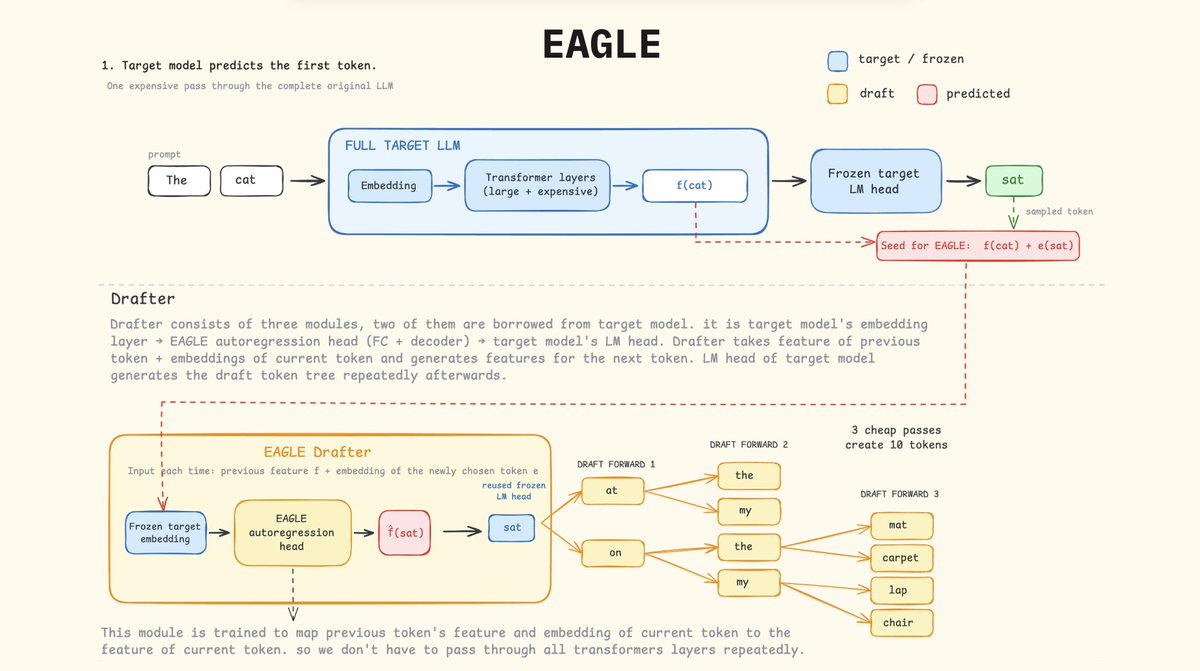
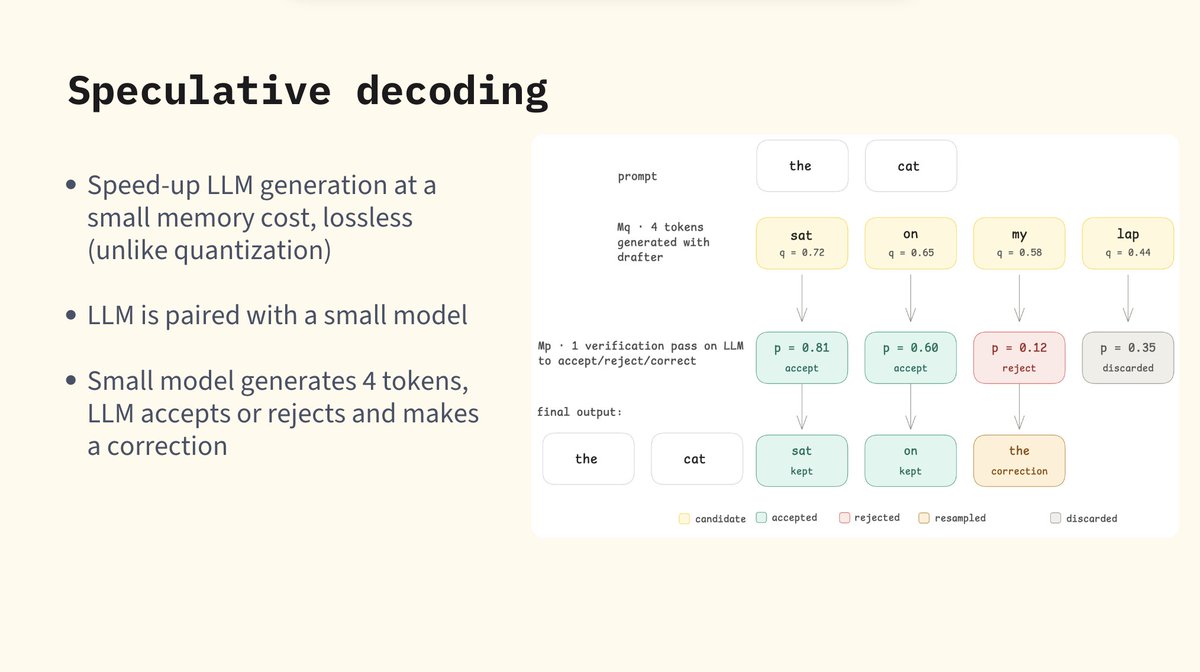
covers from prefill vs decode, MoE vs dense, VRAM vs unified memory, quantization to speculative decoding, everything with llama.cpp
feel free to reuse with attribution
Compute kernels are really interesting!
They are just a list of instructions (like any other computer program) but can be run parallely on a LOT of compute units (SMs in NVIDIA GPUs for example).
This week I will try to help folks understand how to use pre-builts kernels. 🔥
https://t.co/wy0DIvnA1K
Open-source magnetic tactile sensor for $5! 🧲
Researchers from New York University introduced a magnetic tactile sensor that's low-cost, and easy to fabricate, democratizing tactile sensing for robotics.
Operating in unstructured environments like homes and offices requires robots to sense forces during physical interaction. Yet the lack of a versatile, accessible tactile sensor has led to fragmented solutions and often force-unaware, sensorless approaches.
Building an eFlesh sensor requires four components: a hobbyist 3D printer, off-the-shelf magnets (less than $5), a CAD model, and a magnetometer circuit board.
The sensor is 3D printed with magnets embedded in the middle layer. Based on chosen mechanical properties, magnets displace in response to contact forces, measured by a magnetometer underneath.
An open-source design tool converts simple OBJ/STL files into 3D-printable STLs. This enables application-specific sensors for robot hands, grippers, quadruped feet, and more.
Slip detection generalizes to unseen objects with 95% accuracy. Visual-tactile control policies improve manipulation by 40% over vision-only baselines, achieving 90% success on precise tasks like plug insertion and credit card swiping.
All design files, code, trained models, and conversion tools are openly available.
🔗 Project page: https://t.co/NRx2IhWtuj
~~
♻️ Join the weekly robotics newsletter, and never miss any news → https://t.co/GoA3ZuwoPB
I know, I know… yet another Looped MoE Transformer. But hear me out.
1/9 Looped MoEs are going mainstream: GPT-6 is reportedly one. Yet the community still isn’t convinced they beat standard MoE at matched FLOPs.
The catch: gains saturate as you add loops. Open-source recipes typically stop at 2 loops, because extra loops don’t pay for their extra compute. We hit the same wall with looped MoEs a year ago: https://t.co/iaOSVhdHoj
So the question is:
Can looped MoEs benefit from more than 2 loops, and beat their non-looped counterparts at iso-FLOP?
We introduce LOOM, a unified recipe that breaks two barriers to deeper recurrence: the curse of depth and expert-selection collapse. LOOM stabilizes hidden states, diversifies expert computation, and preserves information across loops.
Across 100M–1.7B models, LOOM trains stably with 9–12 loops.
• At iso-FLOP, our 700M model reaches its lowest perplexity at 5 loops.
• Without FLOP matching, our 1.7B model performs best at 9 loops.
Paper: https://t.co/JmACm0bh1I
Details below 👇
arXiv and every other academic venue is being denial of serviced with slop submissions. It feels like every pillar of what I grew up with as a (self-taught) grant funded machine learning researcher is being disrupted. The driving research is being done privately and in secret or is published partially as marketing by closed labs. Academia is publishing research papers on black box commercial products (e.g. the OpenAI API) and academics are often marginalized unless they build up large social media and press followings. https://t.co/QhRUsTiUX3 is full of slop unless you filter by affilitation or trusted author. This obviously isn't just machine learning it's metastasizing across every discipline. Now's the time for bold proposals on the structure of the scientific enterprise.
pov: live in munich. see its good weather. grab your coworkers on a weekday. drive 1h and you are in the alps. be back at 6pm to have dinner with your family.
Sıralamalardaki değişim birilerini epey eğlendirmişe benziyor. Espriler bittiyse işin ciddi tarafını konuşalım.
Boğaziçi Üniv. Bilgisayar Müh.'nin taban sıralaması (342, 327, 315) ile tüm branşlarda 1. sırada yer aldığı dönemde bölüm başkanlığı yapmış kişi olarak yazıyorum. +++
Can Diffusion LLM learn from its own future?
In our new paper, we introduce d-OPSD, A on-policy self-distillation framework for DLMs.
Instead of forcing AR-style prefix/token supervision onto dLLMs, we exploit their arbitrary-order generation: self-generated answers become suffix-conditioned “future experience,” and training happens via step-level divergence.
This simple shift makes self-distillation naturally fit the denoising process.
Across four reasoning benchmarks, d-OPSD outperforms or matches SFT/RLVR baselines, while using only ~10% of RLVR optimization steps.
Paper: https://t.co/b3ZZrF0Tid
Interesting. Maybe we should only accept papers as chalk talks in ML/AI conferences from now on as part of the final review phase to be accepted into their proceedings. AI-aided research is OK, but not being able to defend a paper with your name on it is not.
My PhD thesis is finished! It's all about making reinforcement learning agents more adaptive to changes in their environment. Here's the audio summary by NotebookLM.
See the full pdf on my website (link below)









![Memoirs's tweet photo. MemFLoRA: Memory-Floor LoRA for CNN Adaptation at the Edge
https://t.co/sLrAC1bYDg [𝚌𝚜.𝙻𝙶 𝚌𝚜.𝙰𝙸]
💬Accepted at the 32nd Asia and South Pacific Design Automation Conference (ASP-DAC 2027), January 25-28, 2027, Tokyo, Japan. Code: https://t.co/HeQXf5b5RU https://t.co/5O8h7EiF8f](https://pbs.twimg.com/media/HUUvCmUXgAA2_0a.png)