STAY WITH ME.
A few years ago, a patient was referred to me because he was diagnosed with complicated cirrhosis. He had an infection which led to a condition called hepatic encephalopathy (brain failure due to high ammonia levels). The treatment largely involved ammonia reducing therapies. One drug was central to this - Rifaximin - a non-absorbable antibiotic that reduced ammonia in the body. I prescribed him Rifaximin for 6 weeks and advised him follow-up.
He came back to me, not after six weeks, but in 4 weeks, this time, in liver coma (worst stage of brain failure - due to very high ammonia). He spent two days in the ICU and six days in total in the hospital. His hospital bill was close to INR 80,000. He had no insurance and his wife borrowed the money from neighbors and friends to clear hospital dues.
Upon questioning, I found that he was not taking the Rifaximin drug I had prescribed. He was only on the other two drugs (one, a syrup called lactulose for improving ammonia clearance in gut). I was furious, because the patient spent a whole week unecessarily in the ICU and wasted so much money that he never had - just because he was "not compliant" to my orders. I decided it was time for me to school him a bit.
But I was wrong. He was compliant. He had purchased Rifaximin and was on it. For 15 days. Thereafter, he could not afford it. He was an autorickshaw driver who shuttled school children every morning and evening. He could hardly make ends meet. He had two children of his own. The Rifaximin brand I prescribed him was 42 rupees per tablet. He had to consume two a day - which would mean 2520 rupees a month. He just did not have that money - so he skipped it - to not compromise on other important matters - childrens education and food.
He was confused and scared about opting for a cheaper version of Rifaximin because one, he was unsure about the quality of Rifaximin that was not prescribed by me and two, he was "scared" that I would scold him for buying a cheaper Rifaximin and if that got him into trouble.
I was confused and scared about prescribing a cheaper version of Rifaximin because one, I was unsure about the quality of Rifaximin that was not "a good promoted brand" and two, I was "scared" that his family would scold me for prescribing a cheaper Rifaximin and if that got him into trouble.
It is heartbreaking that many doctors still simply don’t trust generic medicines. Too often, they worry that these cheaper options are lower quality or might cause more problems than the big, famous brands. This fear leads them to prescribe expensive drugs instead, and the real tragedy is that it pushes vital healthcare out of reach for the ordinary people who need it most - like my patient.
This narrative, that generic drugs 'are never good' and that only big pharmaceutical marketed drugs are what works has been deeply ingrained into doctors and patients alike - I do not know by whom and since when. Looking back, these strong emotions were based on either opinions, testimonials or second- and third-hand information. Not evidence.
Like I said. Stay with me. This is life changing and will disrupt the drug market in India. Here are the results of The Citizens Generic vs. Brand Drugs Quality Project.
1/11
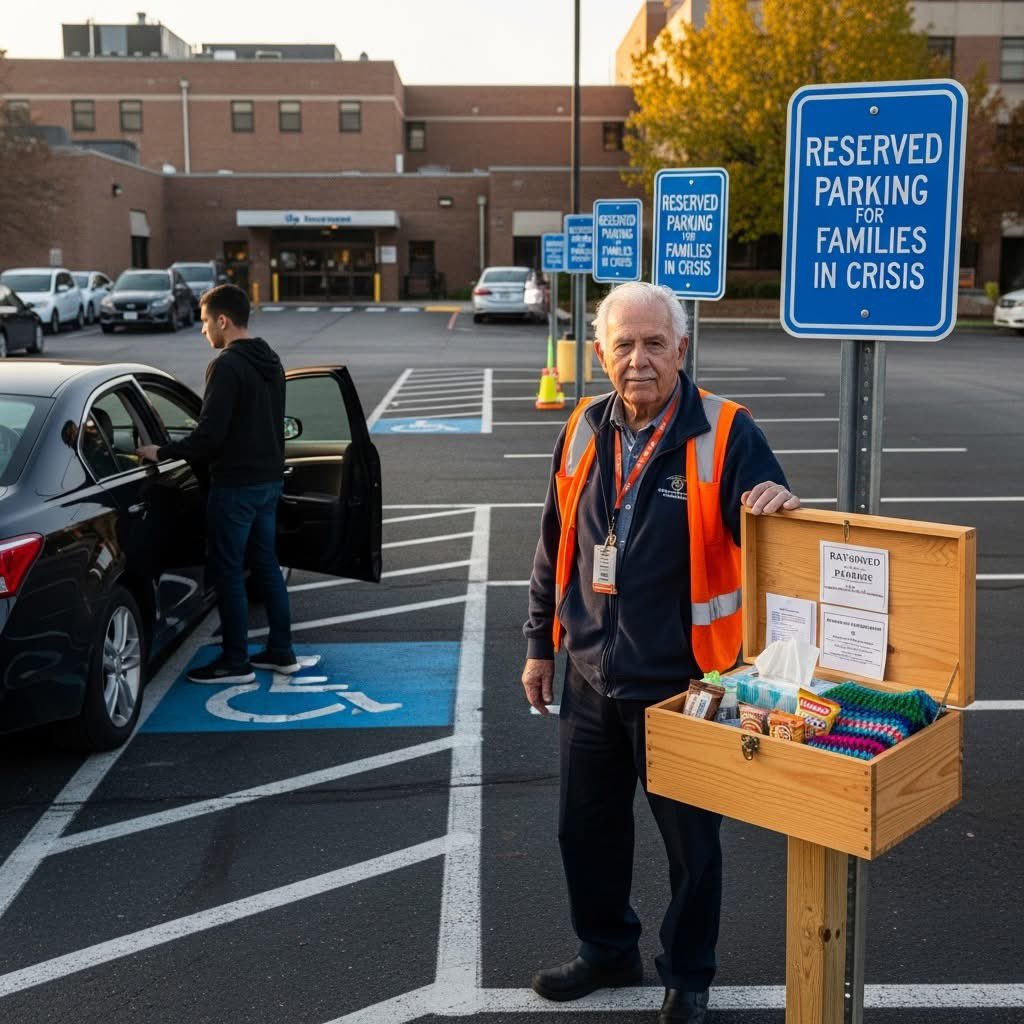
"My name's Raymond. I'm 73. I work the parking lot at St. Joseph's Hospital. Minimum wage, orange vest, a whistle I barely use. Most people don't even look at me. I'm just the old man waving cars into spaces.
But I see everything.
Like the black sedan that circled the lot every morning at 6 a.m. for three weeks. Young man driving, grandmother in the passenger seat. Chemotherapy, I figured. He'd drop her at the entrance, then spend 20 minutes hunting for parking, missing her appointments.
One morning, I stopped him. "What time tomorrow?"
"6:15," he said, confused.
"Space A-7 will be empty. I'll save it."
He blinked. "You... you can do that?"
"I can now," I said.
Next morning, I stood in A-7, holding my ground as cars circled angrily. When his sedan pulled up, I moved. He rolled down his window, speechless. "Why?"
"Because she needs you in there with her," I said. "Not out here stressing."
He cried. Right there in the parking lot.
Word spread quietly. A father with a sick baby asked if I could help. A woman visiting her dying husband. I started arriving at 5 a.m., notebook in hand, tracking who needed what. Saved spots became sacred. People stopped honking. They waited. Because they knew someone else was fighting something bigger than traffic.
But here's what changed everything, A businessman in a Mercedes screamed at me one morning. "I'm not sick! I need that spot for a meeting!"
"Then walk," I said calmly. "That space is for someone whose hands are shaking too hard to grip a steering wheel."
He sped off, furious. But a woman behind him got out of her car and hugged me. "My son has leukemia," she sobbed. "Thank you for seeing us."
The hospital tried to stop me. "Liability issues," they said. But then families started writing letters. Dozens. "Raymond made the worst days bearable." "He gave us one less thing to break over."
Last month, they made it official. "Reserved Parking for Families in Crisis." Ten spots, marked with blue signs. And they asked me to manage it.
But the best part? A man I'd helped two years ago, his mother survived, came back. He's a carpenter. Built a small wooden box, mounted it by the reserved spaces. Inside? Prayer cards, tissues, breath mints, and a note,
"Take what you need. You're not alone. -Raymond & Friends"
People leave things now. Granola bars. Phone chargers. Yesterday, someone left a hand-knitted blanket.
I'm 73. I direct traffic in a hospital parking lot. But I've learned this: Healing doesn't just happen in operating rooms. Sometimes it starts in a parking space. When someone says, "I see your crisis. Let me carry this one small piece."
So pay attention. At the grocery checkout, the coffee line, wherever you are. Someone's drowning in the little things while fighting the big ones.
Hold a door. Save a spot. Carry the weight no one else sees.
It's not glamorous. But it's everything."
Let this story reach more hearts....
Credit: Mary Nelson
@Sona_unplugged Hi ma’am,
I’m doing well by God’s grace, hope you’re doing great too. I may not always have the answers, but I’ll surely try my best.. if needed, I’ll get help from my seniors here. 😊
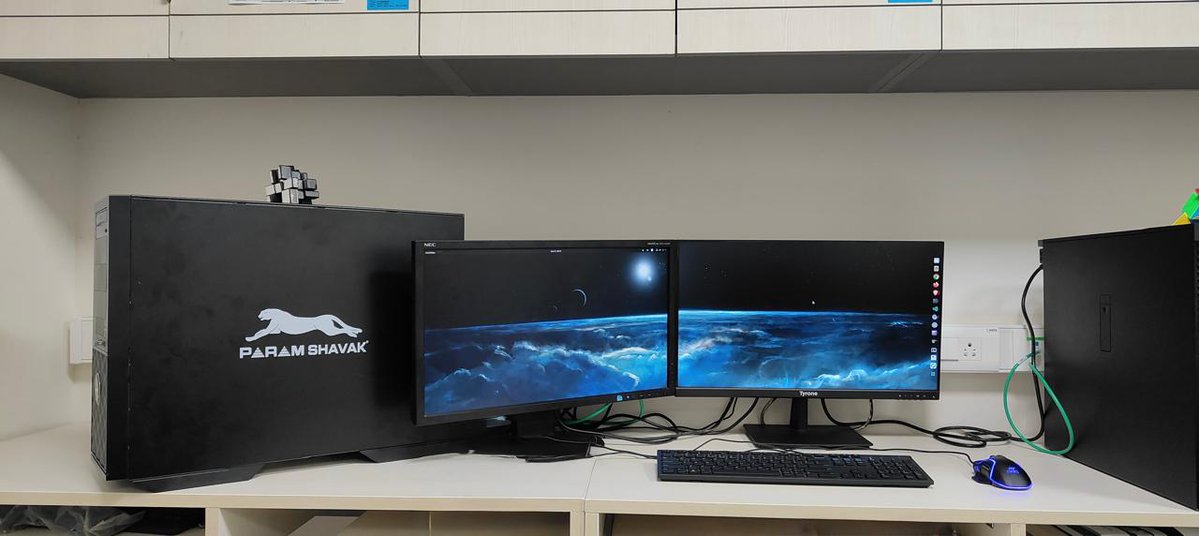
Dept of #RadiationOncology inaugurates #PARAMShavak#Supercomputer @ the CMC Vellore Ranipet Campus to enhance #MedicalResearch capabilities through high-performance computing.
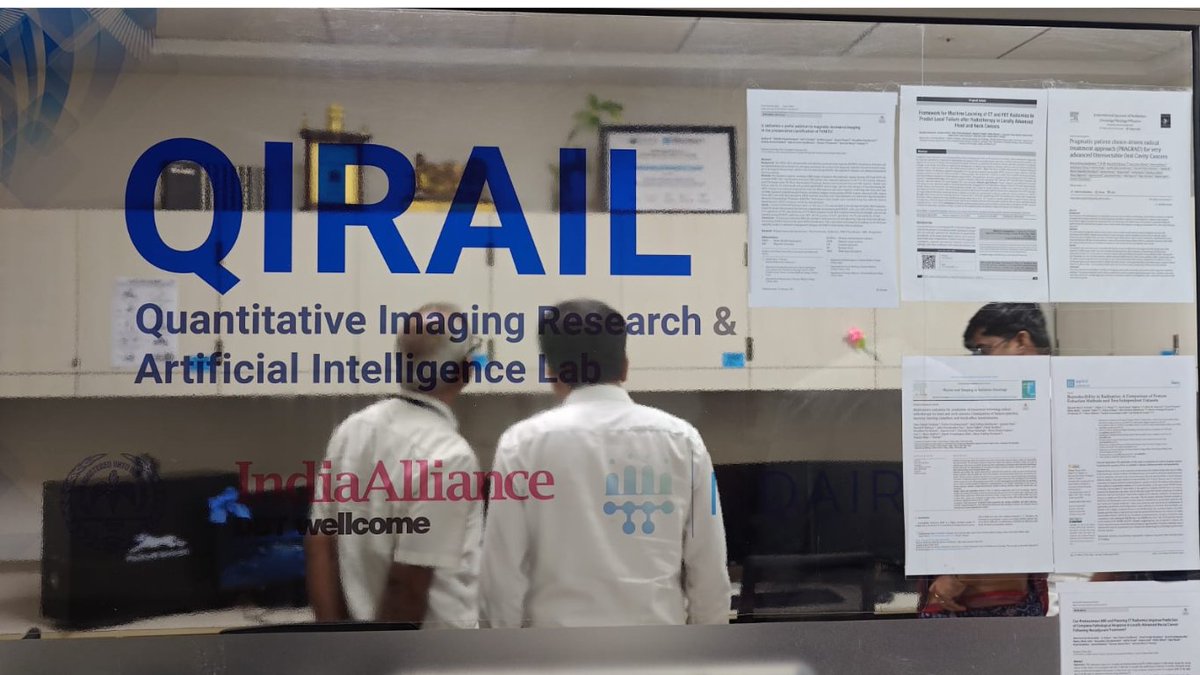
The "supercomputer in a box" was developed by @cdacindia in collaboration with CMC's QIRAIL (Quantitative Imaging Research & #ArtificialIntelligence Lab) & BMIU (Biomedical Informatics Unit).
Supercomputers are designed to handle complex calculations & large amounts of #data, exceeding the capabilities of general-purpose #computers.
@HBalukrishna@joy_mammen
The @IntDiabetesFed has formally recognised #Type5diabetes, as a serious from of malnutrition-related condition.
Working group formed to study and develop diagnostic criteria led by Professor Peter Schwarz.
The group is co-chaired by Dr. Meredith Hawkins from the Albert Einstein College of Medicine and Dr. Nihal Thomas, Senior Professor of Endocrinology at the Christian Medical College Vellore.
"Type 5 diabetes is sporadic presently, not endemic. Malnutrition should be tackled, but there are enough of other reasons which need its attention," explains Dr Thomas.
To know more:
https://t.co/2SHXbZJw6J
#Malnutrition #DiabetesAwareness
1. The 35 year old who died last week. You don't know him. I do.
He was a young hypertensive. 3 rd admission. Never wanted to take meds. Never wanted to evaluate for why he was hypertensive since 28. Started a good keto diet, lost weight. Had a headache. Bleed in the brain. Died
A proud moment for the Indian endocrine community-
Prof Thomas Paul of @OffCMCVellore has been awarded the Clinician of the Year
by the International Society for Clinical Densitometry (ISCD).
His contribution to the bone and mineral field is outstanding and I am delighted that he is getting recognition globally!
@iscd@ISBMRTweets@IndiaESI@isendo@iof
#endocrinology #osteoporosis
Recently I learned that breast milk subsitute manufacturers lobbied with governments across the world to reduce maternity leaves. To sell their formula milk more.
I don't believe in heaven and hell, but for the first time, I wish hell exists and these guys go straight there