Everyone has a story to tell.
In this podcast with @HackerEarth, I talk about my professional journey, highlight exciting software development innovations and share what brings me true joy.
https://t.co/McQHFmHwhf #technology#programmer#techie#podcast
In 2020 when I joined @kunalb11 at CRED, I was drawn to the incredible team and a contrarian idea – “not everyone gets it”
we had ~1M members & $750M TPV
fast forward to 2026, CRED’s impact among India’s most creditworthy is clear, we now serve 17M members & process $100B in TPV
we’ve built with taste, always keeping our members' trust & financial progress as our north star
this momentum is the outcome of ambition, craft, ownership and relentless standards of our team at CRED.
Meta’s $900M minority investment is a booster in our plans to build an enduring institution with an eventual public listing. Meta will be a passive financial investor with no-access to customer data.
Kunal: thanks for being thankless and always 5x-ing each target.
proud to build the next phase of CRED with the best team in Indian fintech.
back to work 🚀
On the back of the recently proposed (now paused) Karnataka bill mandating reservations for locals in the private sector, the ensuing criticism, and the criticism of the criticism, here comes a heartwarming new ad for WhatsApp made by BBDO India and directed by Shimit Amin. In fact, the film itself has a mild whiff of his film, Rocket Singh!
Ikbir, the young Sardar chef, who comes to Bengaluru to join a hotel, is shown to be lost, initially, because he is unable to relate to the cultural milieu, but his mother's words inspire him to use food as a route to win over his colleagues. Food is a universal language by itself, and his effort to make a local cuisine (Bisi Bele Bath) helps bridge the first step.
But he doesn't stop with food. He makes an effort to learn and speak Kannada too. So, while he may not be fluent in Kannada, or familiar with the local culture, he makes an earnest effort to explore, understand, and appreciate them (including celebrating Ugadi), instead of assuming that the local population needs to learn a language that he is comfortable with (Hindi, as a bridge) and that he can continue to ignore/overlook the local culture. In his line of work, the local culture manifests in the form of food, thankfully.
The locals are not shown to be intolerant. They bond among themselves, but they also make an attempt to get Ikbir to feel welcome (asking the chat group to keep the conversation in English) once they understand that he is making an honest effort to adapt.
The human story in this ad is truly wonderful. Where I felt it fell short is its link with WhatsApp. Except 'Verified Business' (the 'Spoken Kannada' business handle), the other features don't seem to be explored adequately. Shwetha's WhatsApp message comes with added context ('Block', 'Add', 'Not a contact. No common groups') but the story has no context to explore them. Ditto with the 2-step authentication or end-to-end encryption that are shown when Ikbir opens his voice messages or does a video-call with his mother. Most users take these for granted, so unless these are explored further, their presence in the script seem perfunctory.
#advertising #marketing #creative
Meeting one of my role models, @milindrunning, and his wonderful family at the “Keep Moving” book signing was an absolute delight! They are a true inspiration, showing us all how to stay young in both mind and body. 🏊 🚴🏃🧘♂️
My favorite speech about America was Reagan's last speech as president. He talks about what makes America great - immigrants.
I tear up watching it, especially the last bit.
highly recommend spending 4 mins to watch
🇺🇸🇺🇸🇺🇸🇺🇸
Truly inspired by Jensen Huang's insightful discussion on topics ranging from failure to greatness, accelerated computing, and AI. His explanation of 'token factories' particularly resonated with me. #stripesessions24@stripe
Jensen, the founder of NVIDIA, said something that triggered me today at the Stripe event.
He compared the Industrial Revolution's conversion of water (atoms) to electricity (electrons) to a modern process of converting electricity to tokens.
He introduced the concept of 'token factories' where electricity is the input, and tokens (text, large language models, images, etc.) are the output.
Wild to see how he’s thinking many steps ahead to a future we’re about to enter.
Jensen, the founder of NVIDIA, said something that triggered me today at the Stripe event.
He compared the Industrial Revolution's conversion of water (atoms) to electricity (electrons) to a modern process of converting electricity to tokens.
He introduced the concept of 'token factories' where electricity is the input, and tokens (text, large language models, images, etc.) are the output.
Wild to see how he’s thinking many steps ahead to a future we’re about to enter.
San Francisco post-mortum.
Tl;dr: Absolute top-tier city if you pretend downtown doesn’t exist.
Literally, just never set your set a feet into the inner-city part and you’re going to have an amazing time.
❌ The bad:
• Downtown (Tenderloin & SoMa) is a zombie wasteland and depressing to be in.
• You could feel the vibe in the surrounding areas was off too by the people living there, which I can’t blame the honestly lol.
✅ The good:
• The energy here is infectious. Everyone’s building something and trying to make a name for themself and it feels very inclusive.
• There are parks EVERYWHERE. I dont think I’ve ever visited a city with this many parks. Then you head “out” of the city and there are even more parks and nature areas.
• It feels super cycle friendly. I cycled from the North to the West to the South for like 30+ miles and it was either bike lanes (because parks) or roads with dedicated bike lanes. There are Lyft bike racks almost anywhere in the city to pick one up or swap for freshly charged one.
• When I think about America, I think of big roads and huge cars. SF has sidewalks everywhere and honestly felt very European in that way.
• It’s alive. There are people everywhere, but not in a crowded bad way. Everyone’s doing their own activities, working out, walking with their family.
• Foods delicious and super fresh, but hella expensive! There are barely any fast-food joint anywhere too which was so odd.
• Everything in the city is like a 20 minute drive and you’re in some other part of town that feels completely different. From huge towers and big hills, to suddenly on the beach.
• People are hella friendly.
📍Locations I loved
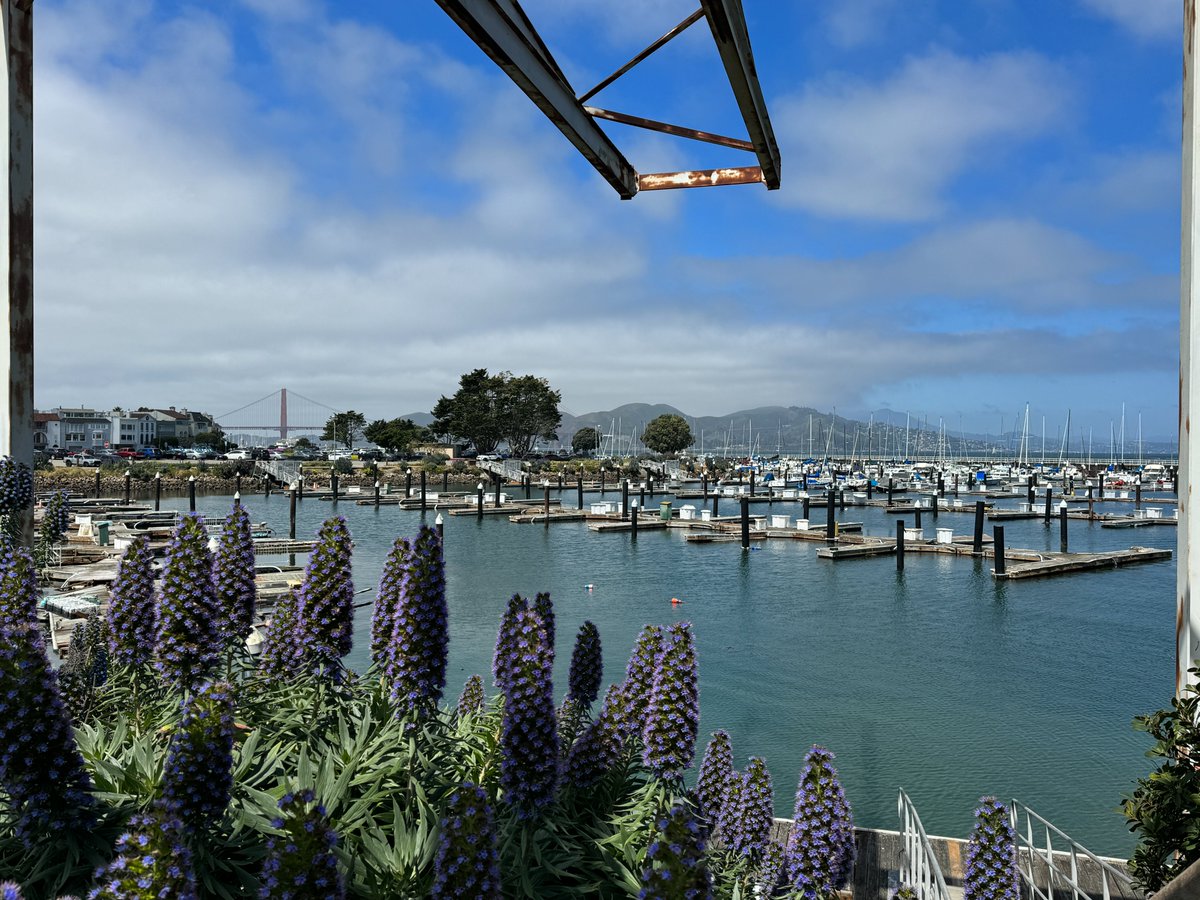
• Marina/Fort Mason: North part of town, beautiful Victorian houses at the water front with view over Golden Gate bridge surrounded by parks.
• Russian Hill: Super high hills with stunning views over the city.
• Haight: Very walkable, young vibes with lots feeling very alive. Bonus points for the beautiful Victorian houses.
• Mission: Great food over here.
• Golden Gate Park area: I just loved to watch old people play with their miniature boats at the park. Very relaxed low key + gorgeous beach on the west side.
• Pacifica (technically not part of the beach, but WOW)
Honestly, I’ve been having an absolute blast and kinda sad to leave after 7 days. I’ll be back!
If you’re skipping on coming here because of some anon on Twitter is posting bad stuff, you’re really missing out.
I found a guy who goes around the US asking 70 to 100-year-olds their:
• Biggest Regrets
• Biggest Lessons
• Advice to their younger self
Oddly enough, most of their answers are the same…
Here are my top 8:
Your health is being destroyed by chronic inflammation and insulin resistance.
Big Pharma led you to believe engineered medications were the only answer.
Here's 7 natural herbs and spices to fight inflammation and improve your sugar levels:
The Rise of Dopamine Culture
You’ll know that everything on the left is real and offline. whereas everything on the right is virtual and online. Perhaps obvious but it seems like the endpoint for digital experiences is the give people what they want. And coupled with an engagement-driven business model (online ads) and access to real-time metrics/dashboards, it means we are constantly driving towards making it even more efficient to give people what they want.
Image h/t @AlecStapp
Ok gang, this one is simple, but one of the most important.
Get ready. Smash RT.
The Dan Go types will plat you to death with “bleh drink water”.
But hydration is so much more than that - and it’s the simplest health hack you can do.
Hydration is crucial for overall health and well-being, and it plays a significant role in fitness, training, and weight loss.
Here are some key benefits of staying well-hydrated in the context of fitness:
1. Optimal Exercise Performance:
Adequate hydration helps maintain blood volume and supports nutrient transport, ensuring that your muscles receive the oxygen and nutrients they need during exercise.
This is essential for optimal performance, whether it's endurance training, strength training, or any other physical activity.
2. Temperature Regulation:
Hydration is vital for regulating body temperature, especially during exercise.
Sweating is the body's natural cooling mechanism, and proper fluid intake helps prevent overheating and heat-related illnesses.
3. Energy Levels:
Dehydration can lead to fatigue and decreased energy levels, impacting your ability to perform well during workouts.
Staying hydrated helps maintain energy levels and reduces the perception of effort during exercise.
4. Muscle Recovery:
Hydration is crucial for the recovery process after exercise.
It helps transport nutrients to muscle cells, removes waste products, and supports the repair and rebuilding of tissues.
Proper hydration can reduce muscle soreness and enhance recovery.
5. Joint Lubrication:
Hydration contributes to the lubrication of joints, reducing friction and supporting joint function.
This is particularly important during weight-bearing exercises and activities that put stress on the joints.
6. Appetite Regulation:
Sometimes, the body can misinterpret signals of dehydration as feelings of hunger.
Staying adequately hydrated may help regulate appetite, potentially supporting weight loss efforts by preventing unnecessary calorie consumption.
7. Metabolism Support:
Hydration is essential for various metabolic processes, including those involved in fat metabolism.
Staying hydrated may contribute to the efficiency of metabolic reactions, which can be relevant for weight loss and overall health.
8. Electrolyte Balance:
Proper hydration helps maintain the balance of electrolytes, including sodium, potassium, and magnesium.
Electrolytes are essential for muscle contractions, nerve impulses, and overall cellular function.
For weight loss specifically, drinking water before meals may contribute to a feeling of fullness, potentially reducing calorie intake.
Additionally, staying hydrated can support the body's natural processes of breaking down stored fat for energy.
It's important to note that individual hydration needs can vary based on factors such as age, activity level, climate, and overall health.
The general recommendation is to drink an adequate amount of water throughout the day, and individual needs can be assessed by paying attention to thirst cues and monitoring urine color (pale yellow is usually an indicator of adequate hydration).
Everything you want in life is on the other side of something that sucks.
That suck might be 100 workouts.
That suck might be 100 bland meals.
That suck might be 100 hours of focused work.
The best things in life require upfront pain.
Embrace the suck.
Introducing Pika 1.0, the idea-to-video platform that brings your creativity to life.
Create and edit your videos with AI.
Rolling out to new users on web and discord, starting today. Sign up at https://t.co/JHRrinsIwx
INVESTING IN INDIA IS IMPROVING INDIA
If you see a startup growing, does that mean it doesn't have any flaws? That it's the best in the world? That you're going to use it for everything right away?
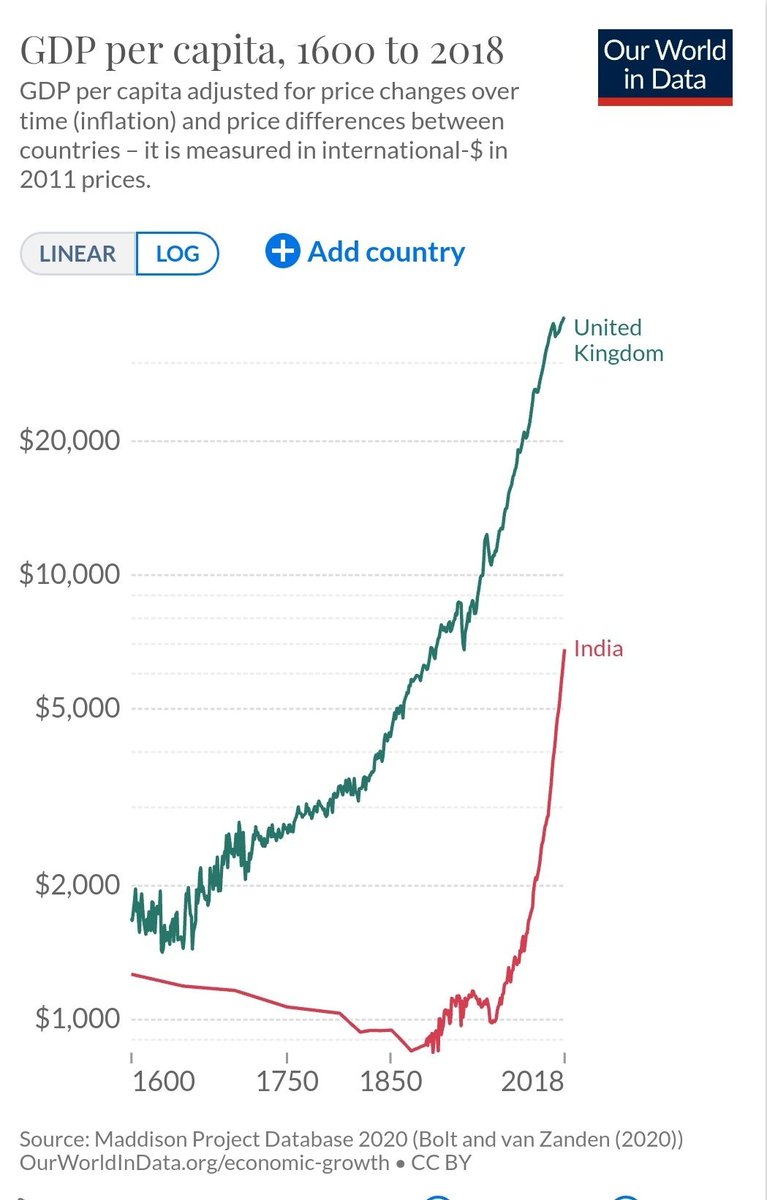
No, of course not. But you might start using it, and putting money into it, and talking about it to your friends. And that's how I think about India — an ancient civilization that's simultaneously like a startup country, as you can see from the graph below.
That's why I'm investing in India and Indians: because I see the growth potential, because it helps build up Bharat, and because a strong and self-sufficient India is good for the world. Now, let me address a few common arguments.
1) Civilizational Reincarnation. First, note that I used the phrase "ancient civilization" above. Of course I'm well aware that the Indus Valley civilization is one of the oldest in human history. But India is still analogous to a tech startup, because the country experienced a civilizational rebirth in 1991 after liberalization, just as China did in 1978. Whenever we use the term "leapfrogging" we acknowledge this. Why could India jump straight over landlines straight to mobile, or from cash to UPI? Because it was reborn recently, after centuries of colonialism and occupation. And reincarnation is something we are familiar with.
2) Underdog Millionaire. Second, observing that something is improving doesn't mean saying that it's already number one. In fact, one of the most important things about India is that Indians think of themselves as underdogs. Not starving "slumdogs" like the regrettable epithet, nor overconfident overdogs, but underrated underdogs — with a chance to win but certainly no guarantee.
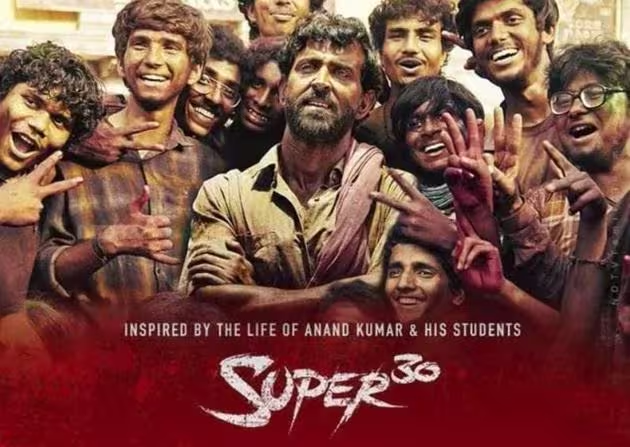
That's the message of movies like Super 30 (https://t.co/N6U5UfNZ2H), which couldn't be more different than Black Mirror. Indians know they aren't #1, or even #2, because they aren't. But the diaspora helps show that Indians can be world class, and that India itself could become world class, which is part of why India is now rising to the occasion.
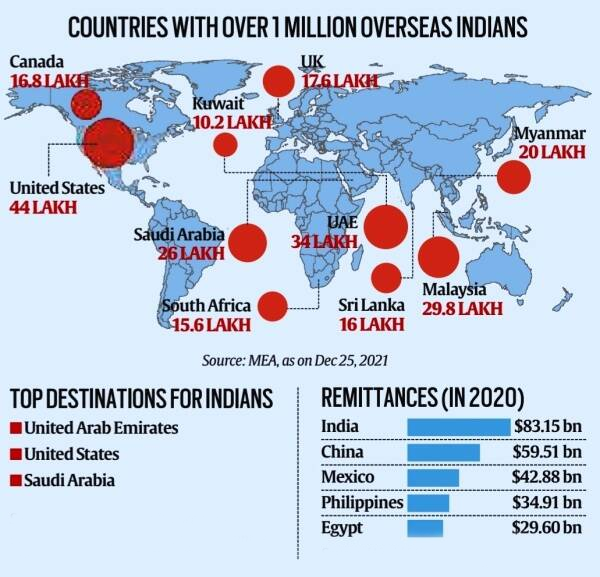
3) Decentralized Diaspora. Third, that brings us to one of India's greatest strengths: its diaspora. In this century China may end up playing the world's best home game, but India is on track to play the world's best away game. So India's development will look different than China's.
For one thing, Indians are willing and able to move anywhere. Westerners mostly aren't willing to move, because they still think their societies are the only places that are "First World". And the Chinese increasingly aren't able to move, because they're restricted from any countries where the Chinese state lacks hard power.
That leaves Indians to fill the gap. As Chinese emigration drops off, Indian emigration picks up to fill the holes in tech talent. As individual Indians become wealthier, more are financially able to emigrate. And as India as a whole becomes stronger, the passport improves, and more people are diplomatically able to emigrate. All this means the age of Indian emigration is just beginning. If China is the centralized state, India is the decentralized diaspora.
4) Special Economic Zones. Putting that all together, that means (a) India is reborn, (b) Indians know they are rising-yet-underdogs, and (c) Indian development is going to be quite different from Chinese development, with much more focus on the diaspora.
So, that's one of the reasons I think so much about special economic zones. Indians thrived in Dubai and Delaware, in Singapore and the Anglosphere — once they got out into a different economic system. And they're now starting to thrive in India itself — once India itself changed its economic system in 1991.
So, it's all about changes to the economic system. And with every investment we make in India or Indians, we build up a feature list of things to change.
Because there are a series of conceptually simple things India can do to be as good a place to do business as Dubai or Singapore. For example, you need to be able to send money into and out of the country for investment without hassle. You need to get a better passport so Indians can attend conferences. You need to rank higher on the economic freedom index (https://t.co/bRMsIKRX6P). And so on.
At India's current rate of improvement, I think much of that will eventually be possible in a place like GIFT City, as a kind of special economic zone, even if not for all of India at once.
Put another way: India's internet connectivity, digital payments, and basic infrastructure has dramatically and visibly improved in the last 10 years. But while it's improving, it doesn't yet have certain "power user" features for international business that Singapore, Dubai, and Delaware do.
Once it does, it'll get even more of my business — and more importantly the world's. But it's already investable, and improving — which is why I'm writing about India, putting money into Indians, and regularly meeting founders on the ground.
5) Investor, not cheerleader. In summary, that's what the quoted tweet gets wrong.
It's not about being a "cheerleader" who has to "stay" in a place to invest in it — imagine if every business had to be funded solely by neighbors down the street.
Instead, it's about being an international investor looking for the best talent around the world — and finding quite a lot of it in India.
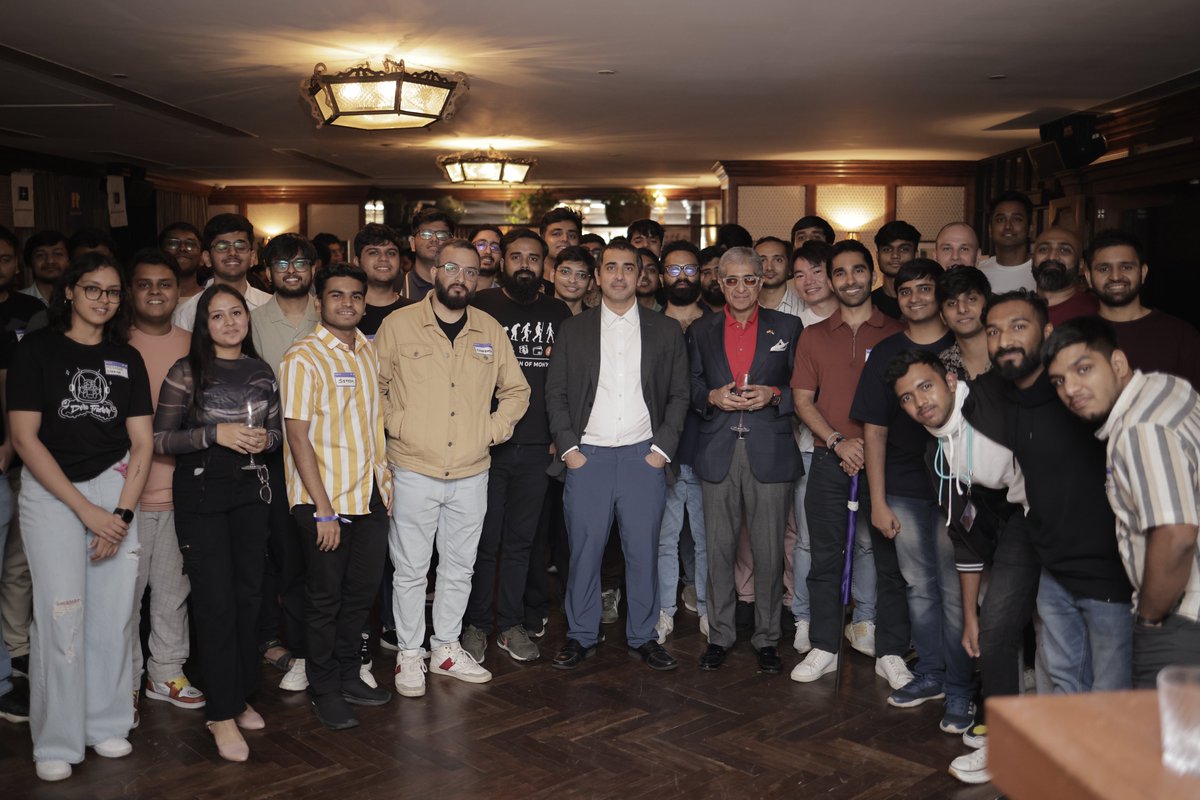
Maybe I'll find one of you at the next meetup!