Prof. at Claremont McKenna,Bks: Globalizing India (2016) and Regional Roots (2005). IR Orgs, Political economy, public health, Dev politics, India-China.
Excited to be part of a panel on sectors in CPE and IPE at APSA. Please come to our panel! It unfolds a productive and powerful research agenda to understand the huge focus on sectors around the world https://t.co/rhYrKwLeig
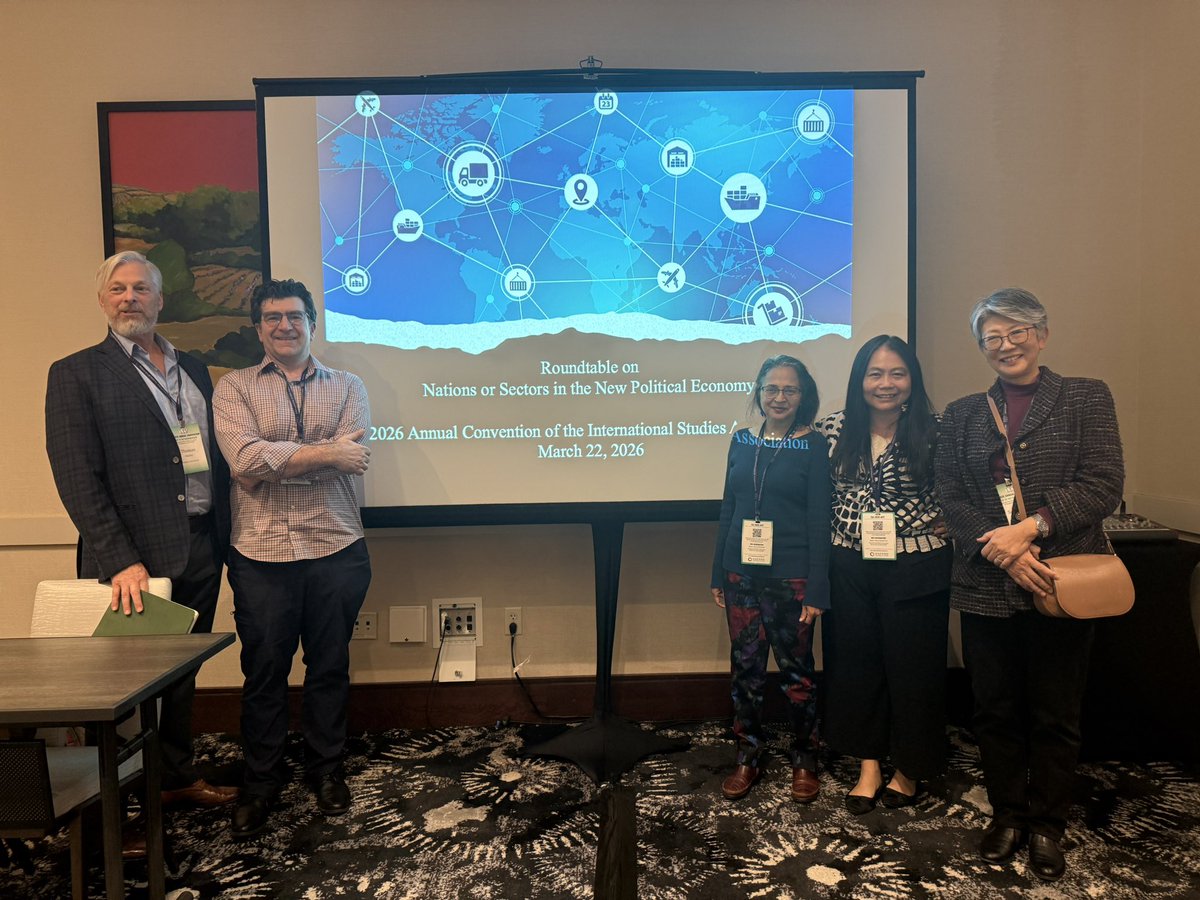
What a stimulating discussion on “Roundtable on Nations orSectors in the New PoliticalEconomy.” Thank you @ANewman_forward, Mark Dallas, Saori Katada, @aseema01 & Thomas Oatley for critically engaging the “bringing the sector back in” research agenda. Pics by @LingChenscholar. 2/
A wonderful time at International studies association (ISA) in Columbus, Ohio, presenting my research, meeting friends, and listening to interesting panels. My presentations related to sectors in India and China & on crisis and order change in the global economic order.
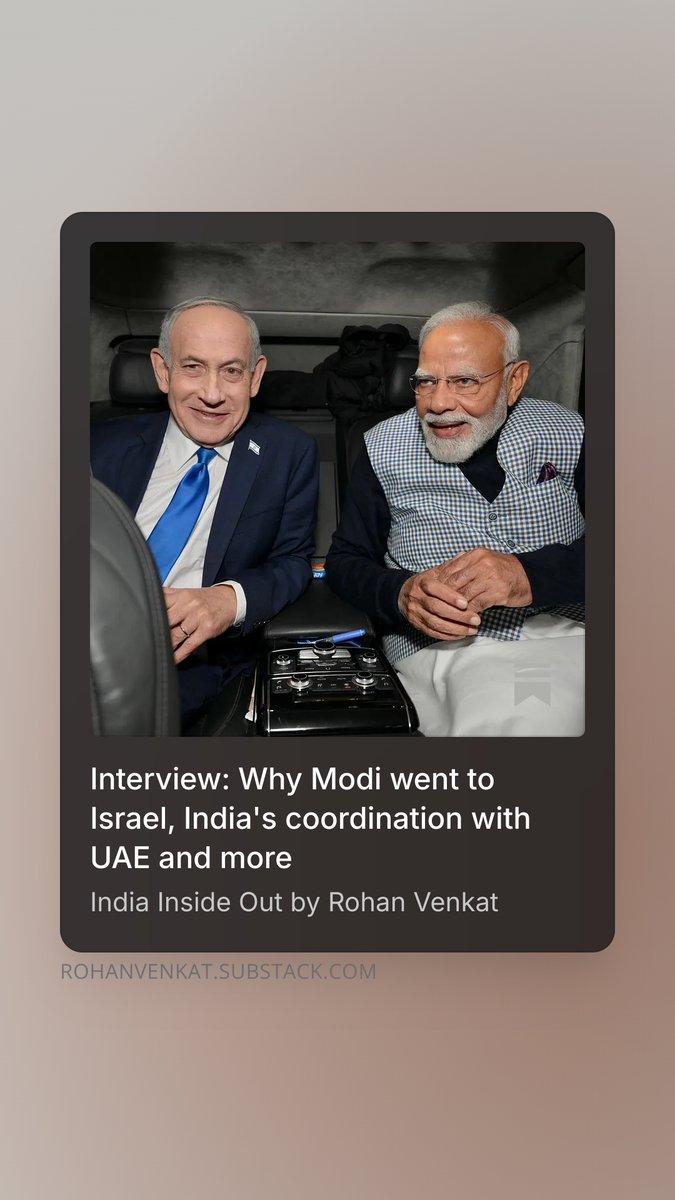
On India Inside Out, I spoke to @nicoblar about Modi's surprising decision to go to Israel in the build-up to the attacks, and what it tells us about India's usually careful positioning in the region – plus the Delhi-Abu Dhabi connection.
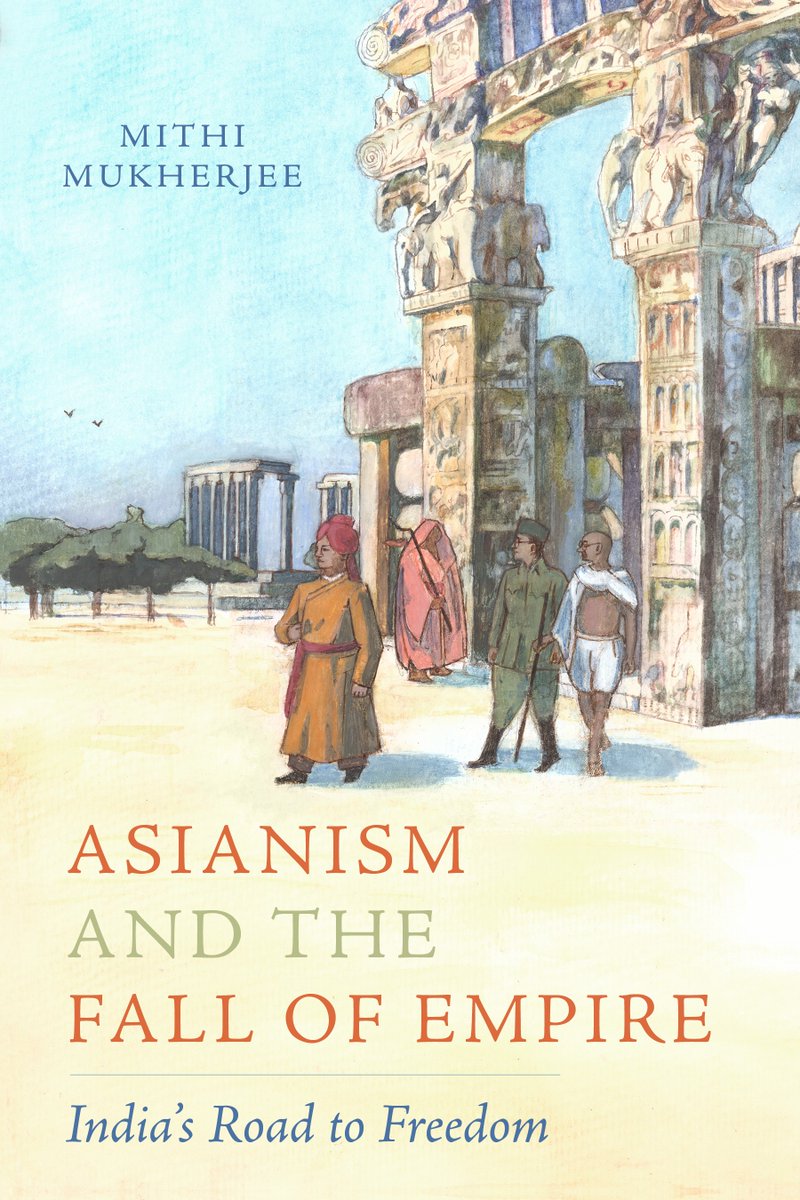
I am delighted to share that my book Asianism and the Fall of Empire: India's Road to Freedom is published today. @IndianHistory_C@historycong@AAPIData.
It explores the transnational history of Asianism in the nineteenth and twentieth centuries and its role in shaping Indian anticolonialism against British rule. #AsianHistory #NewBook #PanAsianism #IndianHistory #GlobalSouth #postcolonial #GlobalHistory
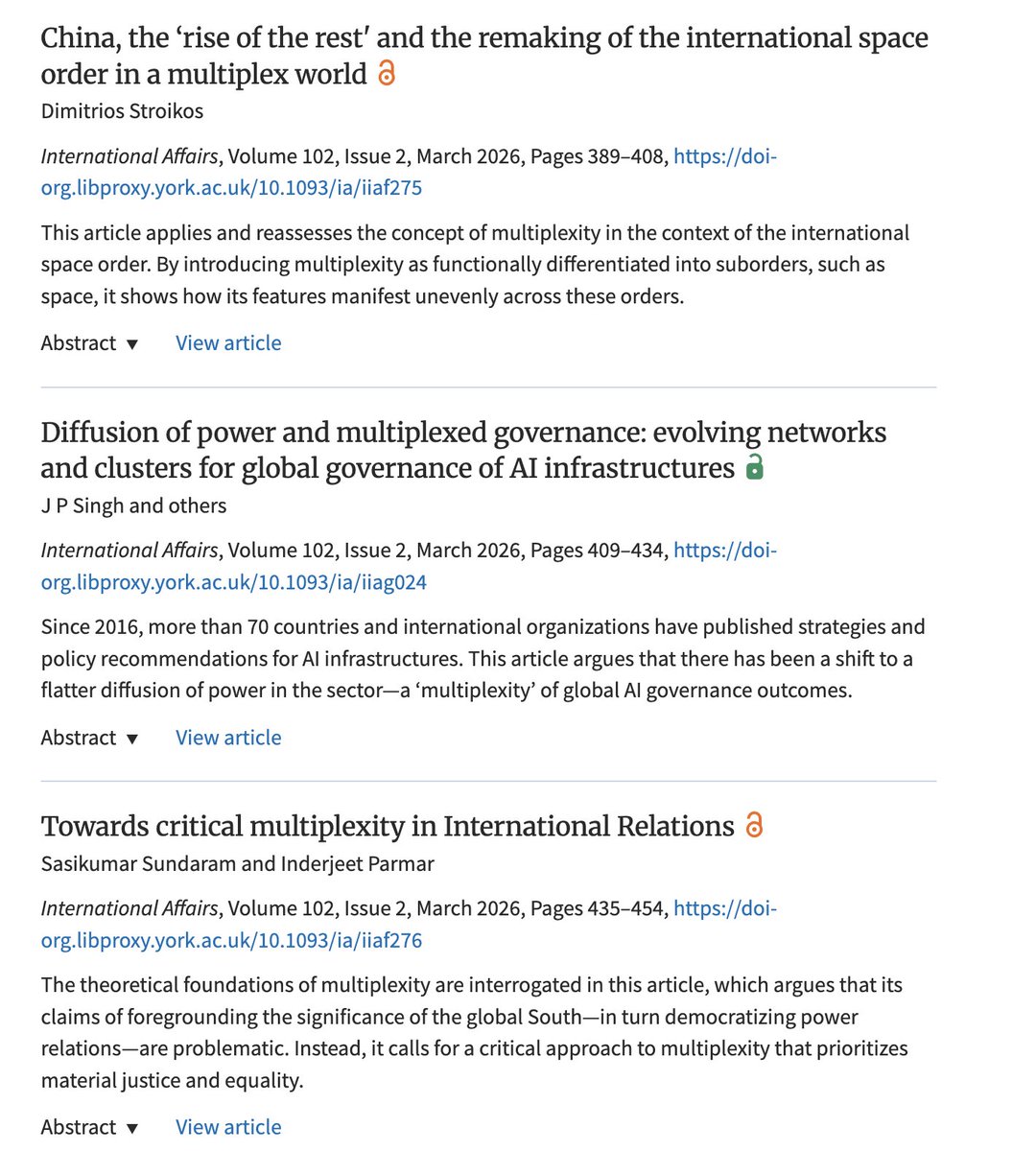
Thereafter, @DStroikos illuminates the (re-)making of the #SpaceOrder by #China & others. Next, JP Singh & co. examine networked governance of #AI infrastructures. Followed by @USEmpire & SasiSundaram who argue in favour of a #CriticalMultiplexity that prioritises equality. (3/4)
This point is key, and something I've thought about a lot in relationship to the research I do for KYE. Even the best research assistant, whether AI or human, can't know the throwaway anecdote that'll catch my eye, or a small but telling detail. There really aren't shortcuts
A decapitation strike in Iran has sent shockwaves far beyond Tehran. According to insiders, Beijing did not expect the United States and Israel to directly target the core of Iran’s leadership. The sudden strike exposed serious miscalculations inside China’s leadership and triggered urgent meetings in Zhongnanhai.
Watch the full video here: https://t.co/bLi0yeYpJq
I just gave a closed-book, pen-and-paper midterm exam in my 300-level course at UBC with 100 students. All exams were graded by an experienced graduate-level TA according to a rubric.
*** The average was 64/100.***
My class averages at UBC are usually 80-85.
Context:
• This was the first midterm, covering ONLY 4 weeks of material.
• Students had a list of possible questions in advance: no surprise questions.
• Questions included (a) 3 concept definitions, (b) 3 paragraph-long questions, and (c) a 1.5-page essay.
• I have taught this class multiple times. Nothing in my teaching style changed this semester.
• We read entire paragraphs of text in class, so students don't have to do something on their own that wasn't covered during the lecture.
• Students take a 10-question multiple-choice quiz at the end of every class (30% of the final grade).
• Attendance is 95-99% every class. Attention during lectures and participation in pair-work activities are very high → anticipating the end-of-class quiz.
*** But unfortunately, I suspect many students are not reading the material on the syllabus. They are asking LLMs to summarize it instead.***
After the midterm, students reported:
• They thought they knew concept definitions but couldn't produce them on paper.
• They thought they understood the arguments but struggled to connect them or identify points of agreement and disagreement.
My view:
It might be “cool” or “innovative” to teach students to summarize readings with ChatGPT or write essays with Claude. But we may be doing them a disservice: reducing their ability to retain material, think creatively, and reason from what they know. If you only read what AI has summarized for you, you don’t truly "know" the material.
Moving forward:
We have a second midterm coming up. I don't know how to convey to students that the best way to do better on the exam is to rely on and improve their own reading skills.
An incredibly important interview with Bafel Talabani, a prominent Kurdish leader and son of legendary Jalal Talabani. He says he doesn’t not see signs of regime change in Iran and opposes the idea of pushing Iranian Kurds to fight the regime.
The Air Power Illusion
Full essay: "Why Bombs Break Buildings, Not Regimes": https://t.co/NfPNrml0Vg
Across more than a century of war, one pattern stands out:
No regime in modern history has fallen solely because it was bombed from the air.
Cities burn. Infrastructure collapses. Leaders are targeted. But political power survives.
Bombs break buildings. They do not, by themselves, break regimes. This thread explains why
@ambtstirumurti@DeccancentreIR@arvindsubraman My bk Regional roots of developmental politics (2005) posed the question of subnational ex. of fast growth in India. So, subnational developmentalism thrives in some parts of India. great to see @arvindsubraman posing that question in this podcast. https://t.co/AViC3N2VPA
Geeta Gopinath explains why India is not suitable for investment, sadly 18% of death annually is caused by pollution!!
Modi PR agencies will wake up now..
@maitreesh@tanikac I did some work on this topic in my book, The regional roots of developmental politics in India that goes back to the 1960s. https://t.co/AViC3N2o02
I adopted more of a political economy lens. I also wrote an article on West Bengal's reform program in https://t.co/JGdxkAnHEt
Sometimes differences between China and India are cast as differences in human capital.
So how much human capital does China have and is India behind? And if behind, by how much?
Let's examine that through some graphs I stumbled across. 🧵
(1/n)