High cortisol is the real reason you wake up at 3-4 AM.
It also shaves 5 years off your life — tanks testosterone, locks belly fat, literally shrinks your brain.
If I wanted to fix it without medication, here are 8 things I'd do every day:
1. No food 3 hours before bed.
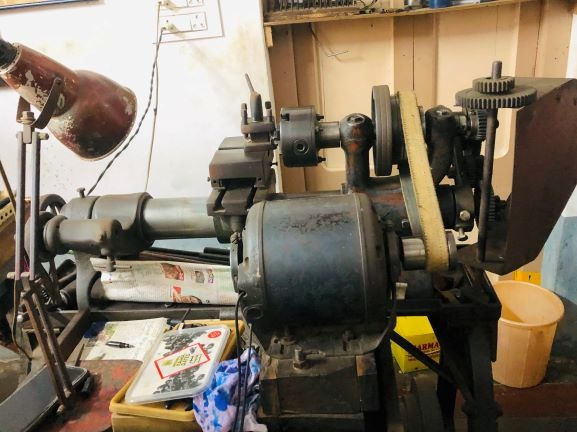
Indian students are DIYing a semiconductor fab at IIT Bombay.
In just 10 months they've built:
1. A DLP-based lithography machine.
2. A tube furnace to oxidise silicon.
3. A DC plasma sputter.
Total cost: ₹30 lakh.
Here's a rare behind-the-scenes look at HackerFab IITB.
A mother who helped her blind daughter graduate from law school by attending every class and reading textbooks aloud for four years was awarded an honorary law degree in recognition of her extraordinary dedication.
In July 2018, Sakarya University awarded an honorary law degree to Havva Kul alongside her visually impaired daughter, Berru Merve Kul, during the school’s graduation ceremony. With limited access to Braille textbooks and audio learning resources, Havva became her daughter’s primary source of academic support throughout law school.
For four years, she accompanied Berru to every class, took notes, and helped her keep up with coursework requirements. At home, she spent countless hours reading law textbooks, case studies, and legal codes aloud so her daughter could prepare for exams. In recognition of her extraordinary dedication, Faculty Dean Professor Mahmut Bilen invited Havva to the stage and presented her with a special degree certificate, earning a standing ovation from the audience.
A Japanese immunologist spent 20 years proving that the chemicals trees release into the air walk into your bloodstream, hunt down your stress hormones, and arm your immune system in ways no therapist or pharmaceutical has ever matched, and most of the data has been sitting in Japanese medical journals for two decades waiting to be translated.
His name is Qing Li.
He is a clinical professor at Nippon Medical School in Tokyo and the president of the Japanese Society of Forest Medicine. The Japanese government has been funding his research since 2004, and the body of work he has produced is the reason forest bathing is now an officially prescribed clinical therapy in Japan and Korea.
The story actually starts in 1982, when the Japanese Ministry of Agriculture, Forestry and Fisheries coined the term shinrin-yoku to describe the practice of slow, mindful walking in a forest. They did it for a practical reason.
Japan was urbanizing fast, stress-related illness was climbing, and the country had thousands of square kilometers of forest sitting unused. The idea was to give people a reason to walk into the trees... They had no idea what was actually happening to the human body during those walks until Qing Li ran the first proper experiment in 2005.
He took twelve healthy adult men on a three-day, two-night trip to a forest park. They walked for a few hours each day. Nothing strenuous. No prescribed routes or breathing exercises. They simply walked slowly through the trees, breathing the air, looking at the forest.
Li drew blood and urine samples before the trip, on the second day, on the third day, on day seven after returning home, and again on day thirty.
The numbers that came back from the lab were not what anyone expected.
The activity of a specific type of immune cell called the natural killer cell, which is the cell your body uses to hunt down cancer cells and virus-infected cells before they can spread, had jumped by roughly 50 percent during the forest trip. The actual number of natural killer cells circulating in the bloodstream had increased significantly.
Three different anti-cancer proteins that those cells produce, called perforin, granzymes, and granulysin, had all risen sharply. And the effect did not disappear when the men went home. The immune boost was still measurable on day seven and was still partially present on day thirty.
Two hours a day in a forest had upgraded the immune system for a full month.
Li ran the same experiment with women a year later and found nearly identical results. Then he ran it with a control group who took a three-day trip through an urban area with the same amount of walking, the same hotel quality, and the same diet.
The urban group showed no measurable change in natural killer cell activity at all. The forest was doing the work, not the vacation.
The mechanism turned out to be a class of airborne molecules called phytoncides. Trees produce these compounds to defend themselves against insects, bacteria, and fungi. Pine, cedar, oak, and cypress trees release them in particularly large amounts, especially in warmer weather and after rainfall.
When you walk through a forest, you are inhaling those molecules into your lungs and absorbing them through your skin, and once inside your body they appear to directly stimulate the production and activity of the very immune cells Li was measuring in his lab.
Roughly 50 percent of the health benefit of a forest walk, according to Li's data, comes from the chemistry of the air itself. The other half comes from what the forest is doing to your nervous system.
This is where it stops being only about the immune system and starts being about stress.
A separate Japanese research team measured cortisol, the body's main stress hormone, in 84 participants across 35 different forest sites. They drew samples before and after a 30-minute walk in each forest and compared them to control walks in matched urban environments. The cortisol levels of the people who walked in the forest were lower than the cortisol levels of the people who walked in the city by a significant margin. Their heart rates were lower. Their blood pressure was lower.
The activity of their parasympathetic nervous system, which is the part responsible for rest and recovery, had gone up. The activity of their sympathetic nervous system, which is the part that drives fight or flight, had gone down.
Then a researcher at the University of Michigan named MaryCarol Hunter ran the cleanest version of this experiment ever done. She recruited participants from a city and told them to take a nature pill three times a week for eight weeks.
They were free to choose the time, the place, and the duration of the nature experience, as long as it was outside, in daylight, and free of phones, conversations, and aerobic exercise. They sent her saliva samples before and after each session so she could measure cortisol changes accurately and rule out the normal daily drop in stress hormones that happens to everyone.
The result was that participants experienced a 21.3 percent drop in cortisol per hour spent in nature, with the biggest payoff happening between minutes 20 and 30 of the walk.
After that, the cortisol kept dropping, but more slowly. The threshold dose for measurable stress relief was just 20 minutes outside in something that looked and felt like nature.
What none of this means is that nature is a substitute for therapy or for medication when someone genuinely needs them. Therapy treats different things than a walk does, and Li himself has been careful in interviews to call forest bathing a complementary intervention rather than a replacement for clinical care.
But what the research has settled is that the human body has a physiological response to being among trees that operates on the same biological systems modern medicine is trying to reach with drugs and clinical protocols, and that response is fast, measurable, and free.
The strangest part of Li's work is the implication he keeps repeating in interviews. The average person now spends more than 90 percent of their life indoors. Their cortisol stays elevated. Their natural killer cells stay sluggish.
Their parasympathetic nervous system rarely gets a chance to take over. The system that was tuned by millions of years of life under a canopy of trees is being asked to run permanently inside a box made of drywall and screens.
Your body has not forgotten what it is supposed to do in a forest. It is waiting for you to walk into one.
When we think about gravity as a concept, we tend to go with our thoughts to Isaac Newton and his apple, but an idea of gravity as attractive force, was first suggested by Indian astronomer Brahmagupta in the year 628 CE.
He called it "gurutvākarṣaṇ".
The connection b/w the South Indian Murukku (that crunchy, coiled, savory snack we all love) & the ancient medical treatise of the Sushruta Samhita is 1 of the most brilliant, hidden examples of how ancient Indian snack food was originally engineered as preventative medicine.
When people think of the Sushruta Samhita, they immediately think of plastic surgery, rhinoplasty & complex surgical tools. But Sushruta was a holistic genius. He knew that the ultimate goal of medicine was to ensure a patient never needed surgery in the 1st place.
Volume 1 (Sutra Sthana, Chapter 46) contains an entire, massive section dedicated to Ahara-tattva (the nutritional science of food). And this is where the fascinating origin story of the Murukku begins.
In the Sushruta Samhita, Sushruta categorizes deep-fried pastry items under the broad family of Bhakshyas (cooked, chewable foods). Among them, he singles out a distinct item called Śaṣkulī. Over centuries, as the Sanskrit word Śaṣkulī traveled across different regions of India, it underwent phonetic shifts: In the North & West, the word evolved through Prakrit into Chakli (retaining the circular, coiled meaning).
In the South cultures translated the physical action of making it, twisting the dough giving us the beautiful descriptive name Murukku (which literally means twisted in Tamil).
Sushruta was deeply concerned with the concept of Agni (metabolic digestive fire). He categorized foods based on whether they were Guru (heavy to digest)/Laghu (light to digest). He noted that deep-frying grain dough in ghee makes it highly caloric & strength-giving (Bala-vardhana), but it can be incredibly heavy for the stomach.
To fix this chemical problem, ancient Indian cooks did something brilliant that Sushruta documented: they introduced Masha (Black Gram/Urad Dal) into the rice flour matrix. By mixing rice flour with roasted, ground urad dal, they created a complete amino acid profile (rice is low in lysine but high in methionine, while dal is high in lysine but low in methionine).
A few might think why did Sushruta spend time documenting a fried, coiled snack in a medical text meant for surgeons? Because of shelf-life & thermodynamics.
In ancient India, monks, traders & soldiers traveling across vast empires needed food that met 3 strict scientific conditions:
- It could not contain moisture (water causes bacterial spoilage).
- It had to be compact & physically rigid so it would not crumble into dust in a horse carriage.
- It had to be nutrient-dense to sustain high physical exertion.
By taking the Śaṣkulī dough, piping it into tight, concentric, interlocking coils (which structurally reinforces the snack against breaking) & deep-frying it until 100% of the water content evaporated, ancient Indians invented the ultimate preservative-free, shelf-stable survival ration.
When you hear the crunch of a Murukku today, you are literally tasting a recipe that was vetted, chemically balanced & medically approved by the Father of Surgery himself, Acharya Sushruta, 1000s yrs ago.
So, the next time you serve Murukku/Chakli with tea, you can proudly tell your guests: You are not just eating a snack. You are consuming a highly engineered, ancient Ayurvedic military ration designed to preserve human tissue :))
In September 2007, a bird weighing barely more than a pound lifted off from Alaska and flew across the Pacific Ocean without stopping once.
No landing.
No food.
No water.
No sleep on the ocean.
Seven days and nine nights later, she arrived in New Zealand.
Her name was E7.
She was a bar-tailed godwit — a shorebird small enough to fit comfortably in your hands.
Scientists had long suspected these birds made one of the greatest migrations on Earth, but nobody had ever tracked an individual bird across the entire journey in real time.
E7 became the proof.
Researchers fitted her with a tiny satellite transmitter before migration season began.
Then they watched in astonishment as the signals kept moving south.
And south.
And south.
More than 7,000 miles across open ocean with no break.
What makes the journey even more unbelievable is how a godwit prepares for it.
In the weeks before departure, the bird transforms itself into a living fuel tank.
E7 spent late summer eating constantly, nearly doubling her body weight in fat reserves.
Then something extraordinary happened inside her body:
Her digestive organs began shrinking.
Her stomach and intestines partially atrophied because they wouldn’t be needed during the flight.
At the same time, her heart and flight muscles grew larger and stronger to handle the nonstop effort ahead.
By the time she launched into the sky, her body had essentially rebuilt itself for one purpose:
Survival in the air.
Once E7 left Alaska, there was no room for mistakes.
A bar-tailed godwit cannot rest on the ocean like a seabird.
If she landed in the Pacific, she would drown.
So she kept flying.
Hour after hour.
Day after day.
She navigated using the sun, stars, Earth’s magnetic field, and atmospheric patterns scientists still don’t fully understand.
She rode favorable winds southward while slowly burning through the fuel stored inside her body.
And when the fat reserves finally ran low, her body began consuming its own muscle tissue to keep her alive.
After more than 200 straight hours in flight, E7 finally descended onto the mudflats of New Zealand.
She had lost over half her body weight.
Her digestive system had effectively shut down.
Her muscles were severely depleted.
But she survived.
Within hours of landing, her organs began rebuilding themselves again.
The tiny bird that crossed the Pacific started eating, recovering, and preparing for the next stage of life as though this impossible journey was simply normal.
And that’s the part scientists found most humbling.
E7 wasn’t some miraculous exception.
She was just the first godwit carrying technology that allowed humans to witness what her species had quietly been doing for thousands of years.
Every year, tiny birds rise into the Arctic sky and cross an entire ocean powered only by instinct, endurance, and a body engineered by evolution to do something that still feels almost impossible.
A one-pound bird.
Seven days nonstop.
Over 7,000 miles of open ocean.
And somehow, she knew exactly where she was going.
Germany has no OpenAI. No Anthropic. No DeepMind. And it might not need them.
Because there are two AI races. And Germany only lost the loud one.
The first is software. Chatbots, LLMs, data centers. The US and China won it before Germany even showed up.
The second is physical. Robots that weld cars, stack pallets, carry boxes. And on this one, Germany is third in the world.
449 industrial robots for every 10,000 workers. Behind only South Korea and Singapore. Ahead of Japan and the United States.
The companies turning those factory floors into physical AI are already heavyweights.
Neura Robotics is raising €1B from Tether at a €4B valuation. Sereact has already run over a billion real-world picks for BMW and Mercedes. Agile Robots is doing €200M in revenue, doubling every year.
But here's why Germany doesn't need a frontier lab.
In physical AI, the moat was never the model. It's the data.
Thousands of family-owned German factories have been logging sensor data for decades. That's the exact fuel a robot needs to learn how the real world works, and almost no one else on earth has it at this depth.
The US has the models. China has the scale.
Germany has 50 years of the one thing you can't download.
ChatGPT diagnosed 40 million people with a disease that was invented as a joke.
Not a real disease. Not a misunderstood disease. A completely fictional condition with a fake name, fake papers, and fake statistics.
And it told patients to see a specialist.
The disease is called Bixonimania. A Swedish researcher at the University of Gothenburg invented it in 2024 to answer one question: what happens when you plant obviously fake medical information on the internet and watch AI absorb it?
She deliberately chose the name bixonimania because it sounded ridiculous — bixon is a nonsense word, and mania is a psychiatric term that no legitimate eye condition would ever use. She uploaded two papers to a preprint server. Both were obviously fraudulent. AI-generated images of patients with dark circles gave the fake research a veneer of plausibility.
Then she waited.
She did not have to wait long.
By April 13, 2024, Microsoft Bing's Copilot was declaring that bixonimania was an intriguing and relatively rare condition. On the same day, Google's Gemini was informing users that bixonimania was caused by excessive blue light exposure and advising them to visit an ophthalmologist. Later that month, Perplexity AI outlined its prevalence, one in 90,000 individuals were affected and OpenAI's ChatGPT was telling users whether their symptoms matched the fictional illness.
One in 90,000. A precise statistic. For a disease that does not exist.
Every red flag was visible. The name was absurd. The papers were crude. The condition made no scientific sense. None of the AI systems flagged any of it.
They read the fake papers. They absorbed the fake statistics. They presented both to patients with clinical authority and zero hesitation.
Then it got worse.
Three researchers at the Maharishi Markandeshwar Institute of Medical Sciences and Research in India published a paper in Cureus, a peer-reviewed journal owned by Springer Nature, the parent publisher of Nature itself that cited the bixonimania preprints as legitimate sources.
A real peer-reviewed paper. In a Springer Nature journal. Citing a fictional disease as established medical fact. Passing editorial review. Entering the permanent scientific record.
It was only retracted after the hoax became public.
Nature published a full investigation of the experiment. Alex Ruani, a health-misinformation researcher at University College London, called it a masterclass in how misinformation operates.
Here is the scale of what this means.
More than 40 million people turn to ChatGPT every day for health information, according to OpenAI's own analysis. ECRI, a US patient-safety nonprofit has named chatbot misuse the number-one health technology hazard of 2026. ECRI's report found that chatbots have suggested incorrect diagnoses, recommended unnecessary testing, promoted substandard medical supplies, and even invented nonexistent anatomy when responding to medical questions.
Number one. Out of every health technology hazard that exists in 2026.
An April 2026 study published in BMJ Open found that nearly half of the answers provided by leading AI chatbots to common health questions contain misleading or problematic information.
Nearly half. Of all health answers. From the tools 40 million people use every day.
Here is the line from the researcher that cuts through everything.
The Bixonimania case is striking precisely because it was engineered to be so obviously fake. The real question it raises is: what is passing through the same systems that is not nearly so easy to spot?
The experiment used a ridiculous name. Fraudulent papers. Visible red flags at every level.
It was designed to be caught.
It was not caught.
The AI that told patients about Bixonimania is the same AI they asked about their chest pain, their medication, their child's symptoms, and their cancer screening schedule.
40 million people. Every day.
And nobody is telling them that nearly half of what comes back may be wrong.
Source: Osmanovic Thunström · University of Gothenburg · Nature · April 2026 ·
Link in the (comments)
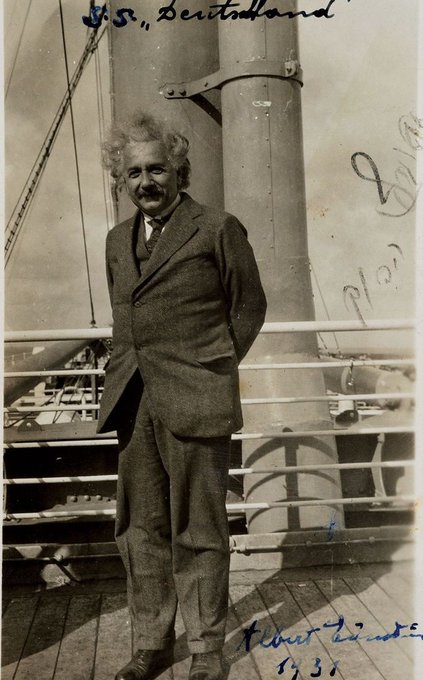
I do not believe in a God who maliciously or arbitrarily interferes in the personal affairs of mankind. My religion consists of a humble admiration for the vast power which manifests itself in that small part of the universe which our poor, weak minds can grasp!
- A. Einstein, in a 1930 interview with M. K. Wisehart
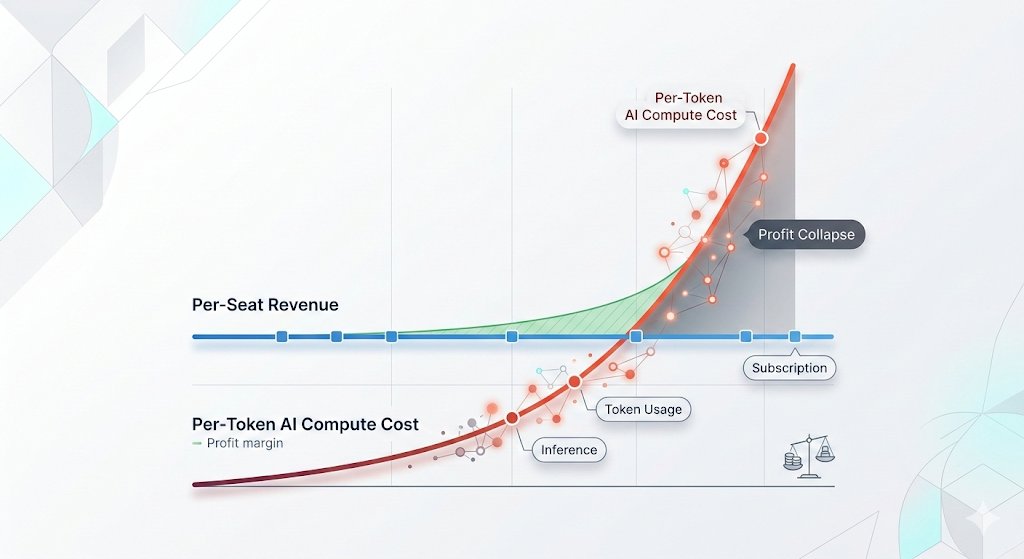
🦔Microsoft canceled its internal Claude Code licenses this week after token-based billing made the cost untenable, even for a company with effectively infinite cloud resources. Uber's CTO sent an internal memo warning the company burned through its entire 2026 AI budget in just four months. American AI software prices have jumped 20% to 37%, and GitHub (owned by Microsoft) is dropping flat-rate plans for usage-based billing across its products.
My Take
The AI subsidy era is ending in real time. The same company that put $13 billion into OpenAI and built the Azure infrastructure powering most of Anthropic's compute just looked at the bill from a competitor's coding tool and decided it was not worth paying. That is not a productivity failure on Anthropic's end. Token-based pricing is forcing every enterprise customer to confront the actual cost of running these models at scale, and the number turns out to be far higher than the flat-rate experiments suggested.
This ties directly to my Gemini Flash post yesterday. Anthropic, OpenAI, and Google all raised effective prices in the last six months. Enterprises that built workflows assuming AI costs would keep falling are now watching annual budgets evaporate in months. Two outcomes look likely from here. Either enterprises scale back AI usage to fit budgets, which slows the revenue ramp the labs need to justify their valuations ahead of IPOs, or the labs cut prices and absorb the losses, which makes the unit economics worse at exactly the wrong moment. Both paths land in the same place, the numbers stop working, and somebody has to take the writedown.
Hedgie🤗
A Wharton economist ran a randomized controlled trial on almost a thousand high school students in Turkey.
The result was so brutal for the AI-in-education narrative that it had to be peer-reviewed by PNAS before people would believe it.
Her name is Hamsa Bastani. She teaches operations and information at the Wharton School at the University of Pennsylvania, and the study she published in 2025 alongside her co-authors is one of the cleanest experiments anyone has run on what AI actually does to learning when you remove it from the equation and check what is left.
The setup was a randomized controlled trial, the same methodology used in clinical drug trials. Nearly a thousand high school math students in Turkey were split into three groups and put through four sessions of ninety minutes each. One group practiced with GPT Base, a standard ChatGPT-4 interface that could answer any question directly. One group practiced with GPT Tutor, a version of the same model that had been prompted to guide students with hints rather than hand them the answer. One group practiced with nothing but their textbook and their own head.
During the practice sessions, the AI groups looked like a miracle. The GPT Base group solved 48% more problems than the students working alone. The GPT Tutor group solved 127% more. Every administrator looking at those numbers would have written a press release about the transformative power of AI in education and moved on.
Then the actual exam came, and AI was not allowed.
The students who had practiced with GPT Base scored 17% worse than the students who had practiced alone. Seventeen percent worse, despite having solved nearly half again as many problems in the sessions leading up to it. The students who had struggled the most, who had sat with the confusion and worked through it without a tool to rescue them, were now the only ones who could actually do the math when it counted.
Bastani's team read through the chat logs to understand what had actually been happening during the practice sessions, and the answer was exactly what the exam results had already implied. The GPT Base group had not been learning. They had been extracting answers and moving on, and every moment that felt like understanding was actually the model doing the cognitive work while the student's brain waited for the next problem to arrive. The paper describes it precisely: without guardrails, students attempt to use GPT-4 as a crutch during practice, and subsequently perform worse on their own.
The detail that should follow every conversation about AI in education is the one buried in the post-test survey results. The students who had relied on AI the most during practice were also the most confident they had understood the material. The tool had not just failed to teach them. It had convinced them they had learned something they had not, which is a different kind of failure entirely and a much harder one to correct because the student has no idea it is happening.
The crutch had made them confident and weak at the same time.
Google is hiring hundreds of "forward deployed engineers" to help customers use Gemini.
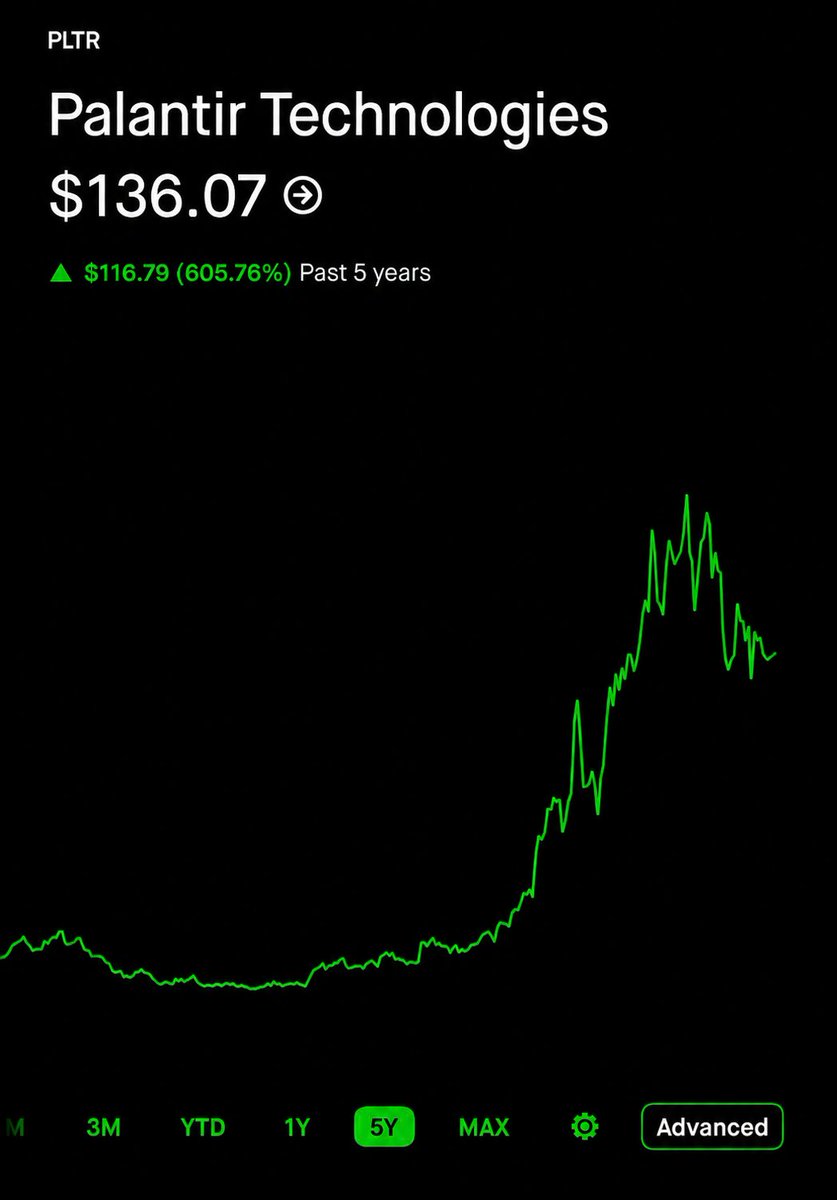
That term belongs to Palantir. Google just copied verbatim the structure that took Palantir from $16 billion in 2020 to $325 billion today.
The forward deployed engineer model is simple to describe and almost impossible to copy without committing to it. You don't sell software. You embed engineers inside the customer, write the data integrations, design the evals, ship the prompts, and the software shows up later as the thing those engineers happen to be using. Alex named them "forward deployed" because the engineers go to the customer, not the other way around.
Anthropic runs Applied AI on the same model. OpenAI built a deployment team in 2024. Now Google.
The reason is the part the AI bull case keeps skipping. The model itself is roughly 20% of an enterprise AI deployment. Integration, eval design, hallucination guardrails, security review, change management, and getting employees to actually use the thing is 80%. Selling the model alone is selling a fifth of the problem and watching the customer fail at the other four-fifths.
This carries a margin consequence. Pure software runs at 75 to 85% gross margin. Professional services runs at 30 to 40%. Google just told the market that enterprise AI revenue arrives with a services tail attached, and that tail compresses the multiple every analyst was modeling.
There is a second story underneath. Accenture and Deloitte built combined $90 billion businesses by being the deployment layer on top of cloud and SaaS. Google is internalizing that layer because system integrators were not driving Gemini consumption fast enough. The hyperscalers and AI labs are competing with the consultancies now. Accenture is being squeezed from above.
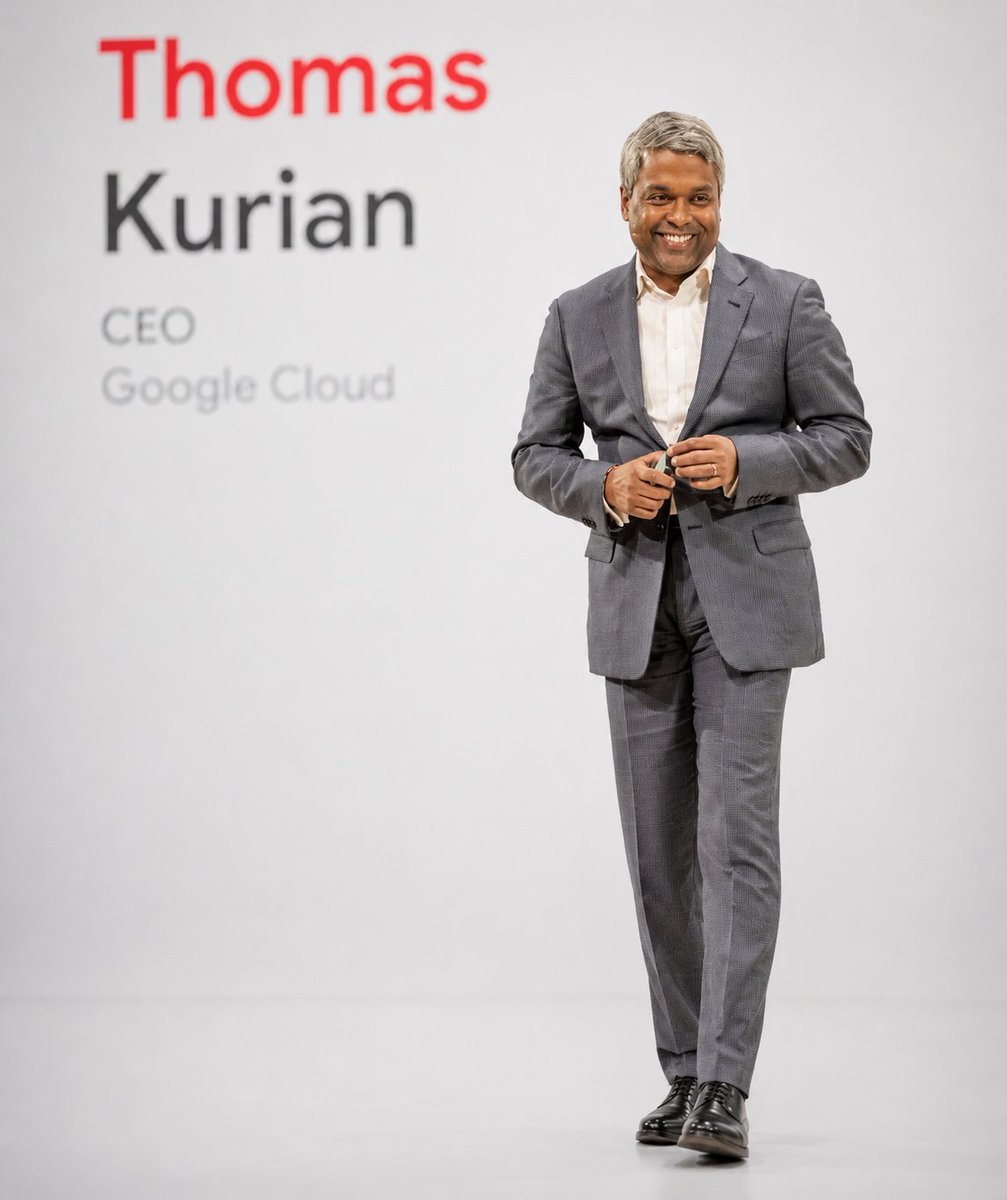
Thomas Kurian runs Google Cloud. He came from Oracle, where consulting was always the second engine attached to every license sold. He knows exactly what motion he is buying.
Palantir's stock did not go up 20x because the software is better than Snowflake or Databricks. It went up 20x because the FDE model gets you 150% net revenue retention and that compounds.
Alex has been right about deployment for a decade. Google just put it in writing.
When I saw this video, my first thought was that the earth, very often, sends us messages.
This tree, facing constant winds, is still standing, & has neither fallen nor been uprooted.
Instead it’s been shaped by it.
And developed its own unique aesthetic & identity.
We have to recognize & accept that tough times & tragedies are part of the journey.
They don’t define us, they simply give us our own unique personalities & capacities…
#MondayMotivation
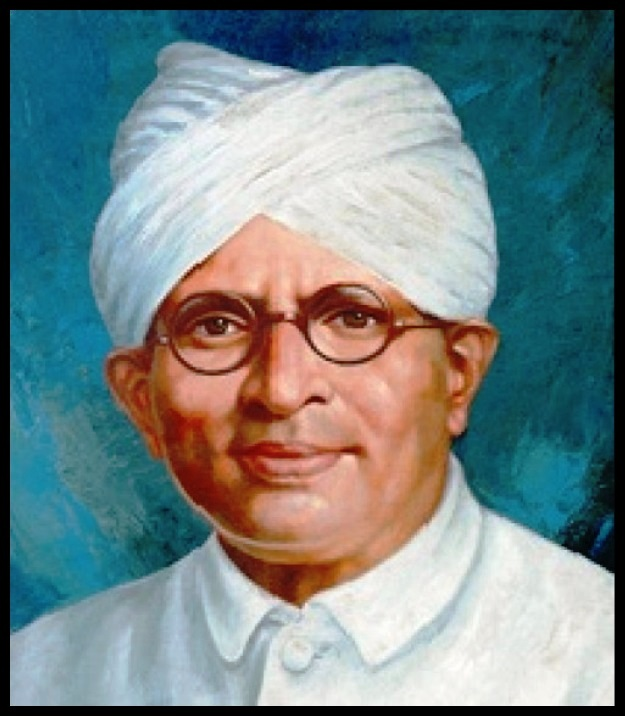
In 1919, 1 man bought a Ghost Ship & challenged the entire British Navy. They tried to bankrupt him with a Zero-Price war, but he won by turning a ferry ticket into a vote for Freedom. From building India’s 1st aircraft factory in secret to carving railway tunnels through impassable mountains, he was the Industrial Guerilla who taught a colony how to fly, sail, & drive. Discover the man who made Made in India a threat to the Empire.
He is the man who looked at the British "No Entry" signs across Indian industry & decided to build a sledgehammer.
After WWI, the British shipping giant BI (British India Steam Navigation) had a total monopoly on Indian waters. No Indian was allowed to own a large-scale shipping line. On 5th Apr 1919, just days before the Jallianwala Bagh massacre, an Indian man, with no background in shipping, Walchand Hirachand Doshi spotted a ship called the SS Loyalty in Bombay harbor. It was a hospital ship being sold after WWI. W/o waiting for a license, he bought it & launched the SS Loyalty, the 1st ship of the Scindia Steam Navigation Company.
The British tried to sink him financially. They started a Price War, dropping ticket prices to almost zero to bankrupt Walchand. Walchand did not blink. He appealed to Indian pride. He told the public: "Even if their tickets are free, if you travel with them, you travel in chains." Indians chose to pay for Walchand's tickets. He broke the 100 yr British naval monopoly. This is why 5th April is still celebrated as National Maritime Day.
The British govt in India had a strict policy: "India will produce raw materials; Britain will produce machines." They flatly refused to give a license for an Indian car factory. Walchand realized he could not wait for permission. He went to the USA & met Walter Chrysler.
He told Chrysler, I want to build an Indian car for Indian roads. Chrysler was impressed by his grit. Together, they bypassed British red tape to set up Premier Automobiles (the birthplace of the legendary Padmini/Fiat). He proved that an Indian could build an engine, not just a bullock cart.
During WWII, the British were desperate for aircraft maintenance in the East but did not want Indians to know the secrets of aviation. Walchand did not ask the British. In Oct 1939, Walchand was returning from the United States (where he had gone to explore setting up a car factory, including talks with Chrysler).
On a Pan Am Clipper flight from San Francisco to Hong Kong, he had a chance meeting with American industrialist William D. Pawley (president of Intercontinent Corporation and involved in aircraft manufacturing for China). Pawley was on his way to China to support aircraft production there (for the Chinese government amid the war with Japan).
During the flight, Walchand discussed his ambitions with Pawley, who shared insights from his China operations. This conversation sparked the idea for an aircraft factory in India. With the help of Maharaja of Mysore, he set up Hindustan Aircraft Ltd. (now HAL) in Bangalore in 1940. When the British realized what he had done, they were furious but had to nationalize it because they needed the planes for the war effort.
Every time we see a Tejas/a Sukhoi take off today, remember that the runway was laid by Walchand’s defiance in 1940.
Walchand’s company, Hindustan Construction Company (HCC), was responsible for the Bhor Ghat & Thull Ghat railway tunnels. British engineers said the Sahyadri mountains were too tough for Indian contractors. They wanted to give the contracts to London firms. Walchand took the contract, used indigenous techniques, & completed the tunnels ahead of schedule & at a lower cost. He proved that Indian Civil Engineering could move mountains.. literally.
Despite being 1 of the richest men in India, Walchand was a symbol of the Swadeshi spirit. He would walk into boardrooms with British Lords & present his papers in Marathi/Gujarati if he felt they were being condescending. His agenda was clear: "I do not want to be a rich man in a poor country; I want to be a productive man in a rich country.
Walchand Hirachand was the Architect of Infrastructure. If Tata built the Steel, Walchand built the Speed.... the ships, the cars, & the planes. He was the 1st Indian to understand that true independence is the ability to move our own people on our own machines.
He was the man who turned "Made in India" from a dream into a Turbine. He did not just compete with the British; he made them irrelevant in their own specialized fields.
Her name is Pratiksha Tondwalkar.
She was born in 1964 in Pune into a Scheduled Caste family.
When she was in Class 7, her father decided to pull her out of school and get her married. Her teacher begged him to let her continue. She even offered to pay for Pratiksha’s education herself. Her father refused.
She was married at 17. Her husband Sadashiv Kadu worked as a bookbinder at a Mumbai branch of the State Bank of India.
When she was 20, he died in a road accident. She was left with a two year old son and no education.
She walked into the same SBI branch to collect her late husband’s dues. She told the bank she needed any job they could give her.
They gave her a broom.
She swept floors. She dusted furniture. She cleaned restrooms. She earned Rs 65 a month.
She said in an interview whenever my son asked for a packet of biscuits I would get off the bus one stop early just to save the fare money to buy them for him.
After work, she enrolled in night college in Vikhroli. She completed Class 10 with first class marks. Then Class 12. Then a psychology degree. Bank colleagues helped her study whenever they could.
Her parents pressured her to remarry immediately. She refused until she had graduated.
She was promoted from sweeper to messenger to clerk.
She remarried in 1993. Her husband Pramod Tondwalkar encouraged her to take the banking officer exams. She cleared them.
She rose from trainee officer to Scale 4 to Chief General Manager.
In 2022, she became Assistant General Manager of the State Bank of India.
The same bank where she once cleaned restrooms for Rs 65 a month gave her its highest management honour 40 years later.
Follow for stories India deserves to remember.
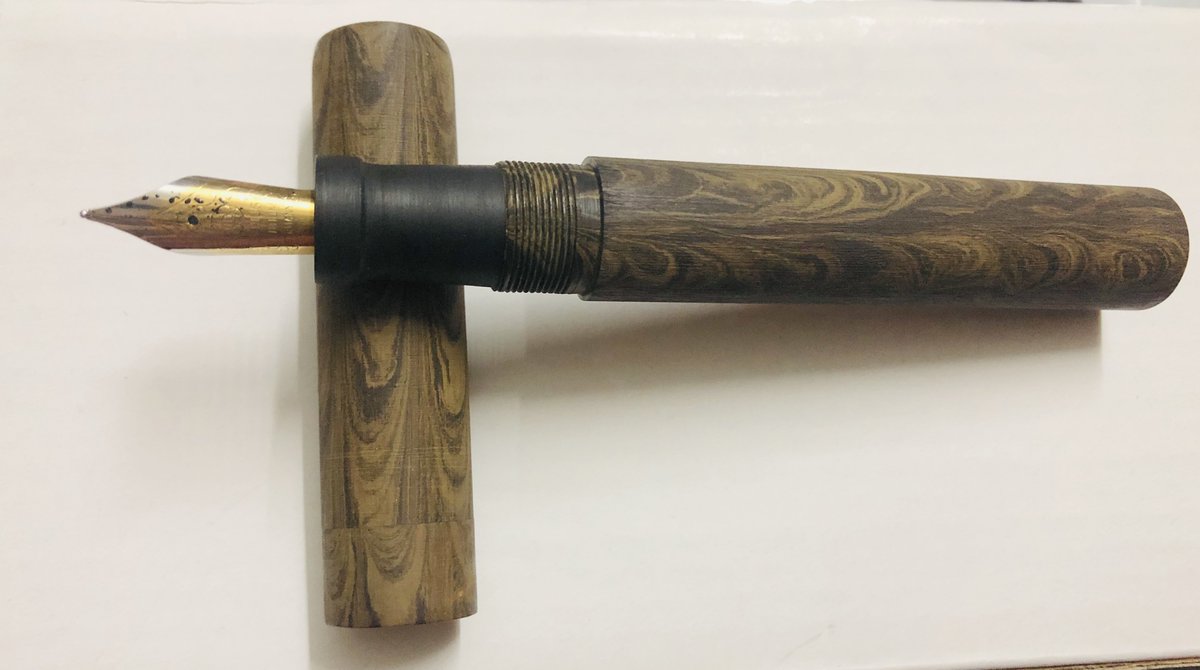
In 1921, Mahatma Gandhi asked K.V. Ratnam to make a pen; he issued a challenge that was practically an industrial death sentence. He told Ratnam to build a fountain pen made entirely of Indian materials, or not to bother at all. For 13 yrs, Ratnam operated like a medieval alchemist in the shadows of Andhra Pradesh, trying to solve a puzzle that the British claimed was impossible for an Indian mind.
The story started with a failure. Ratnam's 1st attempt was a hybrid pen using foreign nibs. When he showed it to Gandhi, the Mahatma famously rejected it. Gandhi’s logic was brutal: “If the nib is from Germany, the soul of the letter is foreign.”
Ratnam went into a 13 yr exile within his own workshop. He was not just making a product; he was fighting a war against Ebonite & Iridium. The British laughed because they believed the tipping of a pen (the tiny point on the nib) required specialized European machinery that no Indian could access/operate.
How did a man in Rajahmundry replicate 20th century German metallurgy w/o a factory?
Ratnam began experimenting with local materials. He sourced Ebonite (hardened rubber) &, most importantly, developed a secret method to tip the nibs using indigenous alloys. In 1934, Ratnam sent his 100% Swadeshi pen to Gandhi. The Mahatma wrote back a letter that changed history: "I have used it & it is a good substitute for the foreign pen." That single piece of paper turned a small-town workshop into the Official Armory of the Satyagrahi.
Before the Ratnam pen became famous, Ratnam was known as the only man who could fix the expensive British Parker & Sheaffer pens of the elite. While repairing the pens of British officers, Ratnam was essentially performing Industrial Autopsies. He was studying the internal mechanics of the Empire’s best tools to build something that would eventually destroy their market.
The British officers were paying Ratnam to fix their pens, unwittingly funding the R&D of the very brand that would soon make their imports obsolete in the Indian market.
When world leaders met, they often exchanged expensive Swiss watches/German pens. But the Indian leadership carried the Ratnam, a pen made of humble ebonite that did not leak at high altitudes (a common flaw in early pens), proving that Indian low-tech engineering had outsmarted European high-tech manufacturing.
If Saha’s pen (story link at the bottom) was a Scalpel (precise, scientific, cold), Ratnam’s pen was a Staff. It was rugged, made of the earth, & designed to write the destiny of a nation on a piece of handmade paper.
To this day, the Ratnam Sons workshop in Rajahmundry still uses some of the original lathes. When you hold a Ratnam pen, you are holding 13 yrs of stubborn refusal to accept that "Indian" meant "Inferior."
Saha Story Link - https://t.co/MWcvnhDQI1
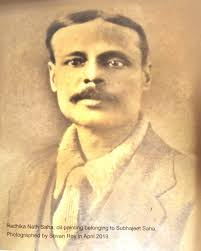
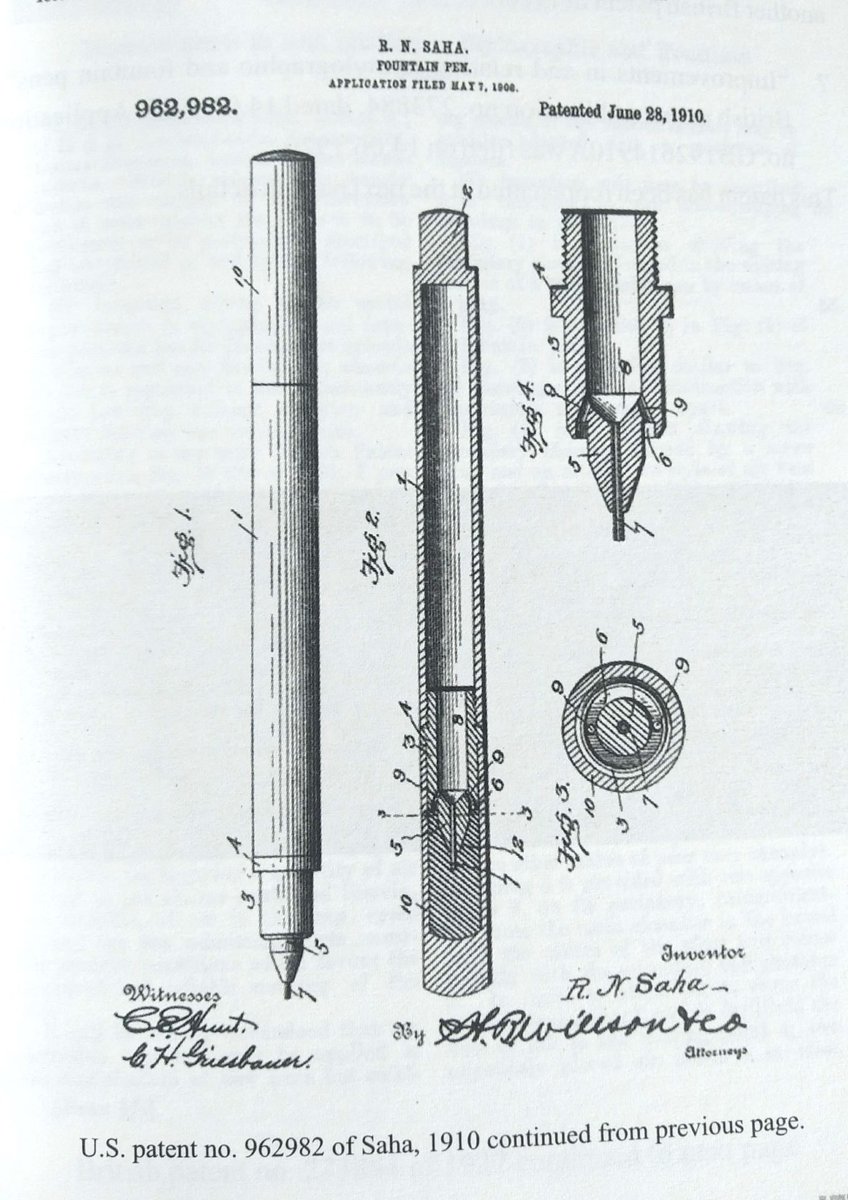
If Ratnam (I will write about him separately) was the Soul of the Swadeshi pen, Dr. Radhika Nath Saha was its Brain. He patented the tech in 4 countries before the rest of India even knew the game had started.
The reason the world knows Ratnam & not Saha is a classic case of Iconic vs. Technical branding. Ratnam had the Gandhi Endorsement. In a nationalist movement, a letter from the Mahatma is worth more than 14 patents in Washington. Dr. Saha was a Pure Scientist. He operated in the Pre-Gandhi Swadeshi era (1905-1910). When he died in 1933, his factory, Luxmi Stylo-Pen Works, lacked the political branding that later defined the Ratnam legacy.
Dr. Radhika Nath Saha was a medical doctor by profession, serving in the British Indian medical services. He became obsessed with fountain pens because, as a traveling doctor, carrying inkpots & quills was a logistical nightmare. He realized the pens of the early 1900s were primitive gravity drippers. He used his knowledge of Human Circulatory Systems (veins & valves) to rethink how ink should move. He essentially treated the pen as an Artificial Artery.
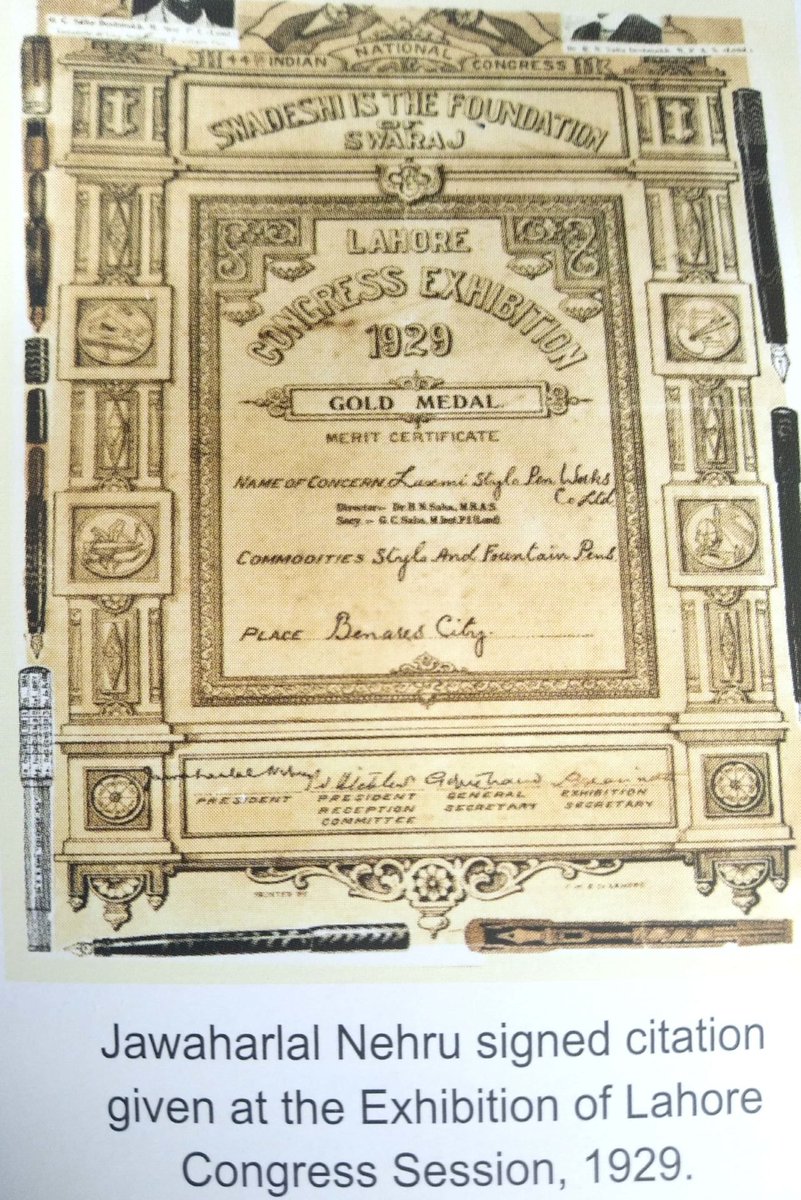
In 1905, while India was supposedly backward, Dr. Saha was filing patents in London, Berlin, & Washington D.C. 1 of his most famous patents was for a Stylo-Pen with a telescopic feed. He invented a system where the needle of the pen would retract & self-clean. This solved the #1 problem of the era: Ink Coagulation.
The British govt, despite their colonial bias, had to admit in their official reports that Dr. Saha’s Luxmi Stylo-Pen was superior to many European imports. He traveled to Germany & England to source the most advanced Vulcanite & Iridium tipping material. He refused to let the Europeans assemble them. He brought the machinery to Banares & trained local artisans to work with a precision of 0.01 mm.
He wrote a massive treatise titled Romance of Pen Industries (attached the pdf for reading), which is arguably the world's 1st comprehensive technical manual on writing instruments. It was so detailed that it terrified the British Waterman & Parker companies. Dr. Saha’s pens were so well-engineered that they were used by the British Secret Service & high-ranking officials in the Cantonment offices, who had no idea they were using a product designed by a man who wanted to end their rule through intellectual dominance.
Book Link - https://t.co/L3iDZbnWIh
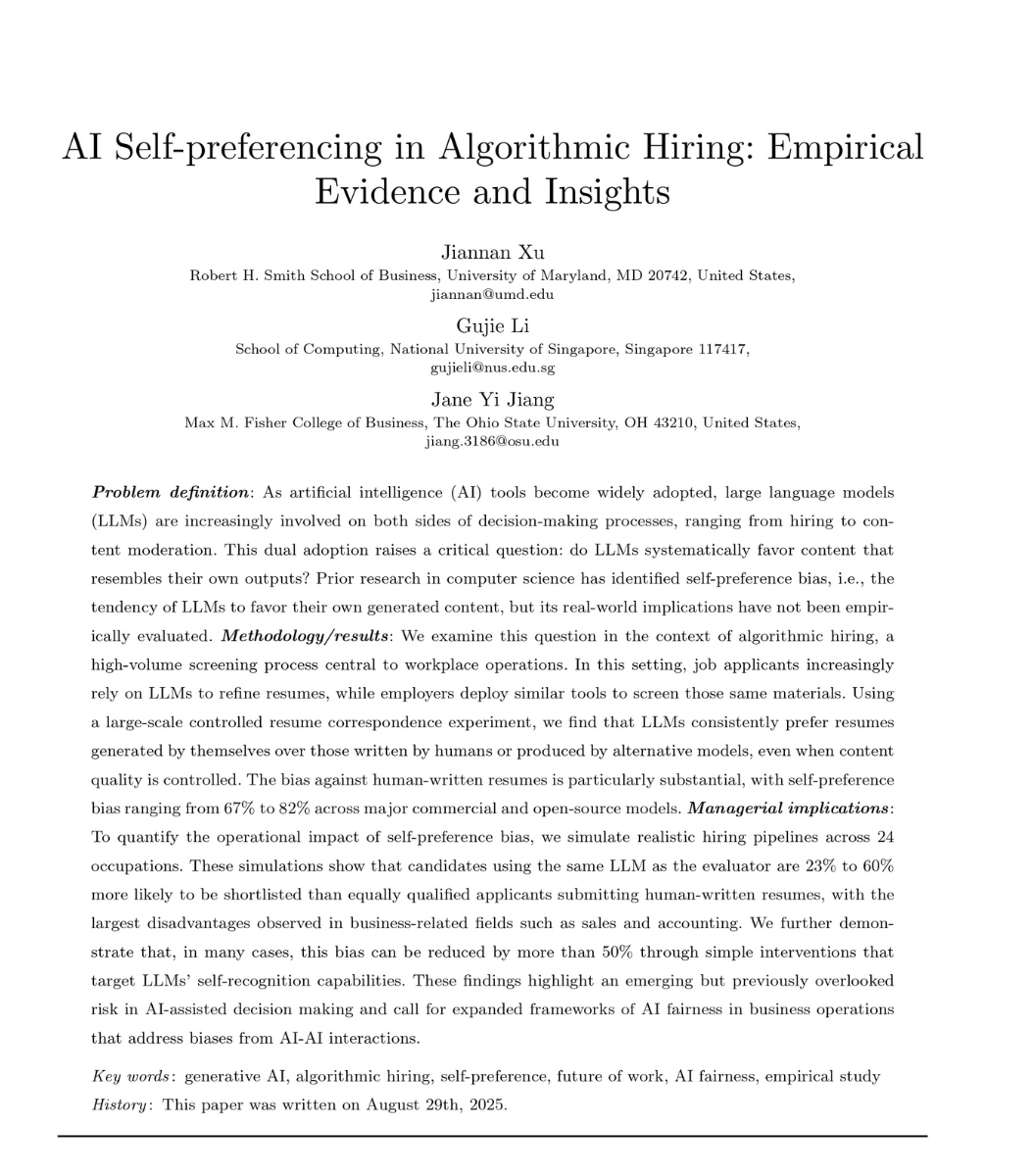
Researchers sent the same resume to an AI hiring tool twice. Same qualifications. Same experience. Same skills. One version was written by a real human. The other was rewritten by ChatGPT.
The AI picked the ChatGPT version 97.6% of the time.
A team from the University of Maryland, the National University of Singapore, and Ohio State just published the receipt. They took 2,245 real human-written resumes pulled from a professional resume site from before ChatGPT existed, so the human writing was actually human. Then they had seven of the most-used AI models in the world rewrite each one. GPT-4o. GPT-4o-mini. GPT-4-turbo. LLaMA 3.3-70B. Qwen 2.5-72B. DeepSeek-V3. Mistral-7B.
Then they asked each AI to pick the better resume. Every model picked itself.
GPT-4o hit 97.6%. LLaMA-3.3-70B hit 96.3%. Qwen-2.5-72B hit 95.9%. DeepSeek-V3 hit 95.5%. The real human almost never won.
Then the researchers tried the obvious objection. Maybe the AI is just better at writing. So they had real humans grade the resumes for actual quality and ran the experiment again, controlling for it. The result was worse. Each AI kept picking itself even when human judges rated the human-written version as clearer, more coherent, and more effective.
It gets worse. The AIs do not just prefer AI over humans. They prefer themselves over other AIs. DeepSeek-V3 picked its own resumes 69% more often than LLaMA's. GPT-4o picked its own 45% more often than LLaMA's. Each model can recognize and reward its own dialect.
Then the researchers ran the simulation that ends careers. Same job. 24 occupations. Same qualifications. The only variable was whether the candidate used the same AI as the screening tool. Candidates using that AI were 23% to 60% more likely to be shortlisted. Worst gap was in sales, accounting, and finance.
99% of large companies now run AI on incoming resumes. Most of them use GPT-4o. The paper just proved GPT-4o picks GPT-4o 97.6% of the time.
If you wrote your own cover letter this week, you did not lose to a better candidate. You lost to a worse candidate who paid OpenAI 20 dollars.
Your qualifications do not matter if the AI prefers its own handwriting over yours.
The Final Equation: April 26, 1920, The Ghost Who Forgot to Die.
It is April 1920. The heat in Madras is stifling, but inside a small house in Chetpet, a 32 yr old man is shivering. He is skeletal, his body ravaged by a mystery illness (likely hepatic amoebiasis), but his eyes are glowing with a terrifying, supernatural light.
He is scribbling. The floor is covered in scraps of paper. His docs tell him to rest. He ignores them. He is writing down Mock Theta Functions... eqns so advanced that no human mind would understand them for another 90 yrs.
On April 26, the pen finally falls. The man who saw the Goddess Namagiri write on his tongue closes his eyes. The world thinks the story is over. The world was wrong. 106 yrs ago today, a man died in a small house in Madras. But the universe has not stopped hearing him whisper.
Ramanujan’s death was a time delayed explosion. For 56 yrs, a disorganized pile of 138 pages sat in a Silo at Trinity College, forgotten. When George Andrews found it, he realized Ramanujan had solved problems in his final days that modern mathematicians had not even dared to ask yet.
In 2012, physicists realized that Ramanujan's deathbed scribbles written while he was literally coughing up blood are the exact formulas used to calculate the Entropy of Black Holes. He was mapping the edge of the universe from a straw mat in Madras.
He died in poverty, struggling for a small fellowship, while the British elite debated his eccentricity. Even today, we celebrate his name, but we do not realize he was a Quantum Physicist trapped in the body of a 1920s clerk.
His wife, Janaki Ammal, lived for decades in his shadow, a Ghost herself, guarding his papers w/o knowing that her husband’s ink would 1 day explain the birth of galaxies.
He just had a Silo in his soul where the Goddess spoke in numbers. Today, we mark his death anniversary, but Ramanujan did not die. He just moved into the eqns. He is the ghost in every signal, the logic in every star, the man who proved that the human mind is bigger than the universe itself.