New paper alert🔔 ‼️
Excited to share-paper from my postdoc work @NatureComms! In this work, we show that ATG9A and ATG2A/B link autophagy and small extracellular vesicle (sEV) secretion through lipid-dependent regulation, revealing a new mechanism that connects these pathways.
Hot from the lab. our preprint showing that embryo implantation requires #inflammation that is controlled by HOXA10, and dysregulation of the HOXA10-inflammation axis is associated with #miscarriage
https://t.co/rrmUn7mb2T
@ponsankaran_r@Sharmishth38157 @icmrnirrch @ICMRDELHI
IT'S HAPPENING! 💥 I'm psyched to launch the collaboration between @qedScience & @openrxiv@biorxivpreprint! Let's go back to concentrating on making discoveries, and not on “getting published”, because it’s not going to matter soon, when feedback & evaluation are detached from the journals. Preprint + q.e.d = your science is out there, and anyone can appreciate it 👇
Despite the madness of academic research this year, there are many trainees whose careers are still progressing. There are faculty jobs out there and here we put together some advice targeted to those sending faculty job apps. Please help share!!
🎉 It’s Official! Our phase 1️⃣ trial of iExosomes in metastatic pancreatic cancer is now published in @NatureComms
Zero DLTs in this first-in-human trial of systemically administered engineered exosomes targeting KRAS G12D ‼️
Phase 2️⃣ is underway!
https://t.co/6AdEqYLRJ0
Mentoring relationships can be incredibly rewarding, but what happens when they're simply not working?
Dr. Marisa Bartolomei offers bold advice: 'If a mentor, mentee relationship is not working... you have to cut losses.'
Listen to the full episode 🎧 https://t.co/Jj5dz80zop
📣Coming Soon: Extracellular Vesicles and Exosomes Biology Core Facility (EVcore)
A first of its kind facility to support your EV research needs including isolation, characterization, imaging, engineering and more.
Grateful to @CPRITTexas for supporting this resource. Stay tuned for more information!
https://t.co/XrQpeEqsHH
🧵 You’re not behind in bioinformatics. The field just evolves faster than anyone can follow.
1/ It’s not you.
Bioinformatics evolves too fast.
And not just from new algorithms—
But from how fast technology itself changes.
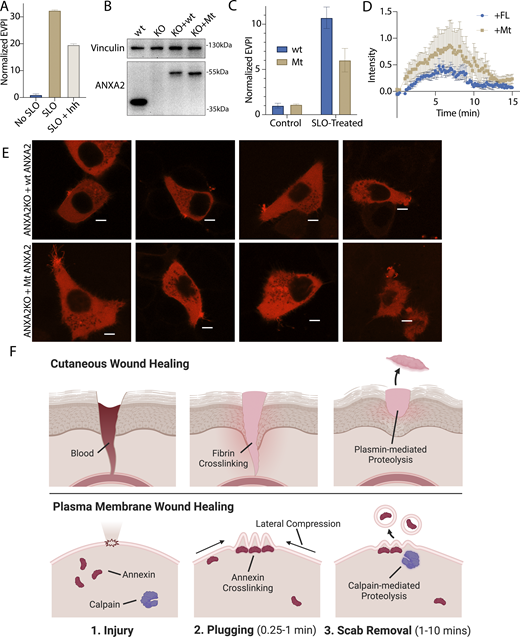
Justin Krish Williams, Randy Schekman et al. @ucberkeley show that human cells shed extracellular vesicles in order to repair their membranes. https://t.co/hgS1mXxkc5
#EVs#Exosomes
Organoids derived from placental tissue can be used to study processes involving syncytiotrophoblasts – cells that contain billions of nuclei – in the placenta. #DevBio
https://t.co/3qRuCYBOD0
We’ve engineered stable cell systems to induce lipid scrambling of the plasma membrane with active forms of TMEM16F. Scrambling alone causes vesiculation (🔵TMEM16F; 🟠PS/Annexin V). Let us know if you want to try the cells out. Preprint: https://t.co/KuSQ16WE6X
Excited to see our N&V w/ @MikeLangePhD published in @Nature, highlighting new work from Raphael Rodriguez and team. A heterofunctional molecule that activates lysosomal iron triggers lipid peroxidation and ferroptosis in therapy-resistant cancer cells. https://t.co/JEXp0ukdnv
Park, Sherwood et al. show that de novo lipid synthesis and polarized prenylation drives cell invasion through basement membrane https://t.co/f6yvuWYOZt
📙 In our #Cancer Cell Biology collection: https://t.co/3DeJyRbkKk
#AACR25