On Behalf of @SGAC Near Earth Objects (NEO) Project Group, We wish you all a very happy 'International Asteroid Day' ! ☄️☄️🌠
On this special day, we are pleased to present to you our First 'Special Edition' of SGAC NEO Project Group Newsletter! 🌟 (1/3)
Today is Asteroid Day! Studying asteroids like Ryugu can uncover information about planet formation and how the Earth became habitable. This is one of our favourite images of Ryugu! Many more can be seen in our gallery: https://t.co/cwDNDeNx7U (📷: JAXA, U. Tokyo & collaborators)
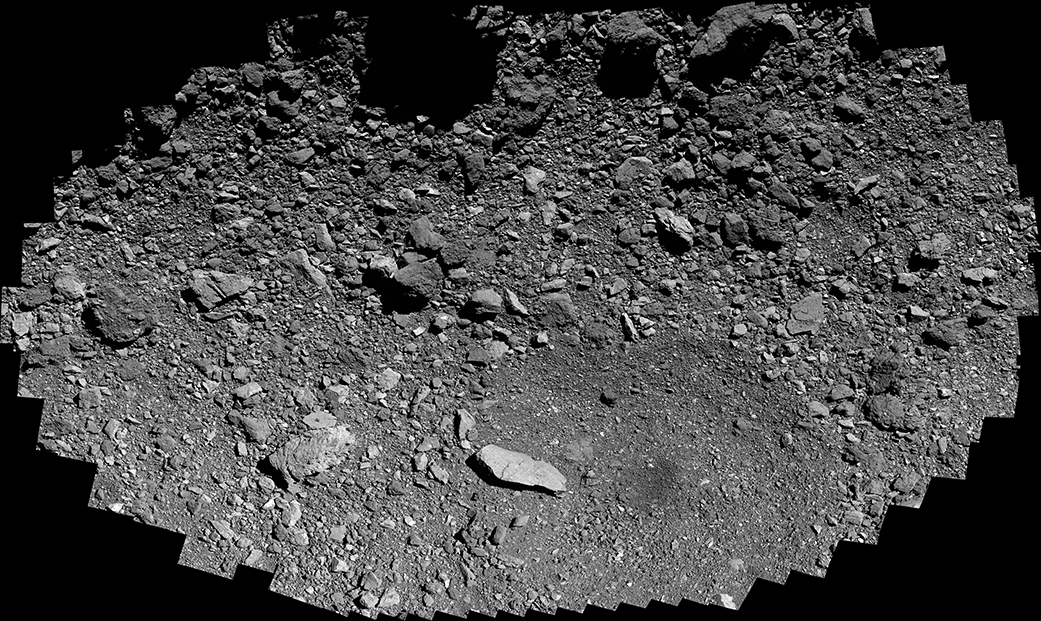
This is the highest-resolution mosaic of site Osprey to-date, and shows the site at 0.2 inches (5 mm) per pixel at full size. It is made up of 347 images — all taken May 26, during the 820 ft (250 m) pass over the backup sample site.
Download the mosaic: https://t.co/0D1FCCF21G
On April 29. asteroid 1998 OR2 will safely pass Earth by 3.9 million miles/6.2 million km. A @Daily_Express article implying there is a "warning" about this asteroid is false. A complete listing of all asteroid passes is always public at https://t.co/i6i8HwCDJq. Carry on!
ENTREVISTADO EN @20m sobre el encuentro con el asteroide potencialmente peligroso #2002PZ39 que pasa mañana a 5,8 millones de km de la Tierra. Su diámetro: cercano al km
Nuestro estudio de la importancia de conocer sus propiedades mecánicas para desviarlos
https://t.co/aOQIPWLcXY
You may have heard an asteroid is "headed our way fast". It's not. This one will miss is by 13x the distance to the Moon and its orbit is well known since 2002.
A worldwide network of astronomers is always scanning for threats. 🔭🛡️☄️ Info here:
https://t.co/SOh7dlnon0
We've seen some incorrect stories on #asteroid 2002 PZ39 circulating. The trajectory of this asteroid is very well known. It will safely pass Earth at a distance of 5.77 million km (3.59 million miles), about 15 times the distance of the Moon.
Newly-discovered asteroid 2020 CQ1 passed just outside our band of geostationary satellites yesterday, missing our surface by only 58,000 km. It's slow speed allowed Earth's gravity to noticeably bend its path.
https://t.co/PAtsz0Wq5Z
Multi-disciplinary team from @UBC studied unintended consequences of debris from #asteroidmining, an aspect that current legal frameworks don't address. They present their results at 1st International Orbital Debris Conference Dec 9-12. #orbitaldebris2019
https://t.co/vWzPdPKw1R
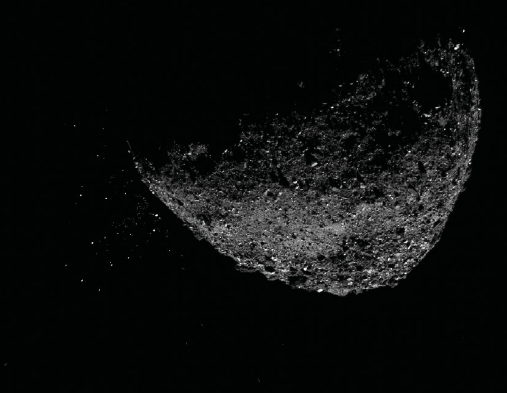
Early this year, the @OSIRISREx team made a surprising discovery: asteroid Bennu was releasing particles. After months of study, the team has narrowed down the possible causes of these particle ejections. https://t.co/sNKbJA5xQ1
ASU's Interplanetary Initiative @II_ASU uploaded the stream of their interdisciplinary panel on "interplanetary everything". Space is for everyone! #spacetothrive https://t.co/k1ij3SB1YS
Thread: Today I got to do what a lot of astronomers rarely get to do (mostly I think because the engineers think we'll stuff something..) and installed hardware on a big(ish) telescope. 1/11
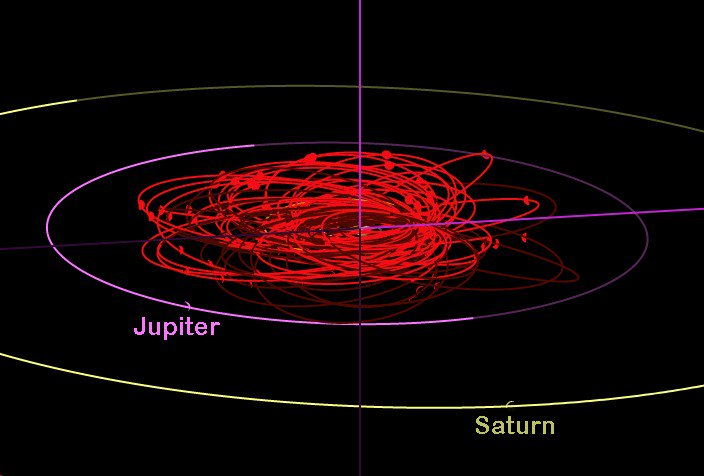
The November 2019 report from @esa on NEOs is available.
On 31 Oct 2019, very small asteroid 2019 UN13 passed within 0.03 lunar distances from Earth. Also, @AreciboRadar has observed a record 100 NEOs so far in 2019! #planetarydefense#teamradar
[PDF] https://t.co/vDuqytLwF6
The @b612foundation has released their 2019 Annual Progress Report. This has been an important year for educational outreach and their Asteroid Institute developing new technologies to track and find asteroids. #planetarydefense
https://t.co/CKL7wmvPdT




![asteroidanalyst's tweet photo. The November 2019 report from @esa on NEOs is available.
On 31 Oct 2019, very small asteroid 2019 UN13 passed within 0.03 lunar distances from Earth. Also, @AreciboRadar has observed a record 100 NEOs so far in 2019! #planetarydefense #teamradar
[PDF] https://t.co/vDuqytLwF6 https://t.co/kV1ztOk7i8](https://pbs.twimg.com/media/EInzyJlWsAEltaJ.jpg)