Research Fellow at #ESO. Phd student in Grenoble at #ipag. Member of the #DOCproject (ERC Dawn of Organic Chemistry). Energetic and loud, as a typical italian!
“With the VLA, both protostars showed strong evidence of methanol surrounding them. This means that both protostars have hot corinos, and the reason we didn’t see the one at shorter wavelengths was because of dust" ^.^
Check it out:https://t.co/b2ajJtwL11
https://t.co/mZqTaw2j4M
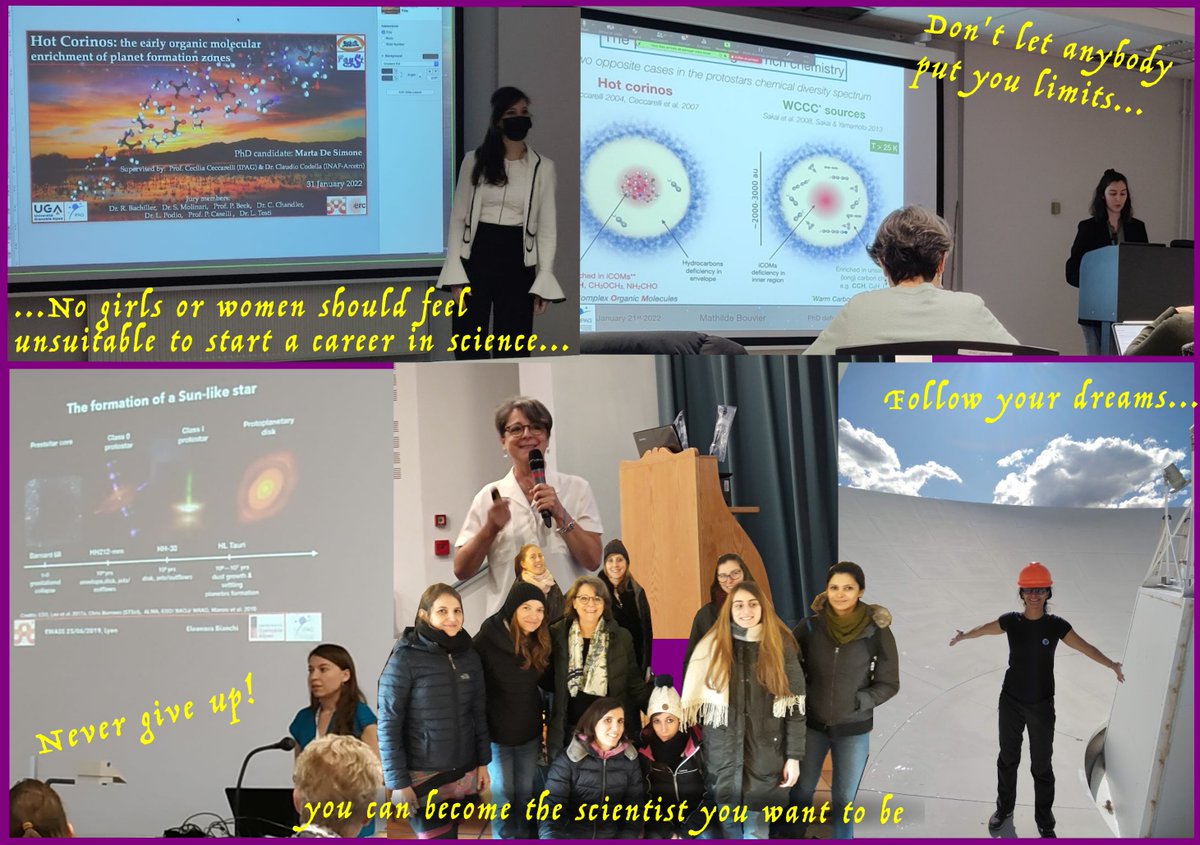
I am very happy to share this amazing news: @UGrenobleAlpes awarded me a prize for my PhD thesis work judged to be of "exceptional quality" within the Physics doctoral school. I am very honoured and enthusiast. Congratulations to the other Doctors awarded in the other fields!
#Félicitations 🥳 // L’@UGrenobleAlpes a récompensé 10 docteures et docteurs diplômés en 2022 pour leur travail de thèse jugé d’une qualité exceptionnelle ! Bravo à eux ! 👏 Les prix seront remis lors de la Cérémonie des docteurs le 22 juin prochain.
➡️ https://t.co/Tg44rcjFa7
✨I am very honored and excited to have received the 2023 prize of @SF2A_astro for my PhD thesis!
Merci beaucoup à la Société Française d'Astronomie et d'Astrophysique. À bientôt in Strasbourg! 💫🥂
PRIX DE THESE DE LA SF2A 2023
Le conseil de la SF2A a attribué le prix de thèse 2023 à Marta de Simone. Marta de Simone a effectué sa thèse à l’IPAG @IPAG_fr , sous la direction de Cecilia Ceccarelli et Claudio Codella (INAF). Ses travaux concernent (1/6)
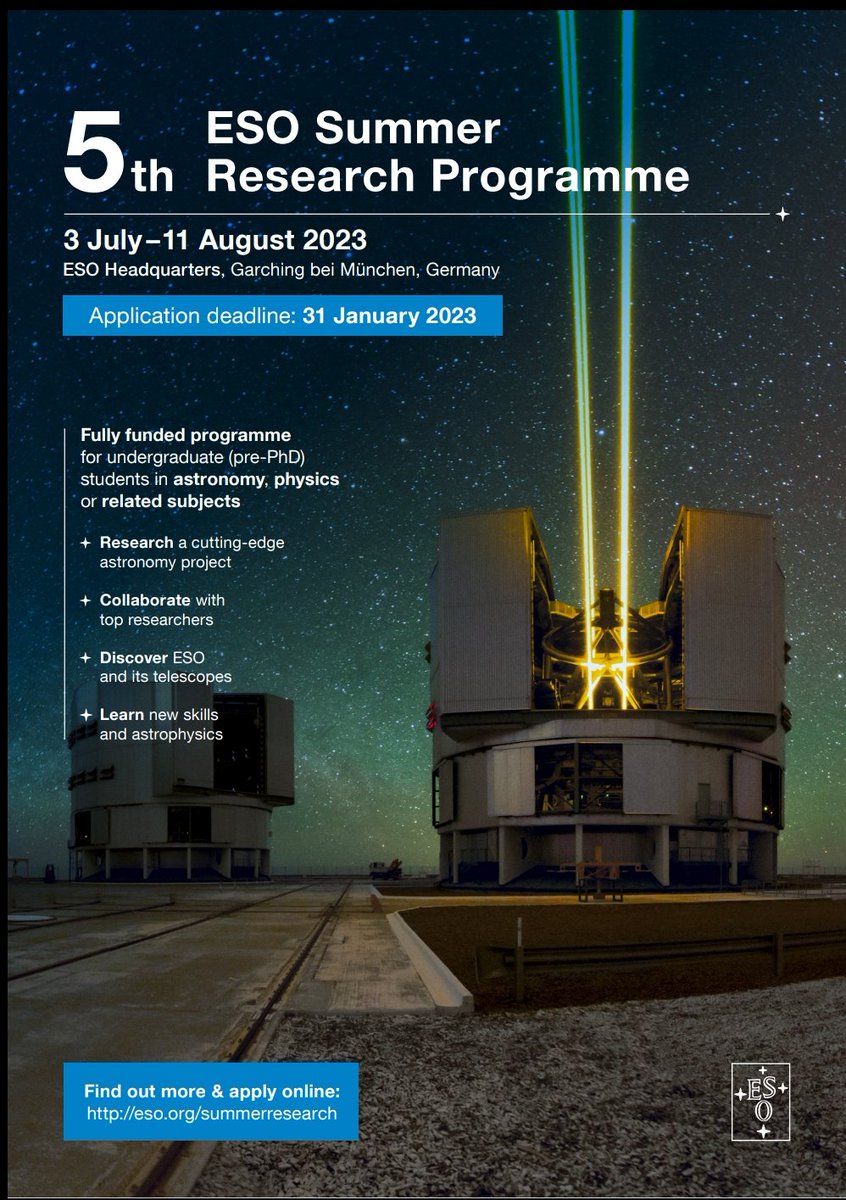
We offer 7 projects ranging from protoplanetary discs to the earliest galaxies.
(Disclaimer: in one of the project very nice and fun molecules are excited in space waiting for you!) ☺️
Deadline to apply: 31 January
✨Calls for #undergraduate students✨
Join us at @ESO-Garching for our #SummerResearchProgramme! It's a great opportunity to get hands-on research experience for those not enrolled in a PhD. You will be part of the super active ESO Life! Check it out!
🔗https://t.co/snzcGVwbgb
What do life's origin's tell us about life's future?
Watch this fascinating discussion with #NobelPrize laureates Andrea Ghez, Benjamin List, Paul Nurse, Didier Queloz and astrochemist Paola Caselli from our Nobel Week Dialogue today.
Listen in full: https://t.co/kqnxmlvpXt
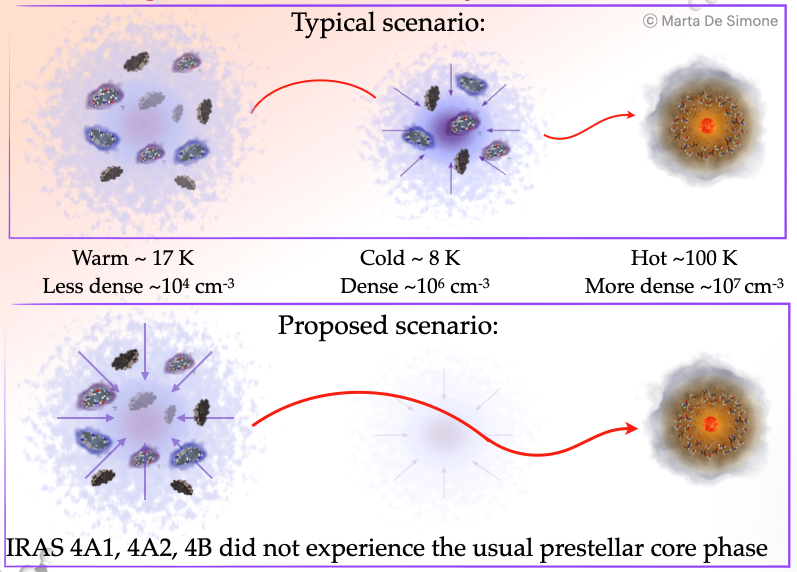
We constrained the dust temperature at the mantle formation time to be ~17K (quite warm for this stage).
We concluded that a brutal event started the collapse that eventually formed the three protostars, which,therefore, did not experience the usual pre-stellar core phase.
✨PaperDay✨
Check out my new paper on ApJ Letters on the ice mantle history of young protostars in the Perseus cloud.
Cm-wave observations are opening a new era in the study of hot corinos!
https://t.co/Afq5iCE7DH
@DawnOrganic#hotcorinos#astrochemistry#protostar#icemantle
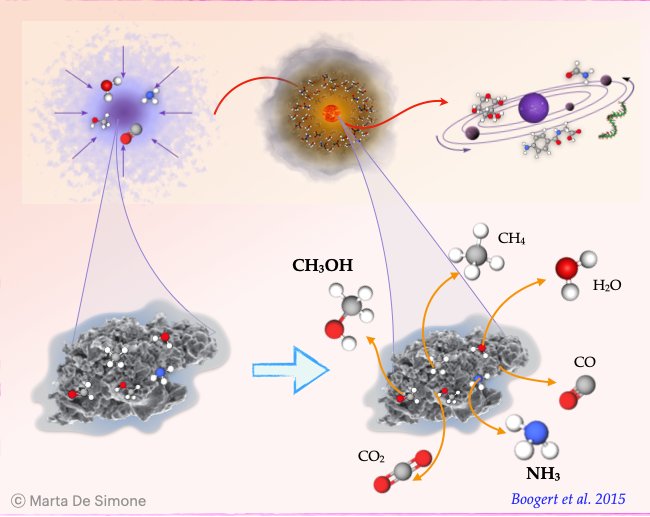
We observed CH3OH and NH3 toward three young protostars at high angular resolution (1"; ~300 au) with the VLA at cm wavelenghts. These species allow us to retrieve the chemical composition of the ice mantles prior to the collapse.
🌟 A star is born!
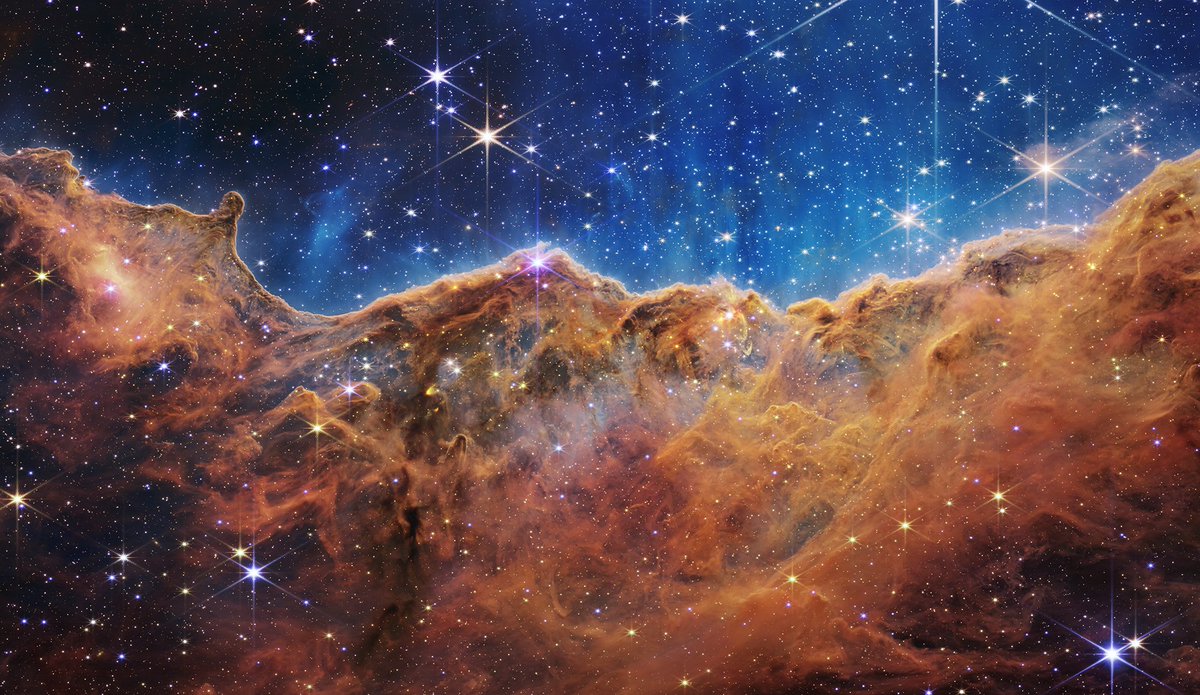
Behind the curtain of dust and gas in these “Cosmic Cliffs” are previously hidden baby stars, now uncovered by Webb. We know — this is a show-stopper. Just take a second to admire the Carina Nebula in all its glory: https://t.co/tlougFWg8B #UnfoldTheUniverse
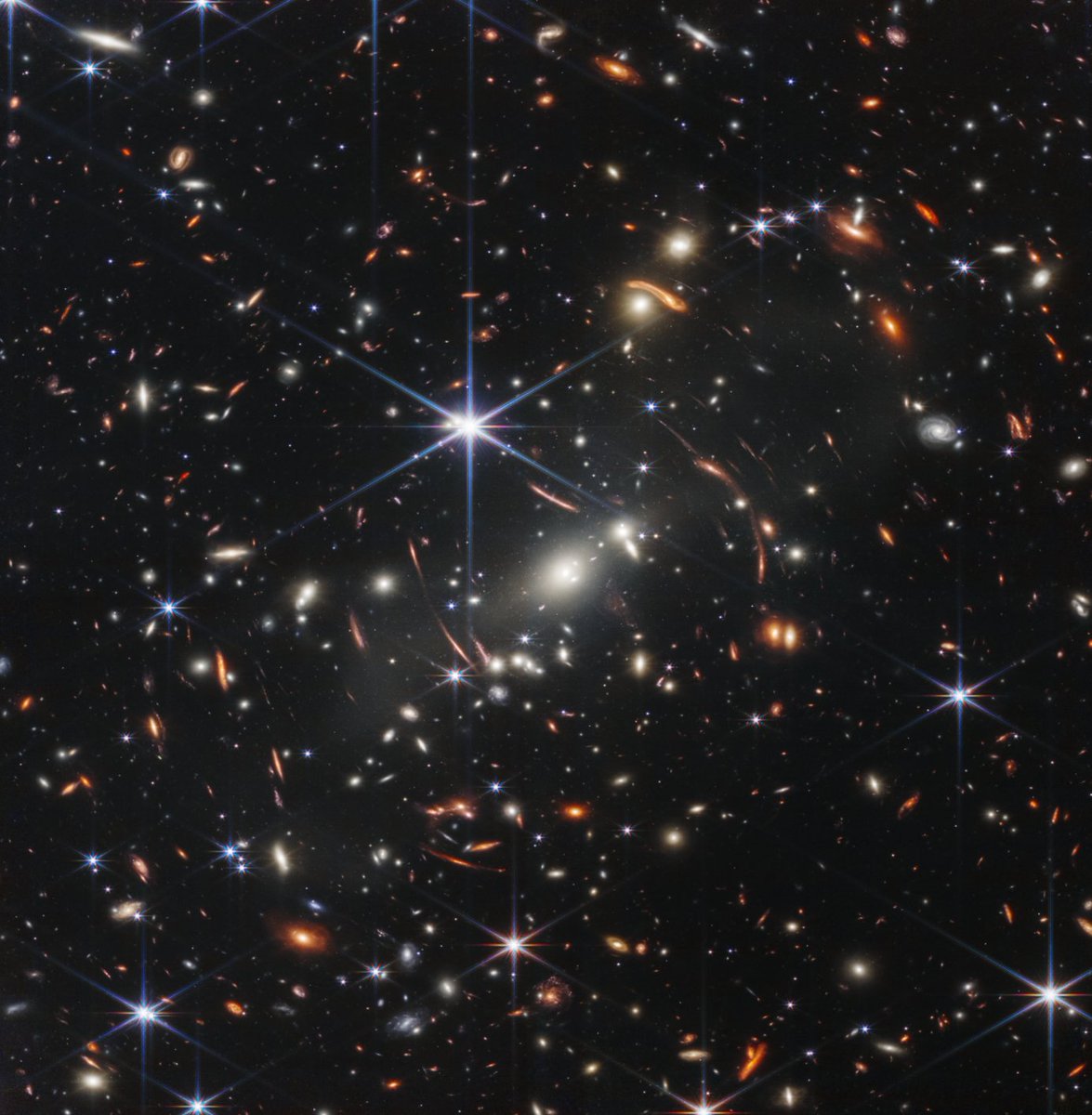
👀 Sneak a peek at the deepest & sharpest infrared image of the early universe ever taken — all in a day’s work for the Webb telescope. (Literally, capturing it took less than a day!) This is Webb’s first image released as we begin to #UnfoldTheUniverse: https://t.co/tlougFWg8B
A train of shocks at 3000 au scale? Exploring the clash of an expanding bubble into the NGC 1333 IRAS 4 region. SOLIS XVI
De Simone et al.
Accepted in MNRAS journal
Full-text URL: https://t.co/vKBFLNGuaU