@WardHoward14 @jonKzink@amvanderburg@amannastro @AstroBenCap @msoaresfurtado@TESSatMIT We'll be looking at the Fig. 12, Zhan+19 with a student flare, and see if we can figure out if the flare is rotating out of view or if it's occulted, or both 👍😃
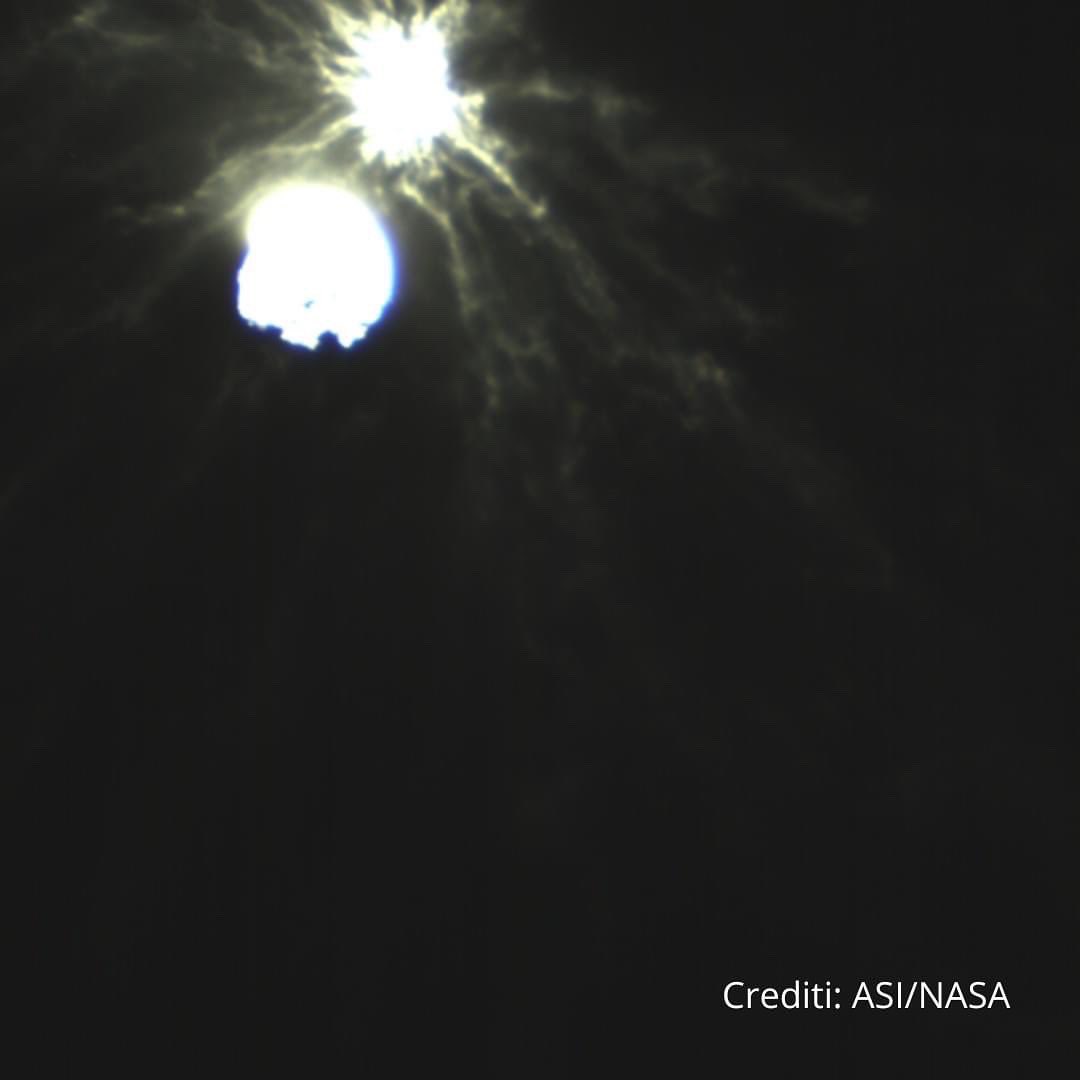
NASA DART TO IMPACT ASTEROID'S MOON
@NASA's #DART (Double Asteroid Redirection Test) spacecraft will impact asteroid Didymos' moonlet Dimorphos Sep 27 to nudge its orbit. Test is key to planning deflection of future asteroids threatening Earth. System shown to scale vs GG Bridge.
Superflares have been suspected of being harmful to the atmospheres and habitability of exoplanets. A newly published study found evidence that they only pose a limited danger, since the radiation bursts do not explode in the direction of the exoplanets.
https://t.co/8mdlZbTvXx
surprisingly, warming scenarios of the (unfortunately) most likely temperature rise this century - 3 degrees and above - are underrepresented in research to date https://t.co/4GaNdiqv0A
@ichhabekaries @JanIguess "aber mein mangelndes Geld liegt ja daran dass ich [...] den Monat 90 für Games und Nintendo online ausgegeben"
Vielleicht solltest du Reisen > Games priorisieren?
@ichhabekaries Aus der letzten Ecke in KA kann sie dich rauskratzen, am anderen Ende vom Globus wirds schwierig. Mich ruft sie auch nie an, seit ich ausgezogen bin. Aber sie mag angerufen werden 😊
@mileslucas_ And for anyone interested, there is a #GSoC project with @Open_Astronomy related to #JuliaAstro Photometry.jl, check out https://t.co/6k7ew1f8t9 #JuliaLang
#CoolStars21 people! Our splinter session on Magnetic Variability in Current and Future Time Domain Surveys now has a website and a hashtag (#magneticfutures) and an abstract submission deadline (13 March 2020). https://t.co/PavuEJ7iDe
Today's post on the @FlatironCCA Astro Data group blog is by @megaparsec808 (with a guest appearance from @afeinstein20) about using convolutional neural networks to detect flares in stellar light curves: https://t.co/MUEE2nr6LV