Telescope teamwork ✅
Hubble and @NASAWebb captured the galaxies in this image, while @ChandraXRay detected the superheated gas that these galaxies are immersed in, seen in purple.
Called MACS J0416, this cluster of galaxies is held together by gravity: https://t.co/VrYdjDPWtG
We need your help! 🆘
In its mission to map out the #DarkUniverse, #ESAEuclid will image hundreds of thousands of distant galaxies 💫
For the next six years, the spacecraft is expected to send around 100 GB of data back to Earth every day! 🤯
That’s a lot of data, and we need your help to train Artificial Intelligence models to classify the shapes of galaxies as seen by Euclid 💡
If you partake in our new Euclid challenge on @galaxyzoo, you could be the first to lay eyes on Euclid's latest images ✨
Not only that, you could also be the first human ever to see the galaxy in the image 🤩
Read more: https://t.co/gUyh2PhLkG
Access Galaxy Zoo: https://t.co/Ds7AnQK0Ra
NASA's Fermi Gamma-ray Space Telescope detected a powerful gamma-ray burst, known as "Brightest Of All Time" (BOAT), possibly caused by a supernova 2.4 billion light-years away.
This event, GRB 221009A, exhibited an unprecedented emission line suggesting matter-antimatter annihilation at 99.9% the speed of light.
👉 https://t.co/9G5zgUDyP0
Yesterday Was CRAZY!
🤯
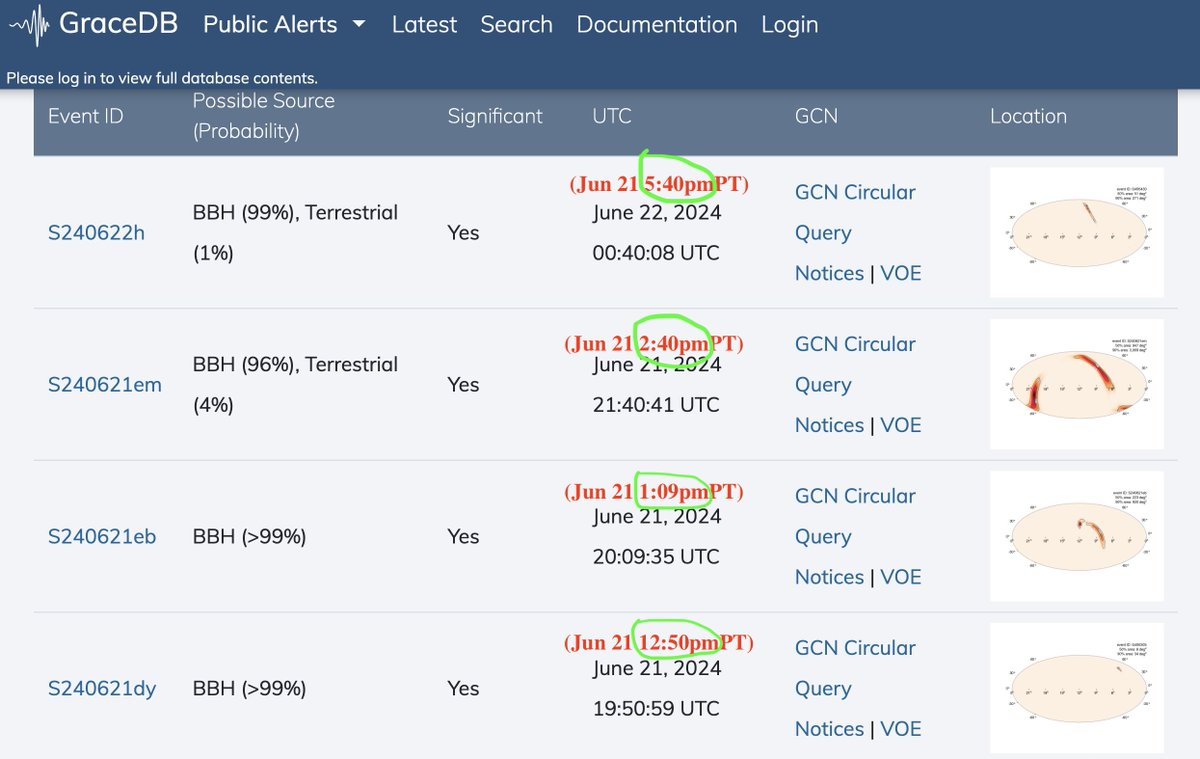
In under 5hrs, FOUR #GravitationalWaves Candidates were observed by BOTH @LIGO detectors & @ego_virgo detector! We've had candidates close in time before, but not FOUR!!
Image below shows the local time for each of these #GravitationalWave candidates.
The following images were taken with XMM-Newton to check the placement of the mirror shells by observing single-reflection arcs while looking at Scorpius X-1. The image is a composite of four off-axis EPIC-pn observations of Scorpius X-1 in the 0.3-12 energy band.
Images showing the dust and cosmic rays on the surface of comet 67P/Churyumov-Gerasimenko with stars moving in the background.
These images were filmed back in 2016 by European Space Agency (ESA) spacecraft Rosetta using OSIRIS (Optical, Spectroscopic, and Infrared Remote Imaging System).
If history has taught me anything, it's that humans are capable of doing horrible things, but when we want to, we're also capable of incredible feats like this one. It's part of the reason why I remain hopeful of our future despite the state of the world these days. Every time I read the news, I get a deep sinking feeling in my chest and everything seems overwhelming.
Strangely enough, when I look at these images of a comet flying around millions of miles away, I feel tranquility. I stop worrying about what I can't control. In the grand scheme of things we're just a tiny spec in the history of the grand cosmos. We'll come and go like everything else. Just a few thousand years ago, we were telling stories around a fire in caves. And now, here we are, capable of engineering a probe to land on a 4 km space rock going at 130,000 km/h, taking photos, and beaming it back to earth so that we can view them from the palm of our hands. Nothing cooler than that.
🎶A supermassive black hole...
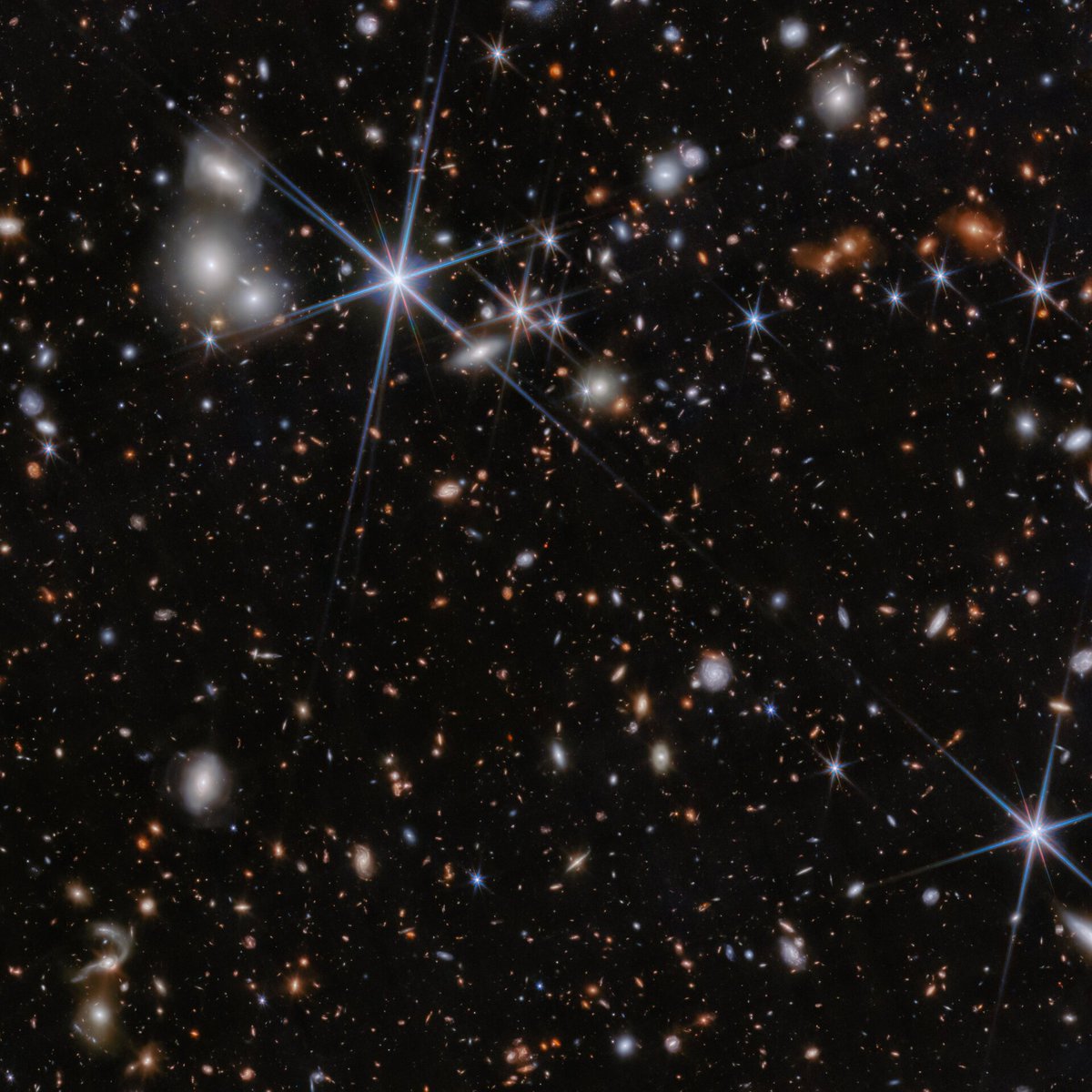
Astronomers have used the NASA/ESA/CSA James Webb Space Telescope to find evidence of the most distant detection of black holes merging together.
Never before has this phenomenon been detected so early in the Universe, shedding new light on how black holes grow.
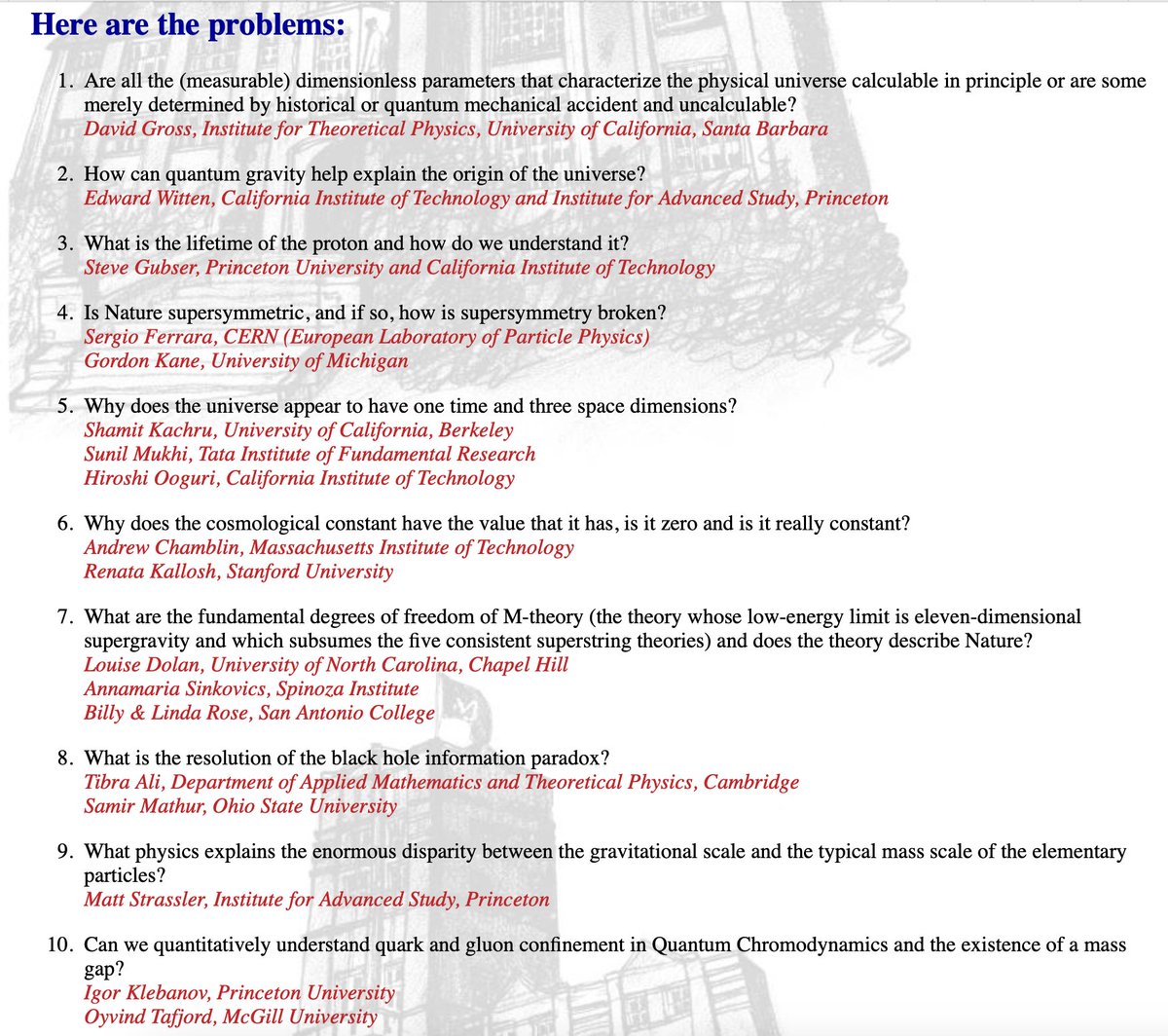
The top 10 Physics Problems for the Next Millennium as proposed by participants of the 2000 Strings conference and selected by a panel of Duff, Gross and Witten:
A first visit to Cité de L’espace this weekend. Had to get a picture with my favourite x-ray observatory. With Chandra’s future in doubt @ESA_XMM will only be more important to the community. #Astronomy
Devastating news that the Chandra X-ray Observatory has been defunded. The very real prospect of an X-ray desert in the near future should be of grave concern for all high energy astronomers.
Pretty depressing day at work today with lots of staff updating their resumes as we grapple with NASA's decision to shut down Chandra, the world's only ever high resolution X-ray space telescope, still returning fabulous science discoveries. Still hoping this can be reversed
This #eRASS1 animation shows the #Xray sky as seen by #eROSITA. The X-ray bands are colour-coded according to their energy (red: 0.3-0.6 keV, green: 0.6-1 keV, blue: 1-2.3 keV). And a number of prominent sources have been highlighted. 4/9
CC: Jeremy Sanders/eROSITA consortium
@eROSITA_SRG#eRASS1 data and papers are out. A few glasses were raised at MPE. Today you should ask what X-ray astronomy can do for you, and *also* ask what you can do for X-ray astronomy! #DR1Splash
The X-ray sky opens to the world https://t.co/N0h94FnUvz
⚠Breaking space science news⚠
We have adopted two new ambitious space science missions:
🪐 EnVision: a bold mission to study Venus from its inner core to its outer atmosphere, giving important new insight into the planet's history, geological activity and climate targeted to launch in 2031.
🔗https://t.co/pbIhCvY0Yq
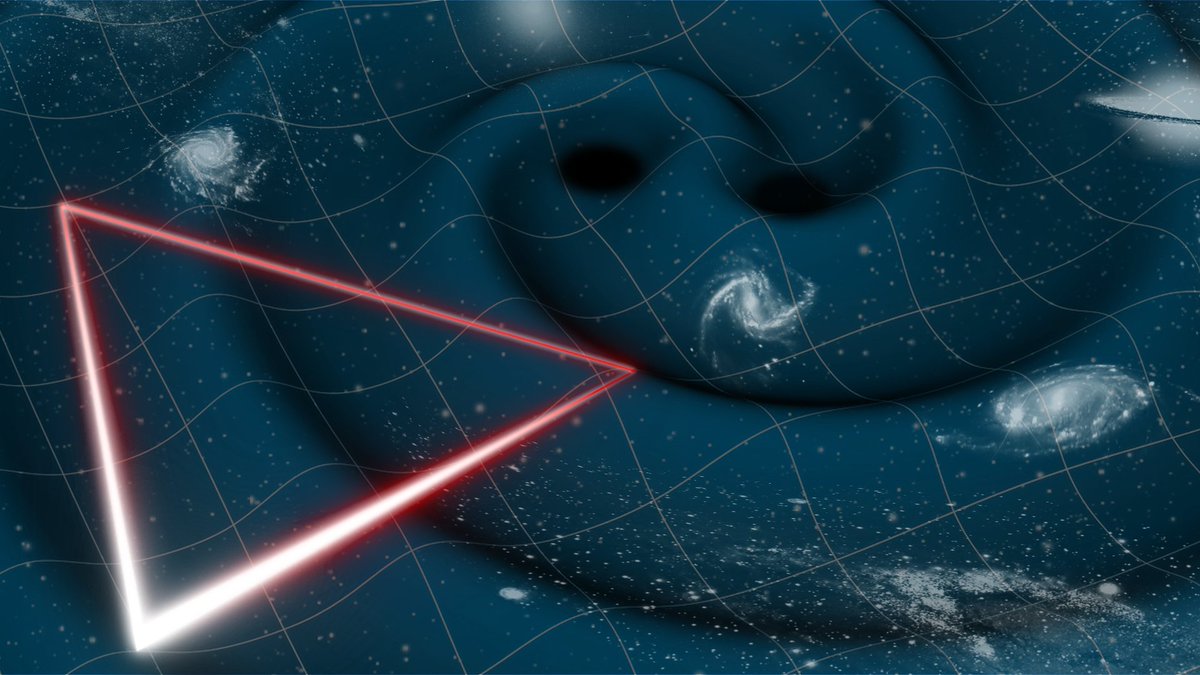
〰️LISA: the first scientific endeavour to detect and study gravitational waves from space targeted to launch in 2035.
🔗https://t.co/8yEjDDuQTe