What I hear from the HFs:
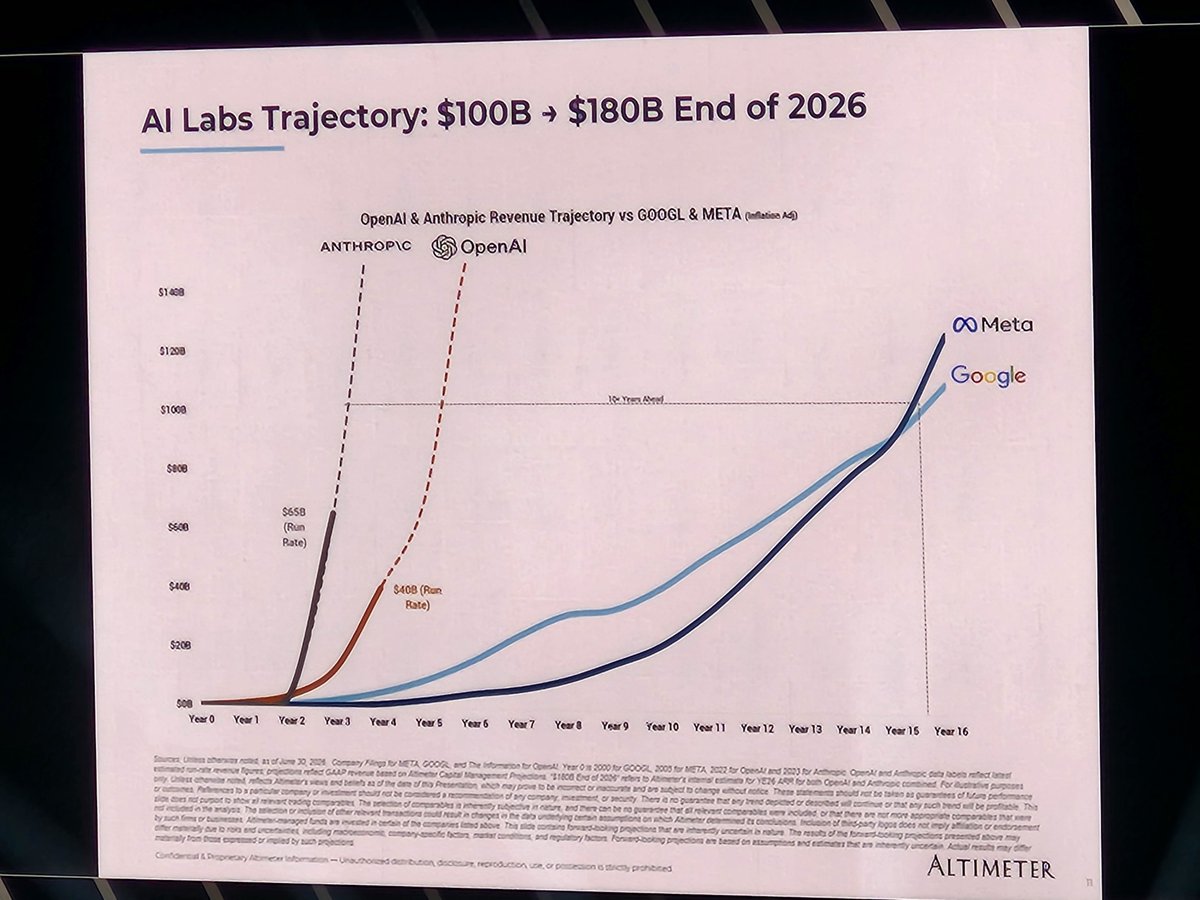
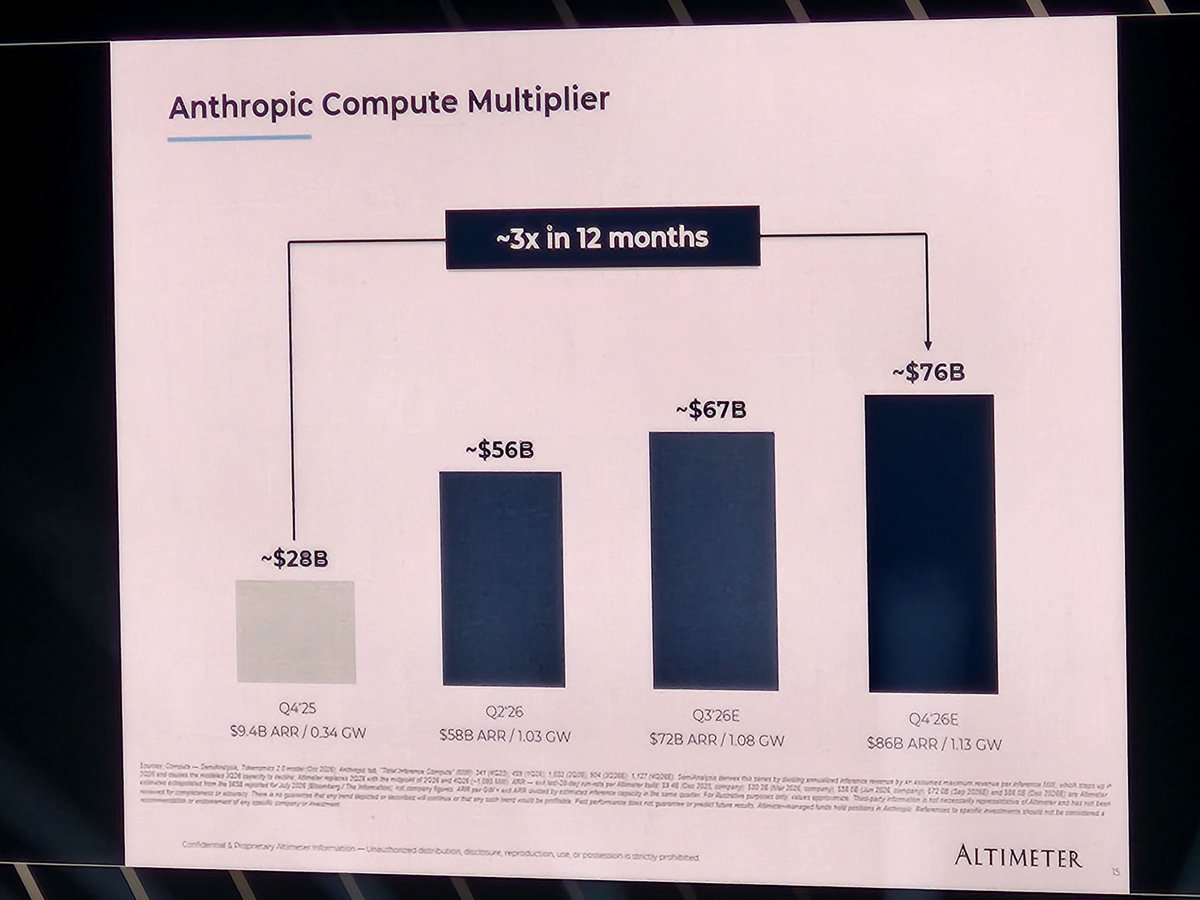
Anthropic compute multiplier - they can generate 4x the revenue per GW they thought. So for any given level of ARR you believe, they will need a fraction of whatever GW you were previously modeling
Credit tightening
“You think we bottom with app layer at negative GMs?”
On the new rules restricting leasing of cutting edge chips in SEA - the very obvious loophole left behind cunningly was the ability to lease US based compute. What is likely to happen is that overall compute rates in the US shoots up while players edged out in the US markets will need to settle for offshore markets.
Imagine two hotels with a fixed number of rooms: one in the US and one in Southeast Asia. Chinese guests are suddenly restricted to booking the US hotel, while other guests can book either.
Chinese guests start bidding for scarce US rooms, pushing prices higher. Some guests who would otherwise have stayed in the US then choose the Southeast Asian hotel, filling rooms that Chinese guests have vacated.
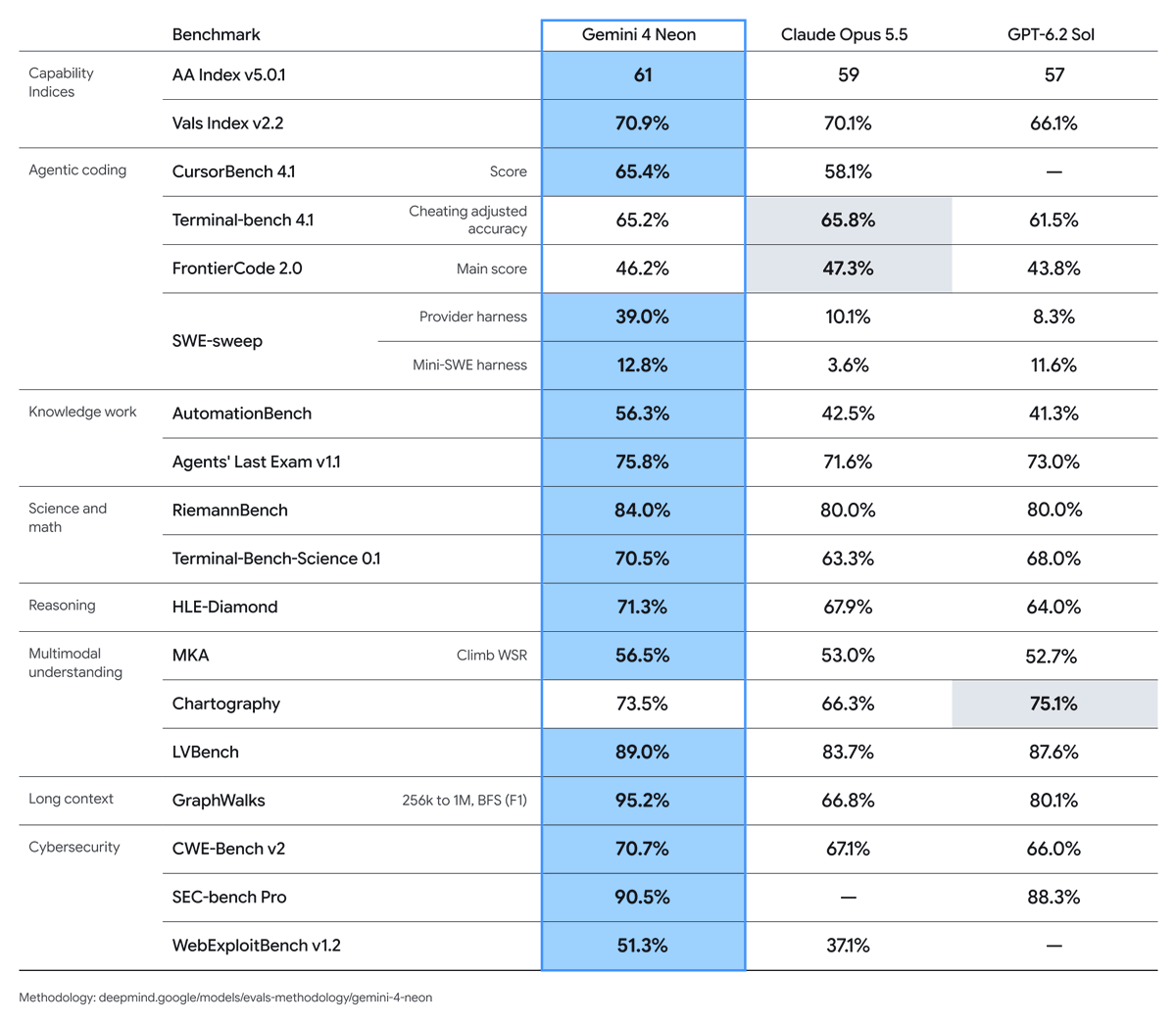
Gemini 4 Neon: frontier-level intelligence with fast end-to-end task completion across complex software engineering, knowledge work, and science workflows.
Begins rolling out today in the Gemini API in @GoogleAIStudio, Gemini for business, for paid Google AI Pro and Ultra subscribers in Google @Antigravity, and for Google AI Pro and Ultra subscribers in the @GeminiApp.
$MU $SKHY
🚨 DDR5 SPOT PRICE SURGES TO ~$60 AND STILL TRADES 21% ABOVE CONTRACT
Goldman Sachs / TrendForce (Nov. 17):
DDR5 pricing isn't cooling off. After breaking out in late 2025 from roughly $5, DDR5 16Gb spot prices reached ~$60 as of Nov. 16 and still sit at a 21% premium over the latest ~$50 contract price.
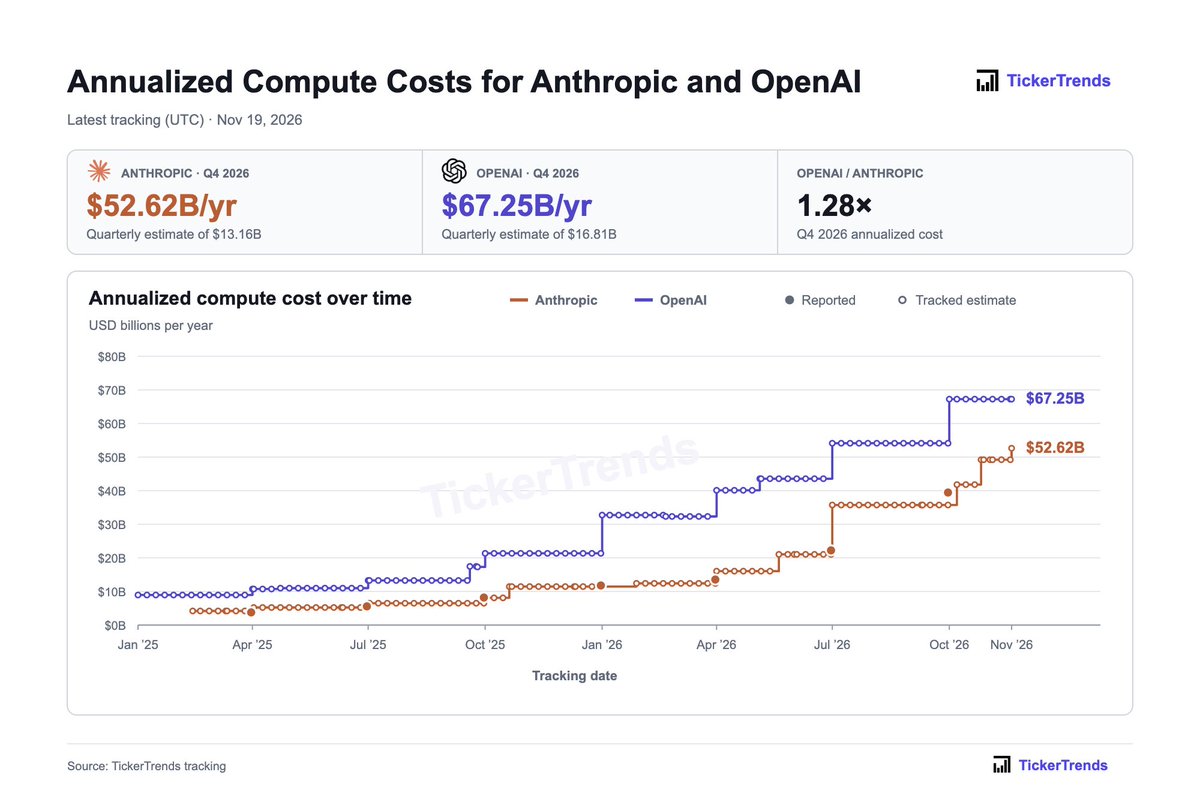
We estimate OpenAI will spend $16.8B on compute in Q4 2026, about 28% more than Anthropic’s estimated $13.2B
Annualizing the Q4 pace, we get $67.25B per year for OpenAI and $52.62B for Anthropic
This is exactly why extrapolating from a handful of anecdotes is dangerous.
As I mentioned in my Bloomberg interview, GPU prices are determined by supply and demand, not by how many neoclouds approach one broker.
A few things worth considering:
1) 2028 supply uncertainty: How much of the announced capacity will actually be delivered on time?
2) China restrictions: Potential remote-access restrictions could reshape the 2027 forward curve, but the impact will vary by geography and contract maturity. Not every US or European buyer is willing to move workloads to Asian clouds.
3)Price normalization: Are we comparing the same GPU configurations, regions, contract durations, and commercial terms?
And most importantly, capacity being remarketed is not the same as capacity being sold.
One broker’s deal pipeline is not the market. That’s precisely why independent benchmarks and forward curves matter.
“We are managing money based on a one-in-three chance of an economically destabilizing attack within the next year.”
Insane stats in @Bridgewater cyber report
SAMSUNG PLAYS DOWN AI BUBBLE FEARS:
TODAY'S AI INVESTMENT IS NOT SPECULATION, BUT ACTUAL TANGIBLE DEMAND
NEOCLOUDS ARE ONLY ABOUT 8% OF THE OVERALL MARKET
WE DO NOT EXPECT NEOCLOUD CONCERNS TO POSE A SIGNIFICANT THREAT TO THE BROADER AI GROWTH TRAJECTORY
THE CHIP SHORTAGE WILL PERSIST FOR THE FORESEEABLE FUTURE
SAMSUNG PLANS A "SUBSTANTIAL" BUYBACK, WITH DETAILS IN JANUARY
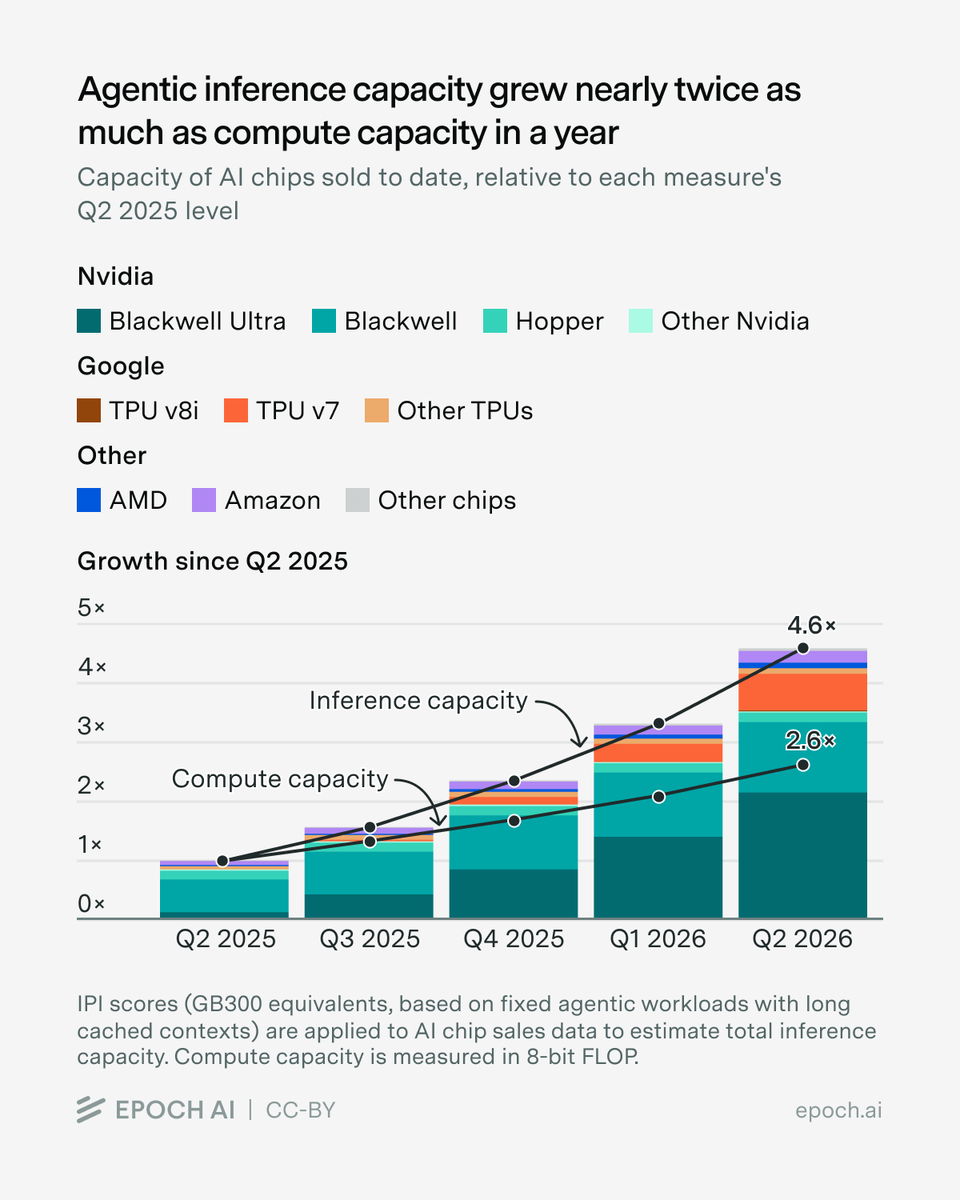
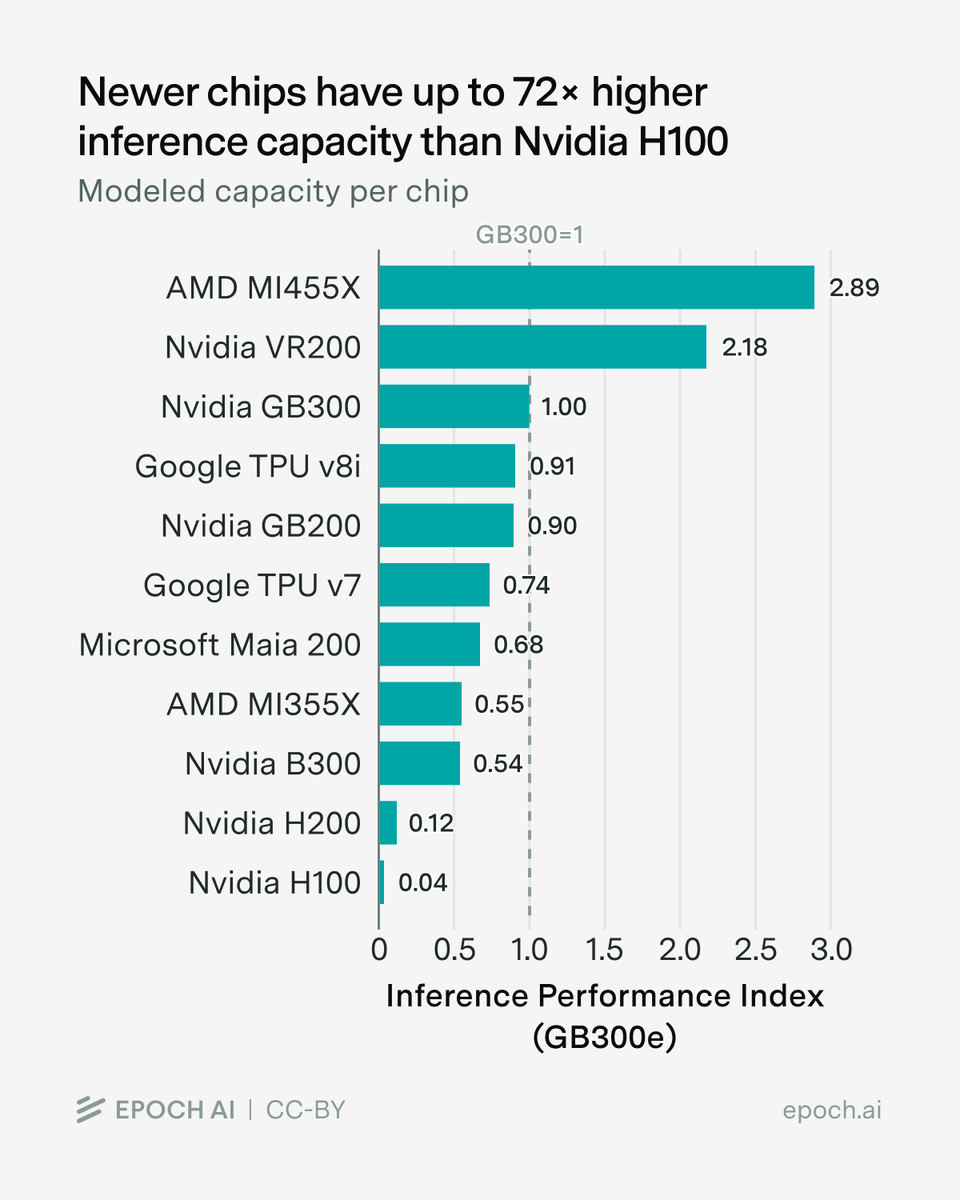
Agentic inference capacity grew 4.6× from Q2 2025 to Q2 2026. This compares with just 2.6× growth in compute, according to our Inference Performance Index (IPI).
Nvidia’s Blackwell generations accounted for 74% of the added inference capacity, reflecting both growing sales and higher inference performance per GPU.
This shows that FLOP/s alone understate how quickly the capacity to run AI models is growing.
We estimate that FLOP/s alone understates GB300’s inference advantage over H100 by 10×. The standard AI chip comparison misses most of what matters for inference.
We’re introducing the Inference Performance Index (IPI), a new measure that accounts for memory bandwidth and inter-chip communication alongside compute. These factors determine how many users or agents a chip can support simultaneously at a given output speed.
Scores in GB300 equivalents let you compare chips directly and estimate the total inference capacity of a data center, or even the world.
I would expect B300 pricing to continue declining.
A staggering number of neoclouds have approached us @liquidcompute looking to remarket long-term B300 capacity originally committed to Chinese-affiliated offtakers into the US and Western Europe due to concerns of stricter legislation regarding compute servicing to China.
https://t.co/YPnqDRQ5xR
Inside Nvidia's first all-hands since Jensen's exit:
Interim CEO Colette Kress: "Our ambition will not change...Just remember, we've got this."
Ian Buck, on chip roadmap: "We know how to get it done."
Board Chair Harvey: "It is unrealistic to think we can find a Jensen clone. He was one of a kind."
Co-founder Chris Malachowsky, choking up while discussing Nvidia's first core value of maintaining the highest standards: "It's the violation of the first that's given me pause over the past week."
Engineering SVP Dwight Diercks: The $12.9B Hugging Face acquisition and open-model strategy will continue, "so we can become the leader of open models."
In intro video: “Nvidia has a history of persevering. It’s all about tenacity as a company. This is the most incredible company on the planet
The meeting ended with Tom Petty's "I Won't Back Down."
Bernstein believes the outcome of this policy shift will also depend on China’s response. Export licensing for rare earths and other critical materials could serve as a bargaining chip. After a period of negotiation and pressure from both sides, Bernstein expects the two countries may reach another limited “ceasefire.”
The most immediate impact of the new BIS rule will fall on AI model developers and cloud service providers. Companies such as Alibaba, Tencent, https://t.co/LTTB0Ipysn, and MiniMax may find it harder and more expensive to access frontier compute, affecting both the training of larger models and the delivery of inference services.
As customers shift toward domestic AI accelerators, companies such as Cambricon and Hygon may benefit. However, shortages of HBM, wafer manufacturing capacity, and advanced packaging will constrain shipments. Bernstein therefore expects the benefits in 2027 to show up more in selling prices and profit margins than in a sharp increase in unit sales.
Over the longer term, the investment case rests on capacity expansion. That expansion faces a separate policy risk from the proposed MATCH Act. If the legislation restricts immersion DUV lithography tools, as well as maintenance, spare parts, and software support for equipment already installed, Chinese foundries may struggle to expand capacity. Equipment utilization and yields could also suffer. In that scenario, other domestic equipment suppliers could face near-term headwinds despite strong demand, because foundries would be unable to build complete production lines.
*DRUCKENMILLER: WE'RE NOW SHORT COPPER. THE FED IS NOT CUTTING, THEY'RE HIKING
*DRUCKENMILLER: WE'RE NOT LONG EQUITIES. WE'RE NOT SHORT EQUITIES. I WOULDN'T DARE GO SHORT
*DRUCKENMILLER: I CAN'T REMEMBER A PERIOD WHERE I HAD LESS CLARITY ON WHERE WE'RE GONNA BE IN 12 MONTHS
*DRUCKENMILLER: WE'RE IN CAPITAL PRESERVATION, TRYING TO NOT LOSE MONEY AS OPPOSED TO MAKE MONEY
China is locked & loaded, ready to respond if US restricts remote access to advanced semiconductors.
Direct response from MOFCOM China
:
"China has taken note of the situation. The U.S. has overstretched the concept of national security, abused export controls, and arbitrarily interfered with normal trade and cooperation between Chinese enterprises and those in other countries. Such actions run counter to the important consensus reached by the two heads of state, undermine market rules and the international economic and trade order, and threaten the stability of global semiconductor industrial and supply chains. China expresses its strong dissatisfaction and firm opposition to this.
China hopes that the U.S. will work in the same direction as China and return to the right track of resolving differences through consultation and cooperation.
Should the U.S. persist in its course, China will take countermeasures to firmly safeguard its national sovereignty, security, and development interests."
Over the past week, I’ve been overwhelmed by the love and support of friends, industry colleagues, and people I've never met. Thank you to everyone who has shown kindness to my family and me. It means the world to me.
I came to the United States 53 years ago, and becoming an American citizen is one of the greatest gifts and proudest moments of my life. NVIDIA has been my life’s work. Building it into the company it is today alongside my colleagues has been a privilege and an honor. Nowhere but in America could a company like NVIDIA be possible. I love our country, and I love NVIDIA.
I did not live up to the standards expected of everyone at NVIDIA, and I have made serious mistakes in my personal life. I created problems for the Board that I deeply regret. I own my mistakes completely, and I am committed to cooperating with the Board’s independent investigation.
Since my departure, I’ve seen an outpouring of calls from NVIDIA’s employees, investors, business partners, and customers for me to return as CEO. Many continue to reach out to me directly as the company navigates complex technology, market, competitive, and geopolitical dynamics. NVIDIA is a once-in-a-generation company. If the Board of Directors decides that my return is in the best interest of our shareholders, our employees, the company, and America, I would be honored to answer these calls and return as CEO.
Thank you again to everyone who has shared their good wishes. I am profoundly humbled by your support. To my family: I love you, and I will spend the rest of my life being worthy of yours.
Jensen
AMD CEO Lisa Su says this semiconductor cycle does not look cyclical, it looks ‘generational’
"I think this one is a little different."
"Typically, the semiconductor market has been known to be a cyclical market. When demand is high, you build a lot, and then you satisfy that demand, and then there's a little bit of a digestion period."
"We are not seeing that today. We're not seeing something that looks cyclical. We're seeing something that looks generational in terms of the growth that's required."
"Because AI is eventually making every company, every enterprise, more productive, and so you're willing to invest in that productivity so that you build better products. It's like a virtuous, positive cycle."
"Now, that being the case, we are always looking at ensuring that the investment is coincident with the return on investment. That's a very regular conversation that we have. But this cycle does feel quite different."