I am increasingly convinced that there will be a third round in the US-Israel-Iran war. It is not inevitable, but the signals I am picking up from the two sides, as well as from key GCC states, leaves me quite pessimistic.
Tehran believes it has the military edge and is openly discussing going on the offensive instead of merely responding to American attacks. By that, Iran will not only have wrested control of the scope and geography of the war from the US, but also its timing.
In the US, on the other hand, an increasingly frustrated Trump not only promises to annex a Strait he can’t open, but also threatens to bomb Oman, even though Muscat by all accounts has become very helpful to the US’s broader strategy. Meaning, it is increasingly representing the US position in the talks rather than its own, given it was Oman’s previous compromise proposals that prompted the first threat by Trump to bomb America’s own mediator.
And of course, Trump has formally endorsed the Pakistan-Saudi-Turkey defense pact, while Supreme Leader Mojtaba Khamenei has reshuffled much of the top Iranian leadership. So once again, we have lots to discuss and I am scheduling our next Q&A session for Sunday, August 23, at 11.00 am ET.
Sign up here: https://t.co/XoXUAZnI7m
The U.S. post-9/11 wars have forcibly displaced at least 38 million people. This exceeds those displaced by every war since the start of the 20th century, except for World War II. [1/3]
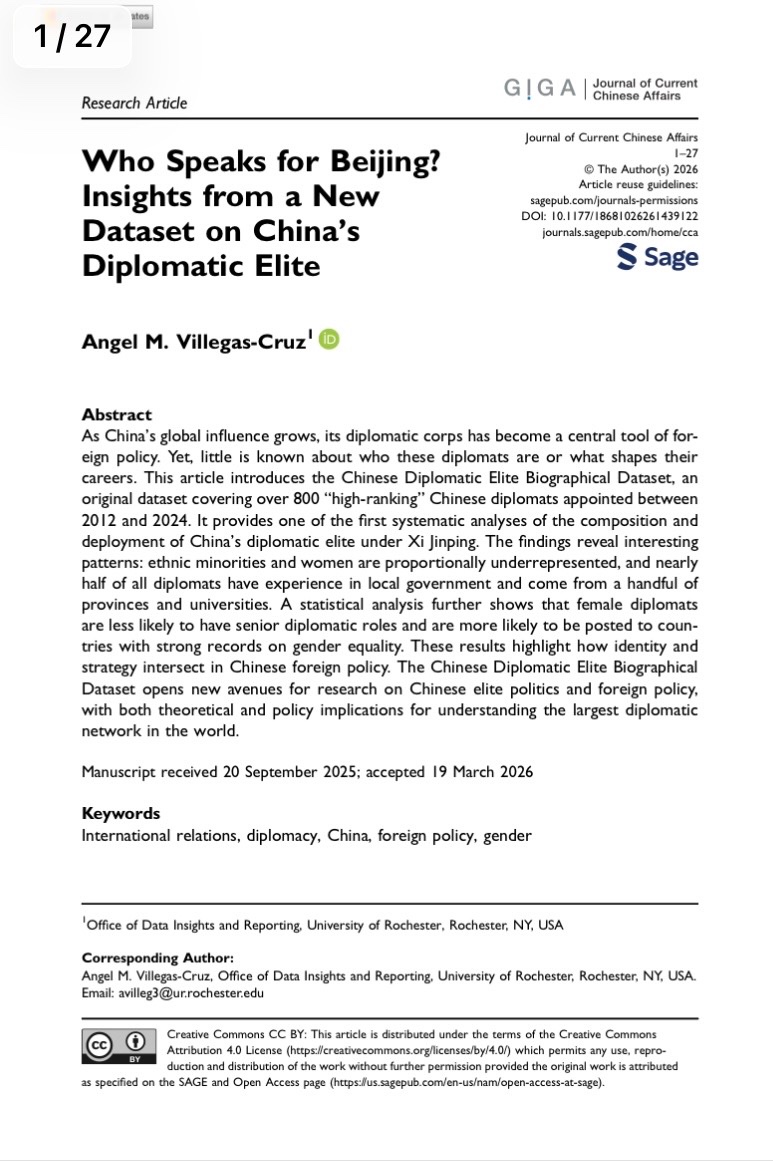
Who Speaks for Beijing? Insights from a New Dataset on China's Diplomatic Elite
“This article provides one of the first systematic analyses of the composition and deployment of China's diplomatic elite under Xi Jinping.”
https://t.co/4v9oofXz8F
Food for thought.
Yes, the New Great Game is unfolding.
No nation stands to gain more from a closure of the Strait of Hormuz than the United States, across the short, medium, and long term.
This logic is embedded in President Trump’s National Security Strategy, with the Trump Doctrine now visible in practice. Strategically, China loses on multiple fronts with Hormuz closed: seaborne Middle Eastern supplies are constrained just as Venezuelan crude is increasingly redirected toward the U.S. Gulf Coast on short, politically secure routes. At the same time, the Strait of Malacca, and with it, the broader Malacca Dilemma, moves to the center of gravity. In parallel, the Sunda, Lombok, Makassar, and Mindoro Straits remain critical arteries for Chinese trade and energy flows.
Together, they constitute the geographic chokepoints of Beijing’s vulnerability, and Washington is acutely aware of this. Yes, the New Great Game is unfolding, and Wall Street has yet to comprehend the consequences.
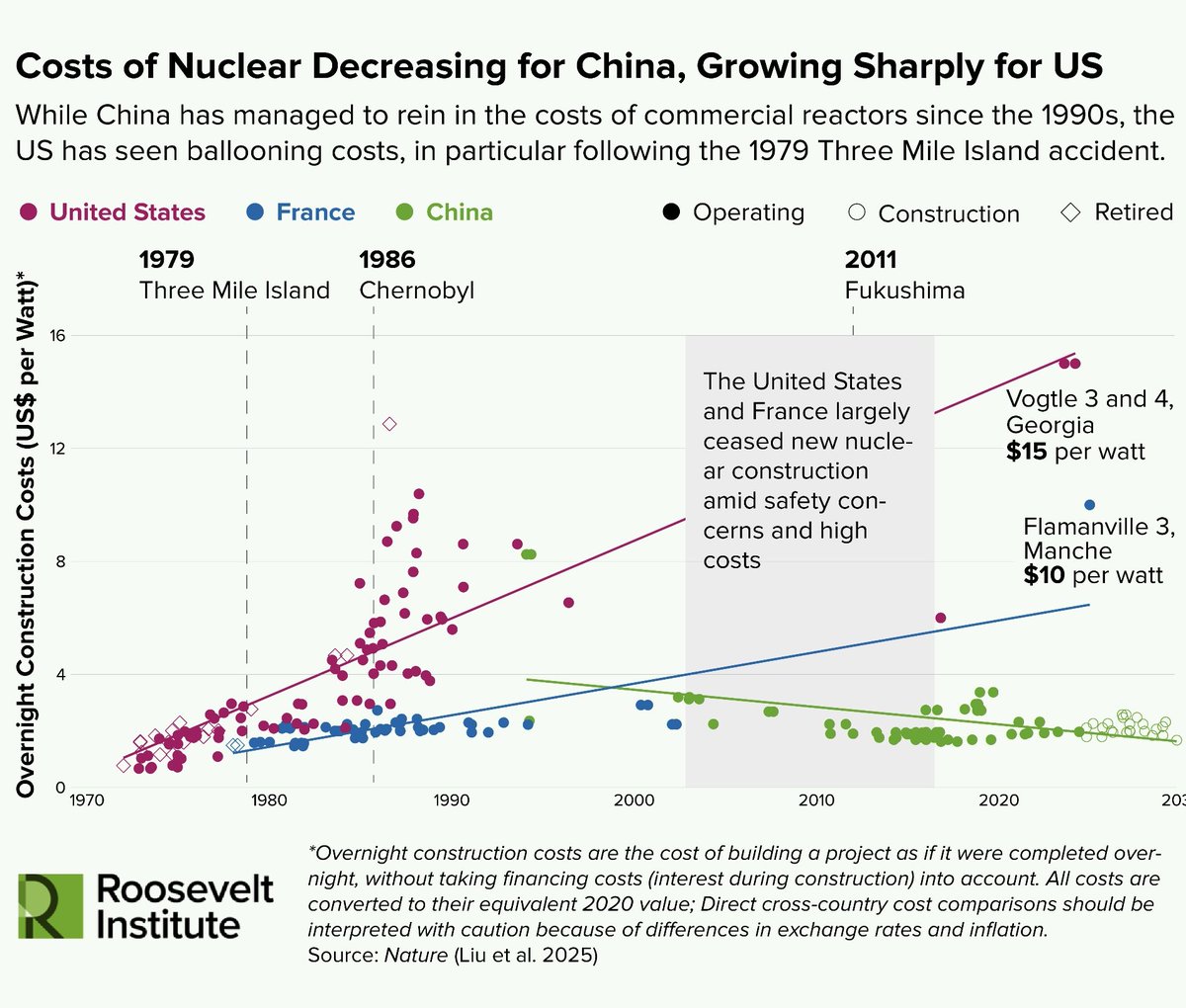
China has managed to control rising costs for building nuclear plants, unlike most countries. How?
"Indigenization—i.e., building a domestic supply chain and skilled workforce—has been key to China’s ability to avoid cost escalation."
Great blog post by @shangwei_ : https://t.co/8WXSBGJiXp
But the reality has proven otherwise. They were left alone when attacks occurred and were forced to confront difficulties by themselves.
Only now are they realizing that true protection comes from building their own strength, not from relying on others.
The Gulf countries are beginning to face the bitter reality of being deceived by the United States and Israel. They believed that by entrusting their economic and security fate to America, they would remain safe and their economies would continue to grow.
I am a diplomatic aide in the Sultanate of Oman's Ministry of Foreign Affairs.
My job is logistics. When two countries that cannot speak to each other need to speak to each other, I book the rooms. I prepare the briefing materials. I make sure the water glasses are the right distance apart. You would be surprised how much of diplomacy is water glasses. Too close and it feels informal. Too far and it feels like a tribunal. I have a chart.
We had a very good month.
Since January, Oman has been mediating indirect talks between the United States and Iran on Iran's nuclear program. The talks were held in Muscat and in Geneva. The Americans would sit in one room. The Iranians would sit in another room. I would walk between them. My Fitbit says I averaged fourteen thousand steps on negotiation days. The hallway between the two rooms at the Royal Opera House conference center is forty-seven meters. I walked it two hundred and twelve times in February. This is good for my cardiovascular health. It was less good for my knees. Both are in the service of peace.
By mid-February, we had something.
Iran agreed to zero stockpiling of enriched uranium. Not reduced stockpiling. Zero. They agreed to down-blend existing stockpiles to the lowest possible level. They agreed to convert them into irreversible fuel. They agreed to full IAEA verification with potential US inspector access. They agreed, in the Foreign Minister's phrase, to "never, ever" possess nuclear material for a bomb. I have worked in diplomacy for seven years. I have never seen a country agree to this many things this quickly. I made a spreadsheet of the concessions. It had fourteen rows. I color-coded it. Green for confirmed. Yellow for pending. By February 21 the spreadsheet was entirely green. I printed it. It is on my desk in Muscat. It is still green.
That phrase took eleven days. "Never, ever." The Iranians initially offered "not seek to." The Americans wanted "will not under any circumstances." We landed on "never, ever" at 2:14 AM on a Tuesday in Muscat. I typed the final version myself. I used Times New Roman because Geneva prefers it. The document was fourteen pages. I was proud of every comma.
Here is what they said, in the order they said it.
February 24: "We have a once-in-a-generation opportunity." — The Foreign Minister, private briefing to Gulf Cooperation Council ambassadors. I prepared the slide deck. Slide 14 was the implementation timeline. Slide 15 was the signing ceremony logistics. I had reserved the Palais des Nations in Geneva, Room XX. It seats four hundred. We discussed pen brands for the signing. The Iranians preferred Montblanc. The Americans had no preference. I ordered twelve Montblanc Meisterstucks at six hundred and thirty dollars each. They arrive on Tuesday.
February 27, 8:30 AM EST: "The deal is within our reach." — The Foreign Minister, CBS Face the Nation. He sat across from Margaret Brennan. He said broad political terms could be agreed "tomorrow" with ninety days for technical implementation in Vienna. He said, and I wrote this line for the briefing card he carried in his breast pocket: "If we just allow diplomacy the space it needs." He praised the American envoys by name. Steve Witkoff. Jared Kushner. He said both had been constructive.
I watched from the Four Seasons Georgetown. The minibar had cashews. I ate the cashews. They were nineteen dollars. The most expensive cashew I have ever eaten. But it was a good morning and we were within our reach.
February 27, 2:00 PM EST: Meeting with Vice President Vance, Washington. The Foreign Minister presented our progress. Zero stockpiling. Full verification. Irreversible conversion. "Never, ever." The Vice President used the word "encouraging." His aide took notes on an iPad. The aide did not make eye contact for the last nine minutes of the meeting. I noticed this. Noticing things is the only part of my job that is not water glasses.
February 27, 4:00 PM EST: "Not happy with the pace." — President Trump, to reporters.
Not happy with the pace.
We had achieved zero stockpiling. Full IAEA verification. Irreversible fuel conversion. Inspector access. And the phrase "never, ever," which took eleven days and cost me two hundred and twelve trips down a forty-seven-meter hallway.
Every American president since Carter has failed to get Iran to agree to this. Forty-five years.
Not happy with the pace.
February 27, 9:47 PM EST: The Foreign Minister's flight departs Dulles for Muscat. I am in the seat behind him. He is reviewing Slide 14 on his laptop. The implementation timeline. Vienna technical sessions. The signing ceremony. The pens.
I fall asleep over the Atlantic. I dream about water glasses.
February 28, 6:00 AM GST: I wake up to push notifications.
February 28: "The United States has begun major combat operations in Iran." — President Trump.
Operation Epic Fury. Coordinated airstrikes. The United States and Israel. Tehran. Isfahan. Qom. Karaj. Kermanshah. Nuclear facilities. IRGC bases. Sites near the Supreme Leader's office. Israel called their half Operation Roaring Lion. Someone in both governments spent time choosing these names. Epic Fury. Roaring Lion. I spent eleven days on "never, ever." They spent it on branding. The President said Iran had "rejected American calls to halt its nuclear weapons production."
Rejected.
Iran had agreed to zero stockpiling. Iran had agreed to full verification. Iran had agreed to "never, ever." Iran had agreed to everything in a fourteen-page document that I typed in Times New Roman.
The President said they rejected it.
I do not know which document the President was reading. I know which one I typed.
February 28, 18:45 UTC: Iran internet connectivity: four percent. — NetBlocks, confirmed by Cloudflare. Ninety-six percent of a country went dark. You cannot negotiate with a country at four percent connectivity. You cannot negotiate with a country that is being struck. You cannot negotiate. This is not a political opinion. This is a logistics assessment.
February 28: The governor of Minab reported forty girls killed at an elementary school.
I do not have logistics for that. There is no slide for that. The water glass chart does not cover that.
February 28: Lockheed Martin: up. Northrop Grumman: up. RTX: up. Dow futures: down six hundred and twenty-two points. Gold: five thousand two hundred and ninety-six dollars. An analyst at AInvest published a note titled "Iran Strikes: Tactical Plays." The note recommended positions in oil, defense stocks, and gold.
The most expensive cashew I have ever eaten was nineteen dollars. The most expensive pen I have ever ordered was six hundred and thirty dollars. The math suggests I have been working in the wrong industry. Defense stocks do not require water glasses. Defense stocks do not require eleven days. Defense stocks require one morning.
February 28: Israel closed its airspace and its schools. Iran launched retaliatory missiles toward US bases in the Gulf. The Supreme Leader promised a "crushing response." Israel's defense minister declared a permanent state of emergency. Everyone is using words I recognize in an order I do not. I recognize "permanent." I recognize "emergency." I do not recognize them next to each other. In diplomacy, nothing is permanent and everything is an emergency. In war it is the reverse.
February 28: The Foreign Minister has not made a public statement.
The briefing card is still in his breast pocket. It still says "within our reach."
Excellent analysis by @Alihashem on why Khamenei’s death does not mean the end for Islamic Republic. He argues it is built to withstand the Ayatollah's Assassination. Decapitation as strategy is unlikely to achieve US and Israel’s war goals. https://t.co/mNWHg90Vr1
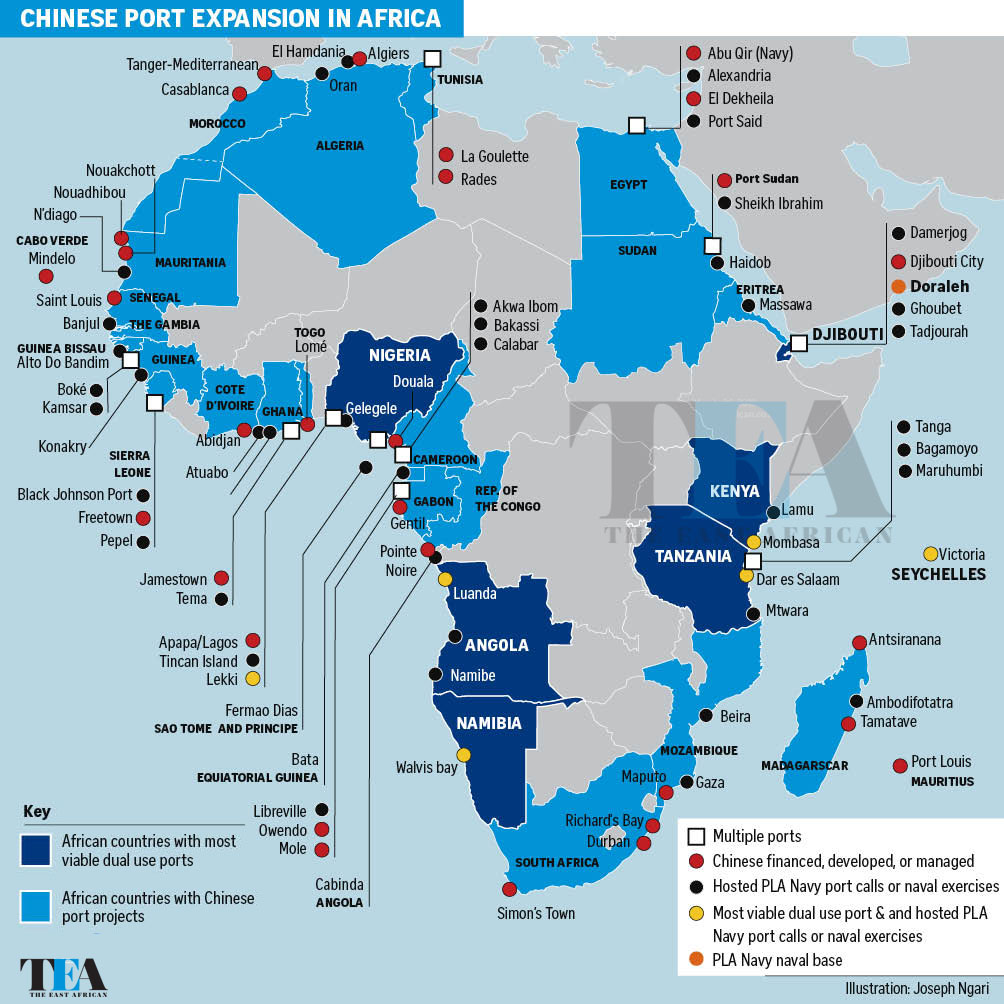
How China is expanding influence in Africa through construction of ports
Beijing’s presence in Africa, overall, includes nearly a third of 231 active commercial ports in the continent’s maritime trade hubs, according to the latest report by Nigeria's leading geopolitical research firm SBM Intelligence.
https://t.co/2rgycPuefb
So here’s the issue you get influencers like this guy have a quarter million followers and they claim they don’t know why it is declining… it’s because they don’t understand basic mechanics of price discovery.
They don’t understand that the marginal buyers or the float determines price they think the onchain bitcoin is that is the price discovery
Well, it was once upon a time but now..
Once you can synthetically manufacture the supply, the asset is no longer scarce and once scarcity is gone, price becomes a derivatives game, not a supply-and-demand market.
This is exactly what has happened to Bitcoin.
This is the same structural break that occurred in gold, silver, oil, and eventually equities once they became derivatives-dominated.
The original premise that no longer exists
Bitcoin’s entire valuation logic was built on finite supply (21M) and inability to be rehypothecated.
That died the moment:
•Cash-settled futures
•Perpetual swaps
•Options
•ETFs
•Prime broker lending
•Wrapped BTC
•Total return swaps
were layered on top of the chain.
From that moment forward:
Bitcoin supply became theoretically infinite.
Not on-chain in price discovery.
The metric that explains the collapse
Synthetic Float Ratio (SFR)
Once you can synthetically manufacture the supply, the asset is no longer scarce — and once scarcity is gone, price becomes a derivatives game, not a supply-and-demand market.
That is exactly what has happened to Bitcoin.
This is the same structural break that occurred in gold, silver, oil, and eventually equities once they became derivatives-dominated.
Why Wall Street can now “trade against” Bitcoin
They do exactly what they’ve done in every commodity market:
1.Create unlimited paper BTC
2.Short into rallies
3.Force liquidations
4.Cover lower
5.Repeat
They are not “betting” — they are manufacturing inventory.
The same 1 BTC can now support:
•An ETF unit
•A futures contract
•A perpetual swap
•An options delta
•A broker loan
•A structured note
All at once.
That is six claims on one coin.
That is not a market.
That is a fractional reserve price system.
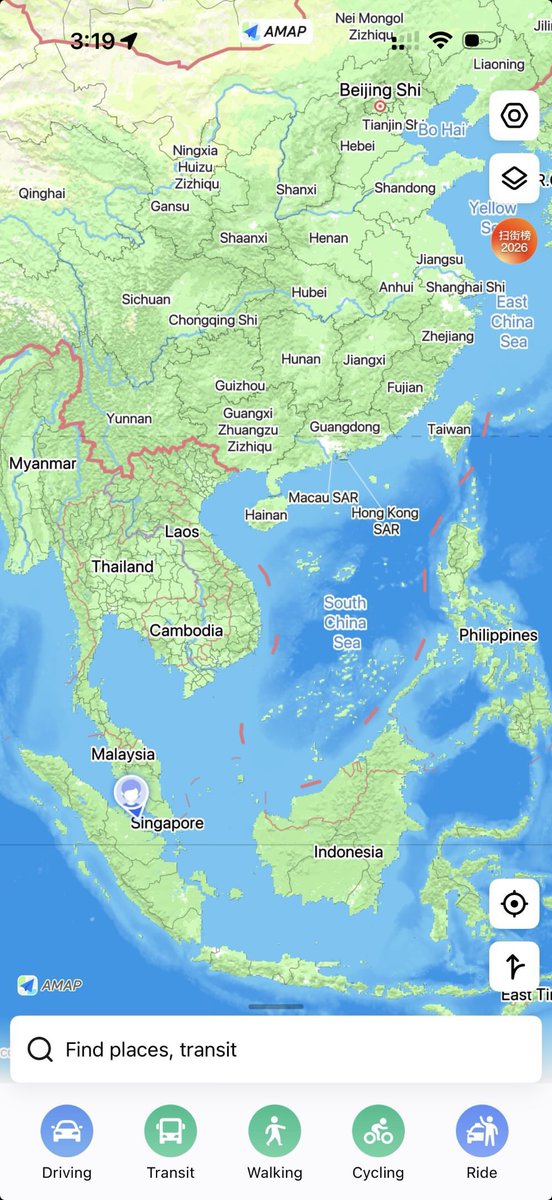
Amap dari China.
Dekat laut pun dia nak tayang border China…
Waze Israel
Amap China
Google Amerika
So support local pakai App Tuju by Lembaga Lebuhraya Malaysia.
Pakai dulu dah ramai guna diaorang akan pressured utk upgrade bila ada bajet.
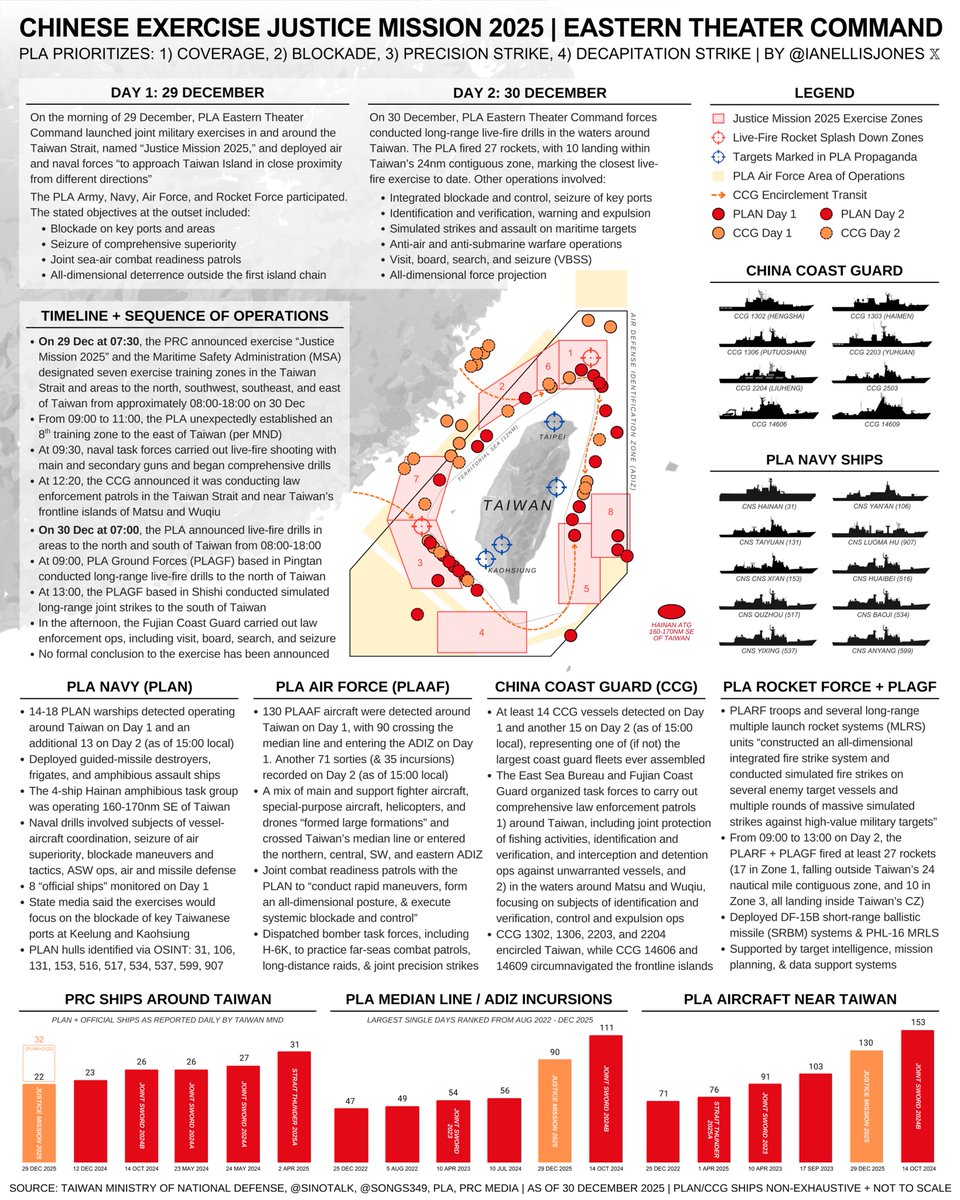
Over the past 48 hours, China surrounded Taiwan and executed large-scale live-fire military exercises featuring simulated decapitation strikes and the seizure of key ports.
“It is a noose-style blockade. The operational scope is no longer limited to symbolic, isolated shows of force, but has evolved into a coordinated and interconnected blockade network, practicing the tactics to choke off the island’s vital supply lines,” the official PLA press account stated bluntly.
With a potential Day 3 on the horizon, here’s everything you might have missed:
I am not getting into the debate about whether only US and China are great powers as argued by respected scholars such as Yan Xuetong earlier and American Scholar Jennifer Lind more recently. My point is polarity or multipolarity or unipolarity make sense only if you count the number of powers defined materially (economics and military) and comparing individual national power. But if you measure not just standalone power but also interaction capacity and variations in regional influence, a much more complex picture emerges. We did such a study, published in International Affairs, measuring interactions patterns in several areas - quantitatively between 1945 and 2017, and came up with multiplexity. Of course standard foreign policy discourses are often confused by any complexity and fall back on the number of powers. Yet, a world order cannot be measured by measuring the number of great powers alone.
“Multipolar or multiplex? Interaction capacity, global cooperation and world order,” International Affairs, Vol. 99, No. 6 (November 2023): 2339–2365. By Amitav Acharya, Antoni Estevadeordal and Louis W. Goodman.
https://t.co/1qS3uxEZFd
full text at: https://t.co/cyvbMGueWD






![CostsOfWar's tweet photo. The U.S. post-9/11 wars have forcibly displaced at least 38 million people. This exceeds those displaced by every war since the start of the 20th century, except for World War II. [1/3] https://t.co/iAJHVjdiNu](https://pbs.twimg.com/media/HPX0YJlbsAEL0c3.jpg)
![CostsOfWar's tweet photo. Read the research, "Creating Refugees: Displacement Caused by the United States’ Post-9/11 Wars". [2/3] https://t.co/ZNO2kQwjsn https://t.co/I3tAJoyn13](https://pbs.twimg.com/media/HPX17-kbcAAIaUQ.jpg)