Professor, ECE, Herbert Wertheim College of Engineering, University of Florida - Emerging Devices & Integrated Systems, Quantum Sci. & Eng., Nanotech, Adv. Mat.
Very much enjoyed a focused reading of the slides of Prof. Terence Tao's public lecture at ICM 2026 on the past Friday (7/24/2026) 👍 https://t.co/Y8eSSwnTPE
Look forward to having a chance to review again when the video comes out!
This summer, the inaugural 2026 Tsinghua Global Research Program welcomed students from 38 universities across 23 countries to study at Tsinghua. Through research, collaboration, and cultural exchange, these NextGen experienced diversity at Tsinghua.
For my first post, I’m sharing a letter @NVIDIA signed on why open models matter.
AI will transform every industry, power every company, and be built by every country.
Open models strengthen safety and cybersecurity, accelerate innovation and diffusion, and enable sovereignty.
The world needs both frontier closed models and frontier open models.
https://t.co/AUKzoQ5Ikb
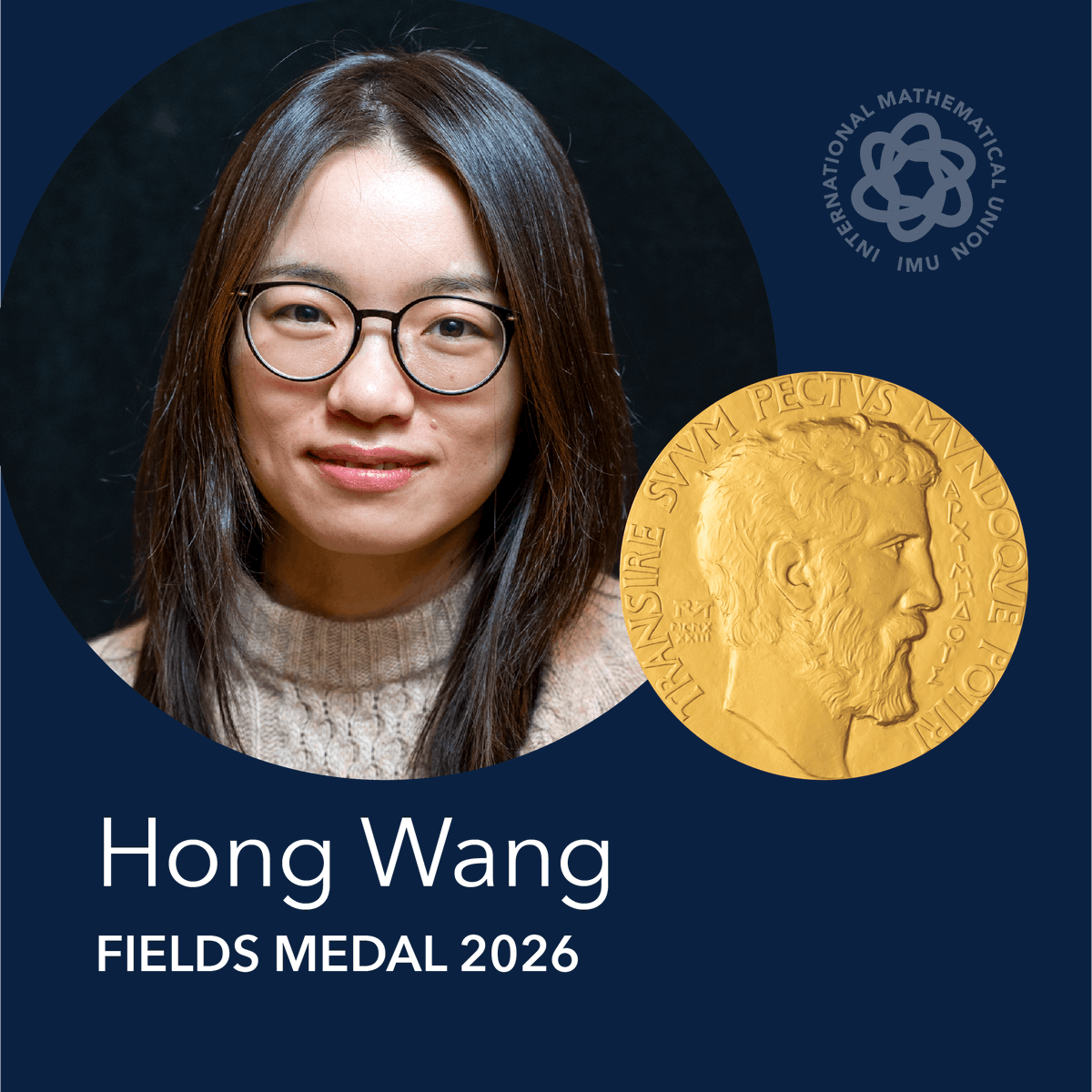
Hong Wang, who proved the three-dimensional Kakeya set conjecture, has just won the Fields Medal, making her the third woman in the award’s 90-year history to receive math’s highest honor. Read our profile: https://t.co/6PiOUUilto
Jacob Tsimerman has won the Fields Medal in part for his proof of the André-Oort conjecture. The honor reflects a career borrowing techniques from one area of math and leveraging them in another to reveal surprising underlying structure. Read our profile: https://t.co/tTWWzQ652S
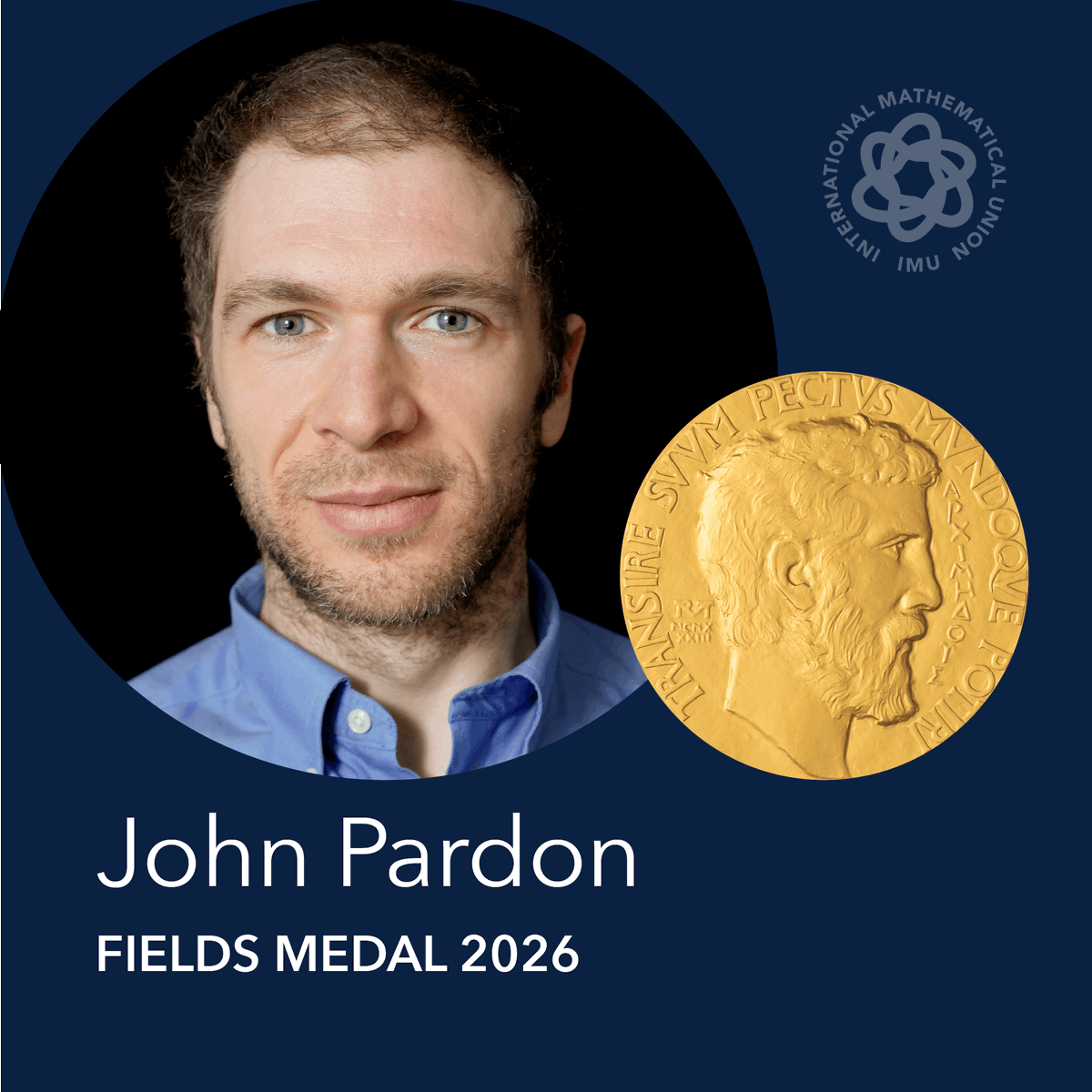
John Pardon’s work is not centered around a particular mathematical area or theme. He simply solves problems that are, to him, interesting. His efforts in symplectic geometry and knot theory have won him a 2026 Fields Medal. https://t.co/HQxvV5fOr1
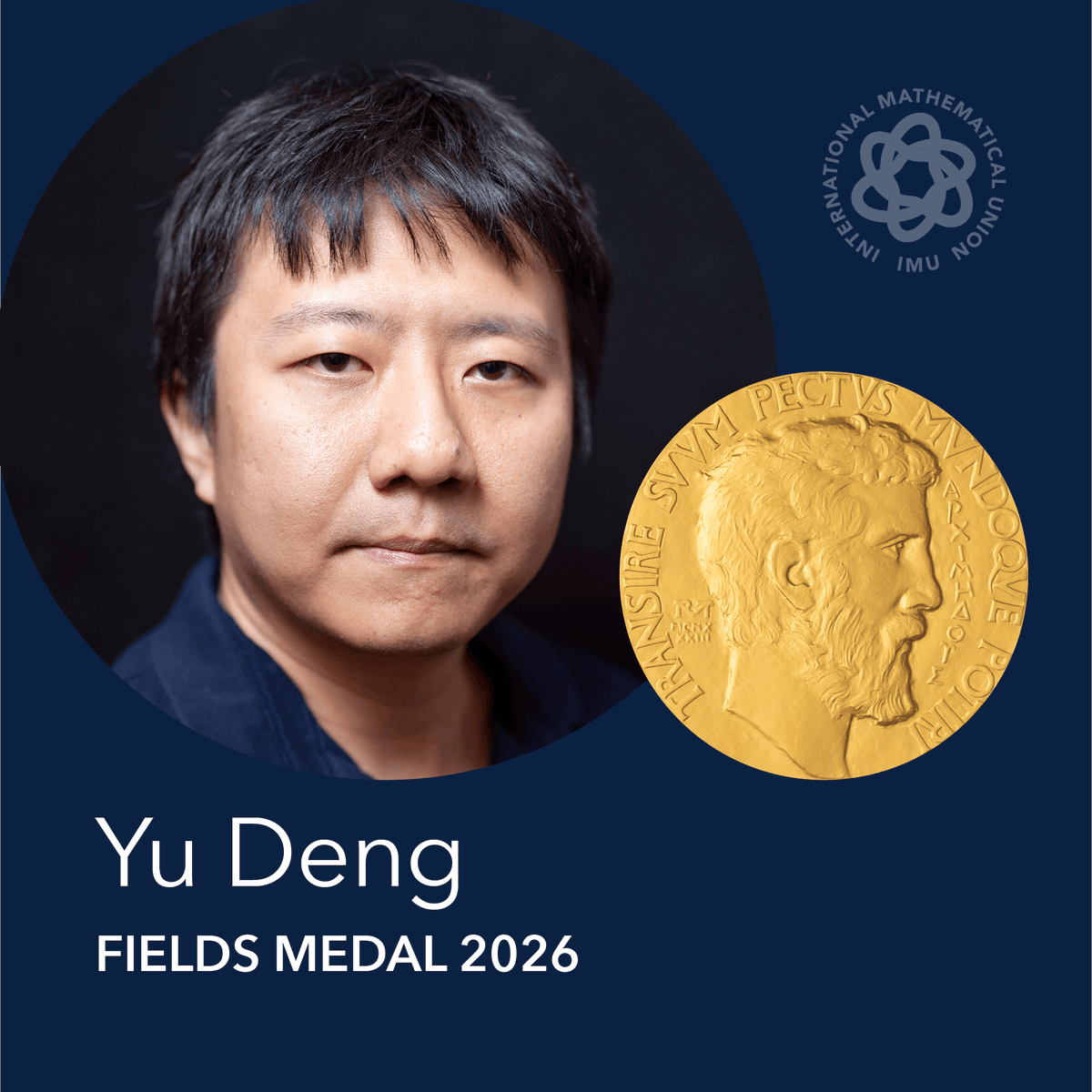
Yu Deng, who, with his collaborators, solved David Hilbert’s 125-year-old “sixth problem,” has just won the Fields Medal. Read our profile exploring his work bringing together the worlds of probability and wave equations: https://t.co/Xkgpp5M29M
During today's #ICM2026 opening ceremonies, the IMU announced the 2026 Fields Medals recipients:
@UChicago's Yu Deng, @stonybrooku's John Pardon, @UofT's Jacob Tsimerman, and Hong Wang of @nyuniversity and @Institut_IHES.
Read more: https://t.co/oJARAI8I8j
In an excerpt from a 2022 oral history, former president Jean-Lou Chameau recalls how a chance encounter with students grew into a campus-wide harvest, and eventually, a $5 million bottle of olive oil.
Article: https://t.co/6ygmvetONW
Each year, the National Science Foundation selects students to receive Graduate Research Fellowships that fund three years of graduate study. This year, 33 Caltech alumni and 19 graduate students have received these fellowships.
https://t.co/emb6ngNSxk
Former Caltech professor Erin Schuman has been named a recipient of the 2026 Kavli Prize in Neuroscience by the Norwegian Academy of Science and Letters.
https://t.co/zIVNqZZsjD
Two Caltech professors were awarded 2026 New Horizons Prizes as part of the Breakthrough Foundation's annual prize ceremony, known colloquially as the "Oscars of Science."
https://t.co/lvUzbZyyOP
The smallest units of matter are not physical objects in the ordinary sense; they are forms, ideas which can be expressed unambiguously only in mathematical language.
-- W. Heisenberg
Quantum mechanics has gone from a theory in test to becoming the foundation of new technologies.
Learn more in a 2025 #SciencePerspective that looked at 100 years of quantum mechanics: https://t.co/dRzbJmJl6D
When asked what sparked his interest in physics and quantum computing, John Martinis, 2025 physics laureate, mentioned that one of his motivations came from his father.
Martinis' father was a fireman with a high school diploma who loved building things in the garage. From a young age, Martinis spent time watching him do this. What he learned wasn’t just how to practically construct things – it was the confidence to build and create. That early experience was one of the factors that eventually guided Martinis to study experimental physics.
Calling all teachers!
Six lessons on this year's new Nobel Prizes are now ready to be used at https://t.co/m577HIID0a. With one lesson on each 2025 prize, you and your students can take a deep-dive into the world of science, literature and peace.
Find all lessons here: https://t.co/1VIU9lV9f1
#NobelPrize
"I really want to emphasise when we did these experiments, I was a graduate student with John Clarke at UC Berkeley, and Michel Devoret was a postdoc. This was a fantastic experience to be mentored by two wonderful people and great physicists... I learned so much from them."
In the 1980s, John Martinis was a graduate student at UC Berkeley, under his co-laureate, John Clarke, and he worked alongside another of this year’s co-laureates, Michel Devoret, then a postdoc.
Speaking at a press conference after receiving the news of his physics prize this year, Martinis took us back 40 years, reflecting on those formative days and the mentors who shaped his journey.
Photo: Jeff Liang, UC Santa Barbara