What do you get when you combine future focused scientific exploration with an incredibly multidisciplinary and amazing team of people?
Check out "Organoid intelligence: a new biocomputing frontier" on
https://t.co/yObuI7JXm4
And see the paper here: https://t.co/nf0CHpoBoA
@ANeuroExplorer@patrickmineault There are no effect sizes even mentioned in the paper (Masumori 2015). In one of the only two sessions run, stimulation has _increased_ by the end of the session. This is paradoxically taken as evidence of "learning by stimulation avoidance"
@ClaraJeffery Both Facebook instant and Google AMP dying are good. A performant and interoperable web based on open standards is much better for everyone, journalists and users.
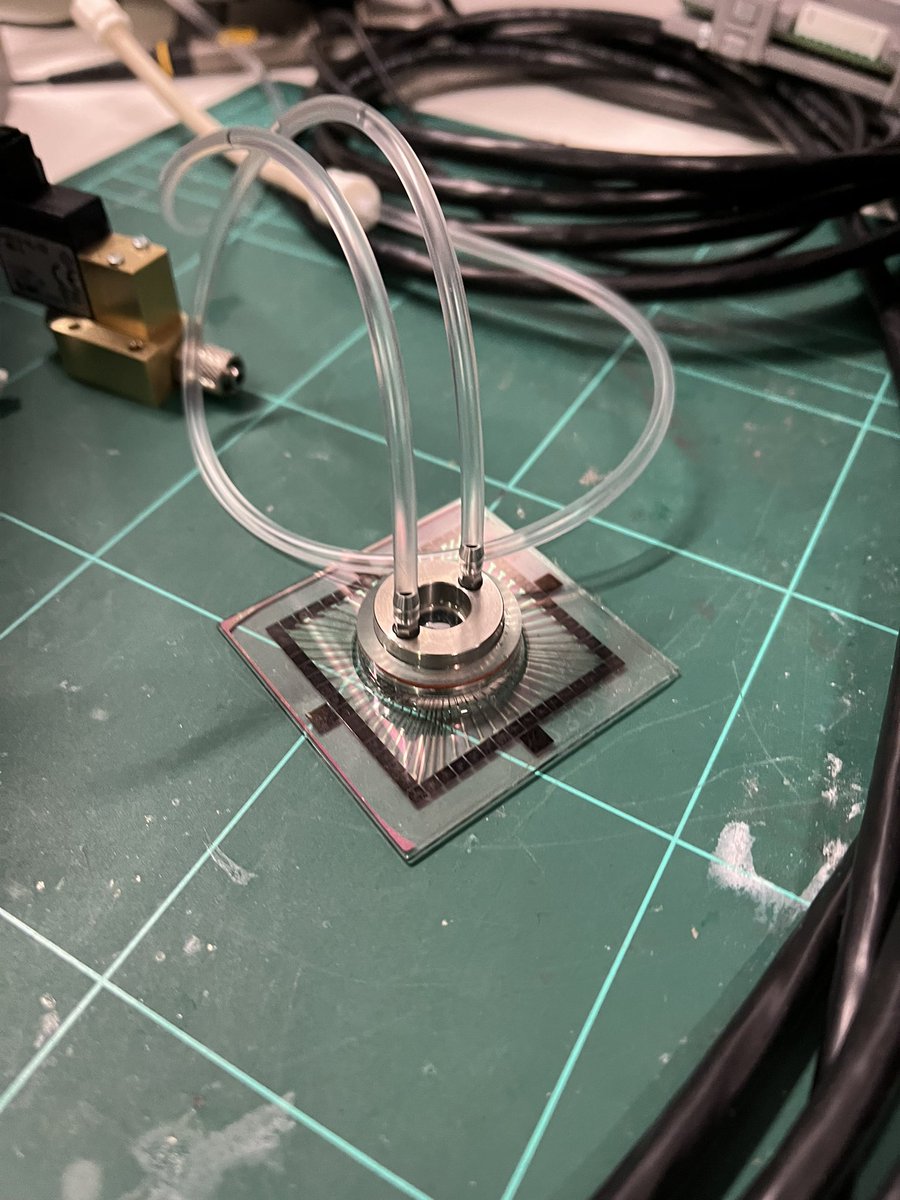
@mkrjf Your questions should be answered in the section "MEA setup and preparation" and the following sections in of our paper: https://t.co/xZlaWzJeOP
Happy to answer any other specific questions.
@Timothy0Leary@EricLeonardis We heavily cite a lot of significant prior work, incl. Chao 2008 "Shaping Embodied Neural Networks for Adaptive Goal-directed Behavior". The contention is about a 2015 conference paper with a sample size of 2.
@stenichele Hey Stefano, this is only meant as a light ribbing, but it appears your own 2017 paper also doesn't cite Masumori 2015, from your own recommended citation list.
@manuelbaltieri@anilkseth@NeuroCellPress@CorticalLabs Did you read the papers or are you jumping on the bandwagon? Computer models of neurons are not the same as biological neurons. Obscure conference proceedings with a sample size of 2... Yes, 2... Are easily missed & even if it had been seen there's more relevant work we did cite
@Shamits@stenichele Thanks, I'm glad you liked the paper. We had many revisions, a year in preprint, a conference, numerous meetings with other researchers, a shared drive with hundreds of papers. I stand by the whole thing as solid science.
@maartengm @sina_lana It's not unusual at all, generally one cites all significant relevant work. The claim seems to be we missed a fairly obscure conference paper presented in 2015, co-authored by Lana and some theory papers about LSA, a topic not covered in the paper.
Let's talk language–specifically why we used the word ‘sentience’. Over time words can end up with multiple meanings, even conflicting meanings. Colloquially this isn’t a problem. Scientifically, it is. When you’re trying to use a term to describe something you have 3 options 1/7
@sina_lana A lot of late nights a person sacrifices went into this project and getting this paper published. One scientist to another: academic prestige and citation politics are awful. I wish we could have just randomly met at a conference and excitedly told each other about our work
@sina_lana Coauthor here, I hope you found the actual substance of our paper elucidating and exciting. It's a shame about the citation thing. I genuinely look forward to engaging with your work in the future.