@RandomSprint It truly is insane when you think about it. Honestly, the appropriate response to a LOT of modern engineering we take for granted is “WTF?”.
something i’ve always found surprising when i’ve read letters written by average people from only 150-200 years ago is how mellifluous and deep their prose often sounds. i’m not talking about writers, but random people with grade-school educations
Interesting debate.
Fiction is just more easily consumed than history. It boils down to the choice of fiction, I believe. Choose wisely what you expose yourself to.
If you consume 100x as much fiction as you do history, you will subconsciously derive your beliefs from fiction. This is a well-studied finding in psychology called “source confusion”: you remember things you “learned” long after you’ve forgotten where you learned them. This applies to moral “lessons” derived from fiction as well. In fact, this is the entire reason we read morality tales with talking animals to our children: we know they will internalize the “lessons” in those stories, even though the stories are fake. After a lifetime of consuming such made up stories, you end up in a state I call “fiction-brained”: your beliefs about the world are subconsciously based primarily on movies, novels, etc. Propagandists have always relied on this effect: Nazi Germany released a dozen fictional movies that everyone knew were fiction but whose plots involved Jews doing villainous things. But the average American today hasn’t watched a dozen hours of fictional content, they’ve watched tens of thousands, making them the most propagandized people to ever live. The only way to combat this on a personal level is to consume much less fiction and to interact much more with the real world and consume history, biography, etc to unlearn your false beliefs.
It's amazing how fast I lose interest in a piece of content as soon as I suspect it's AI generated.
It's not even an intellectual decision, it's an automatic, visceral reaction.
You should be a generalist. Generalists can make tradeoffs across the entire stack. It's better in every way, trust me. You can do things that other people couldn't have, you can be creative. The only cost to do so is your ego. You need enough humility to be a permanent amateur
@redoatz From the brand famous for the man who wore the same thing daily specifically to prevent decision fatigue 🥲
I have needed a replacement MacBook Pro for years but have been similarly thwarted by this exact decision paralysis
@aart_eacc @joneykash16885@ektepenger@mealreplacer Water treatment, especially desalination, takes up a lot of energy though. Agreed with you that it’s a bigger distribution problem than a supply constraint problem, but it’s definitely not trivial.
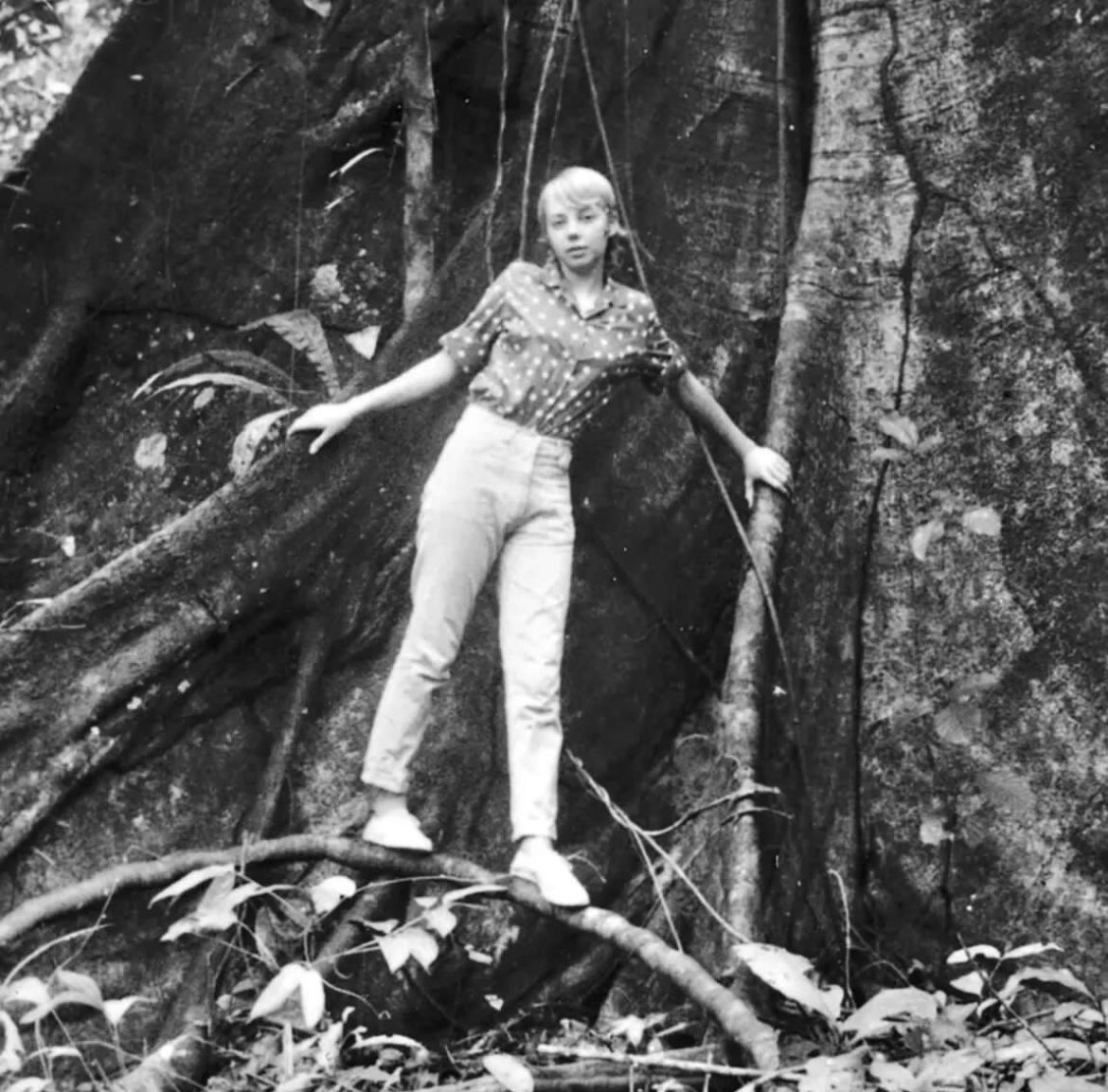
In 1971, 17-year-old Juliane Koepcke was flying over the Peruvian rainforest with her mother when she got sucked out of the airplane after it was struck by a bolt of lightning. She fell two miles to the ground, strapped to her seat.
"The plane jumped down and went into a nose-dive. It was pitch black, and people were screaming. Then the deep roaring of the engines filled my head completely. Suddenly, the noise stopped, and I was outside the plane. I was in a freefall, strapped to my seat bench and hanging head-over-heels. The whispering of the wind was the only noise I could hear. I could see the canopy of the jungle spinning towards me. Then I lost consciousness and remember nothing of the impact. Later I learned that the plane had broken into pieces about two miles above the ground. I woke the next day and looked up into the canopy. The first thought I had was: 'I survived an air crash.'"
Koepcke's first instincts were to try and find her mother, but she was nowhere to be found. After eating some sweets found at the crash site, Koepcke waded downstream and followed the river. After 10 days, she found a moored boat. She poured the gasoline from the boat's fuel tank onto her wounds, which were infested with maggots. She then spent the night in a makeshift shelter.
"I remained there, but I wanted to leave. I didn't want to take the boat because I didn't want to steal it."
The next day, she was discovered by loggers and was soon reunited with her father. She later discovered that her mother had initially survived the crash, only to die of her injuries several days later.
Like her parents, Koepcke went on to study biology at the University of Kiel in Germany, graduating in 1980. She received her doctorate from Ludwig Maximilian University of Munich and returned to Peru to conduct research in mammalogy, specializing in bats.
stop notifying me with unnecessary shit Twitter, especially since I specifically noted not to want certain content (“Elon Musk” stuff obviously)
ain’t helping with the convincing to stay
is donating to charities sufficient to give back? is it too impersonal? should i as a privileged human being be doing more? i feel almost nothing we do could be enough to offset the unfair wealth disparity - and we spend so little time caring about it - why don’t i pause more