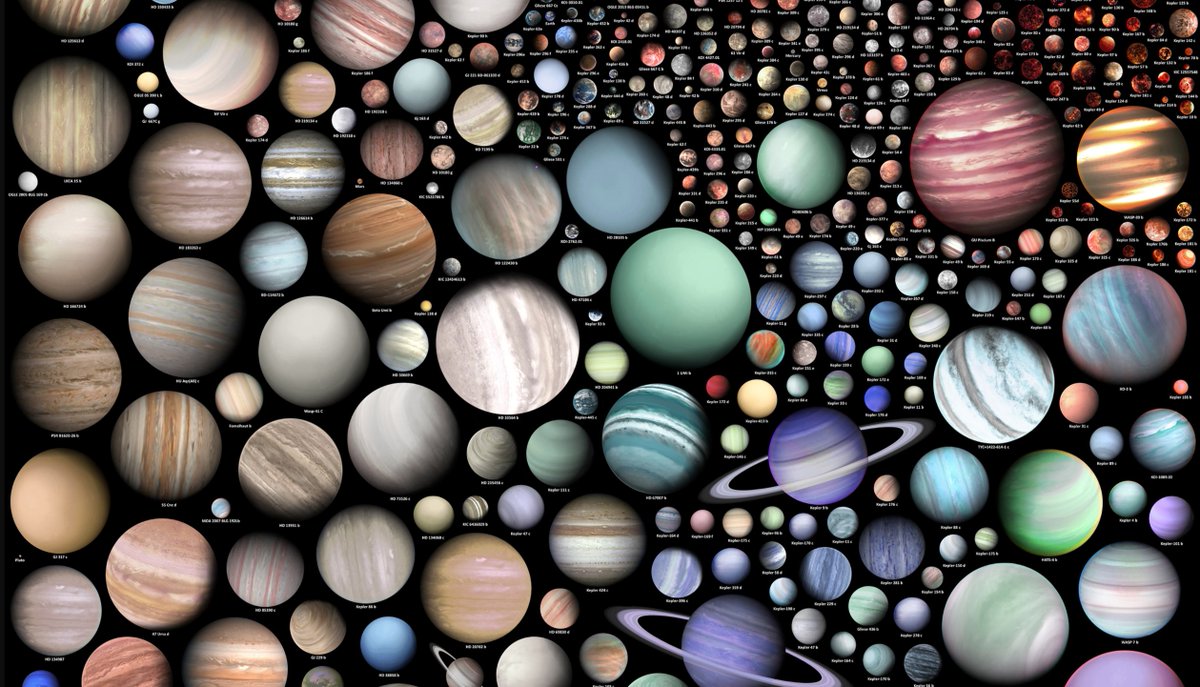
What planets do we study? #Earth & #Mars are some of our favs, but the @JohnsonCloudLab has expanded to include small astronomical bodies like #Titan + our #Moon, and #Exoplanets. If there is an atmosphere we want to use #CloudMicrophsics to explore it! (📸: Martin Vargic)
ICYMI: Purdue University is now a host site for the 51 Pegasi b Postdoctoral Fellowship! 17 faculty mentors from @PurdueEAPS & @PurduePhysAstro pursuing amazing research in planetary astronomy - myself included for planetary atmos inclined - have been identified. More info in 🧵
The 51 Pegasi b Fellowship applications have opened for 2025, and Purdue is a new host institution!
If you are a final-year PhD or 1st- or 2nd-year postdoc interested in origins of life, prebiotic chemistry, or the search for life, my lab might be a fit!
https://t.co/JeYL5RcwAC
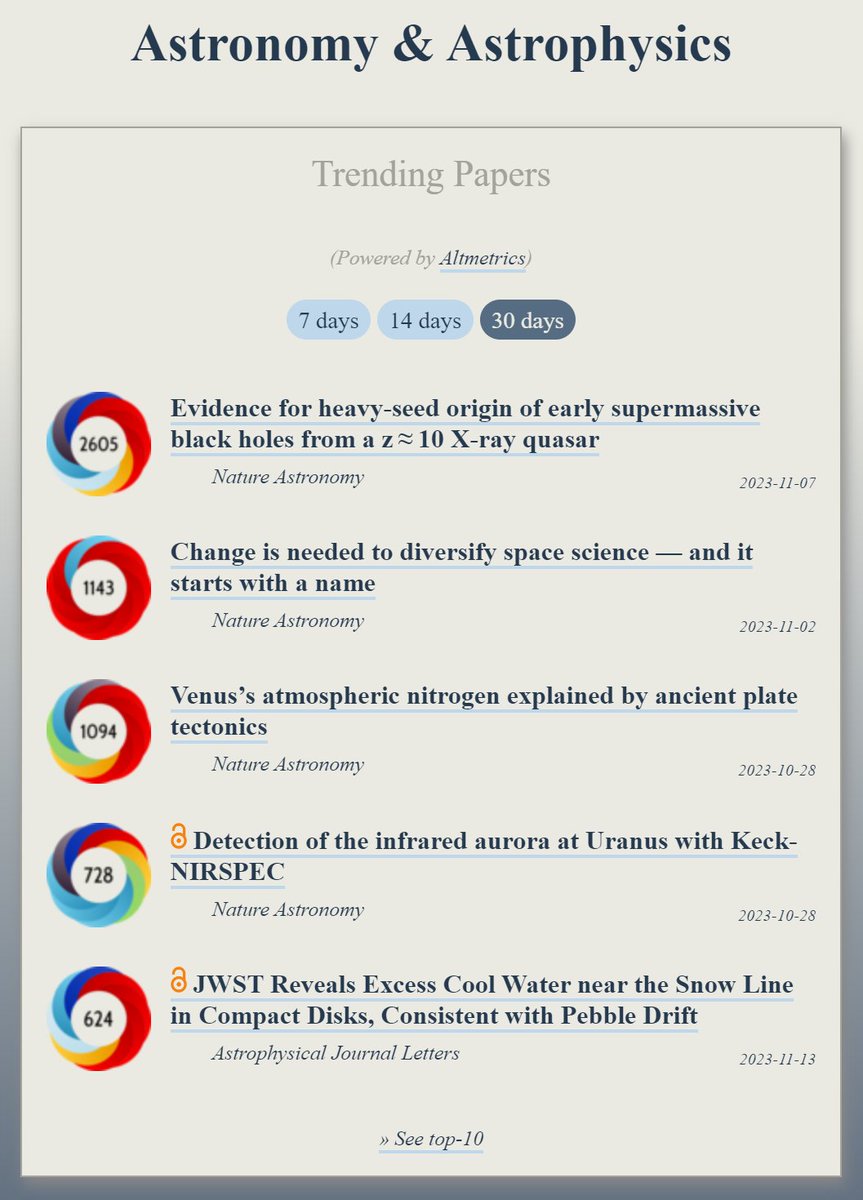
Trending in #Astronomy:
https://t.co/mBuG9n8BAr
1) Evidence for heavy-seed origin of early supermassive black holes from a z ≈ 10 X-ray quasar (@NatureAstronomy)
2) Change is needed to diversify space science — and it starts with a name (@NatureAstronomy)
3) Venus’s atmospheric nitrogen explained by ancient plate tectonics (@NatureAstronomy)
4) Detection of the infrared aurora at Uranus with Keck-NIRSPEC (@NatureAstronomy)
5) JWST Reveals Excess Cool Water near the Snow Line in Compact Disks, Consistent with Pebble Drift
Nitrogen is only ~3% of the atmosphere of Venus, but it holds clues to its past: the abundance can be explained only if there was a period of active tectonics, which lasted >1 Gyr before transitioning into the current stagnant lid. @PlanetaryGeodyn et al.: https://t.co/LpItQe1OSv
Simulations produced by a Brown-led research team suggest the scorching hot and barren planet Venus may have once had tectonic plate movements similar to those believed to have occurred on early Earth. https://t.co/9YcdUZrIs0
An exciting new study led by DEEPS researchers explores the connection between Venus's current atmosphere and surface pressure, shedding light on ancient plate tectonics.
@NatureAstronomy @alexjayevans @Dan_E_Ibarra@avblanch
Scientists make the case that the Venus may have had plate tectonics making it more hospitable to life. Dr. Alexandria Johnson, of @PurdueEAPS, is part of the research team discussed in this @nytimes article. @avblanch#thenextgiantleap https://t.co/0ogqRgUDHj
Been sitting on this news for a hot second, but as of today your girl is a **tenure track** Assistant Professor @PurdueEAPS!
Beyond excited to continue our exploration of clouds in planetary atmos & so very grateful for the support network that never stopped cheering me on.