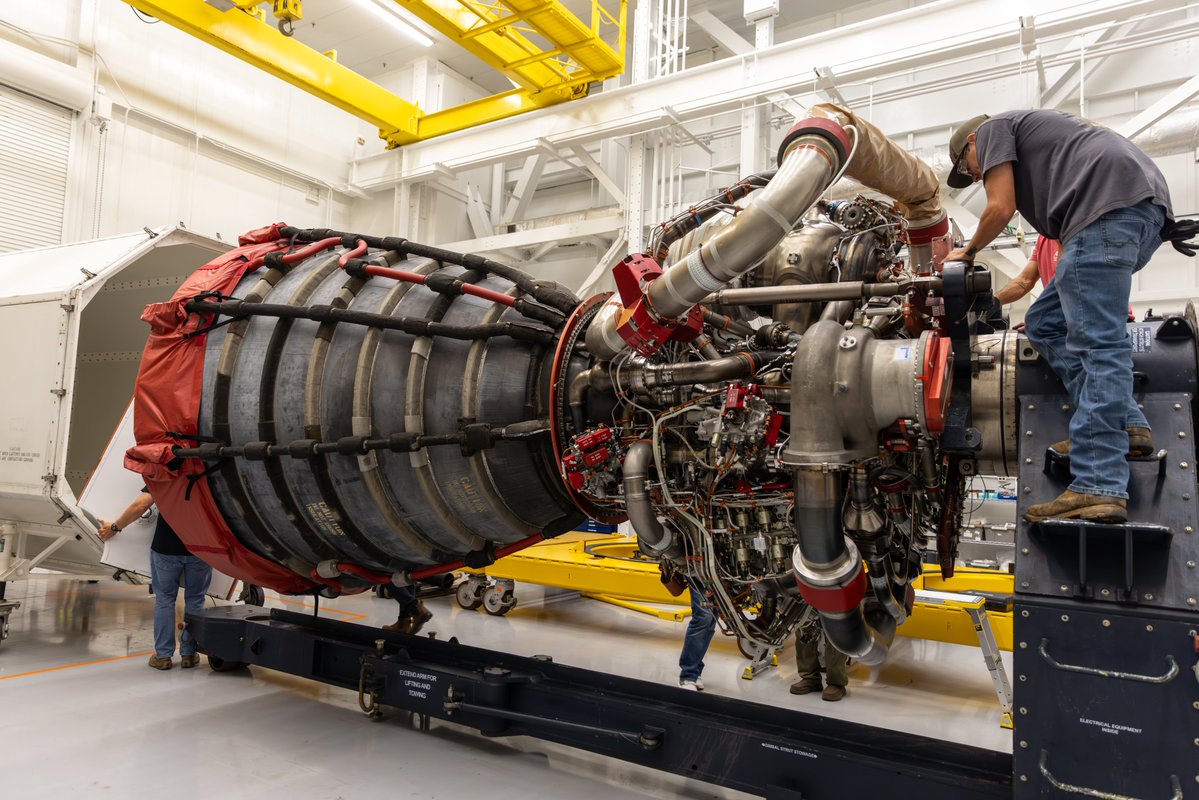
The official start of building the @NASAArtemis III powerhouse. 🚀
The first of four RS-25 engines for the Artemis III core stage is now inside the Vehicle Assembly Building at Kennedy! These powerful engines – providing two million pounds of thrust at liftoff – will help propel Orion on humanity’s next chapter of lunar exploration.
Some LC-36 updates. Now that we’ve had access to the pad and integration facility we can share a bit of good news. The propellant farm, oxygen, liquid hydrogen and LNG tanks are all in good shape. This is good luck because these are very long lead items. The water tower is also good. The big support tower is damaged, but it can be repaired in place rather than torn down and replaced. The booster “Never Tell Me The Odds” and the three GS-2s that were onsite in the integration facility also look good.
I’ve seen some speculation that we might move directly to the 9x4 configuration, but we won’t do that. Rate manufacturing of 7x2 is going well, and we’re going to continue that at pace as planned and store the stages for use. In addition, we had already been working for some time on eliminating our transporter-erector in favor of an alternative vertical conop, and we’ll now go directly to that; so we don’t need a new transporter-erector.
We will fly again before the end of this year. Gradatim Ferociter.
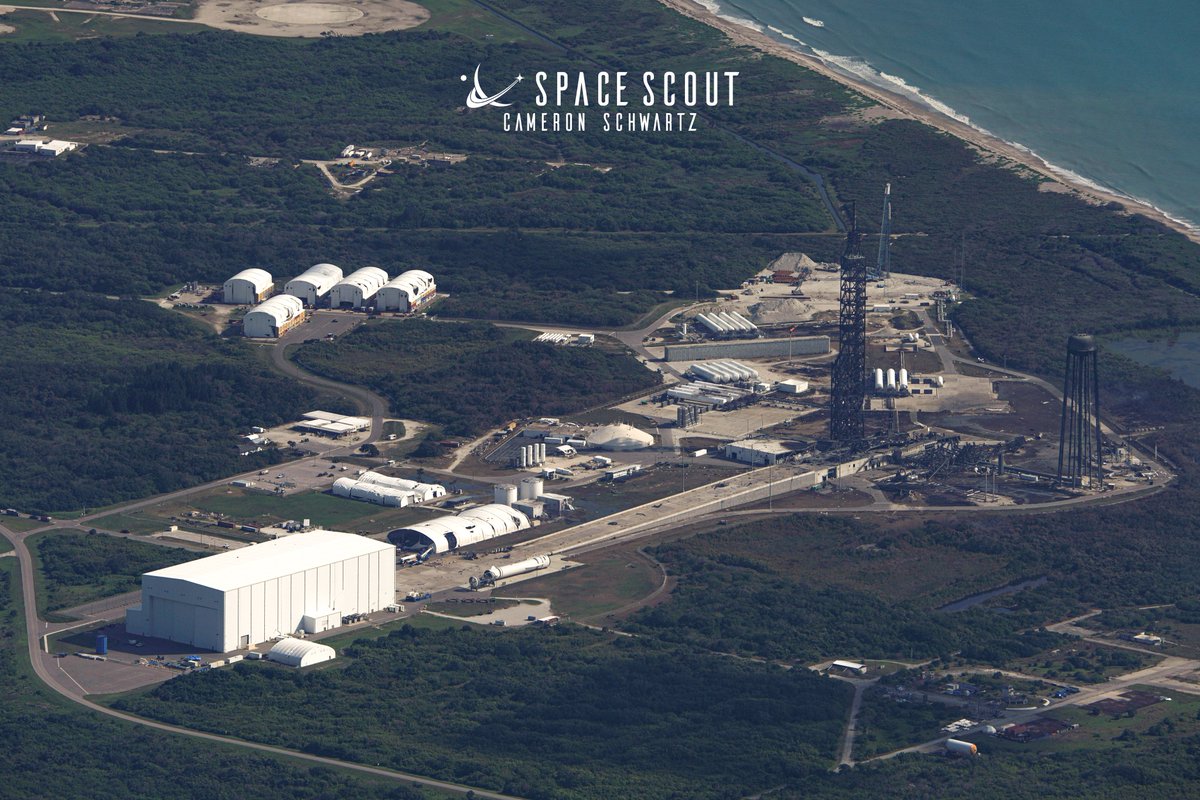
First look at SLC-36 after New Glenn's explosive anomaly last night.
The debris of the second tower appears to be spread across the right side of the pad and the entire area is scorched. The HIF appears ok. Absolutely insane.
📸 Me for @WeAreSpaceScout
A closer look at the launch mount area and the tower collapse, where you can see what remains of the strongback and the carnage of that tower collapsing.
My heart goes out to the entire Blue family. This is absolutely heartbreaking.
📸 Me for @WeAreSpaceScout
Yesterday we introduced CLV-1 (Crewed Lunar Vehicle). Let's explore the use-cases it was designed for and engineered to accomplish:
-Consistent with NASA’s requirements, CLV-1 is designed primarily to transport astronauts and their supplies.
-Conduct surface operations remotely.
-CLV-1 shares hardware with our FLEX rover, using the same tires, batteries and wheel actuators developed by our strategic partner, Venturi Space.
-When stowed on a Commercial Lunar Payload Services lander for delivery to the Moon, CLV-1 measures approximately 2 meters by 2.3 meters by 2.2 meters.
-Once deployed, CLV-1 will measure approximately 4 meters long by 2.3 meters wide by 2.6 meters high to the top of its antenna.
-CLV-1 has a maximum mass of 950 kilograms and can reach speeds of 10 kilometers per hour on level ground.
-CLV-1 is the first in Astrolab’s planned CLV line, with future vehicles expected to be designated CLV-2, CLV-3 and so on.
We are proud to be partnering with @Axiom_Space, @OdysseySpaceRes and @InterluneSpace to deliver CLV-1 and related services capable of supporting NASA crewed and robotic surface missions.
Thanks also to strategic partner @Venturi Space who is providing important technology to CLV-1 like tires and batteries.
Introducing Astrolab’s Crewed Lunar Vehicle (CLV-1), chosen by @NASA to transport crew across the lunar surface and support the construction of a permanent lunar base.
Adapted from our FLEX rover architecture reflecting NASA’s revised approach to lunar surface mobility, CLV-1 is designed to support astronaut operations, science activities, and cargo logistics on the Moon.
Updated all the photos with the new edits and added all pre-launch B-Roll to the Flight 12 gallery!
Settings, Downloads & Prints available here:
https://t.co/dZaTeiqatl