https://t.co/yBsxIu3lz3 brought us one step closer to agi.
i’m serious.
i think the road to agi has two phases:
adoption → rebuilding
adoption - building the bridge between the old world and ai.
rebuilding - throwing away what we built in that phase and rebuilding the foundation around ai.
right now, most of the effort goes into accelerating existing workflows. claude code, dots, harvey, cyera, devin you name it. they are all for one mission - automating our current workflows.
the real question is: how will the next phase look like?
in most industries i think we are too far away to tell.
but the only real exception right now is the software development industry.
i believe software is in the last third of the adoption phase.
let's go through a simple software-dev workflow most engineers will recognize, and divide each step in the loop to internal (inside the model) & external.
“resolve this bug, test and deploy the fix”
intent ("solve the bug, make no mistakes") - external
↓
gather context (knowledge, logs, code) - external
↓
implement loop - both
↓
test - external
↓
push & deploy - external
↓
update context - external
now lets imagine we have an architecture (like chatjimmy) with 100x lower latency and a 1000x larger context window & ability to update its own weights (go wild)
if you rebuilt that same flow around such inference, would you still write it the way it is now?
would python still act like python?
would pytest work the same way?
would bugs live in jira, docs in confluence, logic in code, and code in github?
i think it would've ended up around something like:
intent (external)
↓
model (internal)
which would then raise the question -
if all of my state is inside the model, would this loop even require my intent?:
model (internal)
↓
model (internal)
🤔
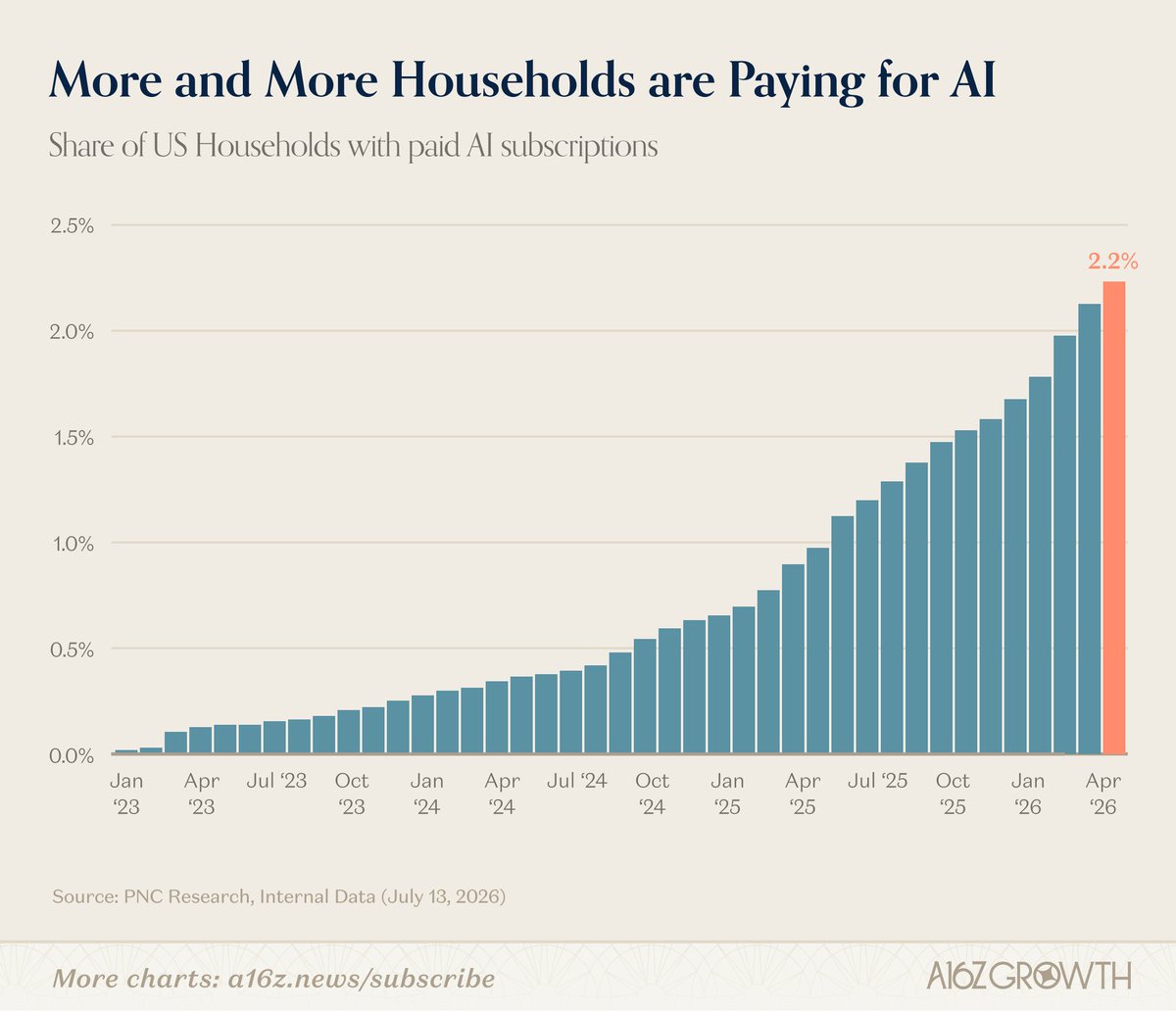
I think this may understate how many households are already paying for AI indirectly. If my bank pays for AI, that won’t show up as me paying for AI, even if some of that cost ultimately flows through to me.
Would be interesting to know how much B2B AI spend is ultimately funded by end users.
I think this may understate how many households are already paying for AI indirectly. If my bank pays for AI, that won’t show up as me paying for AI, even if some of that cost ultimately flows through to me.
Would be interesting to know how much B2B AI spend is ultimately funded by end users.
@assaf_elovic He didn’t just trash the company - he trashed everyone who owns it with him. where is the responsibility to other shareholders? I would never invest alongside a person like that
5/
אז בנינו את ה-Incident Challenge.
מעל 400 משתתפים מרחבי העולם בינתיים, מחברות רציניות.
כל פעם מערכת אחרת, incident אמיתי, והרבה מידע שצריך לחבר.
אפשר להשתמש ב-AI כמה שרוצים.
הקטע הוא שהוא לא אמור להיות מסוגל לפתור את זה לבד.
https://t.co/KU0N0UDkqb
3/
היום אפשר לתת ל-AI הרבה מהעבודה הזאת.
וזה מעולה.
אבל יש פה משהו קצת מוזר:
ai לא מבין את המערכת שהוא פועל בתוכה. זה בדיוק מה שהמפתח מגשר עליו כיום. אז איך מחזקים את השריר הזה?