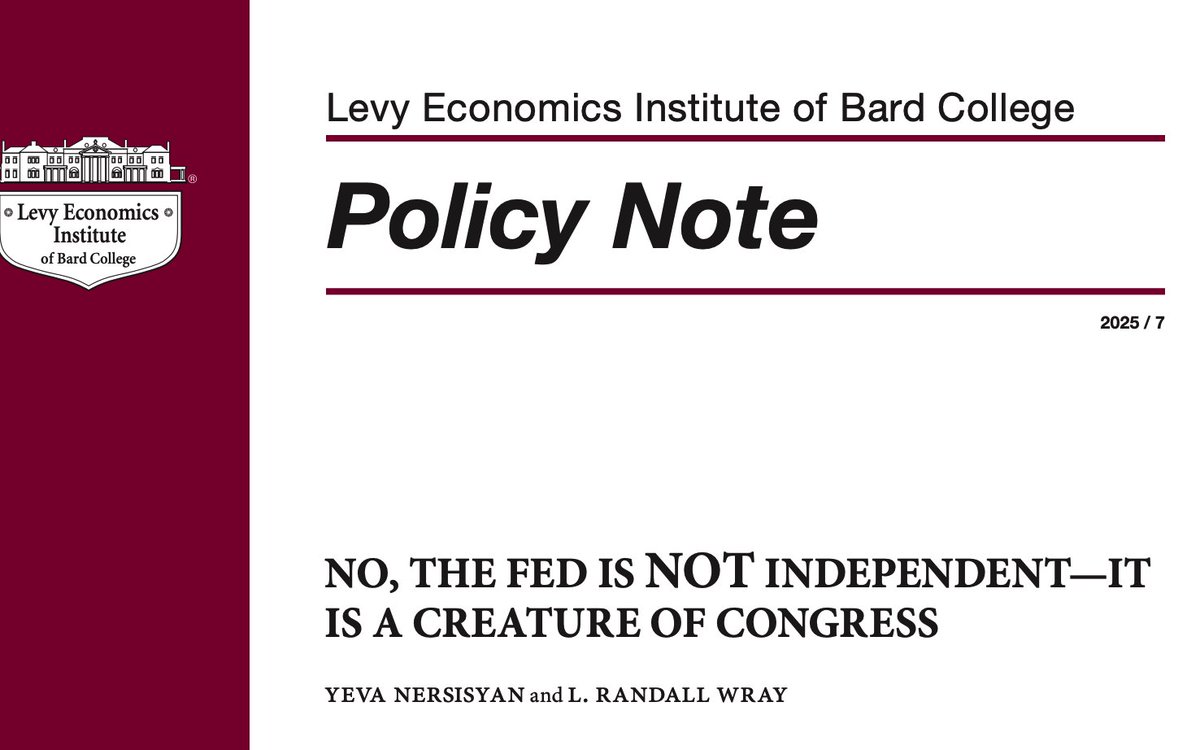
Comments really show that most have no grasp about what MMT is all about. MMT = printing money, increasing fiscal deficit , more QE, inspired COVID response, etc. 😬. Really stupid.
Warsh's "communication fog" isn't the core problem. Volcker rarely spoke & Greenspan's Fedspeak was deliberately vague but neither caused the Fed-driven volatility on their watch. Warsh's monetarist revival will backfire, esp staring into an AI bubble.
📘: https://t.co/EfCk99FOFj
Just published a long review article of Moore’s “Promise to Pay” titled “Chartalism and Monetary Disorder in Colonial America”.
https://t.co/r3OMndHBlD
Riccardo Zolea has an new blog for the @MonetaryBlog, based on his forthcoming book.
"Bank Profitability and Interest Rates: An Endogenous Money Theory Perspective"
https://t.co/vdhYm4KfJK
I like the idea of these task forces (it's never a bad idea to embark on reflections like these). I like this list of names even better! Looking forward to seeing the final product.
A new policy note on the retalization of private finance. It is based on a working paper that analyzes the trends in private finance. Main point is that retalization is feeding a Ponzi process and regulators are actively encouraging it.
https://t.co/FXI7KDrWY8
Poverty is a policy choice. There’s nothing natural about it. It’s a consequence of a monetary society, specifically a capitalist one. Inequality is a feature, not a bug, not a matter of individual choice or personal responsibility. It is institutionally imposed
Our job guarantee proposal is vastly superior. Puts public money to public use to address public needs. Not the sort of 'guarantee' that would ultimately make millions of jobs more precarious, while wiping out others altogether
https://t.co/vPFXrymPYx
see:
https://t.co/MsfvxtVtev
Short post on the two traditions in the history of economic ideas. The central divide is between classical political economy, reproduction, surplus, accumulation, and the Benthamite/marginalist tradition of utility, exchange, scarcity, and individual choice /1
The 1980s was the crucial crossroads in China’s rise. China averted the USSR’s fate, escaped shock therapy and set out on a historically unprecedented path, carved out by drawing on its own statecraft tradition and lessons from experiences around the world.
We live in interesting times. Ed Yardini (who coined 'bond vigilantes') reminds @JoeSquawk that "the flip side of debt is wealth", adding that he's not worried about the national debt. Meanwhile, @econjared's @TheAtlantic piece says anyone not worried isn't paying attention. https://t.co/QRrCL2Wo0M
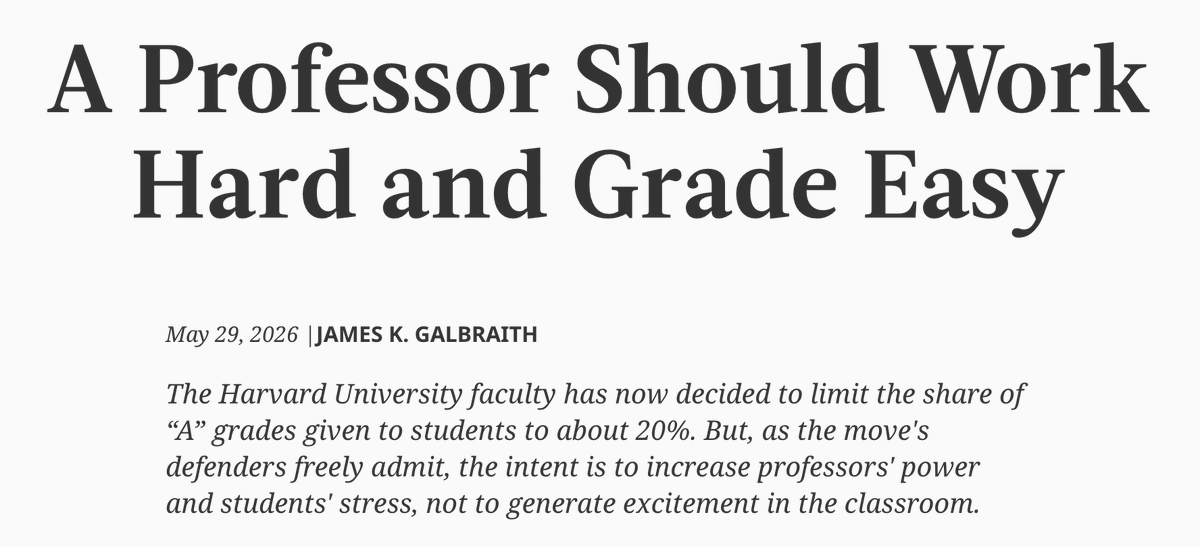
Perhaps Harvard's new As-to-GPA limit has been designed by economists to prevent them from becoming As-insolvent.
Maybe they think that This Time Is Different.
---
@ProSyn https://t.co/i4bcbucBWx
"Unless we can break the habit of thinking like most economists do, we will sooner or later destroy our country, irreversibly damage our world, and perhaps, in the final analysis, doom the human species to a slow extinction. At a minimum, we stand no chance to improve matters, unless we can first understand, recognize, reject, and change the mental habits cultivated by conventional economics—and conventional economists." Coming 9/7/26
@EMaggiori_ It's true that the Treasury needs to have a positive balance to spend, but it's also true that by virtue of how monetary policy is implemented, obtaining that positive balance essentially does not depend on private willingness to hold Treasuries. #6 here: https://t.co/28YmtP4fxr
If anyone is interested, here are 50 free downloads of my article "Post Keynesian theories of exchange rate determination: a critical survey" from the Journal of Post Keynesian Economics:
https://t.co/JDhNO6yT7A