"[...] Voilà qui me suggérait déjà que, pour vendre en quelque sorte la révélation d'un complot, je ne devais fournir à l'acquéreur rien d'original, mais bien seulement et spécialement ce qu'il avait ou déjà appris ou qu'il pourrait apprendre plus facilement par d'autres canaux. Les gens ne croient qu'à ce qu'il savent déjà, et là était la beauté de la Forme Universelle du Complot."
Umberto Eco, Le Cimetière de Prague.
We’re all living through a crisis of agency, at least online. Bots, algorithms, clip armies, & the flood of AI stuff have scrambled notions of popularity, turned everything into a ‘psyop’. AI tools/ agents are reversing the fundamental human, collaborative promise of the internet
"em dash is an AI indicator" "semicolons are an AI indicator" "describing things in threes is an AI indicator" "the word genuinely is an AI indicator" "the oxford comma is an AI indicator" "flowery prose is an AI indicator" should we all die? should we just kill ourselves
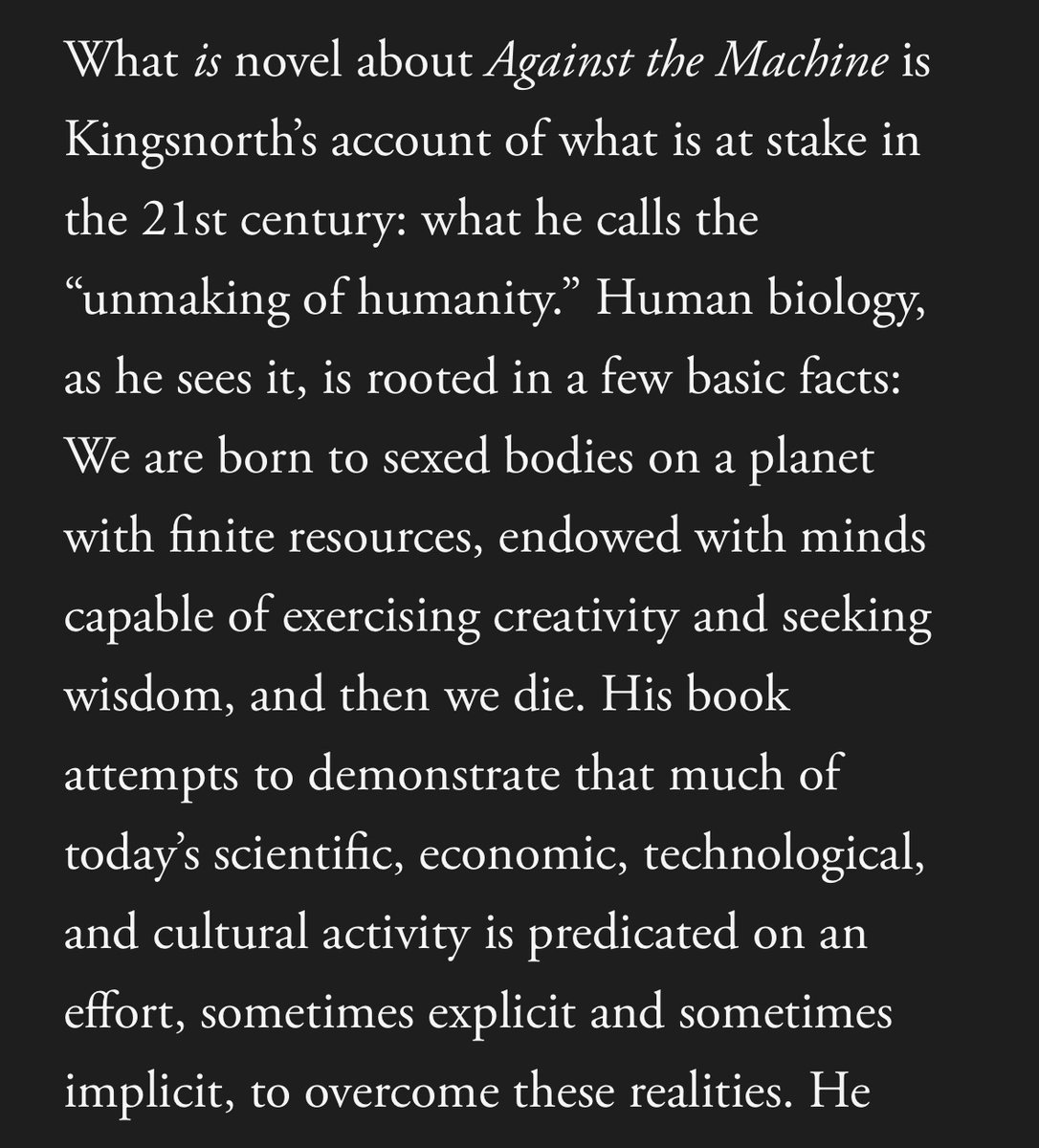
I wrote about Paul Kingsnorth’s “reactionary radicalism.” His book, Against the Machine, assails an anti-limit culture, economy, and tech sector that sees nature—minds, bodies, ecosystems—as something to be engineered away, a view legible in everything from gender debates to AI.
I wrote about polyamory, America's self-actualization fetish, and what I call therapeutic libertarianism: the idea that we should adopt a pro-growth mindset for our personhood, deregulate our desires, and treat "fulfillment" like a kind of psychological Gross Domestic Product. 🧵