Sorry Piers, weren’t you sacked as editor of the Mirror for publishing fake photos? Accuracy doesn’t exactly seem to be your strong point.
The Palestine solidarity movement is seismic and whether you and your Zone 2 dinner-party chums like it or not, it’s not going anywhere.
@DavidM_Friedman Am I supposed to pity you about a war you initiated killing on first day 180 school children and a host of Iranian civilians. Currently over 100,000 Palestinians have been murdered by you. Below is a testimony of your bestiality
https://t.co/jh0AUSkh6G
“They put me on a metal table, pressed my chest and head against it, cuffed my hands to end of the bed and pulled my legs apart forcefully.
I felt a penis penetrating my anus and a man raping me. I started screaming, and they beat me on my back and head.
While I was blindfolded, I felt a man who was raping me ejaculate inside my anus. I kept screaming and being beaten, and I could hear a camera, so I believe they were filming me.
I cannot describe what I felt. I wished for death. Every moment."
— UN Special Rapporteur Francesca Albanese reads Palestinian survivor accounts of rape, torture, and killings in Israeli detention.
18,500+ have been detained since October 7. At least around a hundred, including a child, have died in custody. And some 4,000 are forcibly disappeared.
“What is lost in Palestine will be lost to us all.” — @FranceskAlbs told the Human Rights Council in Geneva.
@IsraelMFA@grok Did Iran fire missiles toward Diego Garcia or did Israel fire the missiles as a false flag operation? Israel is the LEGEND of FALSE FLAGS
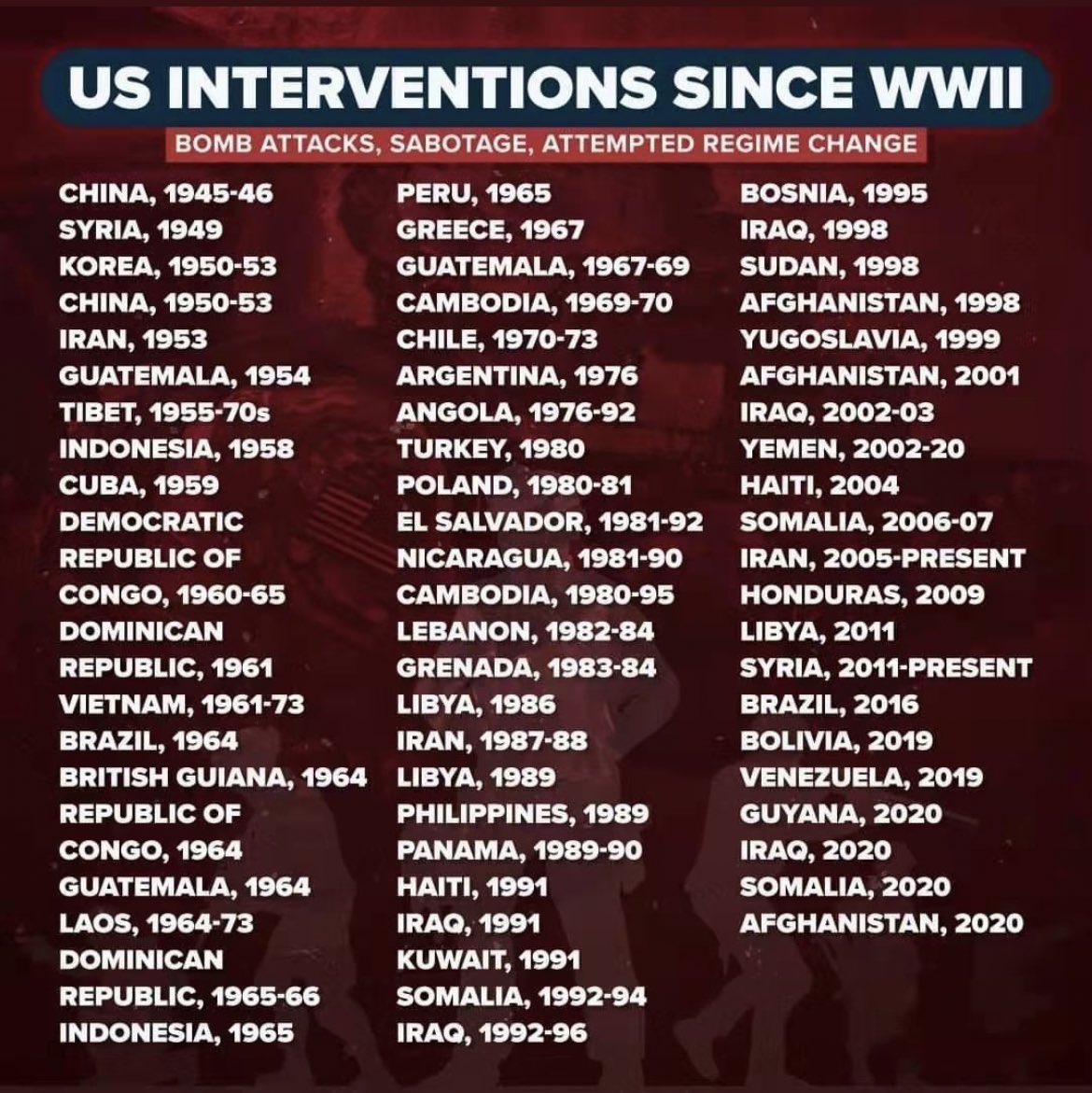
@afneil Even for the sake of argument the claim of Iranian missiles range of 4000 kms was true, who gave the West the authority to hit wherever in the world they want? Have you read about this 👇🏾. The world is not going to be silent forever. Let that sink in
https://t.co/Q4g69ZOaUd
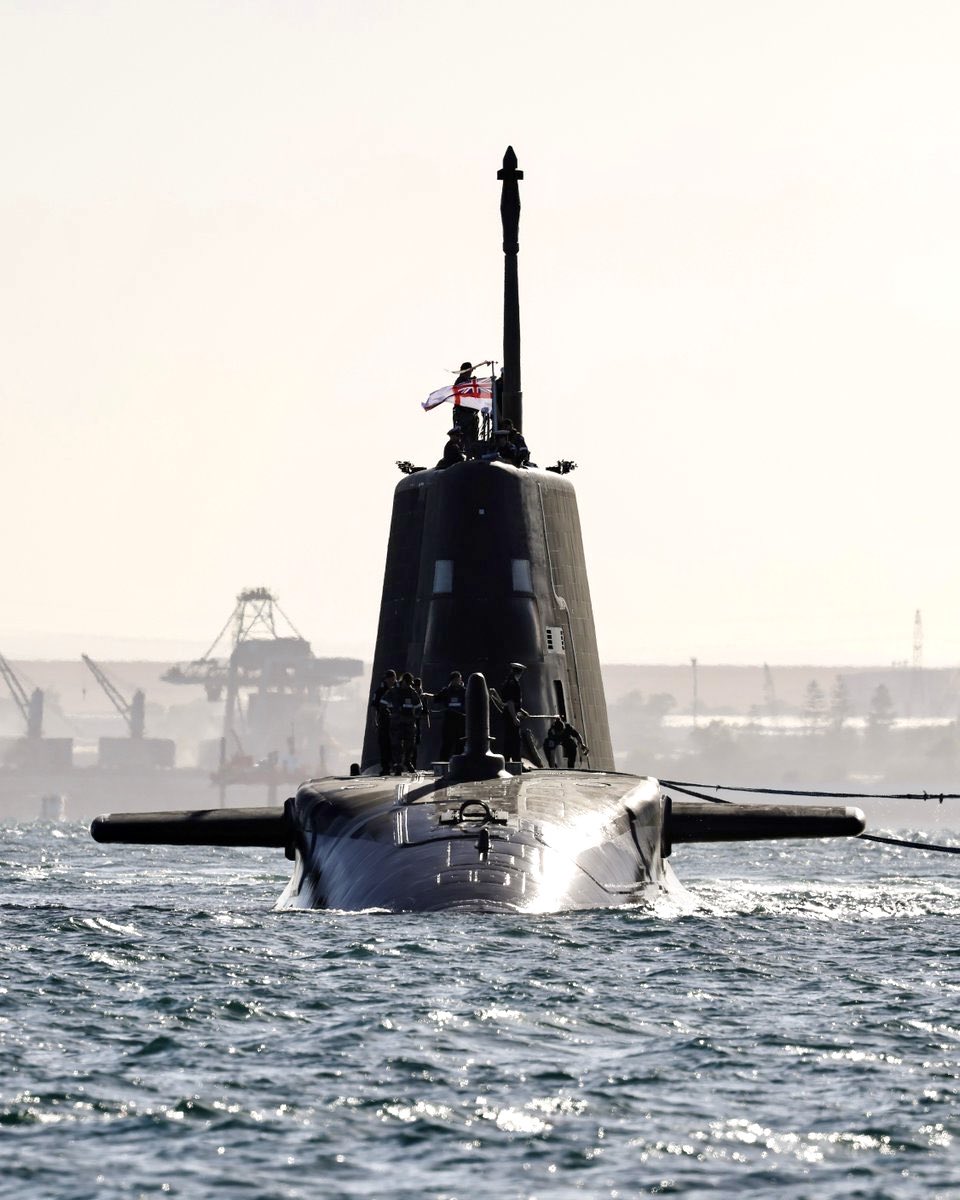
BREAKING. The country President Trump called “very late as usual” just parked a nuclear submarine within Tomahawk range of Iran. HMS Anson, an Astute-class nuclear-powered attack submarine, is now positioned in the northern Arabian Sea with cruise missiles capable of reaching targets deep inside Iranian territory. Britain did not announce this with a press conference. The Daily Mail published the positioning. The submarine speaks for itself.
HMS Anson left Perth earlier this month and traveled 5,500 miles to the Arabian Sea. It carries Tomahawk Block IV cruise missiles and Spearfish heavyweight torpedoes. Its Rolls-Royce reactor will not need refuelling for 25 years. Its pump-jet propulsor makes it one of the quietest submarines in any navy. It does not need to surface to strike. It does not need permission from Washington. Starmer authorises launches through Permanent Joint Headquarters at Northwood. This is a British weapon under British command.
The sequence matters. On the first day of the war, Iran fired two intermediate-range ballistic missiles at Diego Garcia, a British territory in the Indian Ocean. Neither hit. Trump publicly criticised the UK as “very late” and “disappointing” in its response. Starmer initially hesitated on US requests to use British bases for strike operations. Then Britain authorised the use of UK bases, including Diego Garcia, for operations to prevent Iran from attacking ships in the Strait of Hormuz. Iran responded by warning that British lives are now at risk. Britain responded by sending a submarine that can put a Tomahawk through a window in Tehran from underwater without surfacing.
The escalation ladder from “very late” to nuclear attack submarine took less than three weeks.
Starmer’s calculation is not ideological. It is economic. The UK imports significant quantities of LNG and oil through Gulf supply routes. The Strait of Hormuz carries approximately 20 percent of global seaborne oil trade. British energy prices are already surging from the Hormuz closure. British pharmaceutical supply chains depend on Indian manufacturers who depend on Gulf crude. The same supply-chain vulnerability that connects Modi’s Nowruz phone call to Ohio pharmacies connects Starmer’s submarine deployment to British gas bills. The submarine is not defending democracy. It is defending heating costs.
The Astute-class is the most capable attack submarine Britain has ever built. Seven are planned. Five have been commissioned. HMS Anson, the fifth, entered service in 2022. At 97 metres and 7,800 tonnes submerged, it carries a crew of 98 in a hull designed to operate at depths exceeding 300 metres. It is smaller than the American Virginia-class but rated quieter by multiple independent assessments. It carries fewer missiles but needs fewer sailors. In a strait where stealth matters more than volume, the boat that cannot be heard is more dangerous than the fleet that can be seen.
The UK is now the third nation with strike capability deployed in the war theatre, after the United States and Israel. France has the Charles de Gaulle carrier group for air operations. Greece has a Patriot battery defending Saudi refineries. Twenty-three nations signed a statement. But only Britain has put a nuclear-powered platform carrying land-attack cruise missiles underwater in the Arabian Sea with the authority to fire them on the Prime Minister’s order.
Trump said late. Starmer sent a submarine. The missile it carries can reach Tehran. The reactor that powers it will not need fuel until 2047. And the man who authorises the launch is the same man Iran threatened by name when it said British lives are at risk.
The threat was noted. The submarine arrived.
Full analysis: https://t.co/iFmUcarGdV
BREAKING: Iran just struck Ras Laffan. The world’s largest LNG export facility. Qatar’s crown jewel. The facility that funds the country’s sovereignty, its World Cup stadiums, its airline, and its entire economic model.
Explosions. Fires. Partial production halt at a facility handling approximately 18.5 billion cubic feet per day of LNG capacity. Confirmed by Al Jazeera, Reuters, and Iranian state media claiming the strike as retaliation for South Pars and Kharg.
Qatar expelled all Iranian military and security diplomats within 24 hours.
Forty-eight hours ago, Qatar condemned the Israeli strike on South Pars because it shares a geological reservoir with the North Field that feeds Ras Laffan. Qatar was hedging. Protecting its gas. Maintaining the diplomatic channel with Iran that was supposed to keep the shared asset safe. The condemnation was calculated: criticise the ally’s strike to preserve the enemy’s goodwill and protect the field that generates $130 billion in annual revenue.
Iran’s response to that hedge was to hit Ras Laffan directly.
The geology argument is now irrelevant. Qatar condemned the strike that threatened its reservoir from below. Iran struck the facility that processes its gas from above. Both sides have now damaged Qatar’s gas infrastructure through different vectors. The hedging strategy that was supposed to protect both the reservoir and the relationship has failed on both counts in less than two days.
The 24-hour expulsion is the sharpest diplomatic break Qatar has made with Iran in decades. It signals that the shared-field relationship, the North Field coordination, and the back-channel diplomacy that Qatar maintained even while its Gulf neighbours blockaded it in 2017 are over. Iran burned the one Gulf state that was still talking to it.
The LNG implications are immediate and global. S&P Global already assessed one fifth of global LNG supply as impaired by the Hormuz disruption. Ras Laffan is the single largest concentration of LNG processing on Earth. Any sustained production loss at this facility does not tighten the market. It restructures it. Asia-Pacific, which absorbs the majority of Qatari LNG, faces power price spikes, industrial slowdowns, and chemical feedstock shortages that propagate through every manufacturing economy from Japan to Vietnam.
LNG is not oil. Oil has the Yanbu bypass. LNG liquefaction trains are fixed installations that take years to build and cannot be rerouted through a pipeline across the desert. There is no bypass for Ras Laffan. There is no alternative facility at this scale anywhere on Earth. The molecule must be liquefied at the plant, loaded onto a specialised carrier, and shipped. If the plant is damaged, the molecule does not move.
Iran hit Riyadh this morning. It hit Ras Laffan this afternoon. It has published satellite targeting images of Jubail, Mesaieed, and Al-Hosn. Shekarchi threatened to burn every Gulf energy facility to ashes. The regime burying its intelligence minister, its negotiator, and its Basij commander is executing a systematic campaign against the energy infrastructure of every country that called for its destruction.
Kharg Island: 65 percent of Iran’s own gas offline. South Pars: processing facilities burning. Ras Laffan: the world’s largest LNG plant hit. The gas molecule is now compromised at production, processing, and export across two countries and a shared reservoir.
Urea at $610. The farmer plants soybeans. And the LNG that powers half of Asia just became the next molecule trapped by a war that has no off switch.
https://t.co/iFmUcarGdV