My salute to the Indian pilot Captain Smit Machchhar for his extraordinary bravery.
Despite being stabbed and seriously injured, he fought back, resisted, opened the cockpit door, and enabled passengers and crew to overpower the attacker — preventing a catastrophic mid-air disaster.
He saved the lives of 174 people, including Israeli citizens and other nationals.
I wish Captain Machchhar a speedy and full recovery.
He is a true hero.
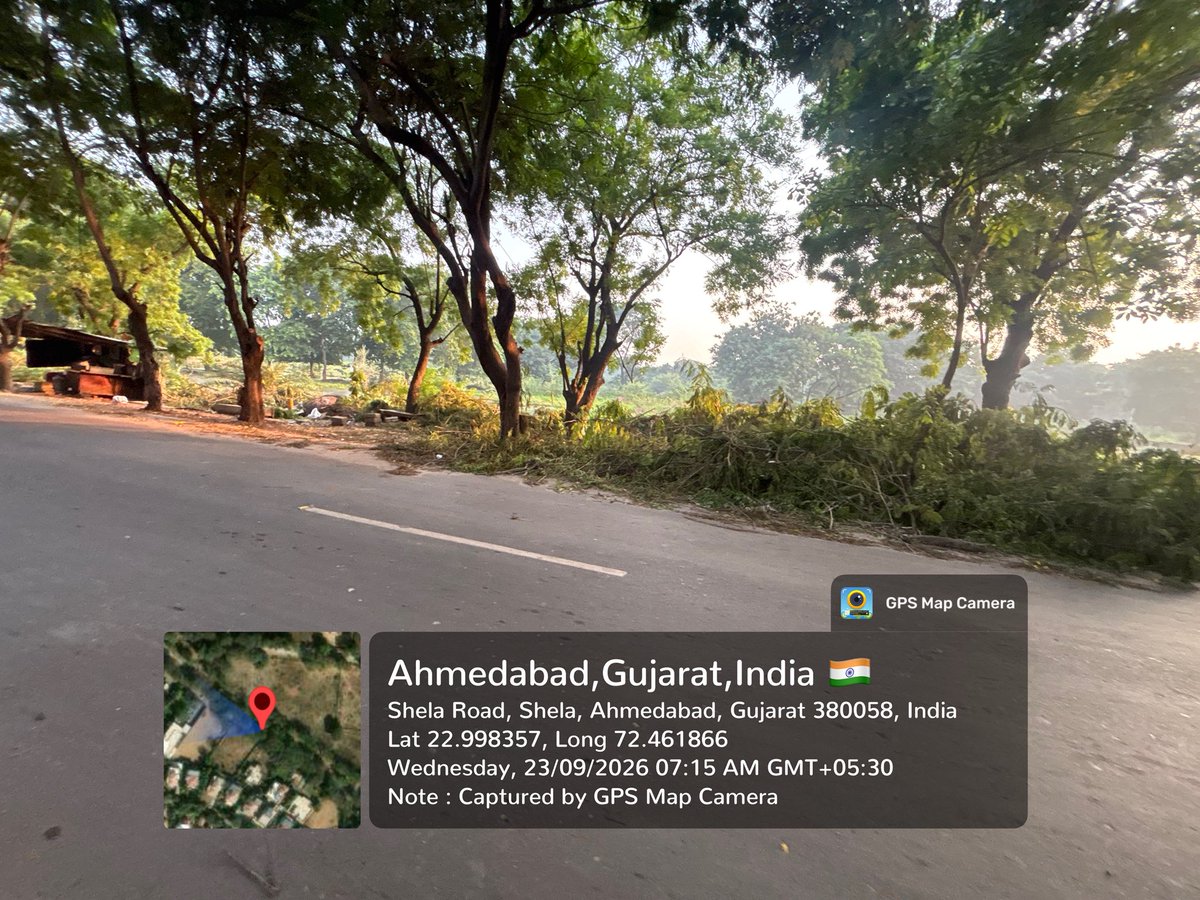
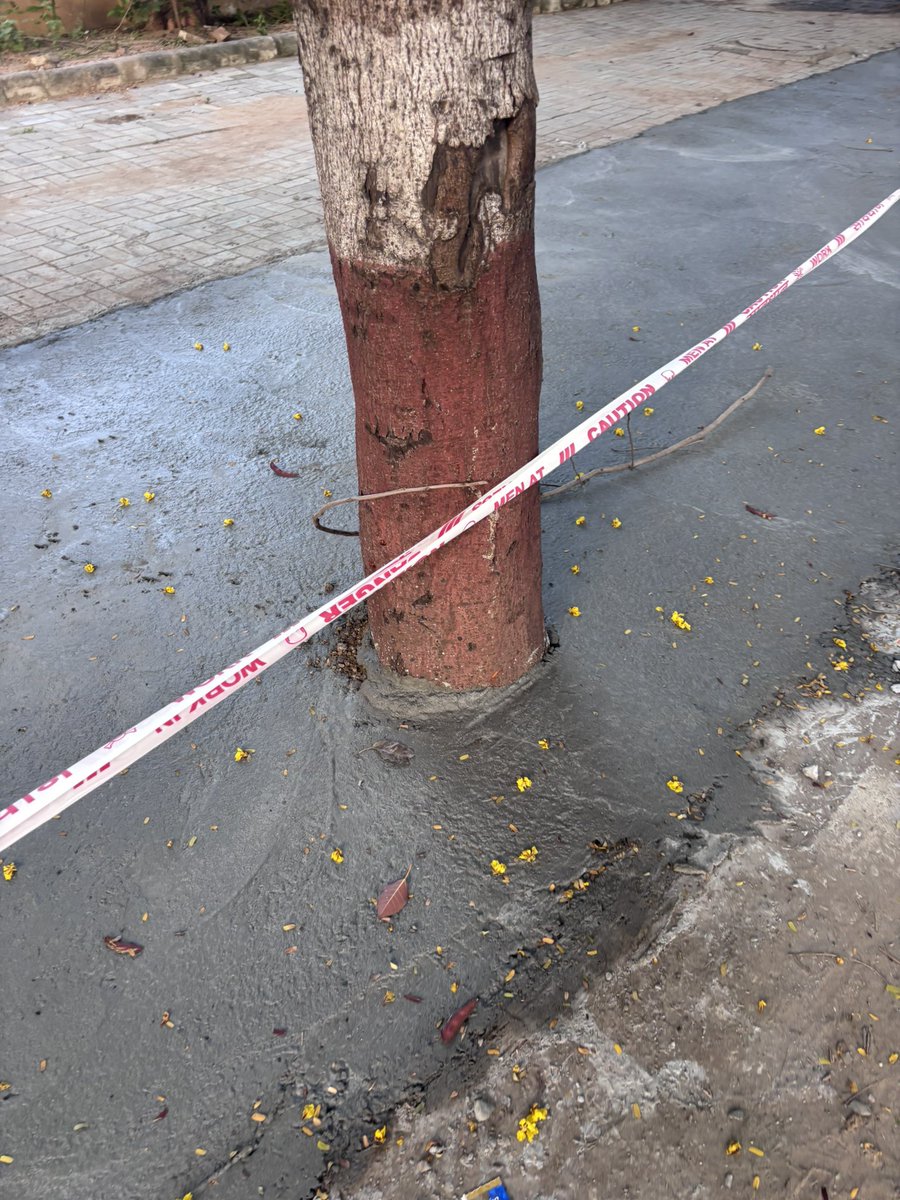
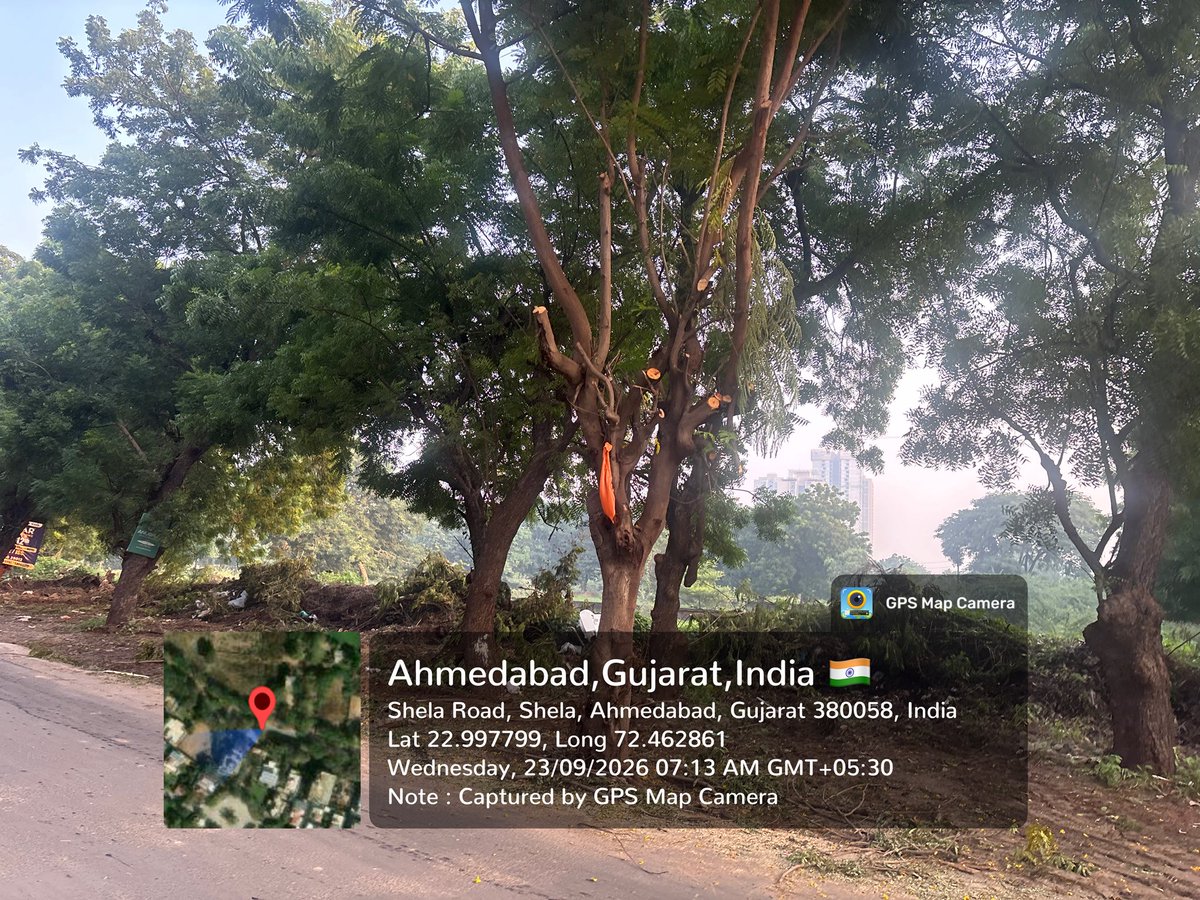
They call it "development." We call it slowly killing #trees.
Cement poured right up to the trunks and trees chopped along Nandanbaug–Vraj Homes Road, #Shela#Ahmedabad ,Who authorised this, and where is the permission for the tree cutting? #SaveTreesAhmedabad#Shela
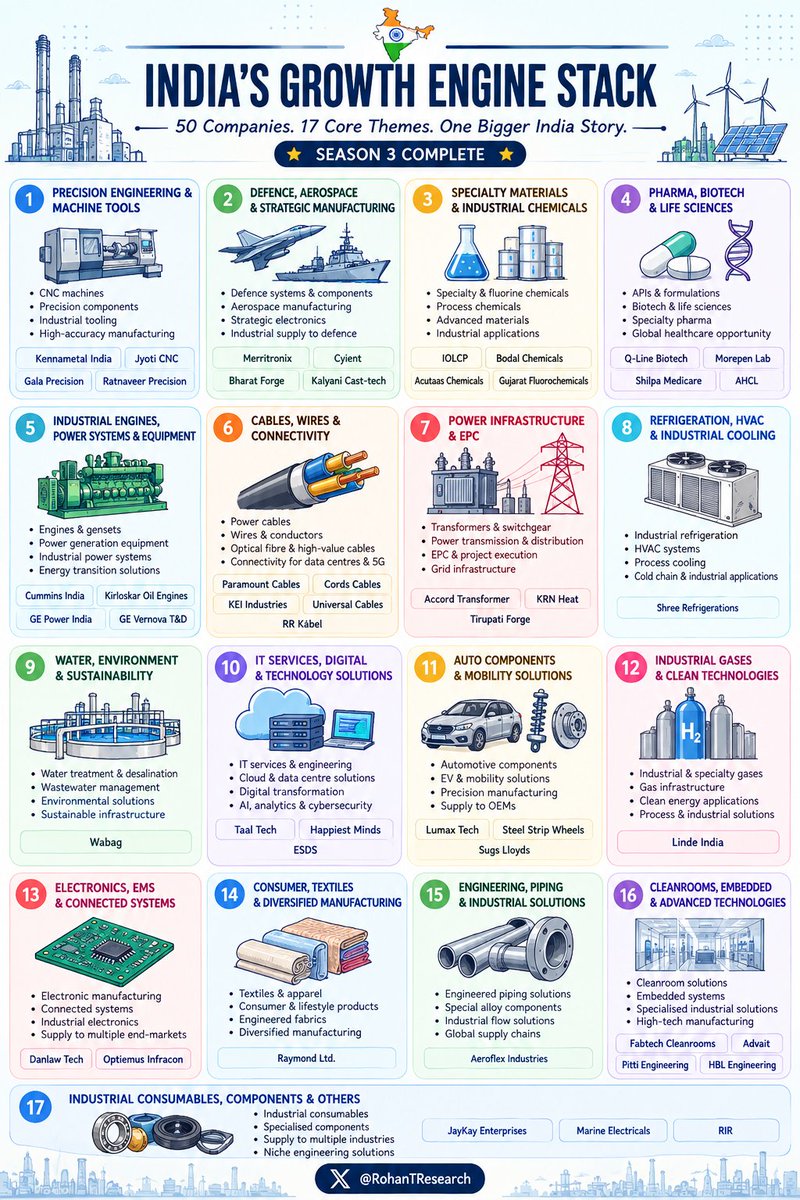
Season 3 Complete - 50 More Companies Decoded!
👉 Season 3 takes the journey to 150 companies decoded, spanning India’s emerging themes across manufacturing, defence, semiconductors, power, infrastructure, technology, healthcare, chemicals, mobility and more.
👉 150 companies decoded. One objective remains: Understand the business first. Then form an investment view.
👉 Checkout Season 1: https://t.co/sezBah5Di2
👉 Checkout Season 2: https://t.co/L71gZtuhAf
Disclaimer: Not a buy/sell recommendation. Do your own due diligence.
Blue Jet Healthcare 2.0 (FY29), Constraints that don't exist kill you the most , building a platform in Hyderabad for Capacity in Vizag, listen to my latest substack audio note
link : https://t.co/PF4XHdXMKY
Lorry trying to dash toward a wild elephant in Bandipura, Karnataka.
This is why night traffic ban should be permanent in eco sensitive regions. Drivers like this dont care about animals
We have done ten stock stories, one every week. These are NOT recommendations. We look at it from a business analysis perspective. if we like one, we put it in our watchlist for active tracking.
Bookmark this if you want to come back and read any of these later. Also, sign up to our Substack to get future stock stories directly in your mailbox. If you want a particular stock to be covered by us, let us know in the comments below.
Here are the ten stock stories till now:
Rossell Techsys - https://t.co/49DuxXiP79
Trishakti Industries - https://t.co/gBiqSv2lyO
Airfloa Rail - https://t.co/aghxRp9Nam
United Drilling Tools - https://t.co/CAHV4bMKIo
Vivid Electromech - https://t.co/uMKNt98VUz
GEE Ltd - https://t.co/08TOSj9LUs
Carborundum Universal - https://t.co/rDcT9IlsoG
Wanbury - https://t.co/ituqr98rSi
Bansal Wire Industries - https://t.co/nkAY8FGPs9
Alivus Life Sciences - https://t.co/bcOC6khvDQ
One of the most interesting parts of CMLL's Annual Report is a section called "Why Caliber Wins."
I liked this section because management has actually put numbers behind the competitive advantages instead of simply saying that the company has a "strong moat." There are five things that stand out.
1. Integration Across the Value Chain
CMLL is among the few operators in India that can manage overburden removal, coal extraction and coal logistics together.
That sounds simple, but it can create a real operating advantage.
A mine owner can work with one company across multiple parts of the mining and logistics process instead of managing different contractors for each activity.
More importantly, CMLL can move its equipment where it is needed. For example, if a logistics tipper is temporarily idle between hauls, it can potentially be deployed for overburden removal at another nearby site.
A contractor focused only on logistics cannot do this.
This gives CMLL an advantage in fleet utilisation, fuel usage, maintenance and manpower utilisation.
And when the fleet is large, these small efficiencies can add up to meaningful savings.
2. Fleet Size Is More Than Just a Fleet Number
CMLL had 1,881 fleet units, which the company says is the largest fleet among contract mining operators for which comparable public data is available.
This is important because fleet size also determines which contracts a company can realistically bid for.
A large mining contract may require hundreds of machines to be mobilised from day one.
A smaller contractor may want the contract, but simply may not have the physical capacity to execute it.
CMLL can.This is reflected in the revenue mix as well.
Contracts above Rs 1,000 crore contributed 76.12% of FY26 revenue.
So the 1,881-unit fleet is not just an impressive number for presentation. It is part of the company's ability to compete for large contracts.
3. The Maintenance Advantage Gets Bigger With Scale
This is perhaps one of the more interesting numbers in the Annual Report.
CMLL operates a central workshop in Chandrapur along with 7 mine-site workshops, supported by 397 mechanics and 901 helpers.
Now look at what happened over two years.
The fleet increased by 145%, while maintenance expense increased by 99%. Even in FY26, maintenance expense grew only 1.27%, while the fleet grew 19.35%.
That is what operating leverage looks like. The workshop network is largely a fixed-cost infrastructure. Once the infrastructure and people are in place, the same setup can support a much larger fleet.
The Annual Report itself puts it well: "Operating a workshop network is a fixed cost that becomes a widening advantage as the fleet grows."
So as CMLL keeps adding equipment, the maintenance infrastructure can potentially become more efficient rather than becoming a proportionately bigger cost.
4. Diesel Procurement Can Move the Needle
Then there is diesel. CMLL consumed 85,226.77 kilolitres of diesel in FY26.
The company purchases diesel roughly one month in advance directly from local refineries, stores it under its own PESO licences and distributes it to sites through 82 company-owned tankers, generally within a 40 km radius in Maharashtra.
Why is this important?
Because diesel is one of the largest cost items in the business. The Annual Report makes a very important point here: even a small percentage advantage on the largest cost line can be worth more than many smaller efficiency improvements.
If the diesel cost base is around Rs 784 crore, then just a 1% advantage is worth Rs 7.84 crore every year.
That is why something as boring as diesel procurement can actually become a competitive advantage in a heavy-equipment business.
At an EBITDA margin of around 25.7%, protecting these costs becomes even more important.
5. The Company Does Not Chase Every Contract
The final advantage is bid discipline.
CMLL says it focuses on high-yield contracts and avoids capital-intensive, low-return work.
This is easy to overlook during a growth phase.
Revenue growth is attractive, but not every Rs 1,000 crore contract is equally valuable.
A low-margin contract that requires a lot of capital can actually destroy returns.
CMLL's approach is to be selective. And there is another number that supports the quality of its customer relationships.
84.59% of FY26 revenue came from repeat customers.
That is a good number. It suggests that customers are not simply awarding work once and moving on. Execution seems to be helping CMLL build repeat business.
The company also says that daily production targets were met at every site over the last three financial years, with only one exception.
In a contract mining business, consistent execution matters because downtime and missed production targets can be very expensive for the customer.
The Number That Makes the Whole Story Interesting
Now put all of this together with the peer comparison.
The Annual Report says that, in the latest year for which peer comparison was available, CMLL had the highest operating EBITDA margin, highest PAT margin and highest ROE among the principal contract mining players in India.
The peer averages were: EBITDA margin: 11.3% , PAT margin: 4.1% , ROE: 12.7%
CMLL's operating EBITDA margin was 25.67%. So the EBITDA margin was more than 2x the peer average.
That is a meaningful difference.
And this is why I think the five advantages are worth looking at together.
The margin advantage is not dependent on one single factor.
It comes from a combination of integration, fleet scale, in-house maintenance, diesel procurement and bid discipline.
The bigger the fleet gets, the more useful the workshop network can become.
The larger the operations, the more important procurement savings become.
Integration can improve utilisation. And disciplined bidding helps prevent growth from coming at the expense of returns.
That is where the Annual Report gives some interesting clues.
Dear Maj Khushboo,
When an officer carries military credentials into the public domain to offer tactical guidance on women’s safety, the responsibility is absolute. Good intentions cannot substitute for sound operational doctrine. Recommending a .177 CO₂ Glock replica as a self-defence weapon for civilian women is not simply bad advice—it is an invitation to catastrophe.
Beyond the tactical fallacy of the tool itself, your demonstration compromised the cardinal foundations of firearms handling.
1. Disregard for the Four Cardinal Rules of Firearm Safety
In tactical instruction, there is no such distinction as "just an airgun." Muscle memory and safety discipline are immutable. Your video compromised every foundational safety doctrine:
Rule 1: Treat Every Weapon as Loaded Casual manipulation, brandishing inside a domestic space, and treating a replica loosely breeds fatal muscle memory should a civilian ever handle an actual firearm.
Rule 2: Never Point a Muzzle at Anything You Do Not Intend to Destroy The muzzle consistently swept uncontrolled arcs, including camera operators and non-target backdrops. Muzzle discipline must remain absolute at all times.
Rule 3: Keep Your Finger Off the Trigger Until Sights Are on Target Positive index-finger placement along the frame was repeatedly broken. Under sudden auditory or physical startle response, that finger contracts, causing negligent discharge.
Rule 4: Be Certain of Your Target and What Lies Beyond It Displaying and operating a projectile device in casual domestic environments ignores ricochet mechanics and non-target backstops.
2. The Operational Fallacy of a CO₂ Replica for Personal Protection
Advising a woman to reach into a handbag for a .177 air pistol during a violent encounter ignores the realities of close-quarter street violence:
Zero Terminal Ballistics: A .177 lead pellet or steel BB propelled by a 12g CO₂ cylinder produces negligible kinetic energy. It generates superficial pain, not hydraulic shock or central nervous system shutdown. Pain compliance fails against an assailant driven by adrenaline, rage, or narcotics; it merely enrages them.
Guaranteed Lethal Escalation: A replica looks identical to a Glock 17. The moment a woman draws it, she escalates a dispute to a lethal encounter. If the assailant possesses a real firearm or an edged weapon, they will use lethal force without hesitation, leaving her holding a toy against lethal steel.
Loss of Weapon Retention in the Ambush Zone: Street ambushes occur within zero to three feet. Untrained individuals cannot retain a full-sized frame in a grapple. An attacker will disarm her in seconds and use that heavy metallic frame to inflict severe blunt-force trauma on her.
Mechanical Failure Under Survival Stress: Between puncturing a CO₂ seal, slow pressure decay over weeks in a purse, and the fine-motor dexterity required to disengage safeties under acute tachycardia, the platform is prone to failure in a crisis.
Law Enforcement Engagement Threat: If a woman brandishes what appears to be a black service pistol in public, responding police or armed security units will perceive an active lethal shooter, placing the victim under direct friendly-fire threat.
3. Practical Doctrine: Legitimate EDC and Realistic Protection
Tier 1 (Non-Lethal EDC): Deploy proven stopping tools like major capsaicinoid pepper gel, high-lumen strobe flashlights, or discreet impact/edged tools instead of ineffective toy replicas.
Tier 2 (Empty-Hand Combatives): Train extensively in situational awareness, threat profiling, boundary setting, and biomechanical striking to create an immediate escape window.
Tier 3 (Lawful Lethal Defense): If a threat genuinely necessitates a firearm, secure a lawful license for a compact civilian calibre (.22 LR / .32 ACP) backed by rigorous holster-draw and retention training.
Please remember, We must equip our citizens with realistic survival doctrine, not lethal liabilities disguised as solutions.
🙏
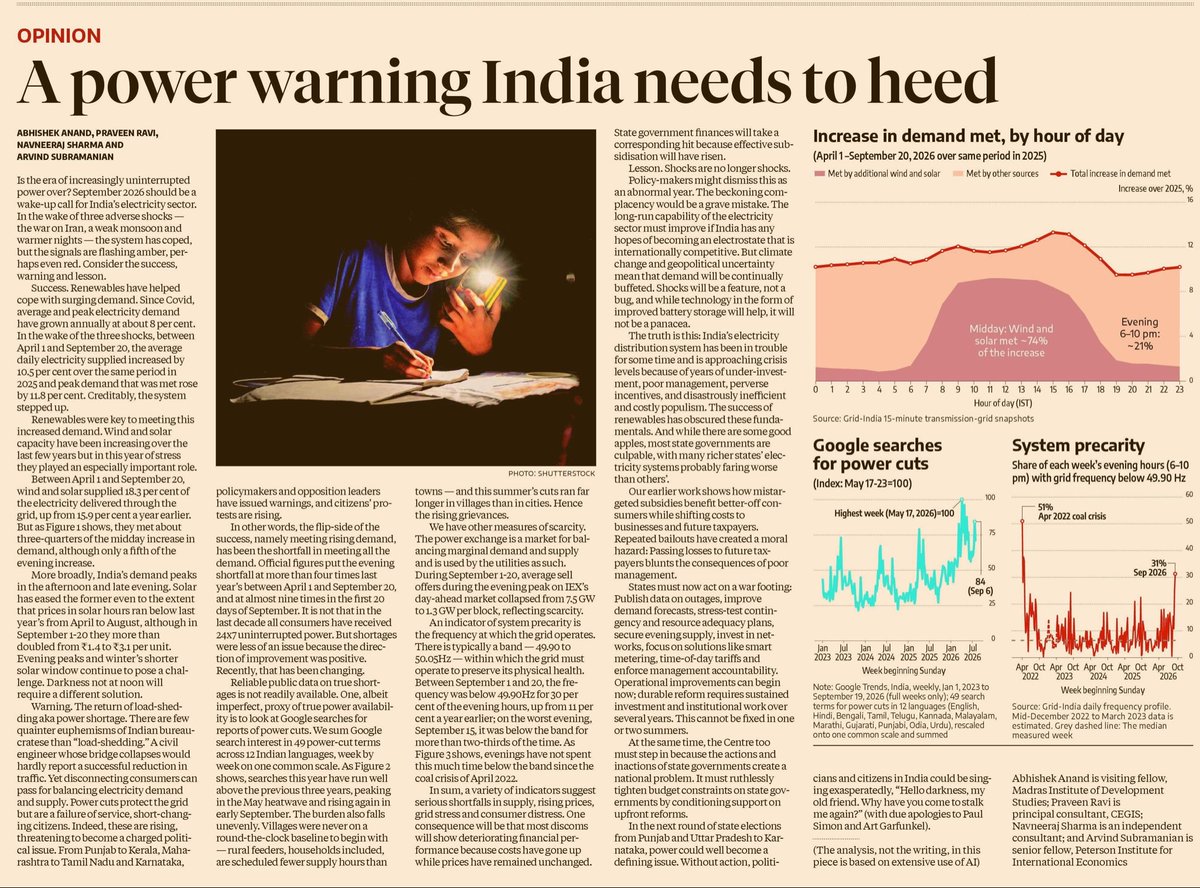
Our piece in @bsindia on the
SUCCESS (day time solar)
WARNING (the return of outages and heightened system precarity) and
LESSONS (fixing distribution)
from the electricity sector in the wake of three shocks this year
TV actors aren't leaving a single chance to show Swara Bhaskar her real place 🚨
Karan - I've not seen your work, but I've seen you in some controversies
Swara - You would've become my fan then
Karan - Not really. I really feel pity for people like you who have to diss their own people just for bread and butter
Swara - Koi nahi. People realise facts slowly
Karan - Facts? Chhatrapati Sambhaji Maharaj's eyes were gouged out, he was tortured for days. Aurangzeb asked him to accept Islam. He roared, Not even if you offer your daughter to me. That's how we survived. We can't compromise our principles like you, who don't even understand our lineage
Swara - It would be better if Indians think about building schools instead of all this
Karan - People who celebrate the Indira Gandhi Memorial made on 45 acres and hate the Ram Mandir made on 2 acres shouldn't lecture others
He literally ate and left no crumbs. All these brave Hindus will make sure Swara leaves this show crying 🙏
An open letter to all my countrymen.
Do you want India to remain a democracy? Then you must understand what Gyanesh Kumar, the CEC, and his bosses are doing in the so-called SIR.
They are violating the law.
- As per Section 21 of the law, a special revision is to be undertaken only in special cases, for reasons to be recorded in writing in each case; and that also only in any constituency or part of a constituency. An order for intensive revision for the whole country was illegal. An exception allowed for special cases cannot become the rule. The Supreme Court order upholding the general SIR was wrong.
Another question is - who took the decision for SIR in the whole country? Was it the full commission; or only Gyanesh Kumar.
- Section 21 of the Representation of the People Act, 1950, provides that where the revision of an electoral roll is taken up, the electoral roll in force at the time of the issue of the notification of revision shall continue in effect till the completion of the revision. The revised electoral rolls become complete only after all the appeals filed against inclusion or deletion are disposed off. Where the appeals were still pending, the original Electoral roll which was valid on the date of notification was to be used. Contrary to this the new roll with deletions was used during the elections even though appeals against deletions were still pending. This was illegal.
- Section 22 of the RP Act provides that the Electoral Registration Officer, and not anyone else, can remove a voter's name from the roll and that also only on the grounds listed in Section 22(a), (b), and (c); and only after a specific enquiry, after giving the concerned person a reasonable opportunity of being heard, and only after appeals against his order are disposed off. Gyanesh Kumar removed the names of all the voters who had been listed by the ERO's after 2003, without any basis, without any enquiry, and without any show cause to the registered voters. This was blatantly illegal.
The persons whose names were removed summarily had to apply as fresh voters in Form 6 and give evidence that they were eligible to be registered. This is a clear violation of the Supreme Court judgement in Lal Babu Hussain and Others v. Electoral Registration Officer and Others, [(1995) 3 SCC 100], which held that the enquiry authority or the objector and not the voter - must bring forth material evidence to back any claim that an enrolled voter be disqualified. And in such cases the voter must be asked to show cause why his name should not be removed on the basis of the grounds adduced by the enquiry officer. All this did not happen.
The established jurisprudence is that the onus to prove that there are sufficient grounds for subjecting any person to a disability or punishment is on the
person or institution which is seeking to inflict the punishment. Here, Gyanesh Kumar has inverted the burden of proof. This is also against the law.
Up to now, the efforts of the Government and the Election Commission have always been to enroll all eligible voters. It was a mission to deepen democracy and empower all citizens. This is the first time in history of the country that the mission is to disenfranchise people.
Gyanesh Kumar added a new appendix to Form 6. He was not authorised to do so, as Form 6 is mandated by statutory rules. And he added this himself – against the views of the two election commissioners. The decisions of the commission are to be taken either unanimously – or by a majority. The majority was against the addition of the new appendix to the form. So the addition of the new appendix was against the decisions of the Commission itself. So why was it added? On whose orders? This was illegal. This appendix asks the applicant to state the serial number in the 2003 voter list on which their parents' names were listed. Where can an ordinary person – a young man of 18; access the 2003 roll in 2026? This stopped the registration of all young voters. BJP knows that young voters will not vote for it.
Objections to inclusion of voters names in form 7 were filed in bulk. Who filed them? How were the forms accepted and acted upon when the persons who signed it did not appear?
Names of 16 lac voters found valid by the ERO were not registered in Bengal because, it seems, the EC filed appeals against them. Why? On which grounds? Who authorised the Commission to file appeals? Two Election Commissioners say they did not do so. So the Commission did not authorise anyone to file appeals. Who did it? Gyanesh Kumar? These people were prevented from voting in the election.
So the Election Commission and some people from a political party were acting in cahoots to get bogus Form 7 objections filed in bulk and delete names?
How were elections allowed to be held when the appeals of lakhs of voters were pending? The ECI and the Supreme Court have to answer. The appeals which have been decided show that 90% of the voters who were left out were valid.
A ridiculous thing was brought up called "logical discrepancy". Gyanesh Kumar does not have any idea of how the poor live in India. Their children are not born in hospitals. They do not have birth certificates. They do not have calendars in their homes. When the BLO approached them to enroll them in the voter list they gave their estimated year of birth. Similarly, when their fathers' names were enrolled in the electoral roll, they gave their estimated year of birth. The dumb people in the Election Commission, under Gyanesh Kumar, said that any difference of less than 15 years between father and children would be a logical discrepancy justifying excluding their names. The “Logical Discrepancy” names were excluded without enquiry, contrary to sec 21 of the act.
The largest number of exclusions have been the poor and the underprivileged, those without a voice. They were and are mostly away from their homes, earning their daily bread. Lakhs are working in faraway places/states. They could not and cannot afford to go back to their homes for a month to get their names registered. They will go hungry if they do not earn. They cannot fill the complicated forms. They do not have birth certificates and the papers. Why should they sacrifice their daily wages for a vote?
The illegal immigrants are not affected. The first thing they do on entering India is to get their documentation made—Aadhaar card, ration card, etc. The earlier immigrants are their support systems. It is the poor Indian citizens who have been disenfranchised. The dumb people in the Election Commission and their bosses did not understand this. Or they wanted it this way.
Gyanesh Kumar has made a digital electoral roll and empowered it to refuse addition of names because of “Logical discrepancy”. In the name of "Logical discrepancy", the names of millions of voters have not been included. This is against the law. The only authority designated by law to add or delete names and publish the electoral rolls is the Electoral Registration Officer. Contrary to this, the electoral roll was centralised and the revision happened centrally. This was illegal.
Two Election Commissioners pointed out that the only people authorized to add or delete names – the ERO, the DEO and the CEO were not being allowed to access the voter list. In Goa, 97 electors were found by the ERO to be valid and fit for inclusion in the roll. They have not been able to add their names to the roll as yet.
The centralisation of the voter list amendment is dangerous. It can be used to cut voters from booths which vote against NDA. Is this what happened?
Deleting voters names before verification is a heinous offence, and Gyanesh Kumar is guilty thereof.
13 crores names have been deleted by SIR so far. This is 13% of the voters, and SIR is not over. The difference between NDA and INDIA in the 2024 elections was only 3%. So the deletion have had and will have a material impact on the elections.
The press note issued after the Commission meeting on 26th September confirms the illegalities mentioned above.
Did Gyanesh Kumar commit all these illegalities himself or was he directed to do so by his bosses?
The Opposition says that they will impeach Gyanesh Kumar. That is an exercise in futility. They just do not have the numbers. If they really want a remedy, they should file criminal cases against Gyanesh Kumar.
The next step to be taken is that all opposition parties should unite and say that they will not participate in any election till the CEC and Election Commissioners' resign and the selection of their successors is as per the previous selection system, with the Prime Minister, the Leader of the Opposition, and a sitting Supreme Court judge. Elections held in states while the appeals of lakhs of voters were pending must be set aside and fresh elections held. And the poll must be held by ballot not by EVMs because no electronic system has yet been invented which cannot be hacked. That is why none of the economically and digitally advanced countries use EVMs.
If we want to preserve our democracy the whole country will need to be made aware and united.
The reputation of the Supreme Court has been besmirched by the judgement on SIR. It is at par in infamy with the judgement upholding the emergency. Hon’ble Judges may please note.
The procrastination on the challenge to the law on selection of Election Commissioners is also sending a bad message about the Supreme Court – as it is an open and shut case that the Election Commissioners should not be selected by the party in power; but by a neutral selection committee to ensure their neutrality.
Let us unite to save our democracy.
RK Singh
(IAS Retd. Ex Union Home Secretary)
@abhijeet_dipke@Cockroachisback@RahulGandhi@kharge@ArvindKejriwal@MamataOfficial@yadavakhilesh@mkstalin@yadavtejashwi@Pawankhera
#WATCH | Gurugram, Haryana | Dr Naresh Trehan, CMD, Medanta Hospital, says, "People who are at risk or are known to have heart disease can carry Aspirin. It can be taken in case of chest pain. You can also take half a tablet of Sorbitrate, sit down or lie down and put it under your tongue. The third thing is to take 20 milligrams of Atorvastatin or an equivalent. These are for people with heart disease..."
पिछले कुछ वर्षों से हिमालय क्षेत्र में पर्यावरणीय आपदाओं और हिमालय की संधारण क्षमता से अधिक बोझ डालने के कारण समस्त जनजीवन भारी संताप से गुजर रहा है। हिमालय के गाँवों से पलायन भी निरंतर बढ़ता जा रहा है, विभिन्न निर्माण कार्य प्राकृतिक आपदाओं के कारण टूट रहे हैं और सड़कें व अन्य विनिर्माण भारी रूप से क्षतिग्रस्त हो रहे हैं।
अंतर्राष्ट्रीय समुदाय बार-बार चेतावनी दे रहा है और ऐसे में जब हिमालय हमारी संस्कृति संरक्षण, प्राकृतिक संपदा और अर्थव्यवस्था का प्रमुख स्रोत है, तब उसकी उपेक्षा करना देश के लिए भारी संकट बन सकता है।
अभी यह आवश्यक है कि हिमालय की तलहटी के सभी राज्यों द्वारा इस पर गंभीरता से विचार कर संपूर्ण हिमालय के लिए एक समेकित सर्वांगीण विकास योजना बनाने पर तत्काल विचार करें, हिमालय केवल इन राज्यों से ही संबंधित नहीं है बल्कि हिमालय के कारण सारा देश संरक्षित एवं जीवित है।
ज्ञातव्य है कि हिमालय से देश की 20% जीडीपी (GDP) प्राप्त होती है, इसलिए हिमालय समूचे देश की थाती है और उसकी रक्षा करना देश की जिम्मेदारी है।
इस स्थिति में भी कुछ सरकारों द्वारा वैज्ञानिकों, भूगर्भशास्त्रियों, भू-वैज्ञानिकों, कृषि एवं जैव विविधता के विद्वानों के प्रतिवेदनों की उपेक्षा करके, विभिन्न यात्राओं, पर्यटन कार्यक्रमों एवं बिना सोचे-समझे हिमालय क्षेत्र में विकास की ऐसी योजनाओं को संचालित किया जा रहा हैं, जिससे हिमालय की संधारण क्षमता तेजी से समाप्त होती जा रही है।
अतः मैं केंद्र एवं हिमालयी राज्यों की सरकारों से आग्रह करता हूँ कि वे ऐसी योजनाओं को बल देने के लिए कदम उठाएँ जिससे हिमालय का संरक्षण हो तथा पर्यावरण, विकास, प्रतिरक्षा व संस्कृति का संवर्धन हो सके
मैं मानता हूँ “हिमालय है तो हम हैं”
Lakhimpur Kheri का 84 करोड़ का गोला ओवरब्रिज NH730 देख लो।
उद्घाटन नहीं, गुणवत्ता जांच नहीं, सड़क धंस गई।
मैंने IGRS 60000260197461 किया - NHAI बोला RTI करो
RTI किया - कोई जवाब नहीं
सेतु निगम का जवाब आया - पत्र 2062/18.08.26 - PWD को भेज दिया
ये है सिस्टम - 84 करोड़ खा गए, जवाब कोई नहीं देगा?
@nitin_gadkari जी ये आपके विभाग का हाल है। Audit कराइए।
@narendramodi@PMOIndia@NHAI_Official@uppwdofficial@DmKheri #LakhimpurKheri #NH730
मध्यप्रदेश में बस पुरानी हो, हालत खटारा हो, सीटें टूटी हों, सफर असुविधाजनक हो—कोई बात नहीं। बस पर नया रंग कर दो, चारों तरफ रेडियम लगा दो और नाम रख दो मुख्यमंत्री सुगम परिवहन सेवा।वाह! अब बस भले ही वही पुरानी हो, लेकिन दूर से चमकती हुई जरूर दिखाई देगी। सवाल यह है कि जनता को सुगम परिवहन चाहिए या सुगम दिखावा? बस के रंग बदलने से उसकी उम्र, फिटनेस और यात्रियों की सुरक्षा तो नहीं बदल जाती। अगर सरकार सच में सार्वजनिक परिवहन को बेहतर बनाना चाहती है तो सिर्फ खटारा बसों का मेकअप करने के बजाय नई, सुरक्षित और समय पर चलने वाली बसों की जरूरत है। बस पर रेडियम चमक रहा है, लेकिन क्या सड़क पर व्यवस्था भी चमक रही है?नाम सुगम परिवहन रख देने से सफर सुगम नहीं होता—इसके लिए बस की हालत भी सुगम होनी चाहिए!