I’ve got a few #Muse invites left.
If you’ve been meaning to try it, now’s probably the time. Use my code XXFAH9 and we both get 1B tokens.
I’d rather give these to people who’ll actually use them than watch them expire.
https://t.co/894KXKaIH6
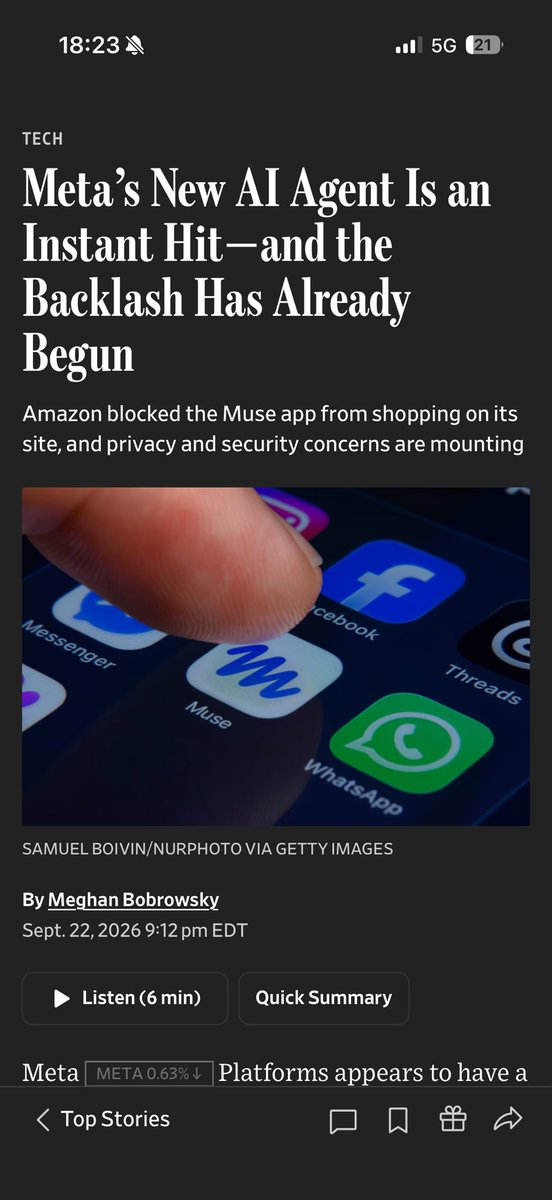
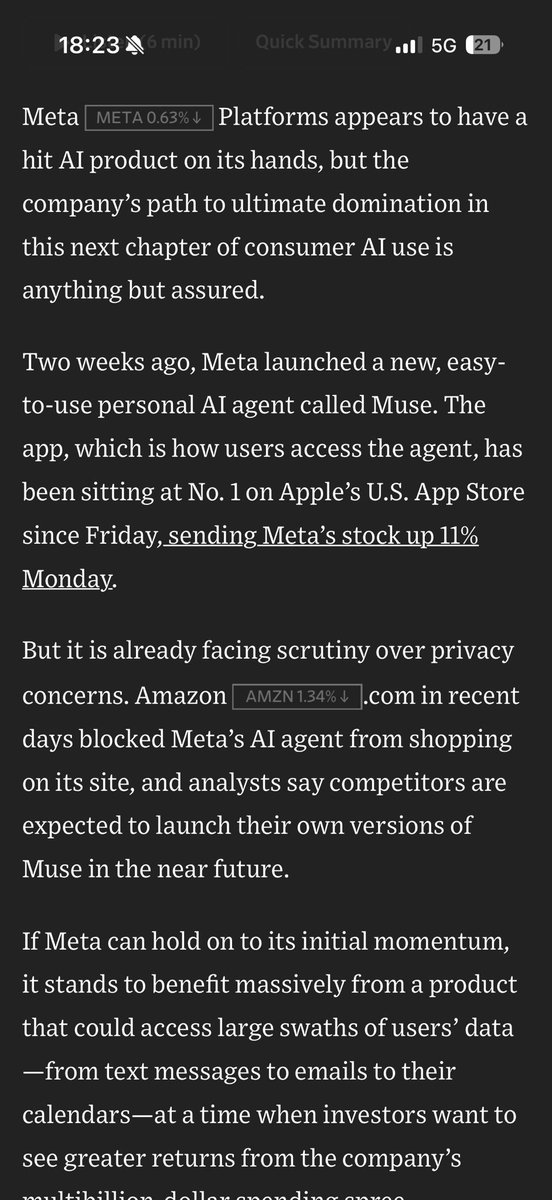
$META Muse could reshape commerce.
📱 3.4M downloads in just over 2 weeks
💳 Meta wants a cut of transactions
📦 Amazon has already blocked it
The battle over the consumer AI interface is getting real.
https://t.co/B5WJuVKjiS
Time for #Copilot to become the enterprise control plane for work: understanding context, creating software, accessing systems, and executing workflows.
If #Microsoft gets this right, the moat moves from the model to the enterprise workflow + data + permissions layer.
We’re building Copilot as a new OS for work that spans every model, every form factor, and every task. Today, we’re announcing our biggest update to Copilot to date, bringing four things together:
· Autopilot: proactive and long-running agent built for the enterprise
· Code: build apps with Copilot, hosted inside your company’s tenant
· Home: Chat + Cowork together
· Office: now fully embedded in Copilot (and Copilot embedded in Office, of course!)
Plus, you can invoke Copilot in Teams, and we’re introducing Today, a proactive experience that surfaces the most important information from across M365 without needing to ask for it.
The way we work is changing and so are our workflows. This update brings AI into that flow, from answering a question, to building an app, to getting work done on your behalf.
It's genuinely useful but once the agent is compromised, the attacker owns everything inside that VM - local files, installed software, browser sessions, agent-generated data etc.
I’ve seen a couple of posts about this so wanted to demystify. Today, every Muse user gets a free computer in the cloud. It's a real computer, and we’ve designed the security architecture of the Muse Secure VM carefully so you and your Muse can do almost anything you could with a computer sitting under your desk while keeping you and the system safe from threats like prompt injection. We wrote about this at length in our security blog post – https://t.co/7HmiTrzoTd. Activity in the “runtime cell”, which you share with your Muse is unfettered, but sensitive actions are all overseen by the Sentinel, which runs outside of that cell. Similarly, all sensitive secrets - like the passwords you enter into Muse’s secure credential storage - are also stored outside the runtime cell.
The runtime cell gets its own root filesystem (including a full Ubuntu linux image) separate from the host filesystem where your other more sensitive data lives. Because it is isolated from the sensitive stuff that runs on the same box, this means that we can, and do, offer users full visibility and control over the files in the runtime cell. Just as you can when you install Linux on your home computer, you can poke around and see all the files that make the system work - both debian system files and the binaries and data files that implement the parts of Muse which run in the runtime cell.
This was a very deliberate choice - your Muse Secure VM truly is your own computer in the cloud. You can install software in it, write and compile code, use the browser to surf the web: it is your own Linux box that you can operate as you choose with your Muse. Poking around in this computer doesn't give you any privileged access to Meta infrastructure, or to other people's data
If I may geek out a little here for a second… As a kid I loved to take things apart to see how they worked. As a teenager I got into computers and soon found myself drawn to C:\WINDOWS\SYSTEM and the system registry, later Slackware’s /dev/, /proc/ etc – I could see how the system was laid out and as I explored what DLL files and .so files actually did, I gradually became able to meld the computer to my own will.
We’re really proud to be able to put a real computer in millions of people’s hands with a similar level of transparency. We built a file explorer right into the Library tab of the UI. We want you to be able to see the markdown files Muse writes while it thinks about how to serve you better, and explore the internals of the system if you’d like to.
So, when you ask your Muse to show you its entire filesystem, and receive gigabytes of files you’re seeing the full contents of the runtime cell. It’s yours to explore and enjoy!
If you’re not a geek like me, or simply want to download the data that you personally have created directly with your Muse, we added a feature for that too in Settings > Data controls > Download your agent data.
With normal software, you can ship a bug and fix it.
With #AI agents, you’re shipping something that can take actions before you even know there’s a bug.
The hard part isn’t moving fast. It’s building without losing control. #security
Zuck is right - this makes a lot of sense.
Manage to your internal controls before releasing anything.
Not FOMO’ing your way to release something incomplete or dangerous is applicable in every market, including AI.
@MrrrOzi Exactly. The interesting part is when #Gemini stops being something you intentionally open and becomes the default intelligence layer across those surfaces.
If Google actually drops #Gemini 4 much earlier than expected, the AI race gets very interesting.
https://t.co/7wqPdf8Pfz
#Google has arguably been sitting on its biggest advantage: models + Search + Android + Chrome + YouTube + Workspace + TPUs.
Face ID has been nagging me a bit lately, so seeing #Apple actually address the issue is oddly reassuring.
When something as invisible and foundational as #authentication starts failing just often enough to annoy you, you notice it a lot.
Unsurprisingly, Apple is working on an iOS 27 update that will fix an issue affecting some iPhone 18 Pro users where Face ID is failing and forcing a restart. By @WGallagher
https://t.co/igBer7j7Po
@0xrwu#Google already sits on the layer where people ask questions, search for things, navigate, shop, email, and get things done.
If they can turn all of that into one dead-simple #agent experience, distribution is already there.
The next #AI battleground isn’t just who has the smartest model; it’s who can make users comfortable giving that intelligence permission to act. #muse#meta
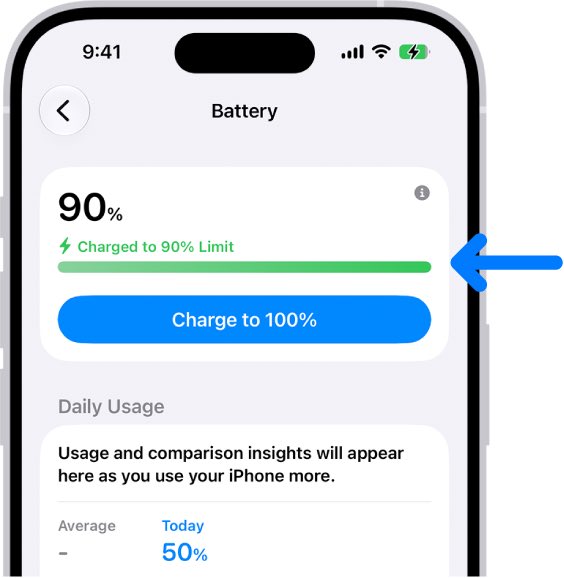
#Apple buried a setting that can help reduce battery wear over years of use, and it takes about 10 seconds to turn on.
Funny how the best “upgrades” sometimes cost nothing.
🔋 Save this one — a simple iPhone battery habit 👇
If you keep your iPhone for several years, you don’t necessarily need to charge it to 100% every night.
On supported iPhones, Apple lets you set a charging limit below 100%.
Go to:
Settings → Battery → Charging
A lower limit can reduce the amount of time your battery spends sitting fully charged.
Small setting. Potentially useful over years of ownership.
The banked reset is the best idea in #AI subscriptions this year. Hit your limit mid-flow, spend your reset, keep building. No clock-watching, no dead sessions. Every AI lab should do this. #Anthropic
since it’s been a good day for anthropic with a strong opus 5.5 release, i’m going to highlight one more thing that may not be obvious
across xai, openai and anthropic -
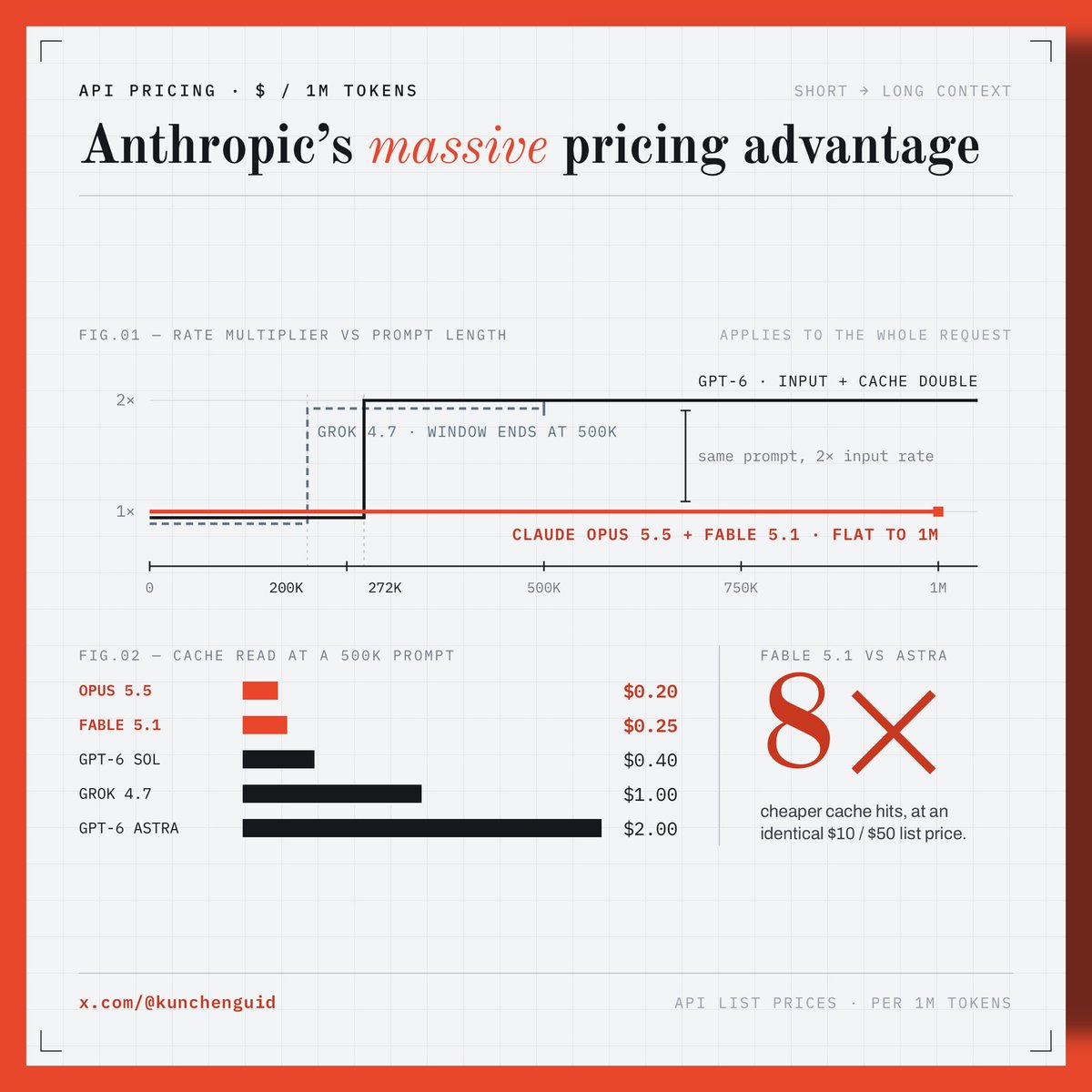
1. anthropic is the only provider that does not charge 2x for long context requests
even at 1M context, anthropic charge at the same flat rate, while openai charges 2x above 272k tokens, and grok charges 2x above 200k
2. anthropic’s latest models have ridiculously low pricing for cached read. see chart below
most coding sessions have 95%+ cache hit rate, so this difference is massive
my hunch is that eventually this will even out, but for now, this is a very material difference that’s easy to overlook