you don’t fix the declining birth rate with subsidies or financial incentives.
the “kids are too expensive” argument is a convenient cope. people claiming they can’t afford children are usually rationalizing deeper issues: they just don’t want them. having children is as expensive as you choose to make it, and for all of human history, people with far fewer resources managed to raise families.
the problem isn’t financial; it’s cultural.
we live in a society that has systematically psyopped and brainwashed people into believing children are a burden, not a blessing. women are told that motherhood is a sacrifice and a hindrance to their career, as if chasing corporate promotions or vanity metrics is more meaningful than creating life.
men are infantilized and taught to fear responsibility. worst of all, we’ve cultivated a nihilistic worldview that makes people see no point in building a future.
the solution starts with changing the culture.
we need to instill pride in people: pride in their ancestry, their legacy, and the future they could create. optimism about what’s to come has to replace the relentless doomscrolling of modernity.
kids aren’t just an "expense"; they’re the greatest investment a human can make, and we need to start celebrating that.
in the short term, the most realistic strategy is doubling down on those who already value family. focus on motivating families with 2-3 kids to have one or two more.
it's much easier to expand a family than to convince couples to start from scratch when they've been ideologically poisoned against the idea.
finally, we need to stop glorifying the miserable, atomized single life and the media narratives that turn parenthood into a joke or tragedy.
yes, parenting is hard, but everything worth doing is.
the joy and purpose it gives far outweigh the sacrifices. once we get that cultural shift rolling, the financial complaints will fade away like the convenient excuses they always were
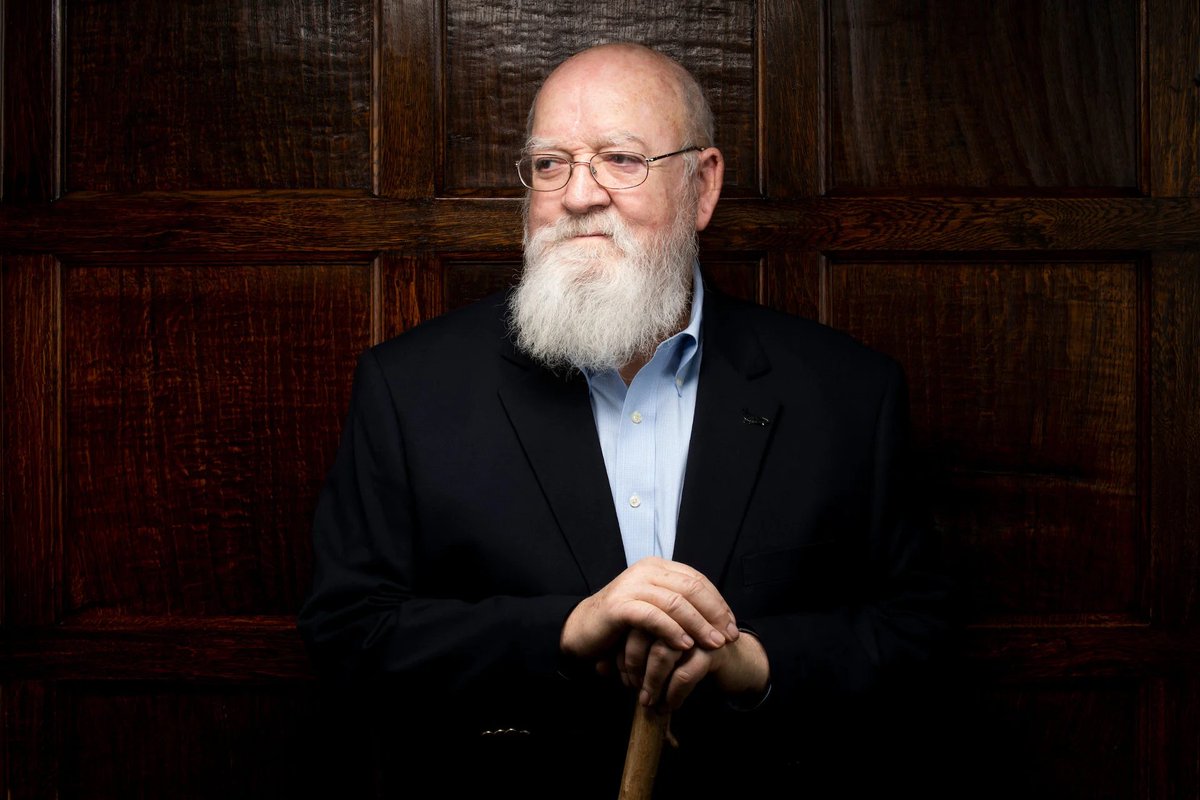
Daniel Dennett passed away today at the age of 82.
He was widely read and fiercely debated, leaving a significant impact on the fields of philosophy, cognitive science, and the study of consciousness.
10 timeless wisdom from the world renowned philosopher 🧵
GCR is one of the greatest traders the crypto space has ever seen.
Although he's no longer active on X, he has left behind a trail of alpha.
I spent 2 hours on the weekend reading & collating it.
🧵: Here's a compilation of the top 15 GCR alpha tweets.👇
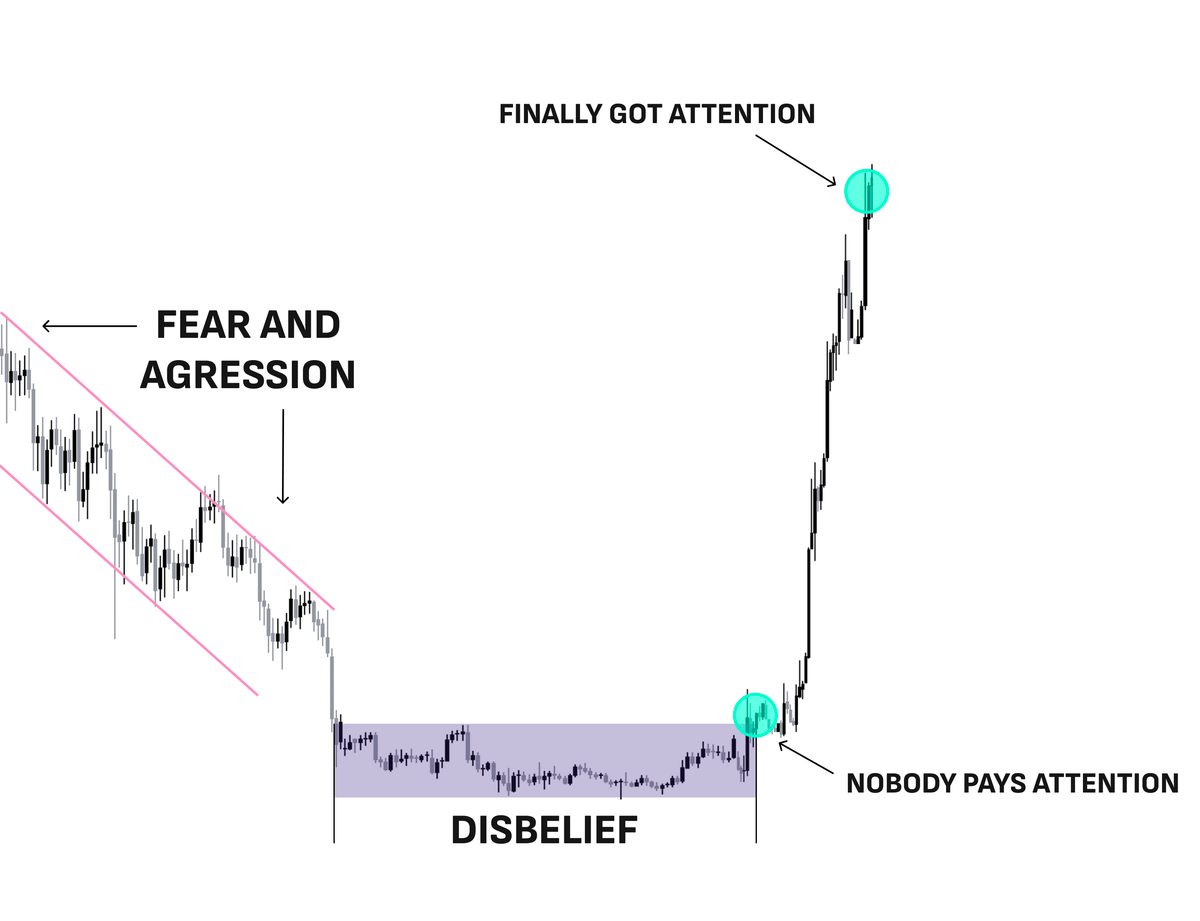
Best time to buy $SOL was when nobody was paying attention to it
Best time to buy $WIF was when nobody was paying attention to it
Best time to buy $POPCAT was when nobody was paying attention to it
🧵: 5 lowcaps that nobody paying attention to + how to find them 👇
In case you're wondering why crypto is getting rugged this morning...
The inflation print last night confirmed the market's fears that the resurgence of inflation since start of year is here to stay. Fed unlikely able to land on its inflation target of 2% anytime soon, and likely rate cuts in 1H are off the table. Core inflation, is now annualizing at a 6M/3M rate of 3.8%/4.2%.
Risk assets like S&P and BTC have been ignoring macro since start of year. First hot inflation print was around Jan, the then US2Y climbed 55 bps - so it was taking like 2+ rate cuts off the table alr. Yet SPX and BTC continued to climb, brushing it off. The macro community tends to be faster to these things while equities (similar to crypto) tends to be more bulltard.
Now US10Y is also rallying (tells you macro community thinks Fed is a little fked, cant tame inflation).
My biggest fear is here - macro boogieman. The macro boogieman is very dangerous in a bull market cause everyone's too focused on the bottom up, the narratives, the rotations, and being risk on.
That said, if ETF flows continue to be strong, I think you buy the dip hard. Tells you that incremental buyers here are truly portfolio allocators and don't care about macro.
My rules for being a founder (after selling 3 companies):
- Pay your invoices fast. People appreciate it
- Recurring meetings are mostly useless
- Your best internet ideas come when you are off the internet
- Create products no one asks for but everyone wants
- Really interesting people apply for Chief of Staff roles
- You need 1000 bad ideas to get to 1 good idea
- Social posts are MVP V1, group chats are MVP V2, products is mvp v3
- Avoid VC unless it's a competitive advantage or you're building deeptech, cleantech, AI chips etc
- Be a rifle not a shotgun. Rifles are targeted, shotguns aren't. The internet rewards targeted products
- Products are like airbnbs. The ones that get booked up the most are the unique experienced ones
- Be a community billionaire. Meaning, create value with many micro-communities
-Buy the ticket, take the chance. My best opportunities came from hopping on a plane to meet someone
- Build communities to avoid reliance on ads
- We’re all in the trust business. Do things that make people trust you
- 100% passive income from startups doesn’t exist.
- Multiple products, multiple revenue streams in case something dries up
- Be the creator or partner with the creator but always have a creator involved
- Freedom from venture, freedom from ads makes me happy. No bosses or micro-bosses
- Do things to put you in the zone to come up with the ideas
- Celebrate all wins, little and big
- Everyone with an internet connection can build an empire
- Be proud or what you're doing or don't do it
- The best ideas are capital light, defendable, have network effects & increased demand
- Dividends > exits
- You can take over your world not the world. Gotta start somewhere niche
- If you can turn your jealousy of others into inspiration of others, you instantly become more productive
- Don’t lose money monthly, make cash flow
- Never call GMV ARR when it's GMV
- Brands: people like brands. Community-based brands: people love brands
- Google Trends/Reddit is a goldmine for startup ideas
- Work with people who will be fun to work with
- Be on time, send cal invites, do the little things
- Whoever is latest to the meeting pays for the coffee, food, drinks.
- Create the things you wish existed
- The most important decision you can make on any given day to be productive: ignore the noise
- "You can get what you want - if you help enough other people get what they want.”
- Every sale has some urgency. No urgency, no sale
- Never care what others think unless it's a loved one
- Sometimes you need to overdose on caffeine, put some headphones on and ship your heart out
- Every startup you start ask yourself what's your unfair advantage. You'll need one
- Checking your email isn't working. People go in these "infinite loops" from app to app checking only to realize the day is over.
- The best products don't necessarily win, the best brand does
- I find all my business partners from either people I grew up with or people I find fascinating on the internet, and nothing in between.
- Find true fans. “10 people who yell make more noise than 10,000 people who are silent”
- My retirement plan. Pick niche. Build community. Create product. Dominate niche. Hire operators. Don't raise venture capital.
- You’d be surprised how many startups spend millions of dollars a year of other people’s money trying to scale a business without an offer that resonates.
- TikTok reviewers are the new search engines.
- Reality is the ultimate "virtual reality”
- Every company is made out of thin air. Anything is possible.
- Find cheerleaders. People above you, people below you, people on your level
- Underspend on material pocessions, overspend on people, experiences, that move you faster
- Some unfair advantages: internet audiences, being "nerdy", spy software, being early
- Create products that reinforce the identity. Those outperform.
- On creating content: the post brings the people, the replies bring the gold
I hope this got you thinking. Reply if it did.
You can follow me @gregisenberg for more.
Most people will end this bull market with $0.
They'll make preventable mistakes that cost themselves life-changing wealth.
So here are 15 mistakes to AVOID in bull markets (and how to prevent them):
"You’re going to die one day, and none of this is going to matter.
So enjoy yourself.
Do something positive.
Project some love.
Make someone happy.
Laugh a little bit.
Appreciate the moment.
And do your work."
@naval
Peter Thiel is a technology entrepreneur, venture capitalist, philanthropist, and former CEO of PayPal.
He has co-founded PayPal, Palantir Technologies and Founders Fund, and provided early funding for companies like SpaceX and LinkedIn.
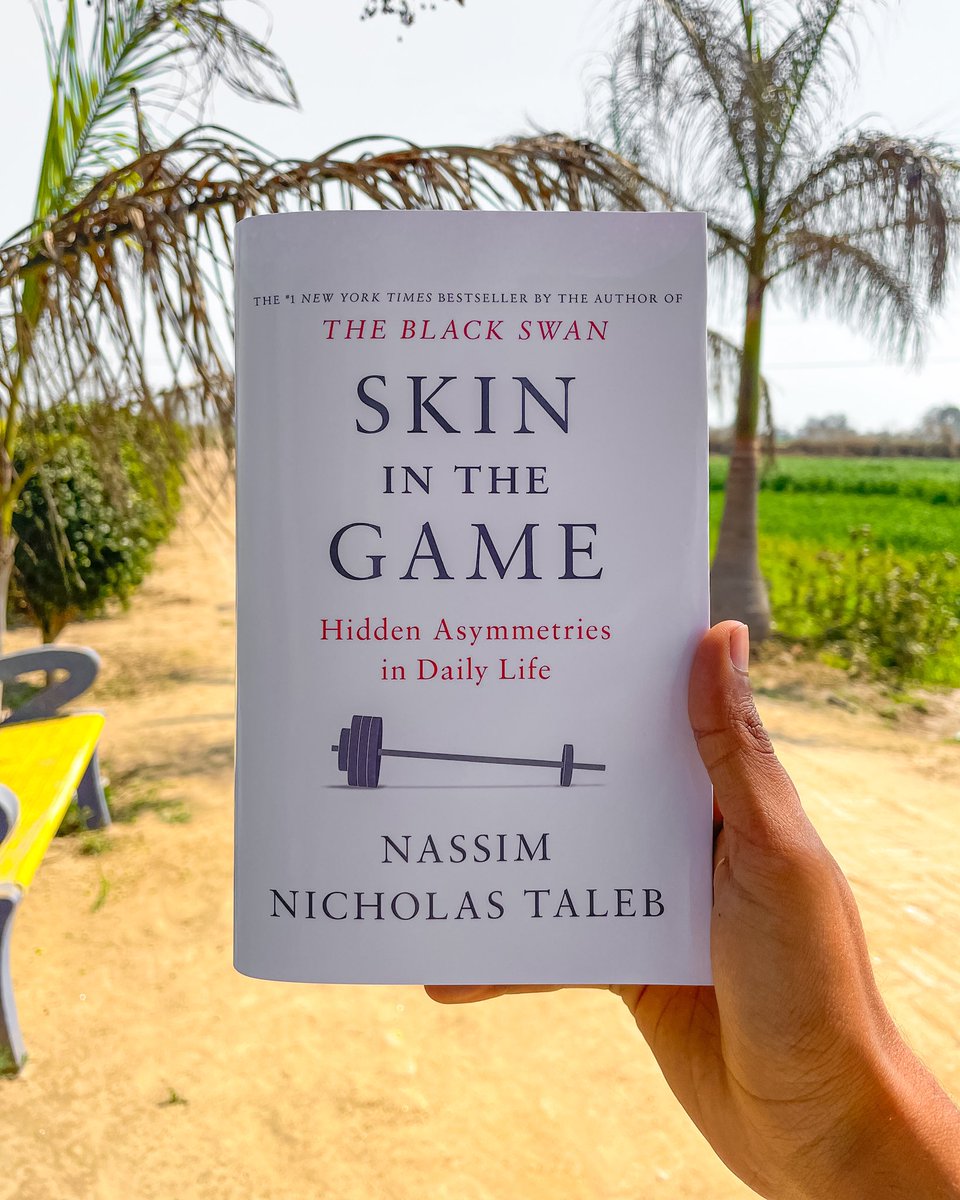
20 books recommended by Peter Thiel 🧵
According to Steve Jobs, there is one single thing that "separates the people that do things from the people that just dream about them."
It isn't their intelligence, their work ethic, or their financial means.
It's something much more simple...
When Jobs was only 12 years old he opened the phone book and placed a call to Bill Hewlett (the co-founder of Hewlett-Packard).
On the call Jobs asked if Bill happened to have any spare computer parts he could have for a project he was working on––building a frequency counter.
Not only did Bill have the parts, he gave Steve a job that summer working on the assembly line at his company.
To quote Jobs, "I was in Heaven."
So what did Jobs do that was so special? (Besides calling the co-founder of a computer company when he was just 12 years old).
He asked.
Yep, that's all.
So many of us are held back by our own self-doubt or unwillingness to ask that opportunities we never even know are available pass us by.
A simple question I've used for years that has served me well:
Will I be any worse off than am I now by asking for this opportunity?
If the answer is no, which I'd argue it almost always is, ––then you've got nothing to lose.
If you're too afraid to ask, you're too afraid to fail.
And without failure, you'll never grow.
Just take action. Just ask.
If you enjoy content like this, follow me @blakeaburge for more.
My first cycle was 2017. I had a prescription for vyvanse and I put it to good use no-lifing the whole run on discord 24/7. I had no idea "crypto twitter" existed back then, but I do now, and I've come to tell you a story about how I'm totally delusional.
Bitcoin peaked at 20k. By that point my portfolio was so big I couldn't even comprehend it, really. The most expensive thing I'd bought before in my life was my car, which cost 9k. My initial Coinbase deposit was $1200. Now I was sitting on enough to cover rent till I died. Not that I'd ever considered taking money out of the market. Why sell the future of finance right before it made you another 100x?
After that peak, bitcoin crashed 40% to 12k. My portfolio was mostly altcoins, which nuked down more like 80%.
I was confused - the coins went up because the tech was good, right? Everyone was writing articles about that. How could they suddenly become bad?
Over the next few days, things bounced back. We hit 17k again and my portfolio was back to 85% of its all-time-high. I dismissed the earlier decimation as a weird fluke, some sort of market error.
With our coins back near highs again, I was talking about new plays with friends in a discord call when an older guy joined. He was a bitcoin miner who'd been in the game since basically day 1.
"Guys, sell everything and don't even think the word 'crypto' for another 18 months. I don't wanna see you do what I did in 2013."
We asked him what he meant - "cycle?"
Did he not understand society was being reorganized around blockchain technology? Did he think things could just got back to how they were before? We had 100 questions.
"I'll never stop mining bitcoin. It'll come back. All this other shit - vertcoin, NULS? Going to 0. Actual 0. You will have to pay people to take it off your hands, and those people will laugh at you for buying it in the first place. Sell all that shit, set a timer for 12 months and when the alarm goes off you dump every cent you have back in bitcoin."
We wished him the best and thanked him for his advice, but nobody listened. He left the call and we agreed he was just too old to understand the revolutionary technology our altcoins were based on.
Over the next month, I proceeded to lose enough money it could've bought several houses.
I didn't even get liquidated trading, just holding coins that went down so fast it was basically the same as liquidation. Day after day after day. It was incomprehensible to me. I'd never seen the charts do that before. Support levels stopped mattering entirely, nothing bounced except bitcoin - and the bounces got sold into like mad, until they wicked the green daily back red and sent us even lower.
There wasn't a single buyer left.
Gradually, people from the discord stopped logging on. At the end it was just me and this totally insane guy. One time while he was saying something totally bizarre, I realized me being the last one sticking around with him probably market me as nuts too. An unpleasant thought, but quite hard to deny at this point. Bagholding multiple fake internet coins down 99% from their peaks is not normal behavior.
After accepting I was delusional, I sold my alts into bitcoin and sent it somewhere to forget about.
This next cycle, you're gonna be accosted by an infinite swarm of people exactly like me from 2017. You might even be one yourself.
They will tell you we've hit escape velocity, that we've created a new paradigm, that we've been institutionally adopted. They're sure that rehypothecation of digital assets brings permanent liquidity to the space and makes it impossible to go down ever again. They'll say shit we can't even imagine right now and they'll believe it completely.
Lots do it their first cycle. When you enter a market that's going up only for over a year straight, it is literally impossible for you to imagine it being any other way.
I have a few goals, based on this experience. I think they're probably decent for most other people too
1) Do not be 2017 Lukas. We go down later. It's not different now and it never will be.
2) Do not let your friends be 2017 Lukas. Most people will not be okay losing 98% of their net worth in one month. They will hate crypto and everyone they associate with it forever. This includes you, to a degree.
3) Make your friends take profits. They don't have to dump the whole stack, but just a little bit to get them used to the idea of selling. Last cycle I bought my 2 best friends AUGs. If I ever again refuse to take profits on a 50x, they know to come point the guns at me. They hope it won't come to that, but they also understand I'd prefer to be shot in my right arm or leg if it does.
3) Identify the Discord Bitcoin Wizards and obey their commands. There will be at least one point this cycle where a person says something to you that sounds completely retarded, but it'll actually be God himself speaking to you through that person's vessel. You have to seriously consider this possibility every time you hear something new. Accurately identifying and obeying the wizards will make you more money than every thread on airdrop farming combined.
4) Exit with at least 50% of your portfolio all-time high. This sounds like the easiest thing on the list but somehow it's 1000x more difficult than locating wizards disguised as retarded people.
Good luck. I love you all and we are going so much higher
Lessons Steve Jobs wanted to pass on.
Written right before he died.
In his own words:
1. ON BUILDING A REAL COMPANY:
I hate it when people call themselves “entrepreneurs” when what they’re really trying to do is launch a startup and then sell or go public, so they can cash in and move on.
They’re unwilling to do the work it takes to build a real company, which is the hardest work in business.
That’s how you really make a contribution and add to the legacy of those who went before.
You build a company that will still stand for something a generation or two from now.
That’s what Walt Disney did, and Hewlett and Packard, and the people who built Intel.
They created a company to last, not just to make money.
That’s what I want Apple to be.
2. ON TASTE OVER MARKET RESEARCH:
Some people say, “Give the customers what they want.” But that’s not my approach.
Our job is to figure out what they’re going to want before they do.
Henry Ford once said, “If I’d asked customers what they wanted, they would have told me, ‘A faster horse!'"
People don’t know what they want until you show it to them.
That’s why I never rely on market research.
Our task is to read things that are not yet on the page.
3. ON COMBINING IDEAS FROM DIFFERENT FIELDS:
Edwin Land of Polaroid talked about the intersection of the humanities and science.
I like that intersection.
There’s something magical about that place.
There are a lot of people innovating, and that’s not the main distinction of my career.
The reason Apple resonates with people is that there’s a deep current of humanity in our innovation.
I think great artists and great engineers are similar, in that they both have a desire to express themselves.
In fact some of the best people working on the original Mac were poets and musicians on the side.
In the seventies computers became a way for people to express their creativity.
Great artists like Leonardo da Vinci and Michelangelo were also great at science.
Michelangelo knew a lot about how to quarry stone, not just how to be a sculptor.
4. ON KNOWING WHY YOUR CUSTOMERS PAY YOU:
People pay us to integrate things for them, because they don’t have the time to think about this stuff 24/7.
If you have an extreme passion for producing great products, it pushes you to be integrated, to connect your hardware and your software and content management.
You want to break new ground, so you have to do it yourself.
5. ON WHAT HAPPENS WHEN YOU SHIFT THE FOCUS FROM GREAT PRODUCTS TO MORE SALES:
I have my own theory about why decline happens at companies like IBM or Microsoft.
The company does a great job, innovates and becomes a monopoly or close to it in some field, and then the quality of the product becomes less important.
The company starts valuing the great salesmen, because they’re the ones who can move the needle on revenues, not the product engineers and designers.
So the salespeople end up running the company.
John Akers at IBM was a smart, eloquent, fantastic salesperson, but he didn’t know anything about product.
The same thing happened at Xerox.
When the sales guys run the company, the product guys don’t matter so much, and a lot of them just turn off.
6. ON GREAT PRODUCTS BEING THE FOUNDATION OF AN ENDURING COMPANY:
My passion has been to build an enduring company where people were motivated to make great products.
Everything else was secondary.
Sure, it was great to make a profit, because that was what allowed you to make great products.
But the products, not the profits, were the motivation.
Sculley flipped these priorities to where the goal was to make money.
It’s a subtle difference, but it ends up meaning everything: the people you hire, who gets promoted, what you discuss in meetings.
7. ON BEING HONEST AND DIRECT WITH YOUR TEAM:
I don’t think I run roughshod over people, but if something sucks, I tell people to their face.
It’s my job to be honest.
I know what I’m talking about, and I usually turn out to be right.
That’s the culture I tried to create.
We are brutally honest with each other, and anyone can tell me they think I am full of shit and I can tell them the same.
And we’ve had some rip-roaring arguments, where we are yelling at each other, and it’s some of the best times I’ve ever had.
I feel totally comfortable saying “Ron, that store looks like shit” in front of everyone else.
Or I might say “God, we really fucked up the engineering on this” in front of the person that’s responsible.
That’s the ante for being in the room: You’ve got to be able to be super honest.
8. ON KEEPING THE TEAM EXCELLENT
I was hard on people sometimes, probably harder than I needed to be.
I remember the time when Reed (his son) was six years old, coming home, and I had just fired somebody that day, and I imagined what it was like for that person to tell his family and his young son that he had lost his job.
It was hard.
But somebody’s got to do it.
I figured that it was always my job to make sure that the team was excellent, and if I didn’t do it, nobody was going to do it.
9. ON TAKING ADVANTAGE OF THE GREAT WORK THAT WAS CREATED BEFORE YOU:
What drove me?
I think most creative people want to express appreciation for being able to take advantage of the work that’s been done by others before us.
I didn’t invent the language or mathematics I use.
I make little of my own food, none of my own clothes.
Everything I do depends on other members of our species and the shoulders that we stand on.
And a lot of us want to contribute something back to our species and to add something to the flow.
It’s about trying to express something in the only way that most of us know how.
We try to use the talents we do have to express our deep feelings, to show our appreciation of all the contributions that came before us, and to add something to that flow.
That’s what has driven me.
10. ON CONSTANT REFINEMENT AND PERPETUAL MOTION:
You always have to keep pushing to innovate.
Dylan could have sung protest songs forever and probably made a lot of money, but he didn’t.
He had to move on, and when he did, by going electric in 1965, he alienated a lot of people.
His 1966 Europe tour was his greatest. He would come on and do a set of acoustic guitar, and the audiences loved him.
Then he brought out what became The Band, and they would all do an electric set, and the audience sometimes booed.
There was one point where he was about to sing “Like a Rolling Stone” and someone from the audience yells “Judas!”
And Dylan then says, “Play it fucking loud!”
And they did. The Beatles were the same way.
They kept evolving, moving, refining their art.
That’s what I’ve always tried to do—keep moving. Otherwise, as Dylan says, if you’re not busy being born, you’re busy dying.