Part of the Contemporary Mathematics series, Algebraic Structures and Applications contains the proceedings of two conferences: NonCommutative Rings and their Applications and Quadratic Forms, Rings, and Codes. It contains survey papers and research articles covering classical ring theory, coding theory, quadratic forms, and new perspectives moving from classical ring theory to universal algebras and non-associative structures.
Don’t have access? Ask your library to contact [email protected] to subscribe!
Links in comments.
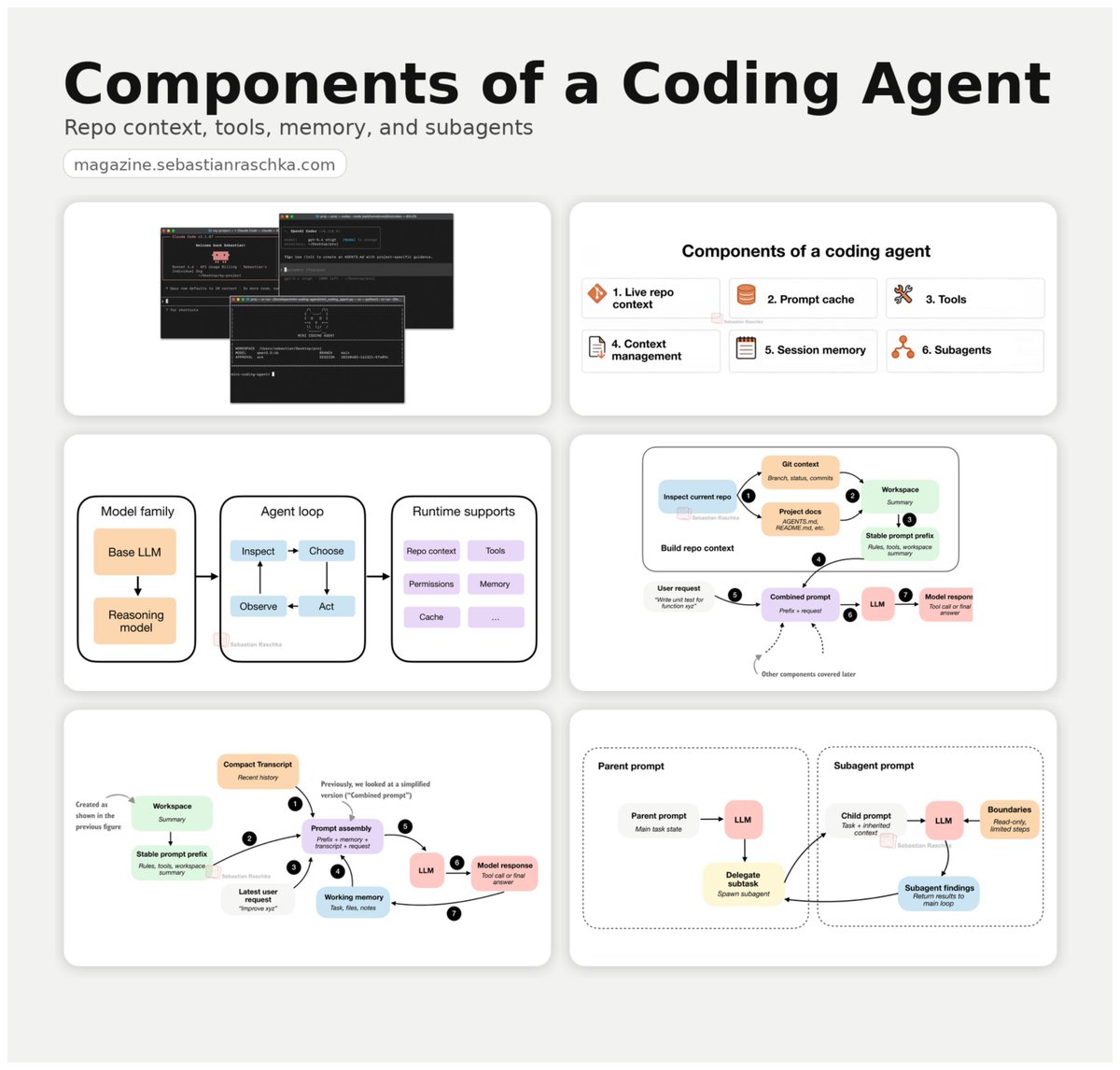
Components of a coding agent: a little write-up on the building blocks behind coding agents, from repo context and tool use to memory and delegation.
Link: https://t.co/iF4DsMcnhj
There is a ragtag group of public-spirited tinkerers dropping benches into the urban fabric of the bay area where they make sense.
They've now built and installed hundreds of benches without any permission.
You can just do things!
https://t.co/OKJAd0Tp8n
RLHF Book status update: lot's of great changes.
Over the past month I've been doing a top to bottom update to the RLHF book. All of these changes are reflected on the website rlhfbook dot com, and will soon be translated to the Manning early access version (MEAP), and then more improvements for the physical copy.
Overall, this took the PDF from ~150 to ~200 pages, the book is much more well rounded now.
Some of the larger changes:
- Updates to the RL chapter to add more algorithms like GSPO, CISPO, etc.
- Updated the big table of reasoning model tech reports (full list below). Added a section on Rubrics for RLVR.
- Updated the text in many chapters to better reflect best practices of today.
- Many clarity fixes throughout, adding better transitions, introductions, etc.
- More consistent notation throughout the book.
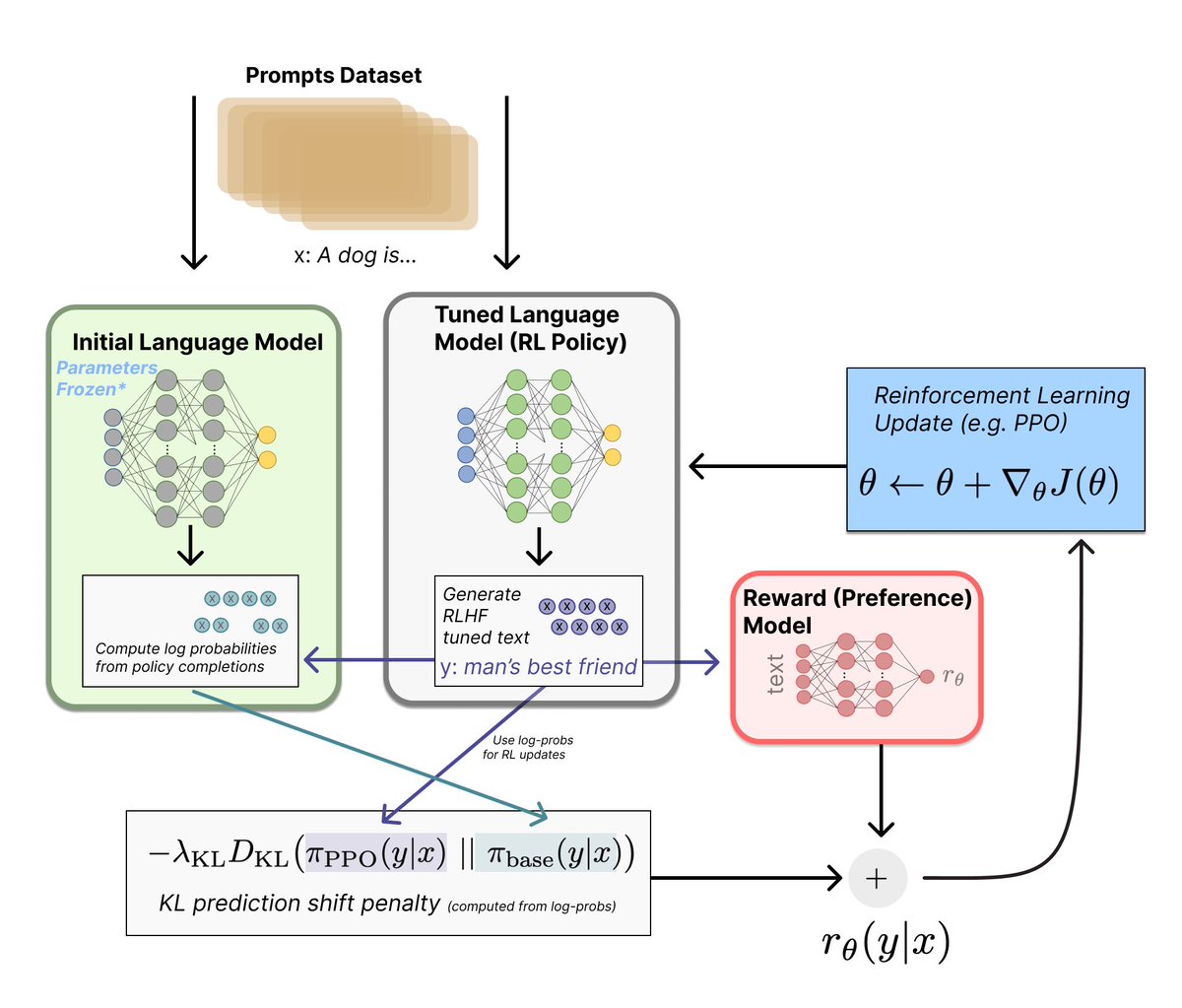
I strongly recommend taking a look again if you only looked in the first half of 2025. There are also many surprising details, such as fixing this attached RLHF system diagram you may recognize from my first HuggingFace RLHF blog post in December of 2022, it had a bunch of minor errors.
Next step I'm going to be focusing on making the physical Manning book great. The content will flow more smoothly than the web version (i'm trying to not change the links), such as linking the constitutional AI and synthetic data chapters. Overall this should make it read better from front to back. Also, all the diagrams and content will be designed to have a much more elegant presentation.
Thanks for reading and feedback!
I'm Boris and I created Claude Code. Lots of people have asked how I use Claude Code, so I wanted to show off my setup a bit.
My setup might be surprisingly vanilla! Claude Code works great out of the box, so I personally don't customize it much. There is no one correct way to use Claude Code: we intentionally build it in a way that you can use it, customize it, and hack it however you like. Each person on the Claude Code team uses it very differently.
So, here goes.
If you aren't using shell-sage you are missing out.
If you like cursor you will _love_ this too! Trust me. Super light weight at 100 loc.
`pip install shell-sage` and you have to run it in tmux
See README
https://t.co/0ZgoDFb52r