This #CVPR2026 paper from our research team is trending #1 on @HuggingFace 🤗
Meet LocateAnything: a vision-language detection model that rethinks bounding box prediction. For AI agents and robots, “seeing” is only useful if a model can pinpoint where something is fast enough to act.
Trained on 138M high-quality samples, LocateAnything decodes bounding boxes in parallel instead of one coordinate at a time, improving localization accuracy while dramatically increasing throughput for visual grounding and detection.
Project page: https://t.co/O7JMe8tzFM
61 years ago this month, the Fast Fourier Transform was created, a powerful tool for image compression & data analysis.
Watch a classic MIT breakdown of FFT, perhaps the most-taught algorithm at the Institute: https://t.co/R7zdspBswx
v/@MITOCW
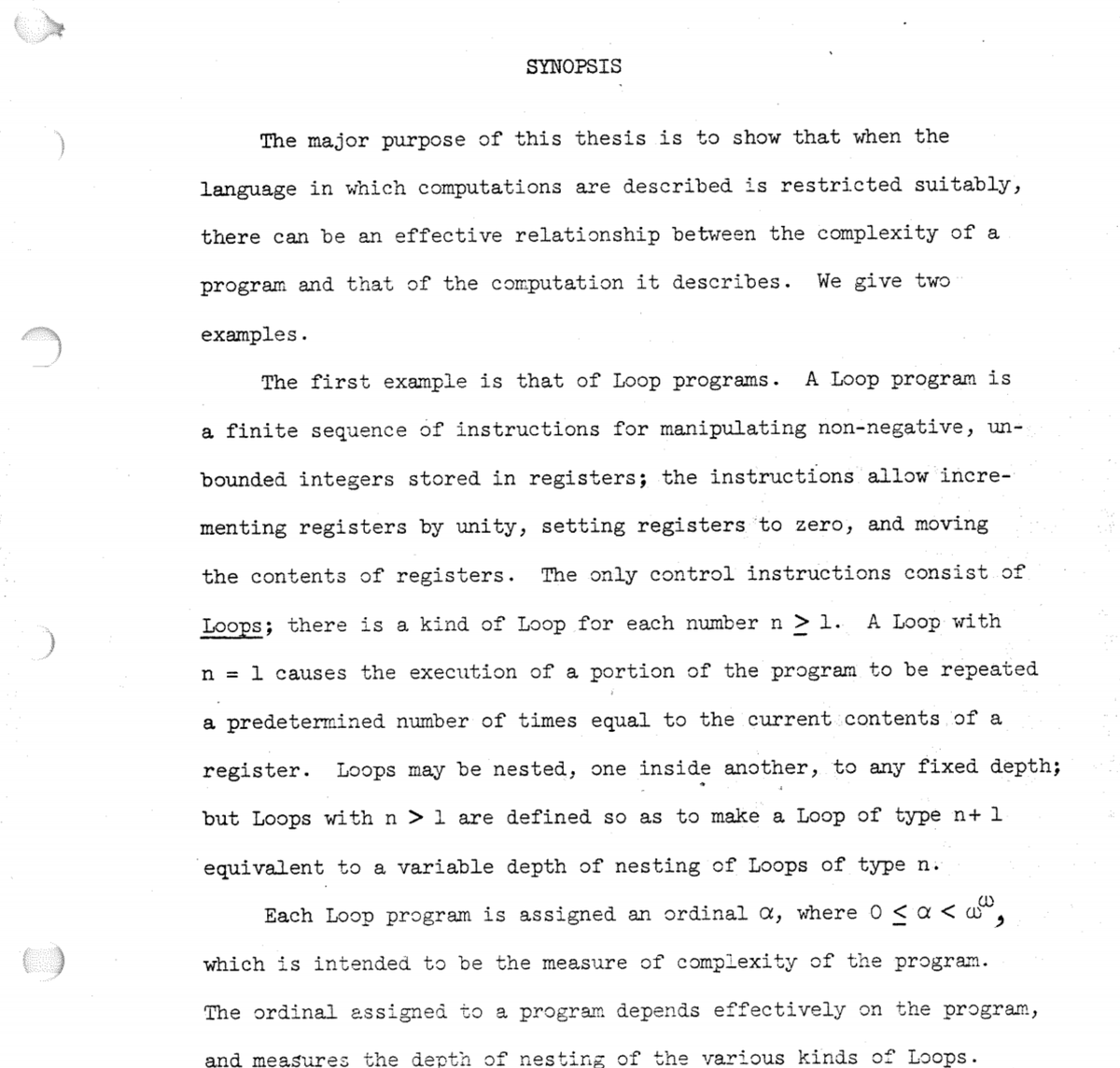
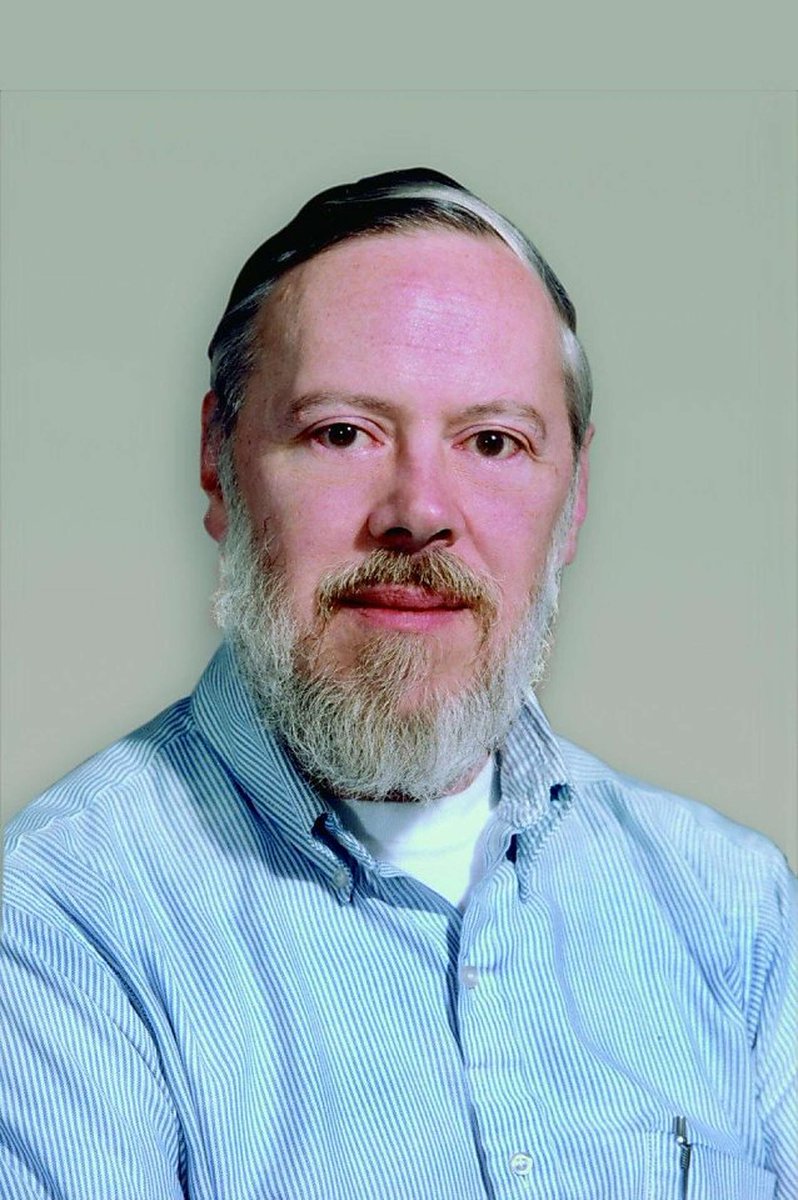
Read the lost thesis of Dennis Ritchie, creator of the C programming language & co-creator of Unix: https://t.co/icflzD4aJl
Ritchie never got his PhD b/c he didn't want to pay Harvard the thesis binding fee.
(v/@IEEESpectrum)
A decade of imaging.
Compressed into three months.
Here’s how MIT CSAIL & Harvard taught an electron microscope to see like you do: https://t.co/qC3zVck0HF
🚨 Grandes noticias hoy la cobertura de capas de datos de #GoogleEarth se ha expandido a México 🇲🇽 y al resto del 🌍. Ahora puedes explorar estas capas y conocer datos geoespaciales como:
🌊 Historial de inundaciones (1999-2020)
🚴 Capas de carga de vehículos eléctricos
⛰️ Orientación de 10m
¡Y muchos más!
Estás listo para comenzar a explorar en #GoogleEarth 👇
https://t.co/4OOhhkqU2u
#otd in 1980 a Japanese computer scientist published a paper proposing the “Neocognitron,” the neural net that directly inspired CNNs: https://t.co/v7TCOMPN6x
Kunihiko Fukushima’s paper explained back in 1986: https://t.co/vaIJlc5GdV
Seeing sounds and hearing shapes.
These Chladni-inspired patterns show how particles settle where vibrations are still, turning frequencies into pure geometry.
If we are all just vibrations, what kind of pattern are we creating?
Credit: generomics
Before Python, Java, or even C++, there was Fortran—the first major programming language.
In 1957, John Backus and his team at IBM developed Fortran, making coding much easier than low-level machine code. Before Fortran, programmers had to write instructions in binary or assembly—slow and complicated.
Fortran changed everything. It allowed programmers to use simple, math-like commands, making it especially useful for scientists and engineers.
NASA even used Fortran to help land humans on the Moon.
Fortran set the stage for modern coding languages, and it’s still used today in scientific computing.
It's here: We just hit superhuman performance on AI kernel optimization!
Real customer models & production settings. Not toy problems (what I typically see).
This is the year that Claude writes its own kernels, Codex its own kernels, for every new GPU that it wants to run on -- something that takes months to port between GPU generations today.
This has a massive impact to scaling intelligence. More compute means getting the next frontier model sooner.
Codex is a know issue :( It basically don't work with autoresearch sadly, in the way it's set up atm:
https://t.co/4xjdf4wQyX
I pung a friend at OpenAI to see if something can be done, e.g. need a /loop equivalent or something like that. More generally, I really dislike the -p + ralph loop pattern of running agents "headless". I want nice, interactive sessions running in tmux so that I can see what they are doing, pitch in, etc.
I'm excited to announce Context Hub, an open tool that gives your coding agent the up-to-date API documentation it needs. Install it and prompt your agent to use it to fetch curated docs via a simple CLI. (See image.)
Why this matters: Coding agents often use outdated APIs and hallucinate parameters. For example, when I ask Claude Code to call OpenAI's GPT-5.2, it uses the older chat completions API instead of the newer responses API, even though the newer one has been out for a year. Context Hub solves this.
Context Hub is also designed to get smarter over time. Agents can annotate docs with notes — if your agent discovers a workaround, it can save it and doesn't have to rediscover it next session. Longer term, we're building toward agents sharing what they learn with each other, so the whole community benefits.
Thanks Rohit Prsad and Xin Ye for working with me on this!
npm install -g @aisuite/chub
GitHub: https://t.co/OCkyxXQMCq
nanochat now trains GPT-2 capability model in just 2 hours on a single 8XH100 node (down from ~3 hours 1 month ago). Getting a lot closer to ~interactive! A bunch of tuning and features (fp8) went in but the biggest difference was a switch of the dataset from FineWeb-edu to NVIDIA ClimbMix (nice work NVIDIA!). I had tried Olmo, FineWeb, DCLM which all led to regressions, ClimbMix worked really well out of the box (to the point that I am slightly suspicious about about goodharting, though reading the paper it seems ~ok).
In other news, after trying a few approaches for how to set things up, I now have AI Agents iterating on nanochat automatically, so I'll just leave this running for a while, go relax a bit and enjoy the feeling of post-agi :). Visualized here as an example: 110 changes made over the last ~12 hours, bringing the validation loss so far from 0.862415 down to 0.858039 for a d12 model, at no cost to wall clock time. The agent works on a feature branch, tries out ideas, merges them when they work and iterates. Amusingly, over the last ~2 weeks I almost feel like I've iterated more on the "meta-setup" where I optimize and tune the agent flows even more than the nanochat repo directly.
Geometry of Machine Learning Models - Gaussian Process Kernel
In 1948 Norbert Wiener framed prediction as a correlation problem, and in the 1970s George Wahba clarified that picking a smoothness preference is the same as picking a kernel.
The motivation is that whenever data i s sparse and noisy, you don't just want a fit, you want a fit with calibrated uncertainty.