Interested to understand the physics behind the biological problem; CSIR-IICB, Umass Chan Medical School, Stony Brook Univ. Assistant Prof. at GITAM Bengaluru
High-Throughput De Novo Protein Design Yields Novel Immunomodulatory Agonists
🚀 New preprint from David Baker!🚀
1. Researchers have developed a high-throughput de novo design approach to create novel cytokines, termed "Novokines," by fusing pairs of computationally designed binders targeting various receptor subunits. This method generated over a thousand potential Novokines, of which 75 activated pSTAT signaling in peripheral blood mononuclear cells (PBMCs).
2. The study identified new pairings of established common receptors, cross-family pairings such as TrkA-γcommon, and a series of pairings with interferon receptor-1 (IFNAR1), revealing that IFNAR1 can function as a versatile common receptor similar to γcommon or βcommon.
3. The framework provides a blueprint for expanding the understanding of cytokine signaling and generating novel therapeutic strategies. The designed binders are structurally programmable, allowing control over orientation and linker geometry, and can be produced at high throughput in bacteria.
4. The researchers characterized 18 Novokines, including those that drive monocyte proliferation, T cell survival, and CD4+ T cell-specific proliferation. The study also demonstrated that private receptors dictate signaling identity, while common receptors serve as modular scaffolds that enable diverse pairings.
5. The scale of the screen, the diversity of receptor pairings tested, and the use of primary human immune cells represent a substantial advance over previous efforts to engineer novel cytokine signaling. The findings suggest that the natural cytokine signaling network may reflect evolutionary constraints rather than absolute biochemical limits.
📜Paper: https://t.co/3Dx6e7qpTG
#ProteinDesign #CytokineSignaling #Novokines #SyntheticBiology #ComputationalBiology
Protein designers have long dreamed of building new enzymes from scratch.
Unfortunately, enzymes are highly dynamic; they move around a lot and have intermediate states that are difficult to design computationally.
But a recent paper from David Baker’s group at the Institute for Protein Design demonstrates a method to computationally design serine hydrolases — enzymes involved in blood clotting, digestion, and nerve signaling — and provides a roadmap for creating other dynamic proteins, too.
Serine hydrolases have three amino acids in their active site (serine, histidine, aspartate) that catalyze a six-step process, producing intermediate states and byproducts that make them particularly challenging to design.
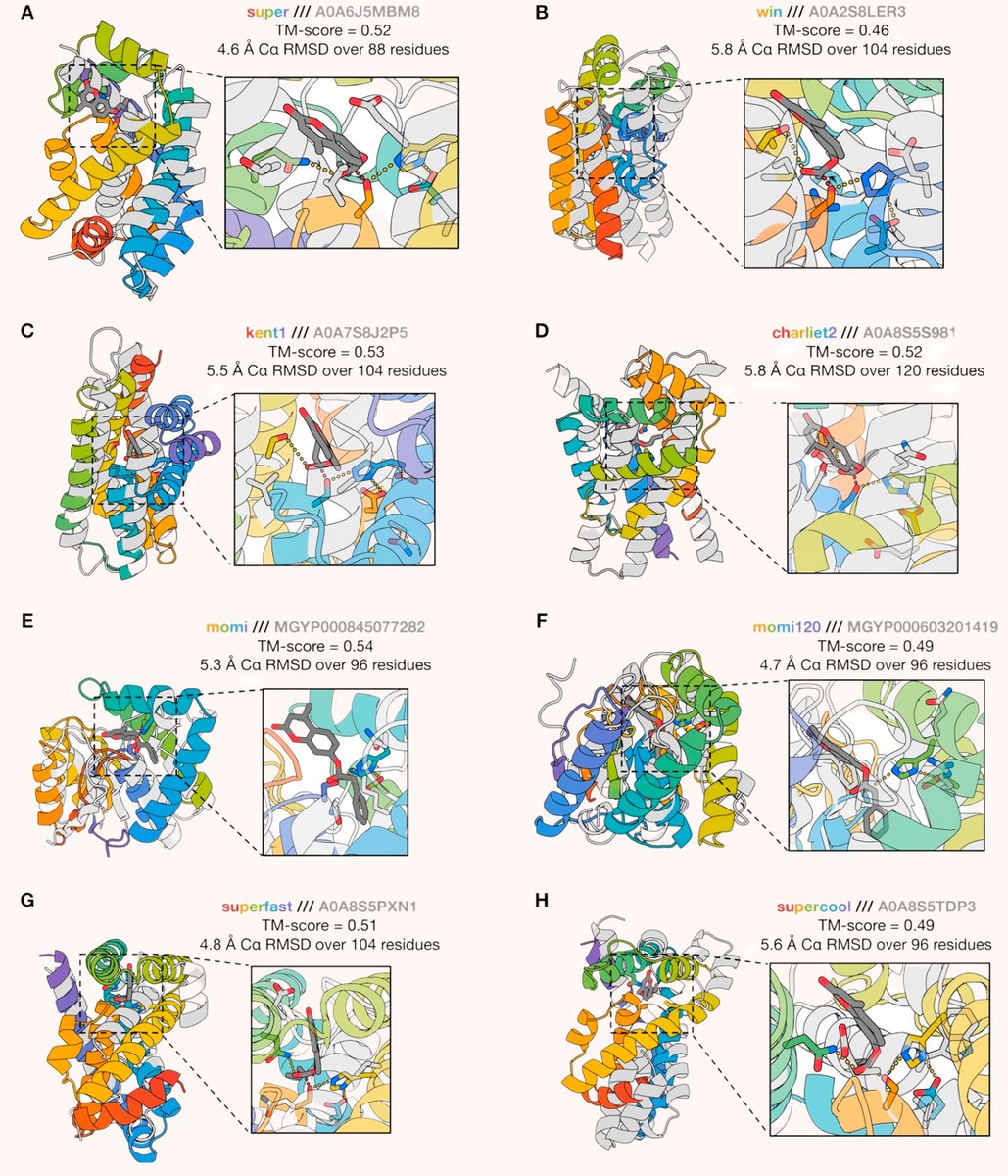
The team used RFDiffusion — an AI protein design tool developed in their lab in 2022 — to generate 10,000 potential designs for serine hydrolases, each built around a fixed catalytic site composed of the three key amino acids.
To identify which designs might plausibly fold into functional enzymes, they ran each through AlphaFold2, comparing the predicted structures against the original RFDiffusion outputs. This step acted as a coarse filter. And while it didn’t address the full complexity of enzyme function, it narrowed the pool to designs whose predicted geometry matched the intended arrangement. Laboratory testing of these AlphaFold2-filtered designs revealed that only 1.6% showed any catalytic activity.
For a second round, the researchers introduced PLACER (Protein-Ligand Atomistic Conformational Ensemble Resolver), a model trained on thousands of structures from the Protein Data Bank, to predict physically and chemically valid atom arrangements in protein-ligand complexes. PLACER learned rules such as permissible hydrogen bond geometries, sidechain packing patterns, and rotamer combinations. The team applied PLACER to the “apo” state — the enzyme without any bound molecules — specifically checking whether a hydrogen bond consistently formed between the serine and histidine residues. Designs failing this test were discarded. This more selective filter boosted the proportion of catalytically active enzymes to 5.2%. But the designed enzymes stalled after the first reaction cycle and got stuck in an intermediate state.
So finally, in a third round, the researchers ran PLACER checks on both apo and acyl-enzyme intermediate states. This boosted the success rate to 18%, with two designs (1.6%) achieving multiple turnover catalysis — the first time anyone has done so with enzymes this complex.
While natural serine hydrolases work at 10²–10⁵ turnovers per second, the designed proteins managed only 10⁻³–10⁻¹.
But still, this is a major milestone! And the technique might also transfer to other classes of enzymes.
Researchers have developed a #DeepLearning system called BioEmu that rapidly generates diverse protein conformations, enabling fast, accurate insights into protein flexibility and function.
Learn more this week in Science: https://t.co/Pe15hm9F52
The ten dollar proteome: low-cost, deep and quantitative proteome profiling of limited sample amounts using the Orbitrap Astral and timsTOF Ultra 2 mass spectrometers https://t.co/m2z3UY4C8S
Our paper on computational design of chemically induced protein interactions is out in @Nature. Big thanks to all co-authors, especially Anthony Marchand, @St_Buckley and @befcorreia
https://t.co/vtYlhi8aQm
The brain’s action-mode network — a Perspective by Nico U. F. Dosenbach, Marcus E. Raichle & Evan M. Gordon
@ndosenbach @gordonneuro
https://t.co/MggGxwKqUp
Thrilled to share our latest publication in Nature: https://t.co/GDbQL0fUIO. This work reflects a fantastic collaboration—special thanks to David Baker and @TimothyPJenkins. Hoping it sparks attention to this neglected health issue and drives solutions in the years ahead!
De novo design and structure of a peptide-centric TCR mimic binding module
1. Introducing a groundbreaking peptide-centric TCR mimic (TCRm) with nanomolar affinity (Kd = 9.5 nM) for the NY-ESO-1 peptide presented by HLA-A*02. This de novo α-helical TCR mimic achieves precision targeting in cancer immunotherapy.
2. Key innovation: The TCRm adopts a rigid α-helical scaffold, engineered using RFdiffusion and ProteinMPNN, ensuring high peptide specificity while minimizing off-target effects, a critical challenge in current cancer therapeutics.
3. Structural breakthrough: The high-resolution (2.05 Å) crystal structure reveals a TCR-like docking mode, focusing on peptide-specific interactions with minimal flexibility, reducing potential for cross-reactivity.
4. Superior targeting: The TCRm was validated through yeast display, SPR, and in silico modeling, demonstrating potent binding to NY-ESO-1 with no detectable affinity for unrelated peptides presented by the same MHC molecule.
5. Off-target analysis: A structure-informed in silico screen identified two potential off-target peptides among 14,363 HLA-A*02 ligands. Experimental validation confirmed the specificity and therapeutic window of the TCRm.
6. Therapeutic potential: This TCRm can function as a bispecific T cell engager, effectively activating T cells against cancer cells presenting NY-ESO-1 while sparing healthy tissues.
7. Modular and efficient: Leveraging α-helical scaffolds over traditional antibody-based approaches, this design facilitates rapid development, modularity, and scalability, significantly accelerating therapeutic discovery.
8. Future vision: This work establishes a robust framework for engineering peptide-specific TCR mimics, paving the way for precision immunotherapies in oncology and beyond.
@arthurdeng0205@karstenhouse_14@stanfordimmuno
📜Paper: https://t.co/jDCky4NdYw
#CancerImmunotherapy #ProteinDesign #Bioinformatics #AI #PrecisionMedicine
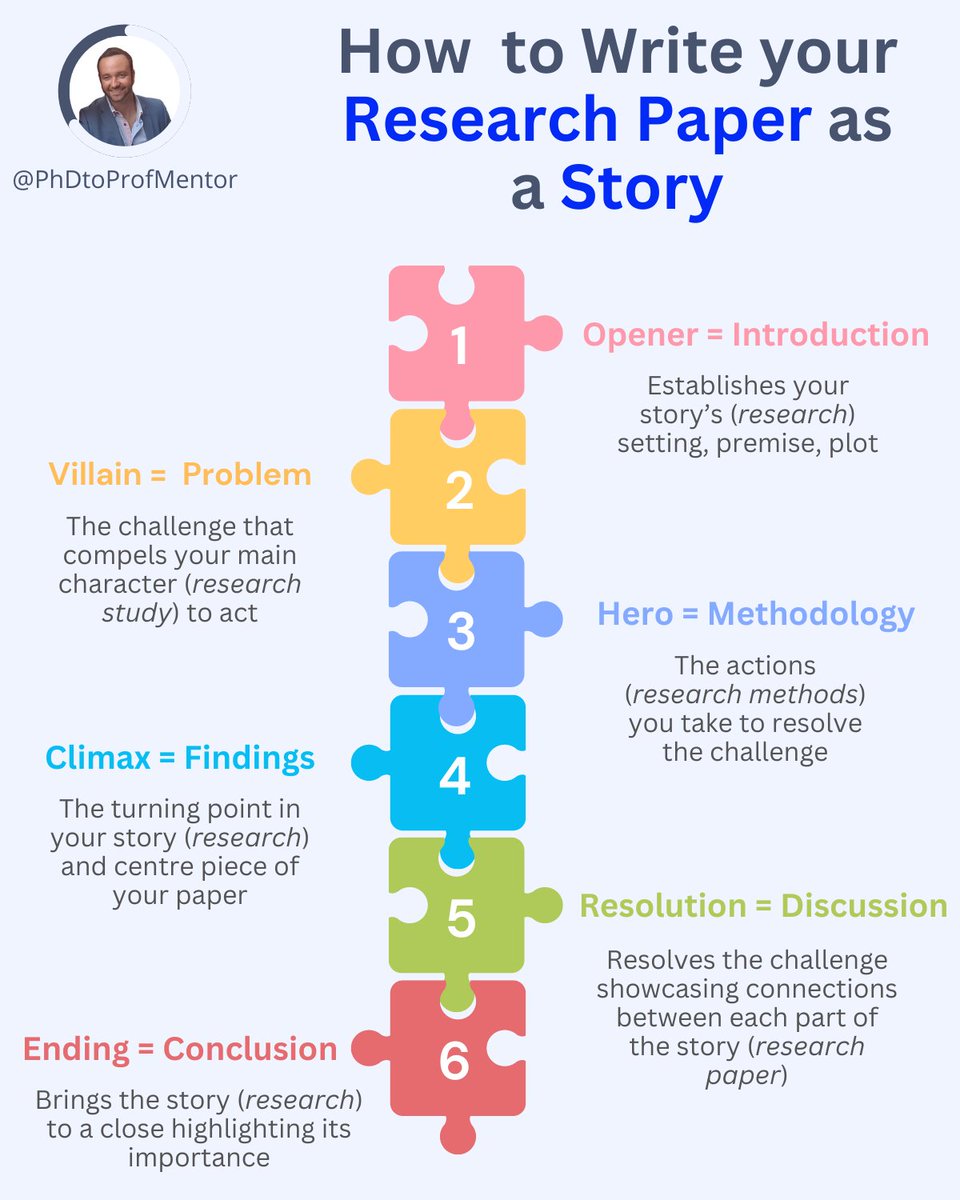
Unlock the secret to compelling research - write it as a story!
This will help hook readers and get your paper published
Here's how to turn your academic work into a captivating narrative:
Excited to announce the launch of my personal research website! Explore my work and opportunities in computational chemistry and molecular dynamics at GITAM University. Check it out! 🔗 https://t.co/nmmjDvVGjQ #CompChem#MolecularDynamics@chem_gitam_blr@GITAMUniversity
I’m very excited about the opening of this professorship in my department, part of our strategy to become a world-leading place for bioimaging & bioimage analysis at scale at our recently established BioVisionCenter. Please check it out&spread the word:
https://t.co/kZQTeMi5Ik