Congratulations to Dr. @BashirAlHussein, Assistant Professor of Urology, and Dr. Chen, Postdoctoral Associate in Urology, who received two 2025 Young Investigator Awards from the Prostate Cancer Foundation.
Read about their groundbreaking research below: https://t.co/LUoOo9YHxf
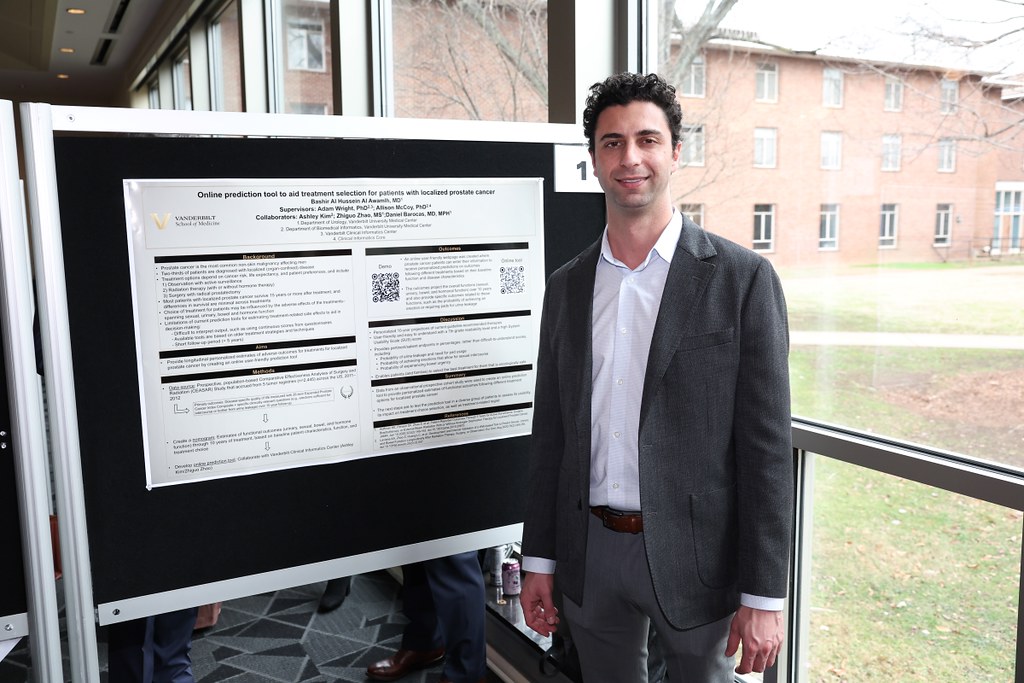
Bashir Al Hussein Al Awamlh, MD, MPH, (@BashirAlHussein) discusses the development of a tool to predict prostate cancer outcomes using patient-reported data. @WCMUrology
https://t.co/JSTGCUXS4W
Data from a recent study showed that 1 in 6 men with GG1 prostate cancer ultimately had higher-risk disease when other clinical features were considered, indicating that biopsy grade alone may underestimate disease risk. @BashirAlHussein@jeshoag https://t.co/IJzdLodwt2
Co-senior author, Dr. Al Hussein, and first author, Dr. Patel, discuss findings from their new study published in @JAMAOnc titled, "Grade Group 1 Prostate Cancer Outcome by Biopsy Grade and Risk Group."
Learn more about the team's research by visiting: https://t.co/ujAtZiykMM
New paper from my group and @giladevrony’s!
https://t.co/M3qqjE6bW4
Historically we measured new mutations in humans using trio studies (parents and offspring). This taught us that on average new mutations increase in offspring with paternal age.
These trio studies showed that mutations in sperm account for 80% of new mutations in humans! These are responsible for our genetic diversity and many genetic diseases. But these studies measure population averages rather than the rate of mutations in individual men.
To address this, we recalled men who had banked sperm from an average of 19 yrs ago (up to 33 yrs)- to provide a new sperm sample. Applying recent advances in DNA duplex sequencing and whole-genome sequencing to these paired samples, we measured a mutation rate for each man.
Mutational patterns seen by direct sperm sequencing matched incredibly well to prior trio studies. And in two men, we found that mosaicism of embryonic mutations hardly changed in sperm with age, indicating remarkable stability of spermatogonial stem cell pools over decades.
We thank our amazing collaborators and funding from @NICHD_NIH. See also exciting recent preprints by @R_Rahbari and @aaronquinlan!
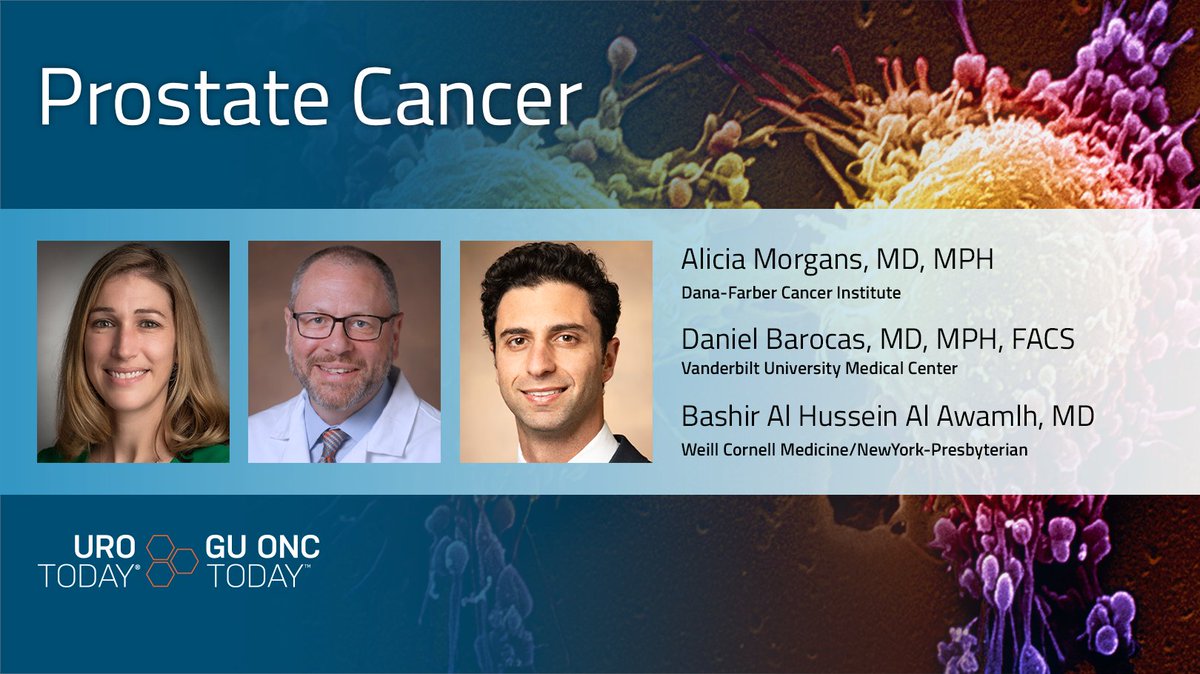
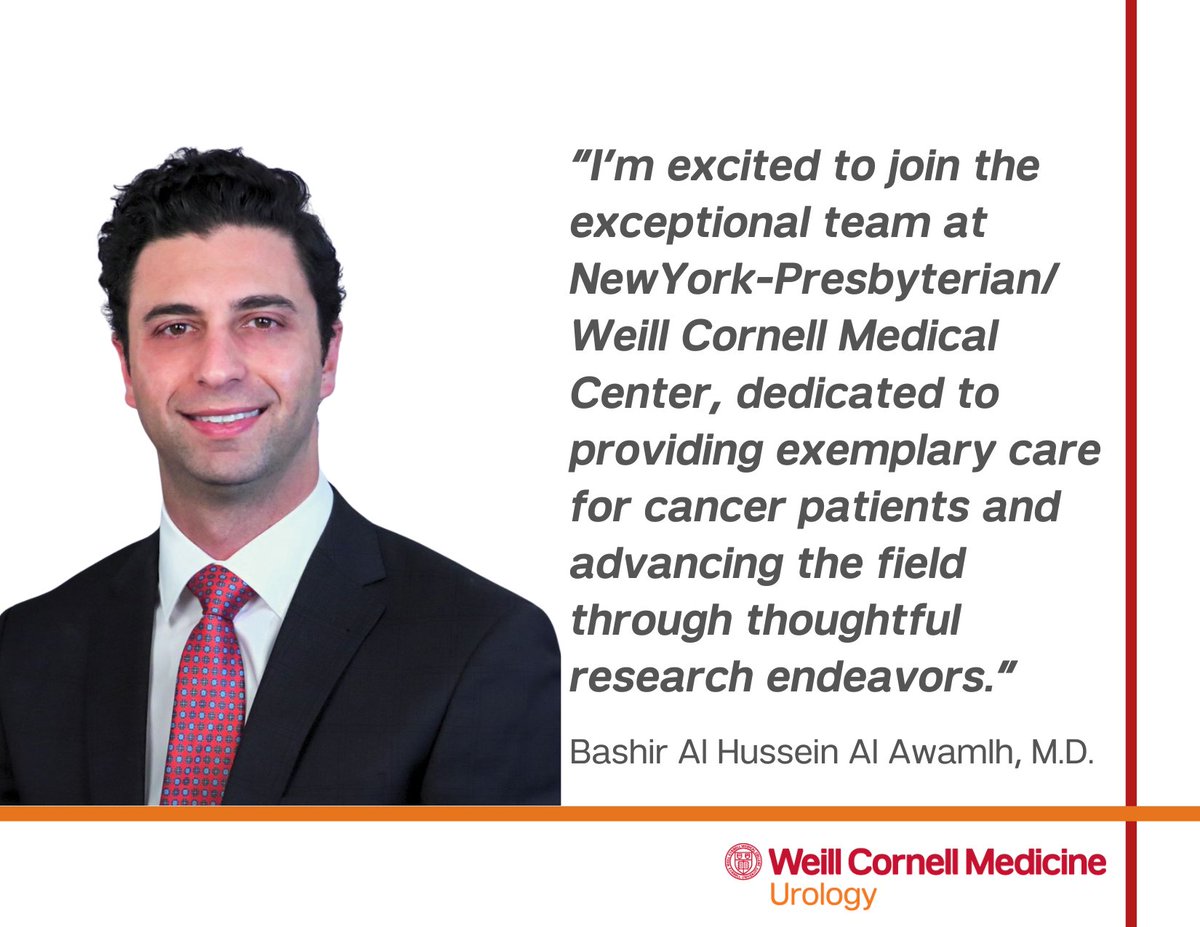
Join us in welcoming Dr. Bashir Al Hussein Al Awamlh (@BashirAlHussein) to @WeillCornell@nyphospital! We are so excited to have you on the team.
To learn more about Dr. Al Hussein Al Awamlh and his expertise in the field of urologic oncology, visit https://t.co/VMLXaxcpTV
RESEARCH RECOGNITION: Bashir Al Hussein Al Awamlh, MD, a second-year MPH student on the Epidemiology Track, had his research on the side effects of prostate cancer treatment featured by the @NIH!
Read the full piece: https://t.co/bHyRZpqlD7
#VandyMed#VandyMPH
Healio spoke with @BashirAlHussein about recent study findings showing that adverse events experienced by men with prostate cancer varied considerably based on the treatment they received and how oncologists can best counsel patients.
Read more 👇
https://t.co/1JJZsbZzCB
Functional Outcomes After Localized Prostate Cancer Treatment @BashirAlHussein@DanBarocas & colleagues
https://t.co/WdPnyewi2m
…one of our “top viewed” this week at JAMA