La folie Trump.
L'administration US envoie des navires pour retirer 900 capteurs océaniques de l'Atlantique et du Pacifique, malgré un double rejet du Congrès. Le but : détruire l’Ocean Observatories Initiative.
Une mesure issue du « Project 2025 ».
> https://t.co/MGQhRn33Pm
A French engineer who lives quietly in Paris has spent 30 years writing software that the entire internet now runs on without knowing his name.
He wrote the code that streams every YouTube video, every Netflix show, every TikTok clip. He wrote the code that runs the virtual servers underneath AWS, Google Cloud, and Microsoft Azure. He calculated more digits of pi than anyone in history. He has no Twitter. He has no marketing. He just keeps shipping.
His name is Fabrice Bellard.
Here is the story, because almost nobody outside the systems programming world knows what one man has built.
Fabrice was born in 1972 in Grenoble, France. He studied at École Polytechnique, the top French engineering school. He never went to Silicon Valley. He never built a startup empire. He just wrote code.
In 2000 he started a project called FFmpeg, an open-source multimedia framework for encoding, decoding, and streaming video. He was 28. The project did one thing nobody else had done well. It handled every video and audio format that existed, in one library, on every operating system. He led it himself for years.
Today FFmpeg is the invisible engine of the internet. YouTube uses it. Netflix uses it. VLC uses it. Chrome and Firefox use parts of it. Every Android phone, every iPhone, every smart TV, every video editing tool you have ever touched runs FFmpeg somewhere underneath. If you have watched a video on a screen in the last 20 years, Fabrice's code processed it.
He was not done.
In 2003 he started QEMU, a machine emulator and virtualizer. He wrote it solo until version 0.7.1 in 2005. QEMU lets you run any operating system on any other operating system. It became the foundation of modern virtualization. KVM, the Linux kernel hypervisor, runs on top of QEMU. Every major cloud provider, AWS, Google Cloud, Microsoft Azure, IBM Cloud, runs virtual machines on infrastructure built around it. The Quick Emulator is the most cited piece of cloud infrastructure code on Earth.
He kept going.
In 2001 he won the International Obfuscated C Code Contest with a small C compiler that grew into TCC, the Tiny C Compiler. TCC can compile and boot a Linux kernel from source in under 15 seconds. In 2004 he calculated the most digits of pi ever computed at the time, using a personal desktop computer and an algorithm he derived himself called Bellard's formula. In 2011 he wrote a complete PC emulator in pure JavaScript that runs Linux in your browser, a project called JSLinux that engineers still cannot believe is real.
In 2019 he released QuickJS, a small but complete JavaScript engine that fits where V8 cannot. In 2021 he released NNCP, a neural network based lossless data compressor that immediately took the lead on the Large Text Compression Benchmark.
Then he turned his attention to large language models. He built TextSynth Server, a web server with a REST API for running LLMs locally. He released ts_zip and ts_sms, compression utilities that use language models to compress text and short messages at ratios traditional algorithms cannot reach. He released TSAC, a very low bitrate audio compression system. In December 2025 he released Micro QuickJS, a new JavaScript engine for microcontrollers, separate from QuickJS, designed for environments with almost no memory.
Fabrice co-founded a telecom company called Amarisoft in 2012, where he serves as CTO. Amarisoft builds 4G and 5G base station software used by carriers and labs around the world. He has been running it for over a decade while continuing to ship personal projects from his own home page at bellard dot org
He has no Twitter. He has no Instagram. He gives almost no interviews. His personal website is a flat list of projects with no styling, no fonts, no marketing copy. Just titles and links.
A quiet French engineer who never moved to Silicon Valley wrote the code that quietly runs the internet.
He is still shipping.
Super uncool phishing attempt where someone is posing as a member of the Google Ads On Air webinar team.
Prompts you to enter your participant information - where I can only imagine they try to extract passwords etc by offering a fake "log in with Google" button.
Red alert!
Vous allez me détester… mais c’est factuel.
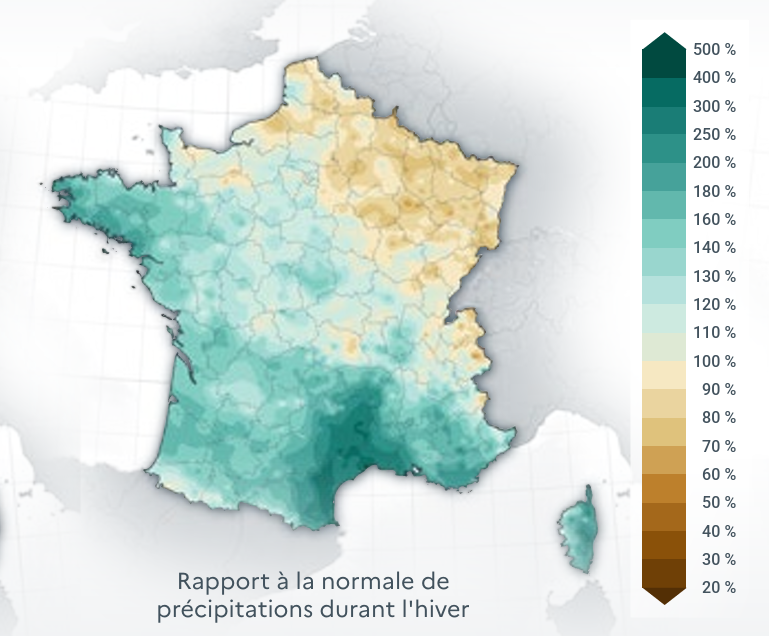
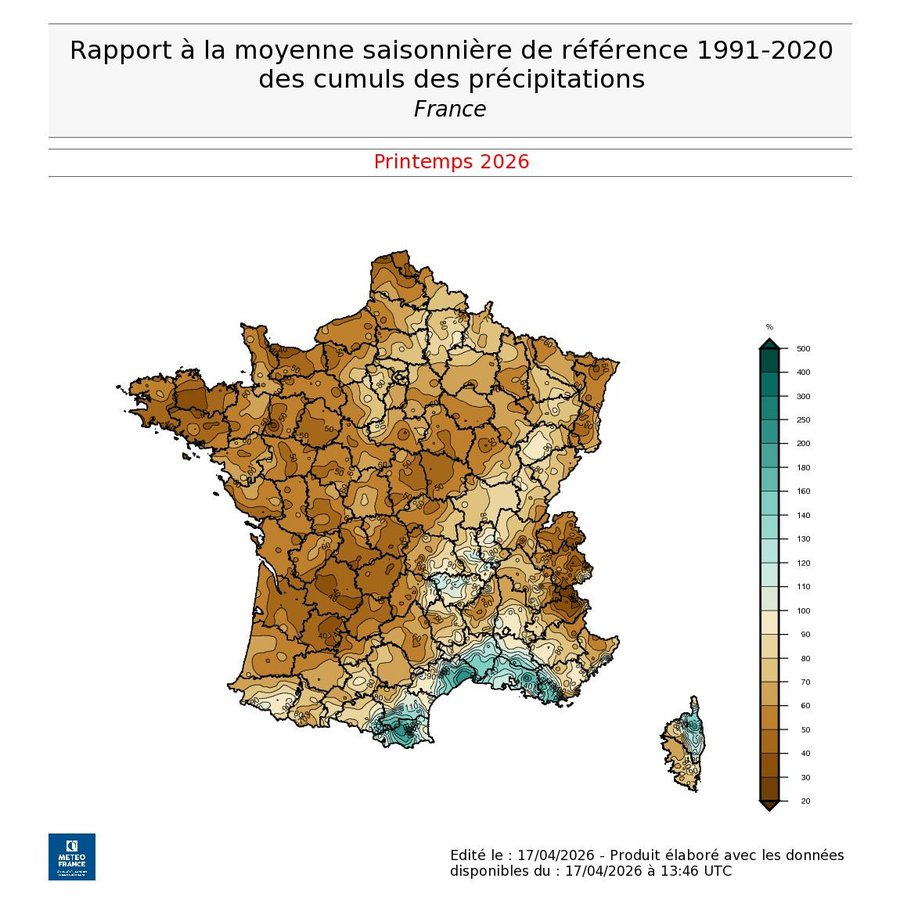
Après avoir subi des pluies records, des inondations d’ampleur et des niveaux de saturation des sols jamais atteints à l’échelle nationale… nous voilà, à peine un mois et demi plus tard, avec des sols superficiels déjà en sécheresse. Ouai, c'est vrai.
La Bretagne illustre parfaitement cette bascule : jusqu’à +200 % d’excédent cet hiver (carte de droite)… puis un déficit proche de -80 % dès le milieu du printemps (carte de gauche).
On est passé en claquant des doigts à des problématiques agricoles d'EXCES d'eau (asphyxie racinaire, accès à la parcelle impossible) à un problème de DEFICITS :
➡️Problème de manque d'eau pour la germination pour les semis en cours (voire décalage de semis ou irrigation au semis).
➡️Difficulté de valorisation de l'engrais car pas assez d'eau dans le sols.
➡️Bon démarrage de la pousse prairiale mais ralentissement à venir de la croissance s'il ne pleut pas prochainement.
➡️Température très élevées et démarrage précoce de la végétation qui pompe de l'eau dans les sols : le combo parfait pour un assèchement rapide !
Alors, la situation n'est bien sûr pas dramatique (enfin pour le moment, à voir s'il va repleuvoir). L'indice hydrique des sols n'est pas records : il est dans les 20% les plus bas sur la période depuis 1959.
Ce poste permet tout simplement d'illustrer une des conséquences de changement climatique : l'accentuation du cycle de l'eau avec des bascules rapides d’un extrême à l’autre. Le “juste milieu” hydrique, qui faisait la stabilité et la performance de l’agriculture française, tend à disparaître.
Heureusement, pour l’instant, le niveau des nappes reste globalement satisfaisant.
@AnthonyHigman 200 emails today from Google.
50 from Clients who received the emails too.
And some more about lowercase/uppercase problems which doesn't exist too.
Tired.
The world's liquid helium depends on 16 plants. Building a new one takes 3 to 6 years. Why? Helium is different from most other gases. When extracted from natural gas, every other component freezes out during cryogenic processing. But above −228°C, the standard industrial method of expanding gas through a valve to cool it makes helium hotter, not colder. So liquefaction at −269°C requires turboexpanders spinning at up to 250,000 rpm. Getting helium to 99.9999% semiconductor grade means concentrating it 1,250 times, then purifying it through 7 stages across a 900-degree temperature range. The final stage uses zirconium alloy cartridges at 700°C to chemically bind impurities below 1 part per billion. The turboexpanders are built by less than five companies worldwide, the zirconium cartridges by even fewer. Lead times for either: 12 to 24 months. The US sold its strategic helium reserve in January 2024. Semiconductor fabs carry about one week of inventory.
Le Shift Project, I4CE, l’Iddri, la fondation Jean-Jaurès, l’institut Montaigne, Terra Nova et l’institut Jacques Delors formulent des propositions pour accélérer l’électrification, sortir de notre dépendance aux énergies fossiles, et mieux résister aux crises pétro-gazières.
https://t.co/ggMxuXkXLi
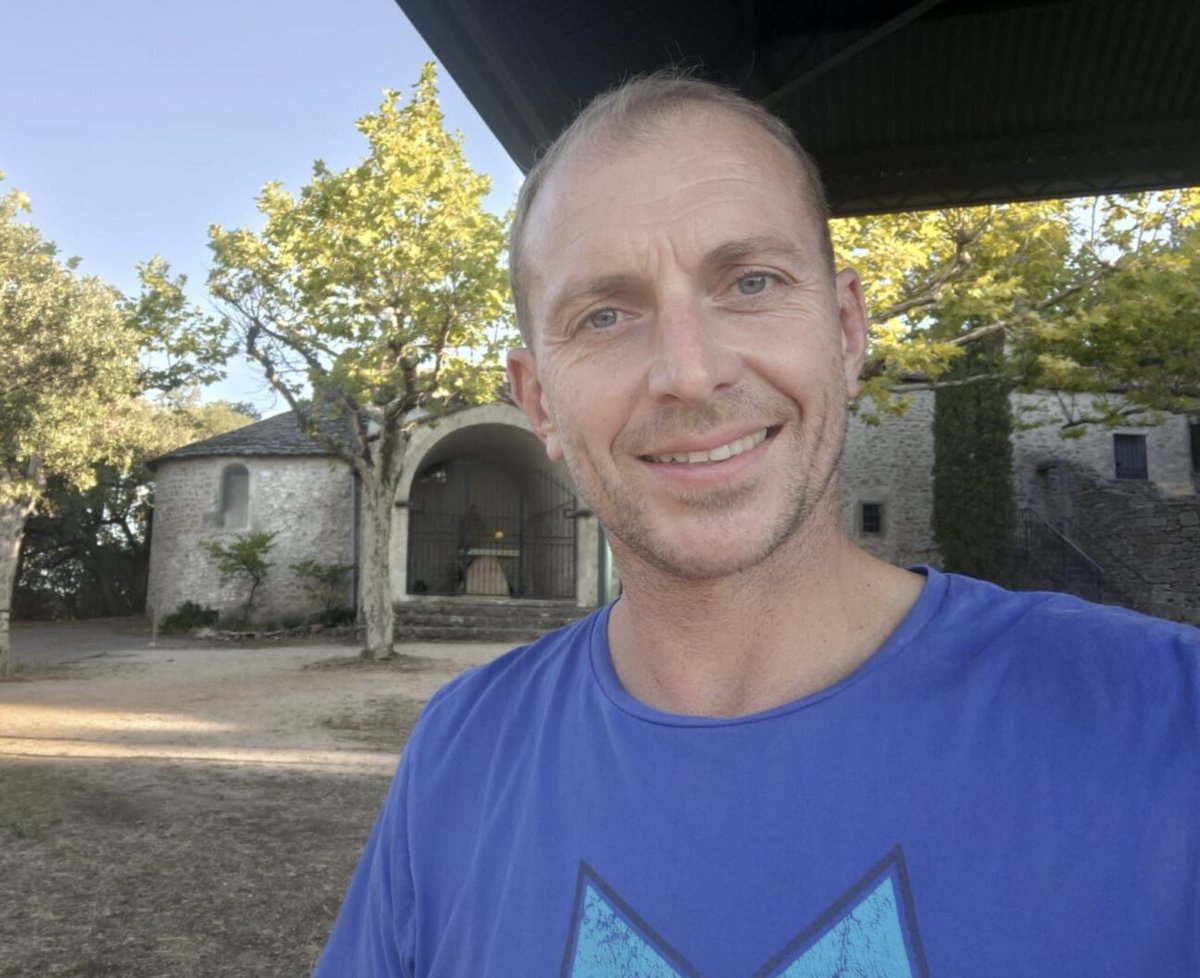
🇨🇵❤ Lueur d'espoir pour les patients atteints de la maladie de Charcot ! Un nouveau traitement freine voire stoppe l'évolution de cette maladie. Christophe, ancien du GIGN, prend depuis 4 ans du Qalsody et sa maladie ne progresse plus. 💪 (Franceinfo)
📸 Christophe Tardieu