"The human genome encodes for a new category of molecule"
"The ‘dark proteome’ is upending our understanding of human disease"
@Nature
"Expanding the human proteome with microproteins and peptideins"
https://t.co/5ncSKGKHBH
https://t.co/2Rx65FJCbG @statnews@MeganMolteni
https://t.co/7mATxNQ1EO @TheEconomist
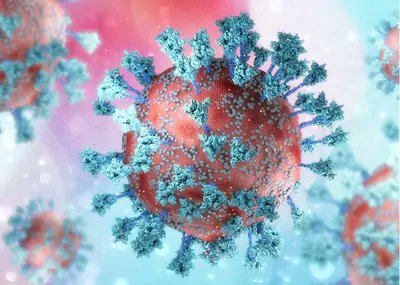
How are host proteases promoting coronavirus entry into cells? Find out by reading our latest manuscript led by Matt McCallum Brett Case Jack Brown @YoungjunPark11 in collaboration with @msdiamondlab
1/19
The next frontier in protein design will not be defined by structure alone, but by the capacity to engineer motion as a first-class principle of function. This is because dynamics is where the real biology lives.
Foundational work by Karplus, Levitt & Warshel made clear that chemistry cannot be understood without motion, mechanism, and scale. Gō, Brooks & others showed that proteins possess characteristic collective motions - low-frequency normal modes that capture how whole molecules bend, breathe, and fluctuate. Frauenfelder then sharpened the picture further: proteins are not static objects occupying a single minimum, but dynamic ensembles traversing rugged energy landscapes.
And yet the modern AI revolution in protein science has been, above all, a revolution in structure. In our new paper in Matter, @_Bo_Ni and I ask a different question: not what structure will this sequence adopt? but what sequence will realize a prescribed pattern of motion?
VibeGen inverts the conventional design paradigm. Rather than treating dynamics as a consequence to be analyzed after the fact, it makes dynamics the design objective from the outset. Using a language diffusion model with two cooperating agents - a designer that proposes sequences and a predictor that critiques them against the target motion profile - the system converges on de novo proteins with tailored vibrational behavior.
One of the most intriguing results is a form of functional degeneracy - distinct sequences and distinct folds can satisfy the same target dynamical specification. For a given functional pattern of motion, evolution may have sampled only a small region of the physically realizable design space. The space of viable molecular mechanics may be far larger than the repertoire biology happened to discover.
We have made "vibe" into a cultural metaphor - something intuitive, affective, subjective. But at the molecular scale, vibe is not metaphor: It is physics. For a protein, the vibe is the pattern of motion itself; the fluctuations, resonances, and collective displacements that determine what the molecule can do.
We are hiring a PhD-level Senior Research Associate to join our Glycomics team. The position focuses on glycomics and glycoproteomics method development using LC-MS/MS. Strong background in proteomics/glycoproteomics MS needed.
Interested? send CV to [email protected]#glycotime
New from our lab! Anna Bereznicka et al show the role of glycolipids and glycoproteins encoded by α1,4-galactosyltransferase and acting as decoy receptors in resistance to Shiga toxins.
https://t.co/Z8y6CiDfFh
#glycotime
Efficient invasion of Plasmodium falciparum strains (but not P. knowlesi) depends on α(2-3) sialic acid structures within mucin-type O-glycans. C1GALT1 as a key player in malaria?
https://t.co/Y1Xl5bRoyP
#glycotime#malaria
Interesting review from Richard Cummings lab about N- and O-glycosylation of brain cell surface glycoproteins. Role in brain development and neuronal functions, spatial distribution, CDG. Must-read!
https://t.co/dDtAjD59O1
#glycotime
Glycosylation in neuroinflammation: mechanisms, implications, and therapeutic strategies for neurodegenerative diseases.
https://t.co/oBqUtiVot2
#glycotime
🚨🩸 Growing evidence links #AlphaGalSyndrome to transfusion reactions. 🚨🩸
1️⃣ AGS patients without type B blood can have IgE that binds the B antigen.
2️⃣ Risk: plasma/platelet transfusions from type B donors.
3️⃣ Data so far from people with type O blood. Not clear whether people with type A blood are also at risk.
👉 If you have AGS, share this research with your medical team—especially before any plasma/platelet transfusion.
1/
Instead of isolating obscure sugars from microbes or spending months on synthesis, researchers use AGA to make them (12 vaccine candidates). This showcases how AGA is accelerating translational research, from epitope discovery to immune intervention.
🔬https://t.co/k0O920XVhJ
Now this is big! N-glycans on glycoRNAs prevent innate immune sensing of endogenous small RNAs by blocking the hypermodified uracil base acp3U (which is immunostimulatory), thus pereventing RNAs from inducing acp3U-dependent innate immune activation.
https://t.co/huCSPs1uaX
It is hard to prove anything in evolution, but I think we just published a quite solid evidence that the rapid evolution of protein glycosylation aprox. 700-800 million years ago enabled the development of multicellular organisms ... https://t.co/xnyJ2XYfWA
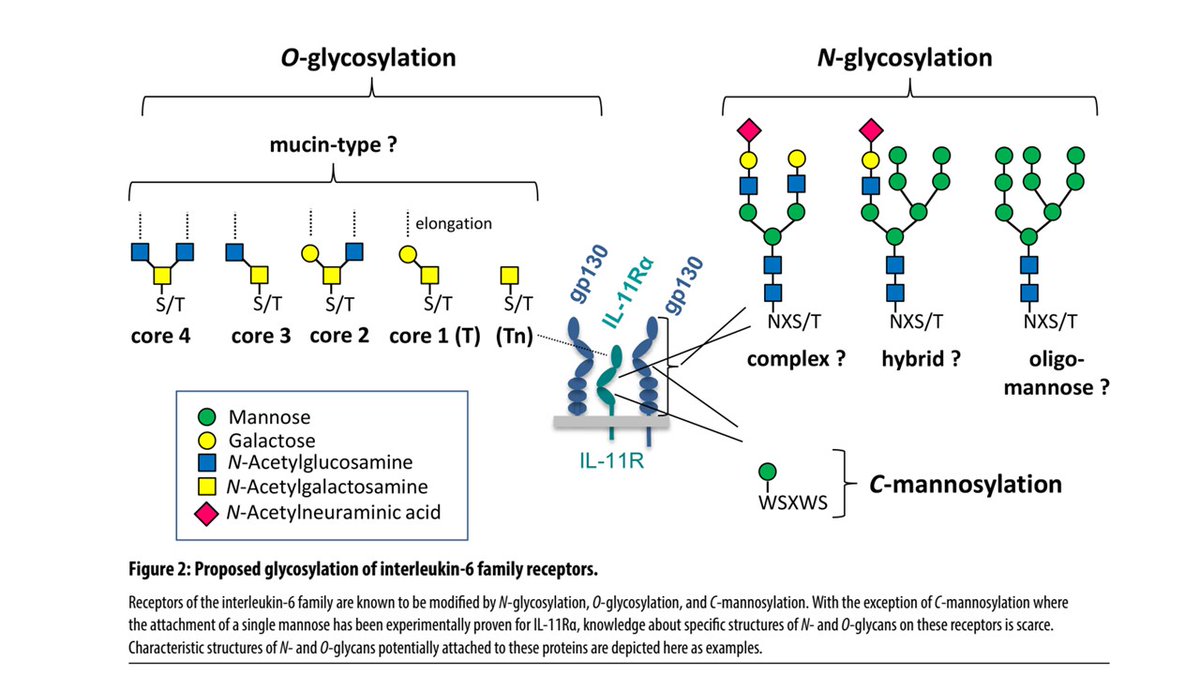
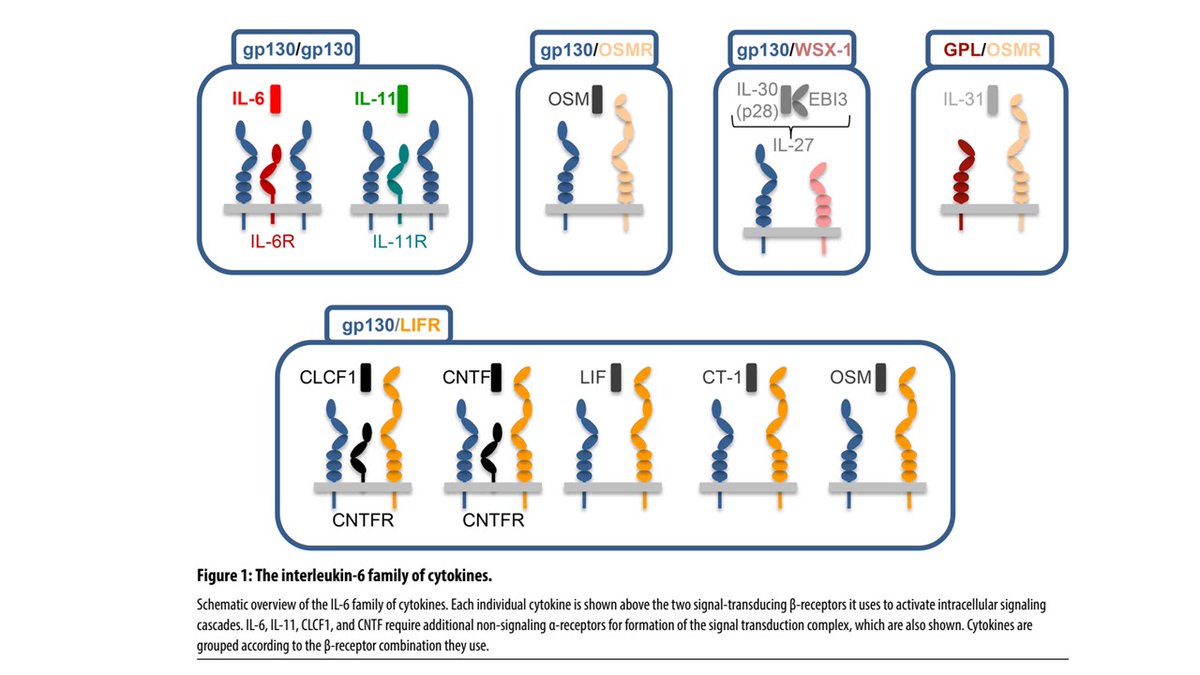
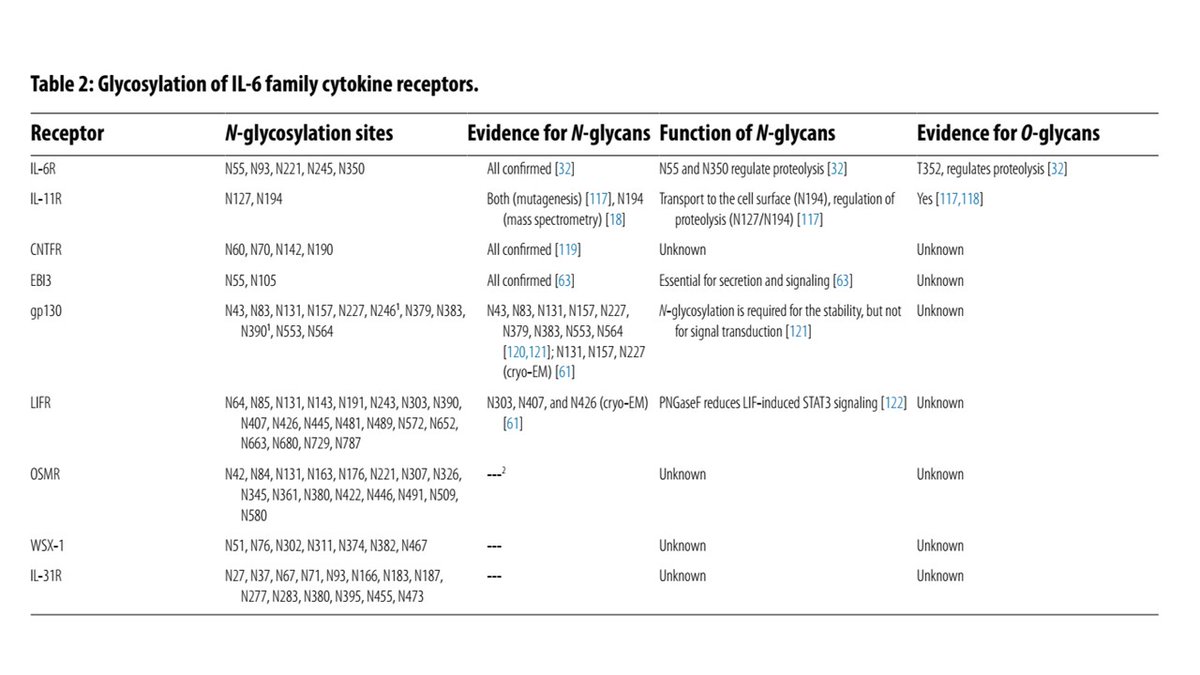
Interesting review about interleukin-6 family of cytokines (there are 9 of them), their receptors, and how glycosylation influences synthesis, receptor binding, signaling, stability, transport, ligand binding, internalization and recycling
https://t.co/2kUSc2IUKj
#glycotime
Exciting virtual seminar by Dr. Maxence Noel (From the Cummings' Lab)- "Brain N and O glycosylation: Discoveries, Tools and Dysregulation in Disease", held by BGDG.
Thursday July 17, 2025 at 12pm EDT.
Register: https://t.co/2QbmXPDm58
#glycotime#neuroglycobiology#neuroscience