Today, we celebrate the birthday of one of the greatest natural talents the chess world has ever seen: @GMJulioGranda.
From rural Peru, far from the traditional centers of chess culture, Julio rose to the world elite without coaches and with virtually no reliance on chess literature. No Informator, no ChessBase. His use of engines and databases was minimal, and only at a later stage of his career. That did not prevent him from holding Kasparov and Karpov to draws, or defeating players such as Topalov, Gelfand, Ivanchuk, and Morozevich. At his peak around 2000, Granda was firmly inside the world top 20, a remarkable achievement given his unconventional path.
Got a research grant. 🤓 My lab at Weizmann Institute now has more PhD student and postdoctoral researcher positions available - send me an email if you are interested (there are no geographical restrictions and virtually no visa formalities).
Our latest review on GPCR-lipid interactions is out at Curr. Opin. in Struct. Biol. https://t.co/dfTAPTFC5J
Congratulations to postdoc Dr. Greeshma Jain!
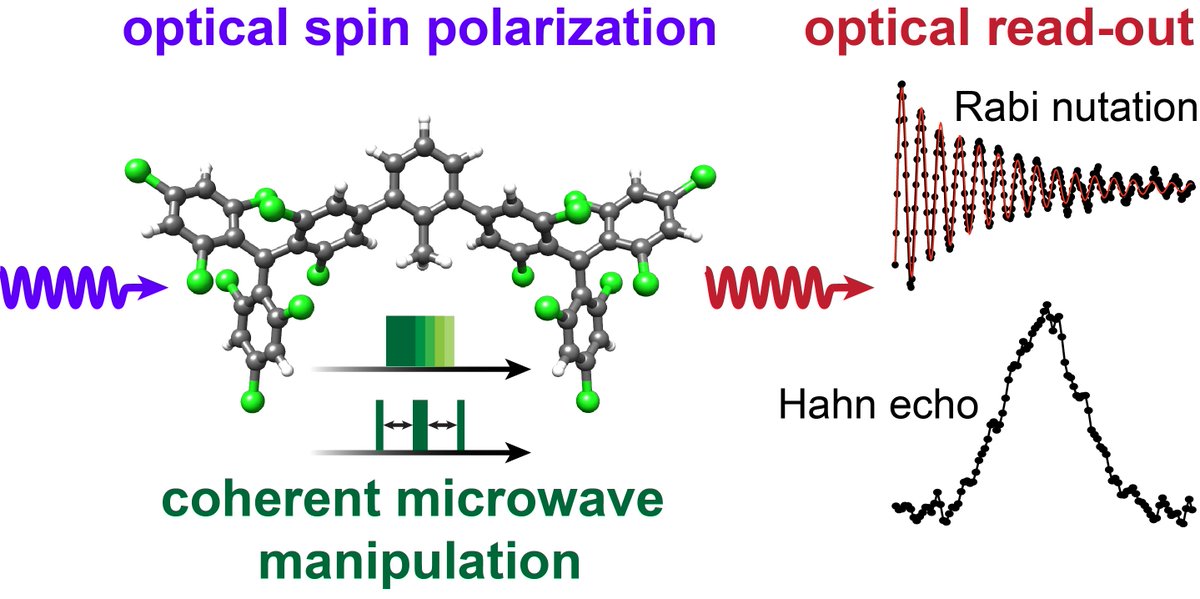
Very excited to share this work just published in @J_A_C_S! We demonstrate the rational design of an improved organic optical-spin interface that allows for the coherent microwave manipulation of electron spins in a nuclear-spin-rich solvent environment at temperatures that were previously difficult to access with molecular color centers; an important step towards using these systems as quantum sensors! @NUChemistry@nuINQUIRE@CMQTnu
https://t.co/VT58ga9ByK
En el año del bicentenario de relaciones diplomáticas entre Estados Unidos y Perú, nos alegra ver este nuevo ejemplo de conexión entre nuestros pueblos.
Proud of this art of work published in PNAS after 5 years of hard work by Michael, Austin, Karen, Sam, Saeed, Andrew and other students and collaborators.
Debuting a mini-tau-prion with seeding competency. Its "secret sauce"? Its the water!
Water-directed pinning is key to tau prion formation | PNAS https://t.co/XFK0OuyrXX
60 years ago this month, the Fast Fourier Transform was created, a powerful tool for image compression & data analysis.
Watch a classic MIT breakdown of FFT, perhaps the most-taught algorithm at the Institute: https://t.co/R7zdspBswx
v/@MITOCW
Renormalisation is a central concept in modern physics. It describes how the dynamics of a system change at different scales. A great way to understand and visualise renormalisation is the Ising model
(some math, but one can follow without it )
1/13
Dear network,
We are pleased to announce the launch of MARQUISE, a platform for magnetic resonance, quantum information science, and education.
This platform aims to bring together and decrease the language barrier between the research fields of magnetic resonance and quantum information science.
It features blog posts on recent literature, theory, simulation, experimental methods, and visualization approaches at the intersection of MARQUISE.
See you on the MARQUISE website and don't hesitate to comment or ask questions on our blog posts (via our website).
So far, Dr. Josh Straub and Dr. Quentin Stern have been publishing posts, but we'll soon have more contributors join our effort to make this platform richer and more useful to our research community.https://t.co/xDMQLcLNgD
@EPR_ESR@ajerschow@ENC_Conf@european_epr@nmr900@global_nmr@LevittGroup@asifequbal313
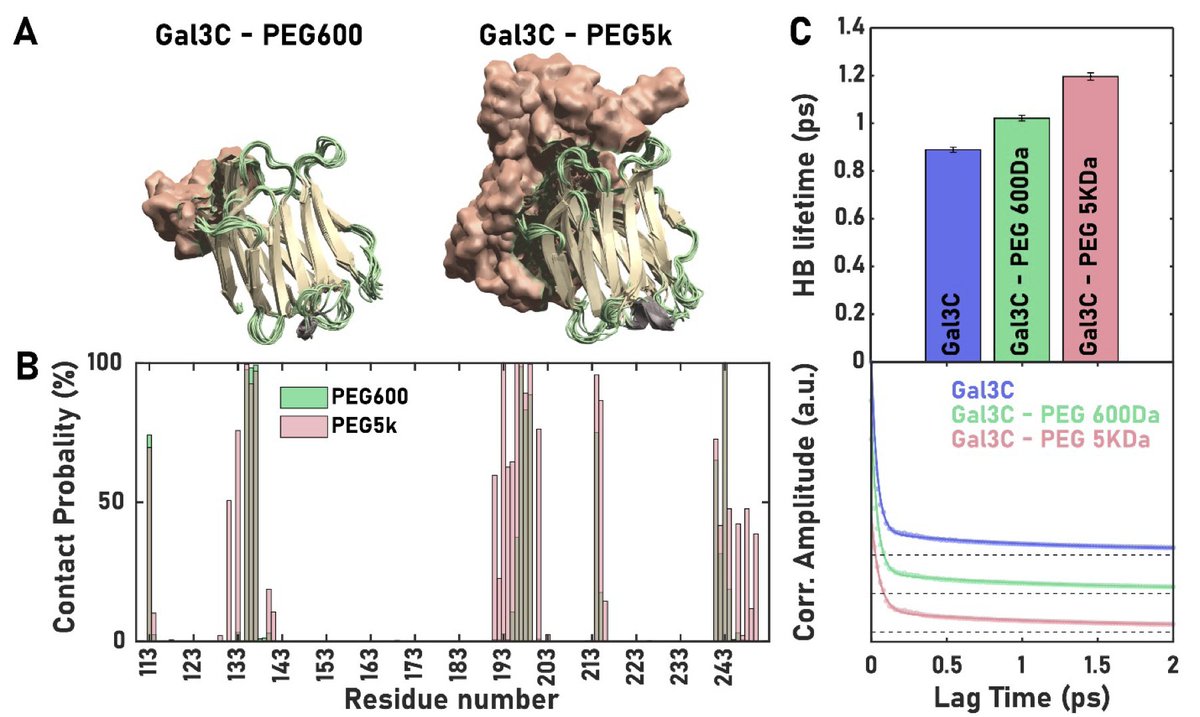
Exciting new collaboration with Prof. Carlos Baiz and his team @UTChemistry, using NMR, 2DIR & MD simulations to investigate solvent reorganization in protein-polymer conjugates. #NMR#NMRchat Preprint out now in ChemRxiv: https://t.co/pQ8yAp4lnU
The cover featuring our recent fragment binding study is now out @ ACS Chem Bio: https://t.co/g9GE31sFJU
Huge thanks to the talented Ivo Kabelka from @CarlssonLab for creating this beautiful cover art.
Journal of Magnetic Resonance Open, Tutorial paper, Introduction to average Hamiltonian Theory. II. advanced examples, Andreas Brinkmann, Metrology, National Research Council Canada https://t.co/GIgGSxwx2j #NMRchat#NMR 🧲
Proud to share a new manuscript:
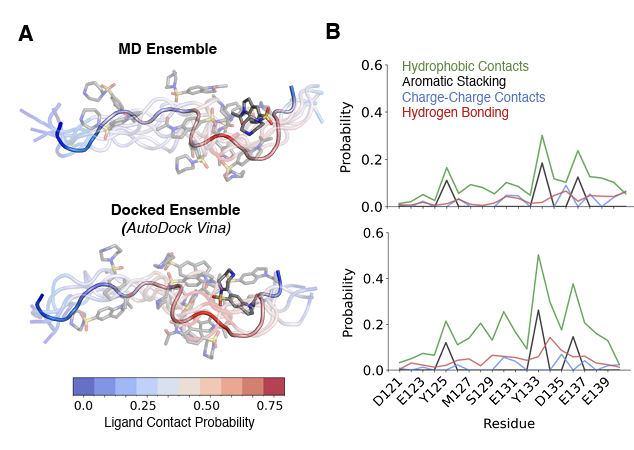
"Ensemble docking for intrinsically disordered proteins"
from @DartmouthChem undergrad Anjali Dhar 24' and grad student Tommy Sisk. We present ensemble docking strategies for IDPs that, remarkably, seem to work!
(Links in thread below)