No es este tu país
porque lo elegirías,
quizás no es así.
Ni porque te enorgullezcan sus victorias,
tal vez sus venas abiertas te queman más.
Es este tu país porque,
independientemente de donde estés,
sus dolores y sus sueños
son los mismos que los tuyos.
"No es este tu país
porque conozcas sus linderos,
ni por el idioma común,
ni por los nombres de los muertos.
Es este tu país,
porque si tuvieras que hacerlo,
lo elegirías de nuevo
para construir aquí
todos tus sueños." - Marcos Martos.
Y lo haría siempre. Feliz 28, patria.🇵🇪
@CesarChavezP29 All the best, Cesar. Sooner rather than later, a kid in the future will be posting about how happy they are to work with the very prominent economist Cesar Chavez Padilla.
Desde @Econthaki 🌎, en colaboración con organizaciones aliadas y profesores invitados, lanzamos Ecomienza 2026✨
Convocatoria abierta para estudiantes de economía y egresad@s recientes de toda Latinoamérica. ¡Completamente gratuito!
📝 Postula: https://t.co/hCGEDoVOb1
For many people, the marginal returns to science, even medical science, are low if not zero, just because they don't have access to the social infrastructure to benefit from it. We might be guilty of not being able to actually help, but let's not undermine our responsibility.
Medical and STEM research seem more important for society until we realize that for the former to actually impact people, we need functional societies. E.g., Why are women dying from maternal conditions at such different rates across the world? Why doesn't the know-how just flow?
Am I the only social scientist that thinks the marginal returns to social science research are pretty low? I mean, I enjoy it & think it's interesting. But I don't think it’s improving the world much. Imo society oversupplies social science and undersupplies medical research.
We need people to work hard on curing the diseases we don't know how to cure yet. But we also need to know how to help people benefit from existing cures and technologies. That is a task for the social sciences. I don't think it's evident whether this is "less important".
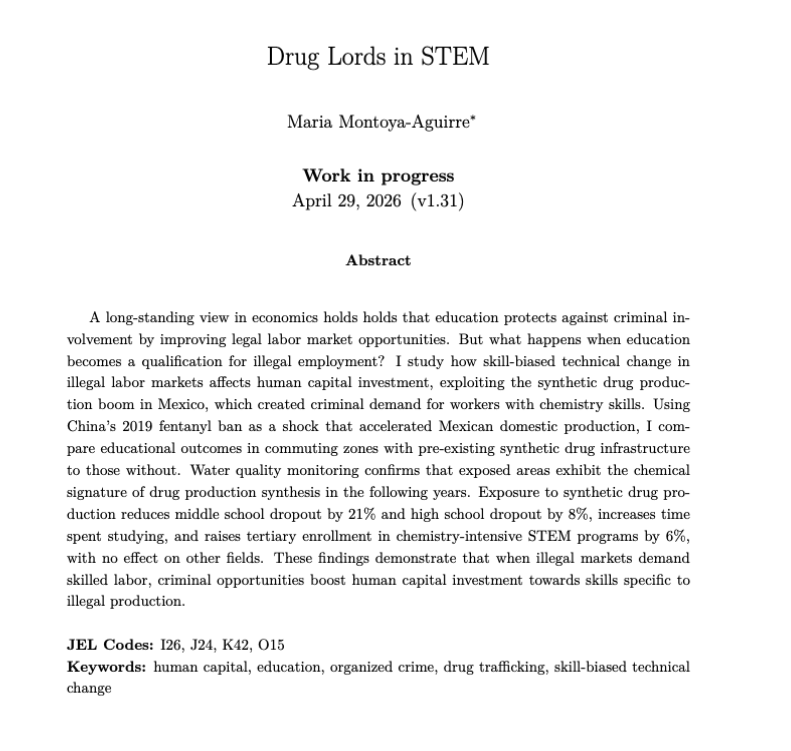
This incredible paper uncovers massive collusion between Indian textile firms to hold down wages. This collusion is enabled by "pro-worker" laws making it hard to hire and fire. Instead, a higher minimum wage would actually increase output and wages. 1/
@constant_hevia Sería interesante ir al otro extremo:
- Rojo: Sobrevives. Pero todos los que no votaron como tu, mueren.
- Azul: Sobrevives, a no ser que más de 50 personas escojan rojo.
Igual, en ambos casos votar rojo equivale a sobrevivir sólo si es seguro que son mayoría.
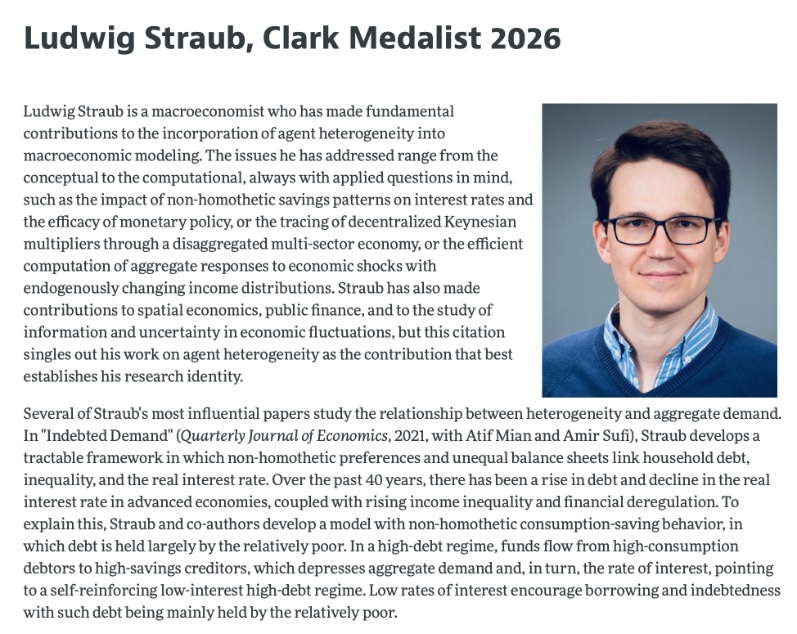
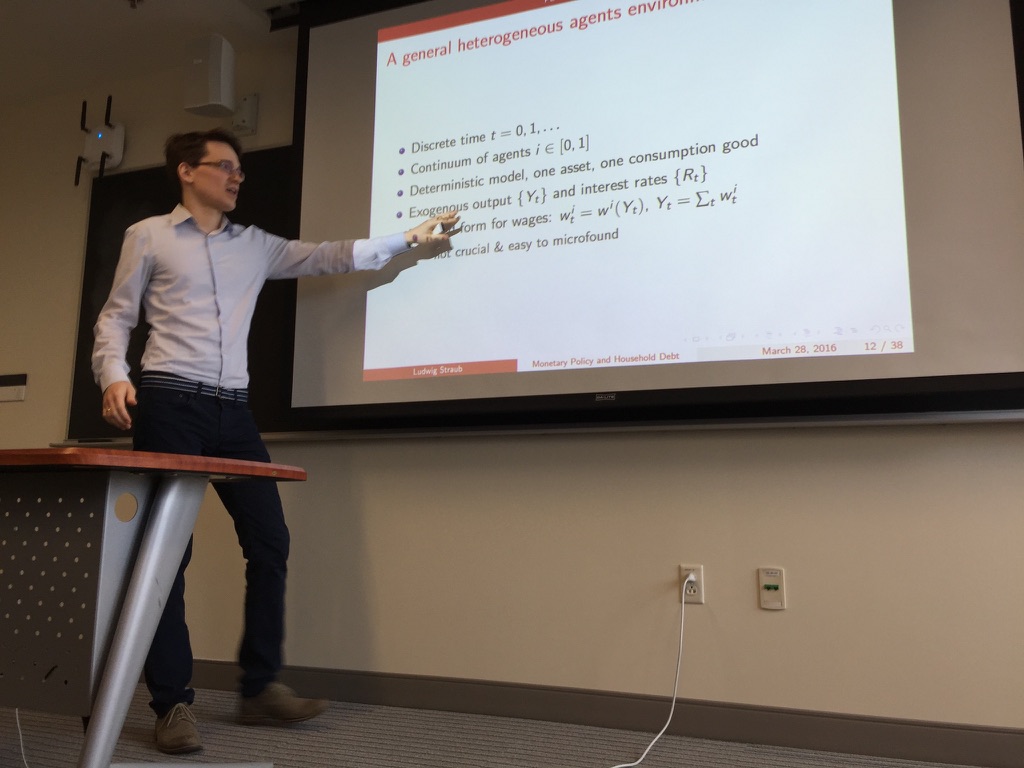
Congratulations to Ludwig! Extremely well deserved. Very happy for him and a testament to all his great coauthors. Here he is as a 3rd or 4th year student presenting in our macro student lunch at MIT.
🍿🚨 NO LA PODES CREER: El Gran Maestro de ajedrez Hikaru Nakamura pasó 67 minutos pensando una sola jugada en un torneo profesional y, aun así, la decisión fue incorrecta y terminó costándole la partida.
‼️ Esta jugada se convirtió en el segundo turno más largo de la historia del ajedrez.
I had undergrads telling me that "their friends" are stopping going to their math lectures and OH (for linear algebra and real analysis) because "there's nothing the professor knows that AI doesn't" and they can just study with it.
I’m honestly looking forward to the day when all top Econ papers can be written by AI. We aren’t that far anyway, and we’ll likely get there in 2-5 years. The professor can then get back to the most high-impact part of their job: teaching!
@Saulomarc64@teller_ts En cierta ocasión, Toei hizo un capítulo especial con estos tres personajes. Claramente el tipo de la izquierda no estaba al mismo nivel de los otrps dos.
Most people know Chris Sims as a giant of macro, but he also essentially founded the modern economics literature that takes the idea that people have limited attention seriously. This work put real structure on the idea that attention is scarce, and it has shaped a huge body of research across macroeconomics, finance, and behavioral economics, including much of my own work over the past decade.
The standard benchmark in economics is that people process all payoff-relevant information; they attend to all features of the information environment and make decisions based on the relevant payoffs. Behavioral economists such as Herb Simon challenged this view with the idea of bounded rationality, but without a specific account on what limited attention would look like.
Chris's paper on *rational* inattention changed all that by putting real structure on the problem. It was a pretty simple idea: People can't pay attention to everything, so they pay attention to features where neglect would be more costly. It turns out this very simple assumption generates profound implications for everything from finance and monetary economics, to health and insurance decisions.
Behavioral economists (myself included) have followed this work by proposing models where attention is limited but not allocated rationally, e.g., salience-driven attention. When I gave a talk at Princeton two years ago on how salience-driven attention can lead to over/underreaction to information, Chris was in the front row asking questions and making comments that helped the paper tremendously.
He will be missed.
@arpitrage@joshrauh Kevin Bryan (@Afinetheorem) and I posted open-access lecture notes on the economics of innovation/productivity growth, which we also taught in an AEA continuing education course (worth considering also doing with your course materials @joshrauh): https://t.co/8T1yBF5oJm.
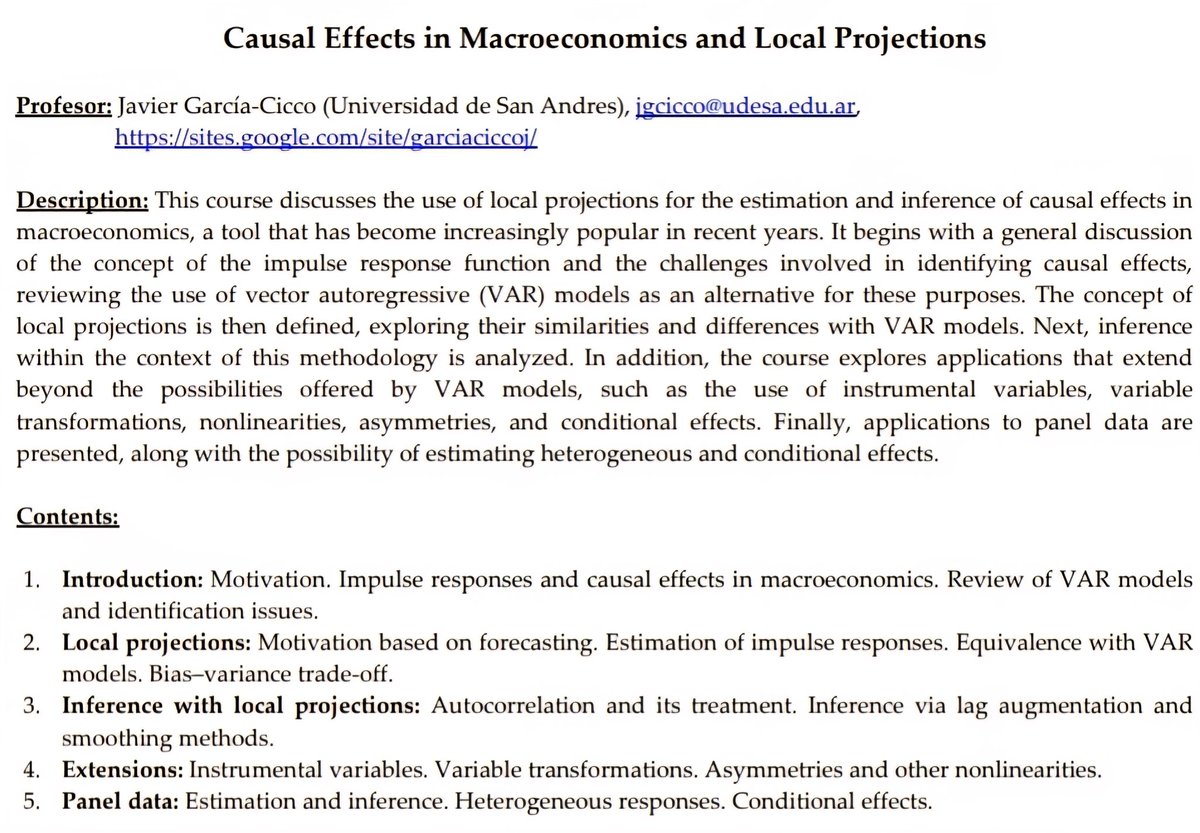
I recently taught a short course on Causal Effects in Macroeconomics and Local Projections. Here is a snapshot of the contents, and I created a website with the slides, in case others find them useful.
Comments are welcomed!
https://t.co/C48neUPFAz
Call for papers is out for Spring 26 Midwest Trade & Theory Conference @ Ohio State Fri April 10 - Sun April 12! Submission deadline Sat Jan 31. @rafer77@YotovG
https://t.co/JO2Y6hydtY