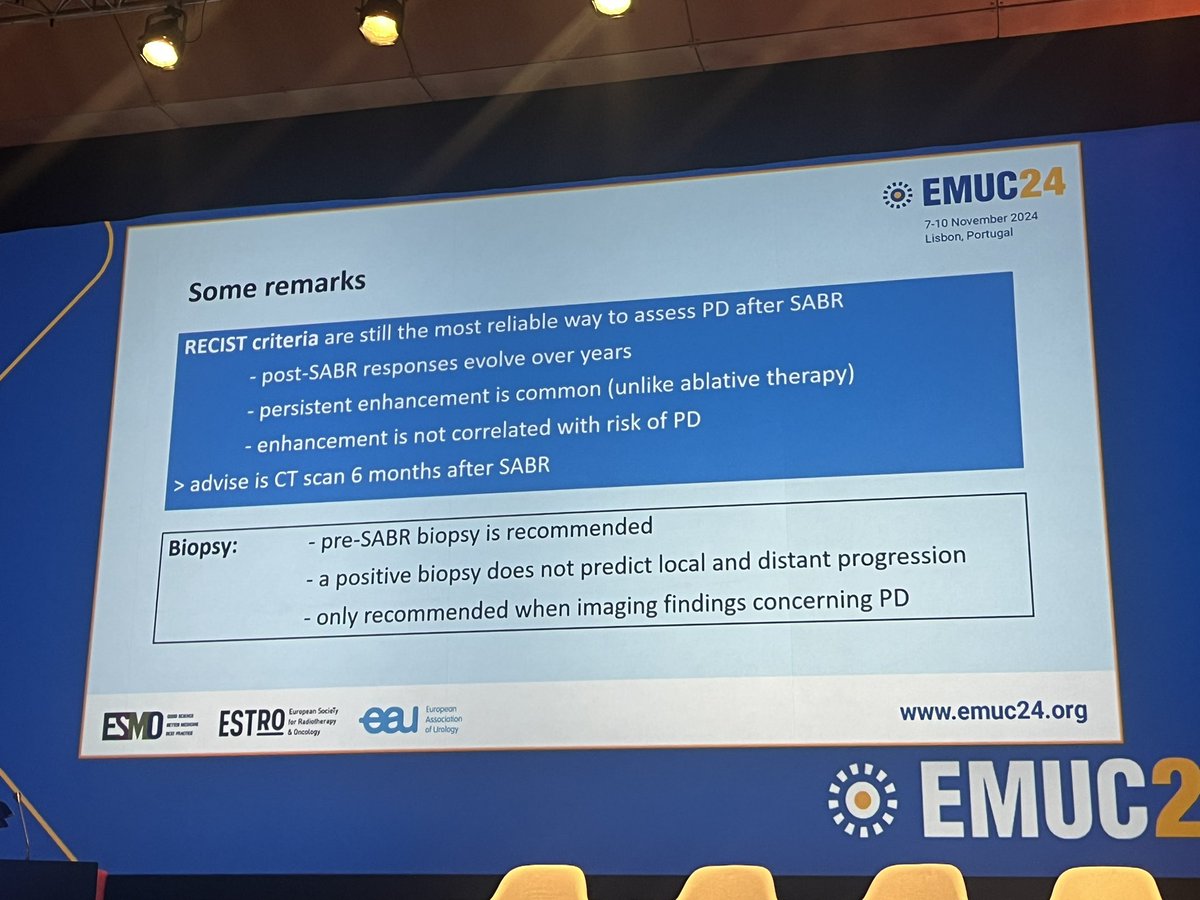
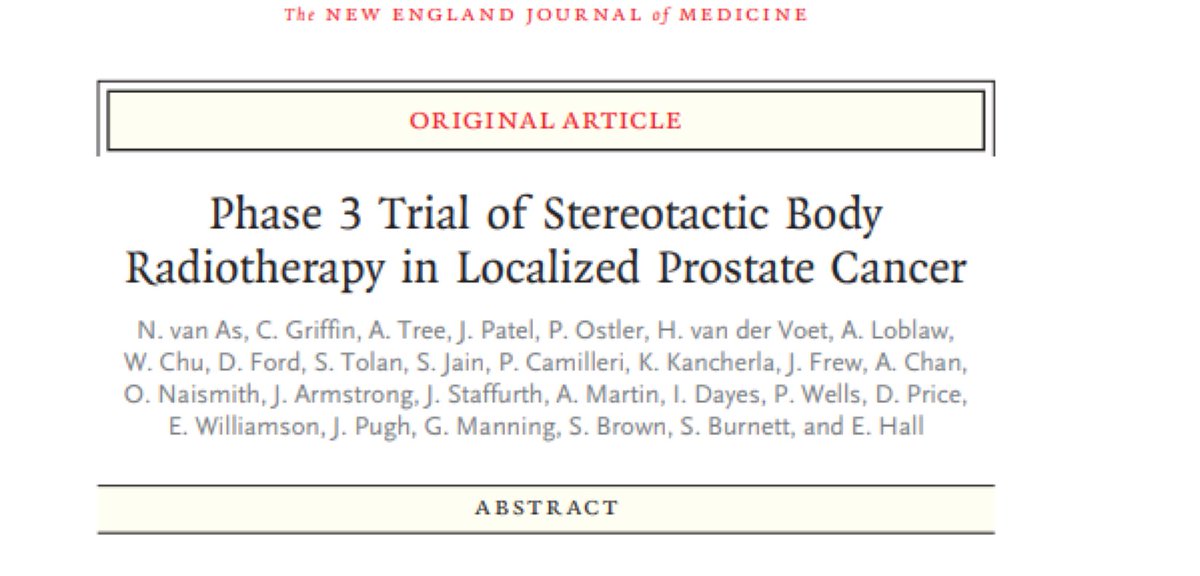
The final sentence in this abstract could just as accurately conclude with "Given the limitations of this study, further investigation is warranted to identify the utility of surgery for octogenarian patients when SBRT is inherently safer in this population". Why? Because far too many patients over 80 have died within a few weeks of surgery for stage I NSCLC, including some of mine, driven by a "belief" that surgery is the better treatment.
Including the many whose fatal complications aren't even reported in this mansucript.
https://t.co/kqRcrE0JEC
@Hipsteropoli L'errore nuovo di questa domenica è "contenuto non disponibile nella tua regione", per quanto mi riguarda. Incredibile. E rimango in attesa dell'applicazione per vederla su smart TV, al momento continuo a vederla solo da smartphone.
@EvanThomas84@piet_ost In your opinion, can this relapse be somehow linked to transperineal biopsy? Wonder if any urologist could join the conversation
@EvanThomas84@piet_ost We saw a patient with basically the same characteristics last week. After MDT discussion we proposed MRI linac SBRT 30 Gy in 5 fractions every other day with concomitant 6 m Relugolix.
⏳🇶🇦⏳
Visti gli insulti di molti e la diffidenza, svelerò tutti i dettagli dopo aver raggiunto 200RETWEET, e mi prenderò ogni responsabilità di quello che dirò.
#Lazio
⚡️Today FDA approved Vorasidenib for IDH-mutant low grade gliomas
When patients ask you about this drug, make sure to inform them that
▶️ risk of tumor progression at 2 years is 49% with Vorasidenib (INDIGO trial) compared to 15% with chemoRT (RTOG 9802)
▶️tumors remain stable without any major progression in 83% of patients receiving Vorasidenib versus 88% receiving a sugar pill (INDIGO trial, Table S4)
▶️patients who do not receive standard chemoRT live 5.5 years shorter than those who do (RTOG 9802)
▶️Vorasidenib has never been compared to standard chemoRT in a rigorous clinical trial