Brian Chesky shares why the saddest day of his life happened the day after Airbnb went public at $100B:
"We go public, we have a hundred billion dollar valuation. It's one of the best days of my life. The next day, I go on a Zoom meeting, and it was like it never happened."
"It became like the saddest day of my life. Because I realized, I got all this adulation, and I don't feel any different."
"Adulation is like a cup with a hole at the bottom. You keep filling it in, thinking it's love, except it just keeps coming out the bottom."
"That made me reevaluate what I'm doing this for. I want to do things for pure intrinsic reasons. Do the work like you used to do, like when you were a kid. It was light. Just make stuff. Make it for yourself."
"So many entrepreneurs focus on what they want to be. "I want to be a giant tech founder. I want to run a billion-dollar company." Instead of focusing on, "What do I want to make."
There's no way to fail if you're making what you love."
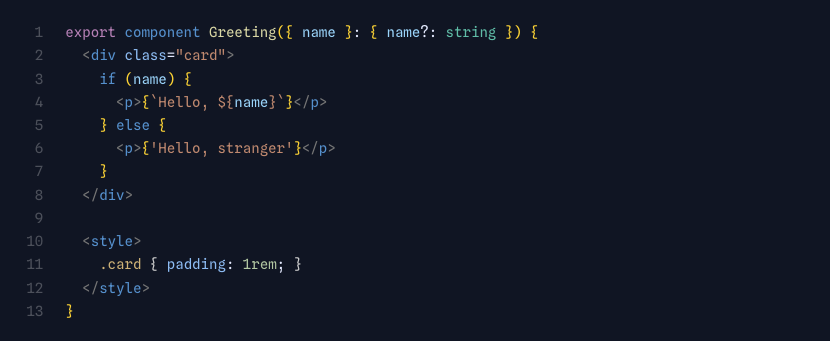
Happy to announce TSRX. Think it as the spiritual successor to JSX.
We extracted it from Ripple, and made it framework agnostic. It can compile to React, Ripple and Solid, other frameworks to come soon.
It's a TypeScript superset language, with a parser, compiler and a selection of plugins for editors + Prettier + ESlint, etc
It's early alpha but we thought people might be interested in it. 🧵
Zapier CEO @wadefoster says remote companies have an advantage in the AI era, becuase "every last bit of work exhaust is documented," which supercharges internal AI and accelerates people's work:
"All our stuff is inside Slack. All our meetings are recorded. Every last inch of work that happens, there is a written trace of that."
"So we can put chatbots on top of that, and that creates a whole bunch of institutional knowledge that accelerates the work."
"So a new person coming in can literally figure out, 'Is there a standard operating procedure for this?' And you don't have to go chase people down in offices and sort of hope the campfire wisdom finds you."
"Remote companies have a big advantage because they do tend to have so much work that leaves a digital exhaust."
@koylanai this is so good looking fwd to the whitepaper. this tracks...decomposition at the prep layer (before the action model ever runs) gives us the same structural properties. fewer passes, narrower context per component, no correction loop
keep struggling
when things come too easy, you don’t exercise the brain nor the emotions. ease can feel like progress, but it often skips the reps that actually change you.
growth is usually a loop, not a straight line – you take passes. you try, you fail, you reframe. you come back with a slightly better model, a slightly calmer nervous system, a slightly wider range of what you can handle.
hardship isn’t the goal. but friction is gold. it shows you where your understanding is thin, where your habits are brittle, where your ego is doing the steering. the struggle is the curriculum.
agents are making things easier, and that’s good. but don’t confuse speed with depth. use AI to remove busywork, then spend the saved energy on the parts that still hurt a little: the unclear problem, the uncomfortable conversation, the hard tradeoffs, the things you can’t yet explain in words. instead of putting all your wishes into the black box, actually keep thinking, and seeing things fully.
keep the difficulty where it matters. outsource the tedious, keep the meaningful resistance. that’s how we keep learning – and how we stay human while your tools get superhuman.
I love this timeline where the future is humans directing swarms of agents building whole products perfectly remotely, but humans must show up to offices for essential “serendipity” and “tap on the shoulder” purposes
we’re hiring senior(+) full stack engineers at Tono Health.
we’re building the best-in-class AI-native OS for specialty medicine, starting with dermatology.
own systems. simplify complex healthcare workflows. make a real impact.
come join us 🚀