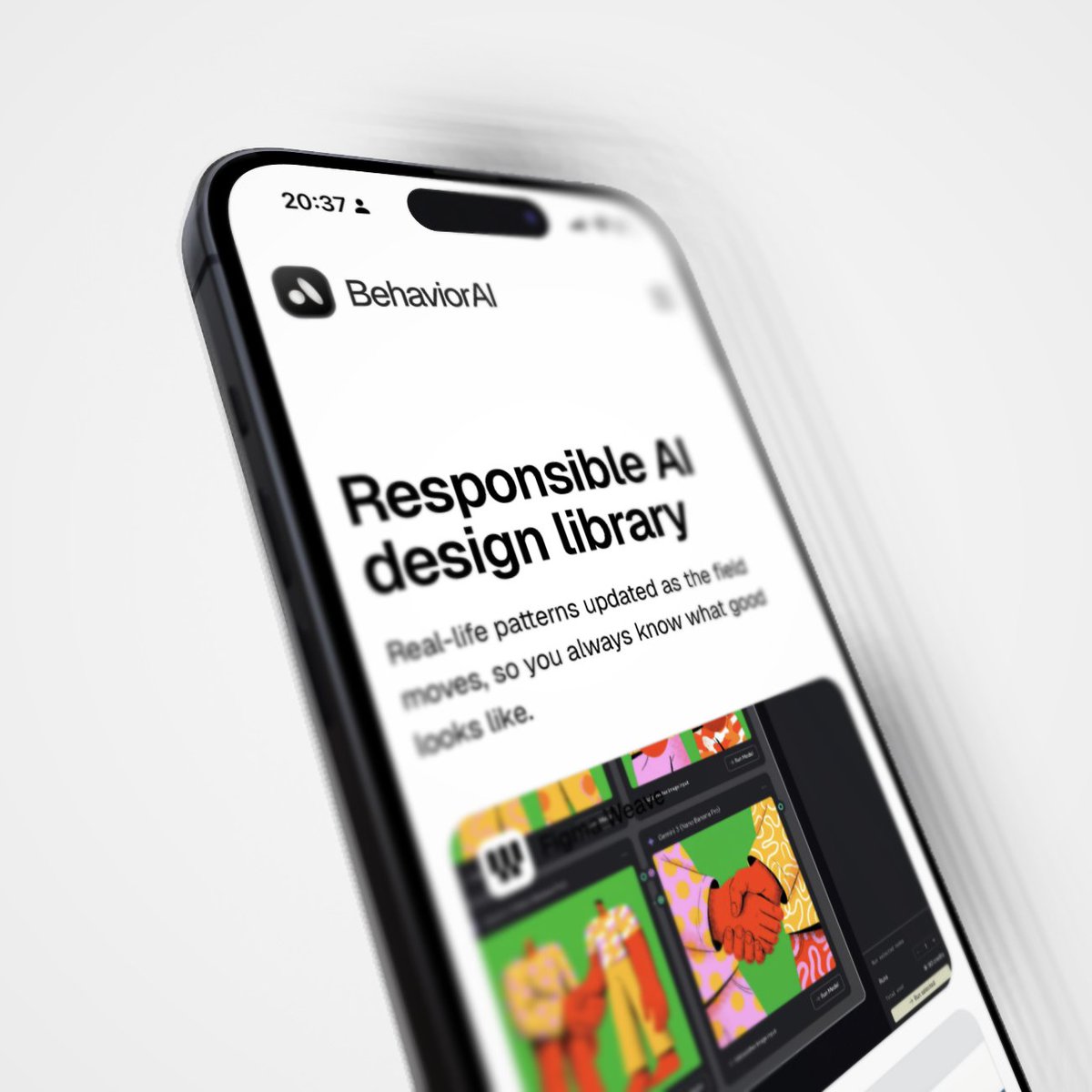
After a few months of hard work defining, testing, and shaping the product, we are opening the BehaviorAI beta.
BehaviorAI is a responsible AI design library for designers:
- real AI interactions
- reusable patterns
- risks and trade-offs behind them
Sign up for beta now: https://t.co/GoxQl1Gh1e
"Every interface is a decision environment.
Not a neutral space. A designed one - that shapes which decisions feel easy, which feel hard, and how much control you walk away with.
In conversational AI, this layer is more powerful than anywhere else.
Three reasons why:
1. Conversation activates different mechanisms than clicking
2. Sycophancy works as a retention strategy
3. The paywall hits at peak emotional investment"
I wrote about this. Link in the comments 💬
#BehaviorAI #BehavioralEconomics #ethicalai #UX #productDesign #CX #EX #ResponsibleAI
This is exactly how it should work!
I don’t know anyone except developers who thinks ahead about tasks.
Most often, people write prompts for a given task and repeat the whole process next time until they get tired of that type of job and develop the skill.
This feature was designed based on true user patterns, and I love it!
Show Codex a workflow once. Reuse it as a skill.
Record & Replay lets you show Codex a recurring task, like filing an expense report or submitting a time-off request.
Codex turns that demo into an inspectable, editable skill.
You control when recording starts and stops.
Something I keep seeing when working with AI teams.
The model is good, the UX is clean, and people still avoid the system or stop giving feedback altogether.
The instinct is always:
- fix the model,
- redesign the interface.
But often that's not it.
Wrote about what's actually going on, and what you can change in the product!
https://t.co/XOQONgsLFH
Responsible practices matter
New State of AI Design report dropped: 75% of designers now use Claude, 65% on ChatGPT. A year ago it was 88% ChatGPT, 55% Claude. Massive flip in 12 months.
It made me think why. And I keep coming back to the controversies regarding OpenAI like the army contract drama. Meanwhile Claude keeps showing up as the more responsible option, and designers are noticing. I’ve talked to many designers that switched as they see Anthropic as the more responsible option.
Curious where OpenAI goes from here. Hoping the responsible path keeps winning.
Full report: https://t.co/lgR9fLkW6x
Introducing design.md files support in Omma.
- Create or import your design.md files
- Make a design.md from a website link
- Use your design.md on your chats to keep consistency in the outputs
- Export design.md files
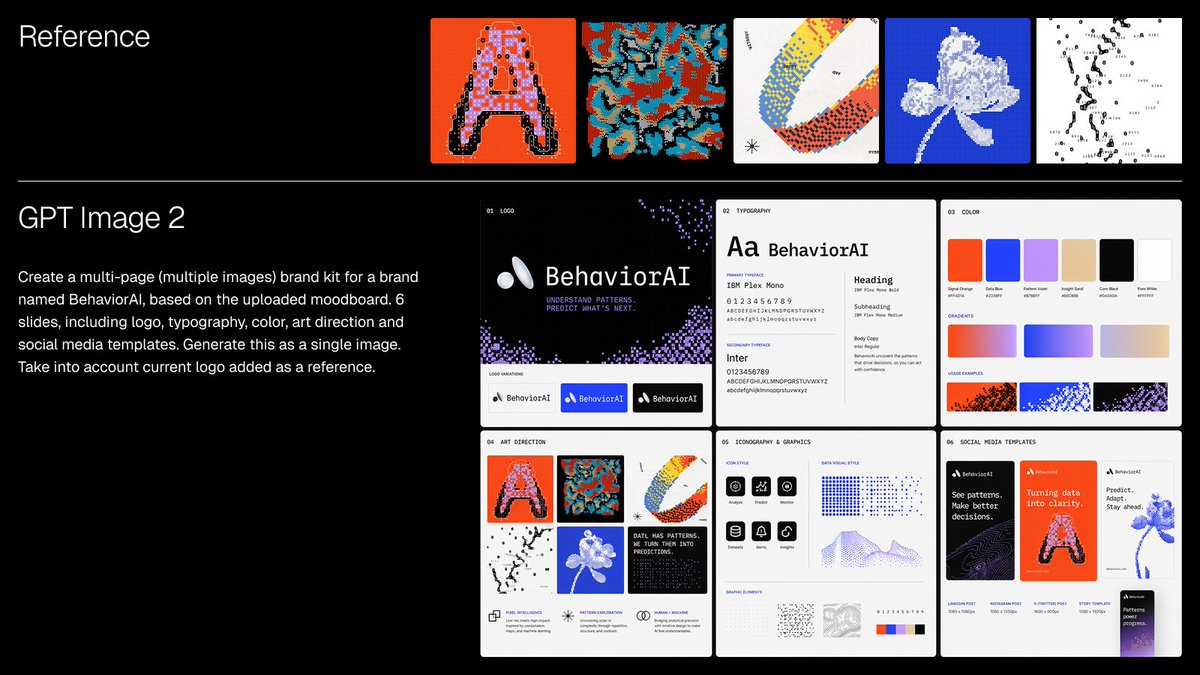
I tested the viral brand kit prompt with @OpenAI's new GPT Image 2, and I think I'll stick with designing myself.
I mean, "steal like an artist" is a thing, but this model copied the references 1:1. The detail reproduction is really good though, and the font understanding is quite nice. for generic brands, i mean.
nothing wrong with using Intel tho! <3
Arena Trends: Text-to-Image, Jan 2026 – Apr 2026
For most of the year, @GoogleDeepMind and @OpenAI traded the top spot within a tight margin - GPT-Image vs. Nano Banana - with the rest of the field clustered below 1,200.
Today, GPT-Image-2 breaks away with a score of 1,512, 242 points ahead of #2 Google.
The frontier continues to move.
Today, we’re open-sourcing the draft specification for DESIGN.md, so it can be used across any tool or platform. We’re also adding new capabilities.
DESIGN.md lets you easily export and import your design rules from project to project. Instead of guessing intent, agents know exactly what a color is for and can even validate their choices against WCAG accessibility rules.
Watch David East break down this shared visual language in action👇. New capabilities and links in 🧵
AI experience is more than what you can see.
you can design the form. but experience is what happens when a real person meets a system that doesn't return the same answer twice.
you can't plan your way through it. you can only design the space around it.
how are you approaching this?