ICYMI: I was on the Canadian Real Estate Investor Podcast with @danielfoch and @mybuddynick89 a few weeks ago to talk about Multiplex Condos. Check it out: https://t.co/V12fxIbwWH
It's funny, but Eric's solution - a blunt age restriction on smartphones - feels harsher, but actually may be the more libertarian solution than the mess the feds want to get into with monitoring the whole internet.
I’ve been following the debate around Bill C-22, Bill C-34, and Bill C-36.
Together, they touch on lawful access to digital information, online safety for children, the social media ban for kids under 16, AI chatbots, privacy, and consumer data rights.
Parents (and most people) are right to be concerned about the harm smartphones and social media are doing to children.
But I worry we are moving too quickly toward the wrong architecture and using this as cover.
The bills here give the government significant new powers over digital life before we have properly debated what freedoms we should have.
I would rather consider something as blunt as prohibiting physical smartphones for children under 16, while allowing simple phones for calls and texts, than rush into legislation with such massive implications.
A physical smartphone ban for minors can be debated, tested, changed, or reversed. A surveillance architecture is much harder to unwind once it exists.
I am also concerned by how much of the real substance will be decided after Parliament votes.
We should not be giving unelected regulators broad discretion over privacy, speech, encryption, digital identity, private conversation, and what counts as harmful content.
Those choices should be made by legislature following real debate. This matters even more as AI becomes more powerful and governments begin using it.
It may be used tomorrow in ways we do not yet understand.
Before we redesign digital rights, Canadians deserve a much deeper debate:
1. Do citizens own their personal data?
2. Should they be compensated when others profit from it?
3. Do they have a right to strong encryption?
4. Do they have a right to conversations that remain truly private?
5. What protections should exist when AI systems can increasingly analyze, predict, and influence human behaviour?
6. Do we have the right to erasure? Or to opt out entirely?
7. How much burden should be placed on technology businesses to comply?
I don’t like many of the answers these bills offer. Hence, a simpler solution. Protect children directly, let them have simple phones for now.
Then take the time to get the rest right.
Our federal government is doing Canadians a disservice by rushing legislation this consequential without having serious public debate.
Scale of sentences on the 4 young people who took direct action against the arms supplier to Israel is truly shocking. To impose years of imprisonment for protesting to save lives in Gaza is unjust, especially sentencing on terrorist grounds they were never convicted of by a jury
Gut wrenching to see four young people jailed for direct action against an arms supplier to Israel.
Years in prison for protesting to save lives in Gaza, with 'terrorism' used despite no jury convicting them of it.
A truly dangerous attack on the right to protest.
This may be one of the best things Wealthsimple has released. Harnessing the natural impulse many people have to gamble (which can be extraordinarily destructive) and directing it somewhere productive - savings - is responsible and socially good. Kudos @mkatchen!
Most chequing accounts pay you nothing, charge you fees, and make you drive to a branch. We built something different.
@Wealthsimple Chequing pays 2.25% interest, charges $0 in monthly fees, reimburses ATM fees worldwide, and lets you deposit cash at any Canada Post location.
But we didn't stop there. We asked: what if a chequing account didn't just delight you - what if it could actually change your life?
That was the idea behind Monthly Millionaire. Every month, we give one Wealthsimple client $1 million. You earn entries by saving so even if you don't win, you're still building better financial habits.
This is what the future of banking looks like. We're just getting started!
BANNED FOR LIFE: YouTuber Allen Ferrell will no longer be allowed at any Six Flags theme parks after sneaking chicken nuggets onto Cedar Point’s Millennium Force roller coaster and recording a video.
Ferrell attempted to eat the nuggets while traveling at speeds faster than 90mph.
@CedarPoint’s @TonyClarkCP sent a statement to WKYC-TV in response to the video:
"This guest has been banned from all Six Flags parks for life. Safety is a cornerstone of our business and we have zero tolerance for inappropriate and unsafe behavior. Our ride safety policy strictly prohibits all loose articles on rides, including food which can become a choking hazard.”
The video of Allen’s last ever ride on Millennium Force has nearly 700,000 views.
I will never forget when the repetition of libels and partisan group-think took over Canadian newsrooms, and journalists confidently brought thinly sourced rape-denial into editorial conversations.
I hope every one of them reads this entire report. https://t.co/i4Sqnk0NXm
Opendoor is hiring AI Ops Engineers in Toronto.
If you apply to this role ONLY using AI (including filling out the forms + creating the documents) & tell us how you did it, we’ll move you straight to final round interviews. Extra points for creativity.
https://t.co/Wb793LR1ke
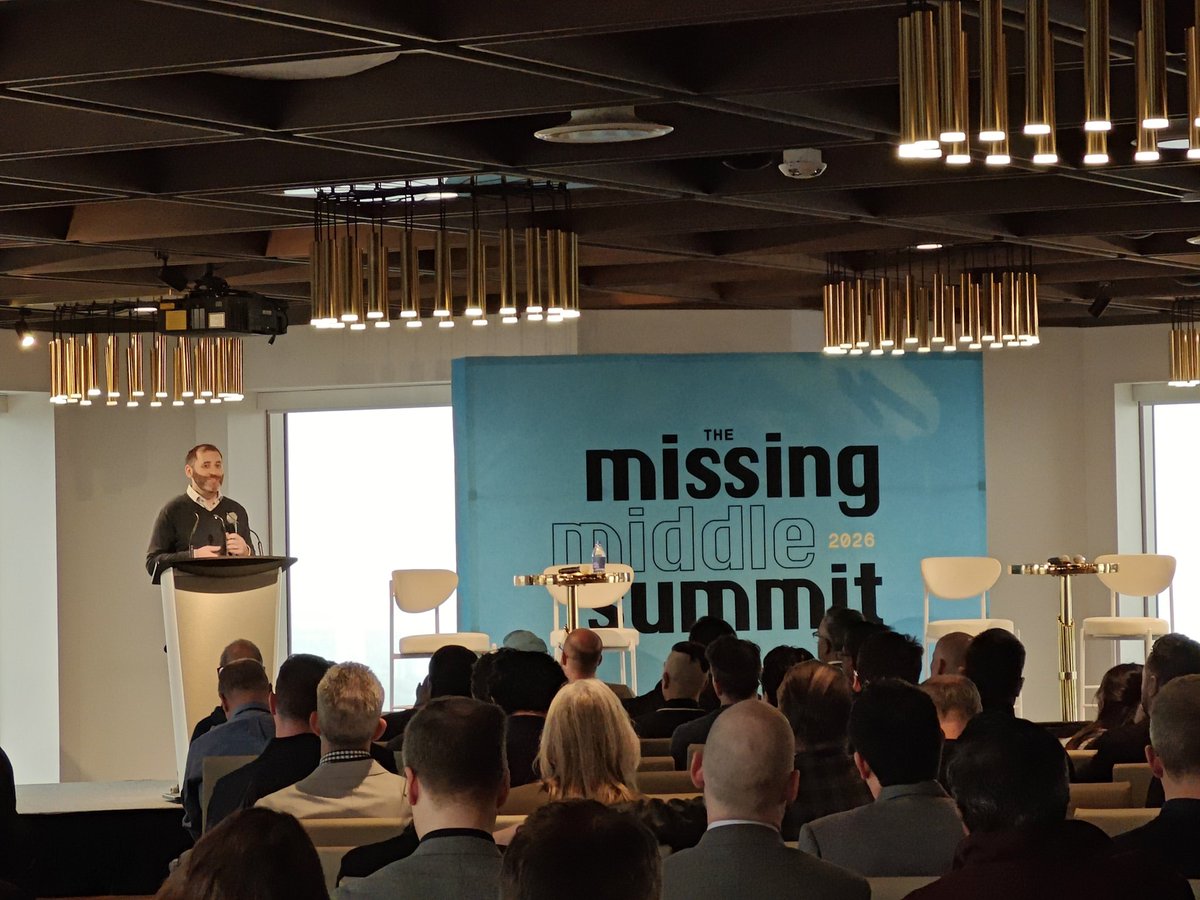
We will likely sell out the 2026 Missing Middle Summit by tomorrow morning.
Unfortunately, I won’t be able to release any additional tickets, as we’re already at the venue limit.
Thank you for your attention to this matter.
I am disgusted by the targeted antisemitic attacks that took place in North York over the last several days, including last night outside a synagogue.
These attacks will not be tolerated and I’m pleased the Toronto Police have acted quickly in response and have a suspect in custody. I expect that all those who are responsible will be punished to the full extent of the law.
I feel like I'm taking crazy pills here. Buying something with an app in hopes that an algorithm pays for it is *definitionally* gambling. At least they don't do credit.
Yesterday we unveiled Buy Now, Pay Maybe and the adoption is wild. Since rolling it out, we have already given out +1,700 purchases for free.
Let us clarify a few things:
1. Buy Now, Pay Maybe is not gambling. There’s no betting, entry, prize or loss. An algorithm decides when to give a purchase for free to maximize customer happiness.
2. There’s no debt in Tuyo. Customers need to have the available cash in their balance to make a purchase (and sometimes we will just cover it!). No credit is provided and overdrafts are not possible.
Financial products and incentives were incredibly boring and stale. Buy Now, Pay Maybe feels novel and that has ignited a spark.
We are creating the next generation of financial services leveraging the best new technology. Innovation like this is needed to deliver it to the mainstream.
We look forward to having you try it out!
I'm interested in "trapped buildings": those that couldn't be built today (because of zoning and code changes) but also can't be substantially modified or demolished (because of historic protection rules). One of those phenomena that really makes one wonder what exactly we're trying to do.
Has anyone ever estimated what fraction of buildings in major cities fall into this category?
When I asked Claude about San Francisco, it concluded: "If forced to give a single number with a single confidence rating: roughly 100,000 buildings — about two-thirds of San Francisco's physical structures — sit in the trap as a practical matter. Confidence: moderate. The number could be 70,000 or 130,000 depending on how strictly you operationalize "can't be substantially modified.""
We’re now nine days away from the 2026 Missing Middle Summit.
Last year, we sold 114 tickets in the final nine days.
We have 73 left.
These are going to go quickly.
Get yours now: https://t.co/jAVqLYk15g