Can we replace individual neural network weights with human-readable Python code? Sorry to be late... but I'm super thrilled to share that our paper was accepted to #NeurIPS26.
"Individual Parameters in Weight-Sparse Transformers Appear Interpretable" (w/ @sheimersheim!!)
The Human Knowledge Compression Contest (widely known as the Hutter Prize) is alive and kicking. This year has seen the largest progress in its 20y-history. We received three winning submissions within one month with a remarkable total improvement of nearly 10% https://t.co/85oKF1kPvI (and ~1/3rd the size of the zip-file!). Congratulations to Ibrahim Marcouch & Kaido Orav & David Freelan & Vladimir Ivanov.
Accepted to #NeurIPS2026, we reshaped Monte-Carlo Tree Search 🙉
Introducing 2FFS, a new tree search algorithm that combines multi-fidelity bandits to resolve the fundamental trade-off: should we use cheaper, approximated evaluations, or expansive but accurate samplings?
More:
For people new to AI/ML instead of straight up studying KL Divergence try to get a little background knowledge about Entropy beforehand.
KL Divergence is essentially :
Kullback Leibler Divergence = Cross Entropy - Shannon Entropy.
It's easy way to understand and remember it.
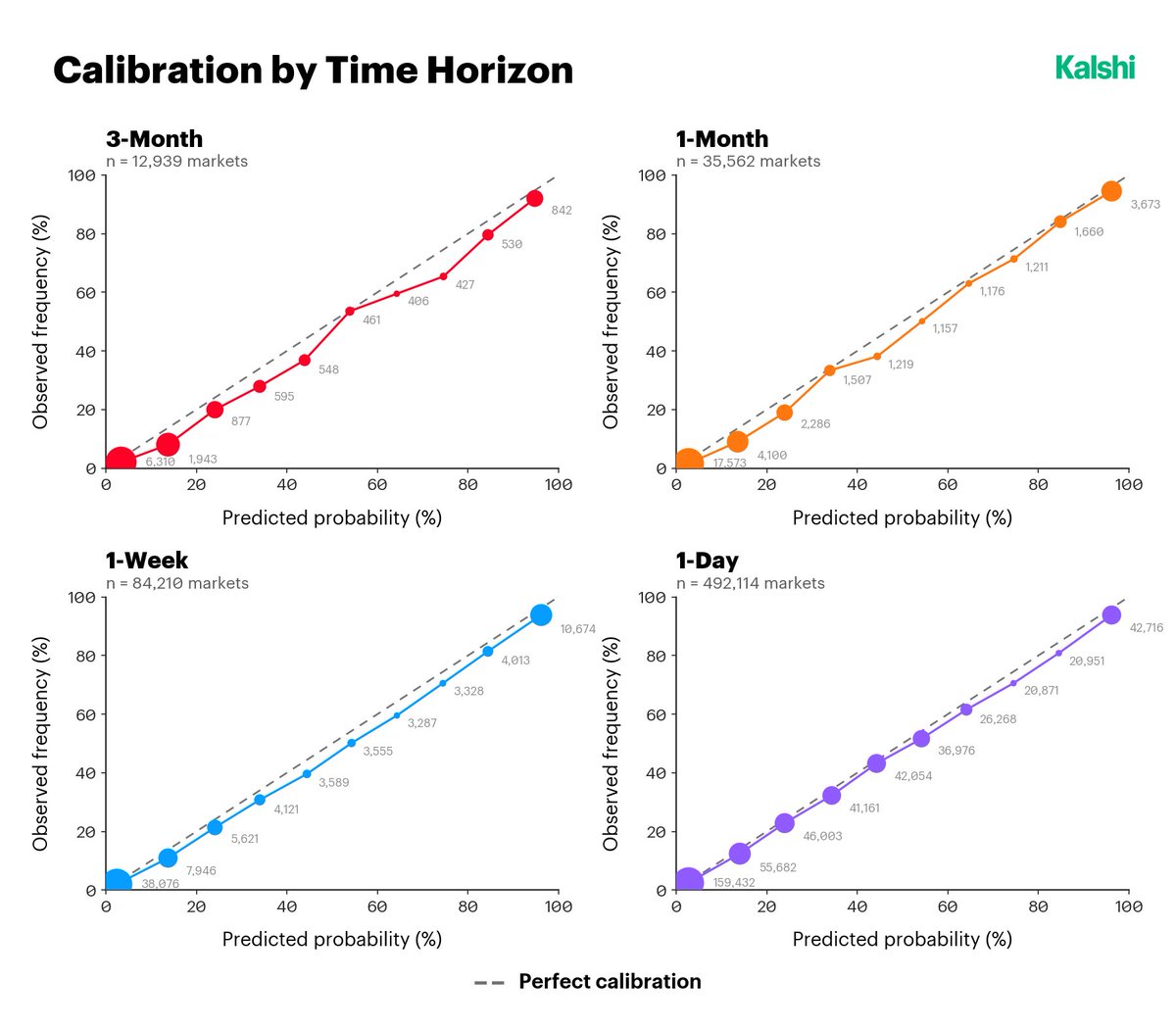
We ran a study on over 2 million markets to evaluate their calibration. To our knowledge, this is the largest replicable study on this topic.
Here are the results: 🧵
Predicting the answer to interventional "what if?" questions — the outcome of an action you never took — need a *mechanistic* model, not a curve fit. And you can only learn one by *experimenting*. Experiments are costly, so the real game is **data efficiency**.
Meet the Model Discovery Agent (MDA). 🧵
The daily paper read> A comprehensive survey on the latest in Self-Evolving Coding Agents, and the challenges: overfitting, safety, maintainability, cost & generalisation. Checkout the repo with 145 papers refs
Paper: https://t.co/bbu95HoBPe
Repo: https://t.co/SR0YlQlE8m
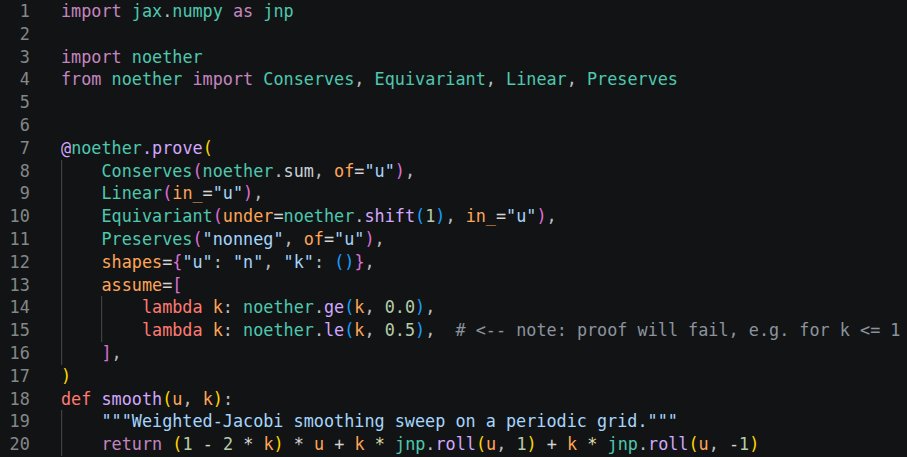
Formal verification should become a normal part of scientific computing.
As a step in that direction, I started prototyping the idea to automatically prove mathematical statements about your Python/JAX code in Lean.
https://t.co/gHg7j4n8If
A must-read for anyone looking to deeply understand JEPAs
SIGReg from First Principles
It starts with a primer on complex numbers and walks you through Euler's formula, Cramér–Wold, and a working training loop!
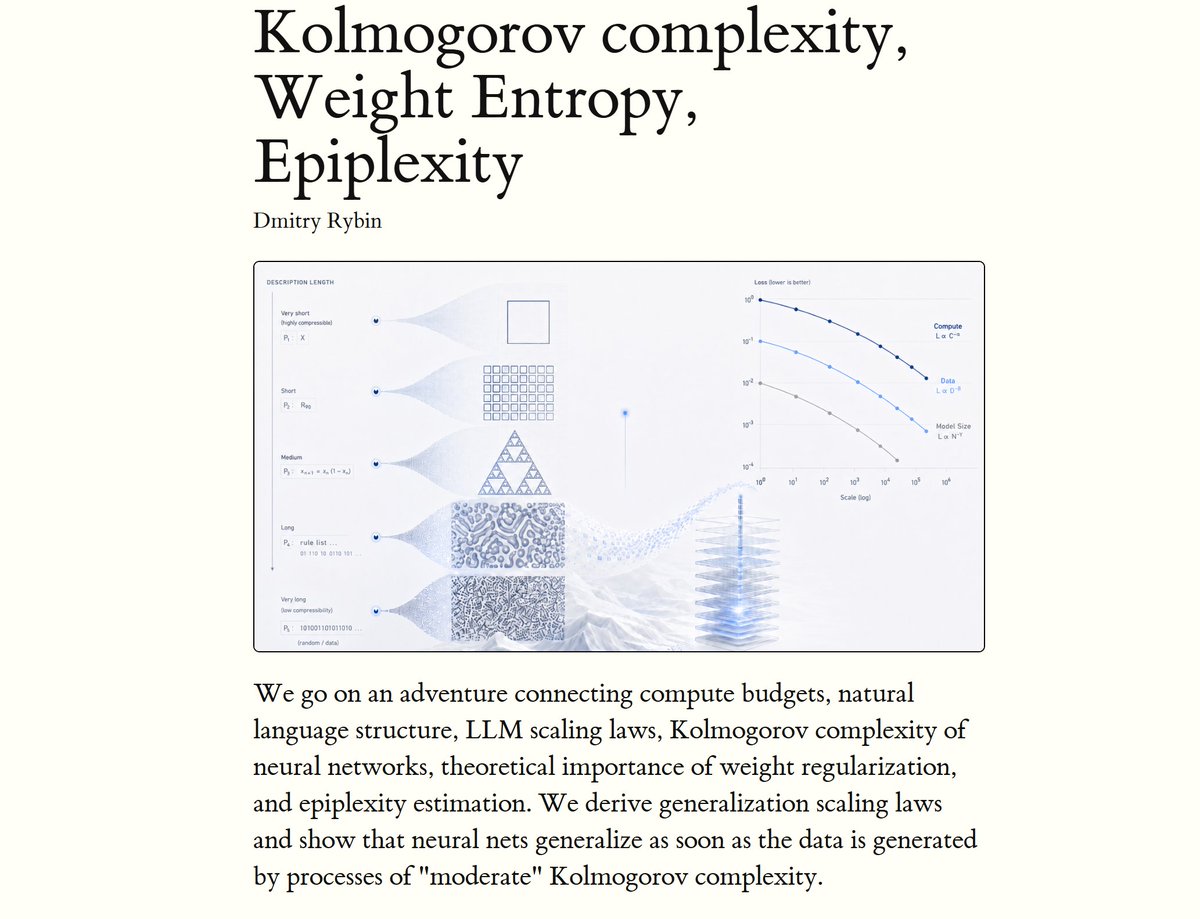
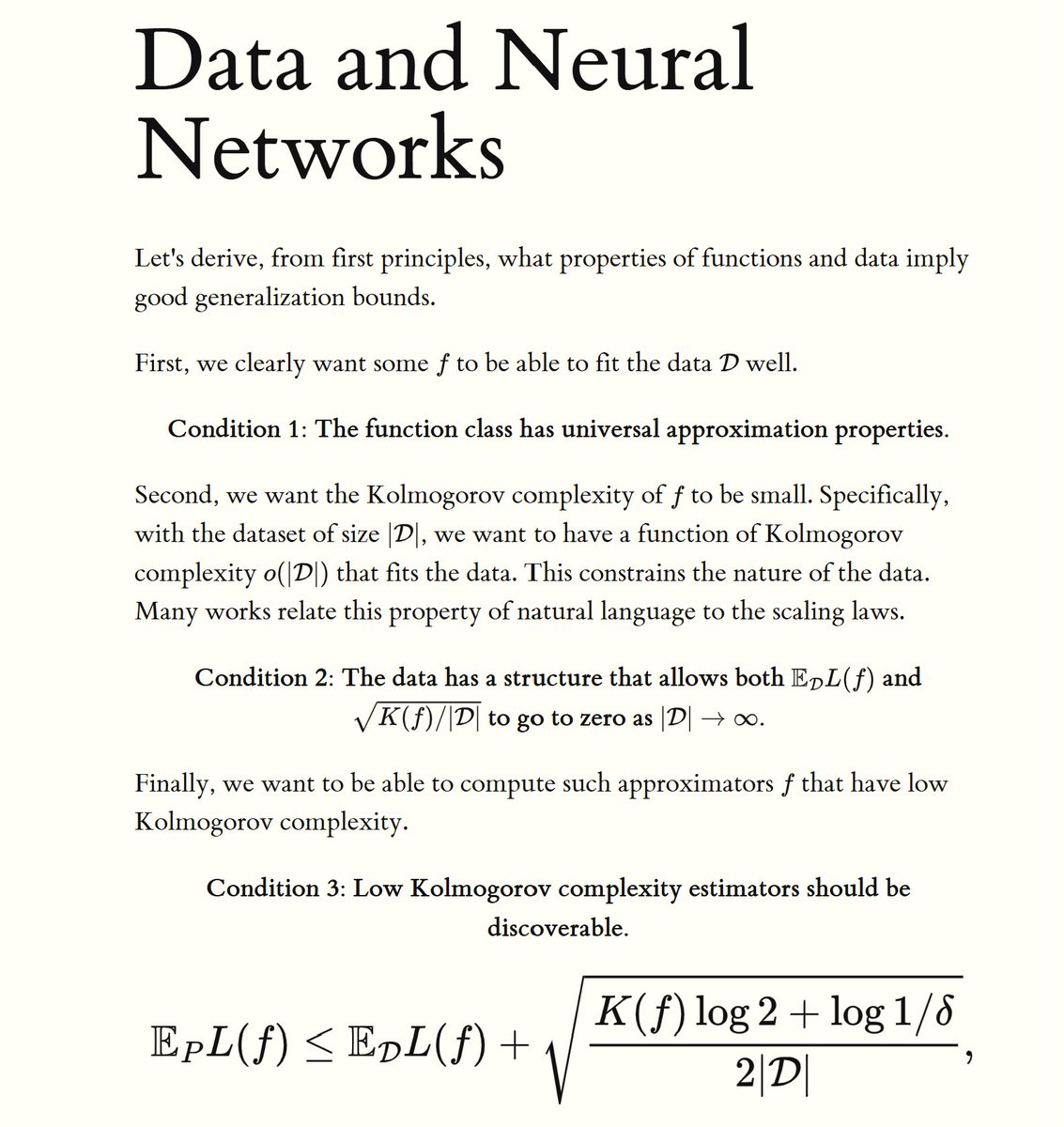
pre-training scaling laws => LLMs generalize on test data
I convinced myself that this implication can be derived without much cheating in math. I suspect this was known to many experts, but I never seen it written down explicitly.
Today we release IFStruct, a new benchmark to measure how well models generate structured outputs.
A 350M model trained on it outperforms models more than 10x its size.
🧵
I am very excited about this research: We show 2 things:
1. If you just do random sampling (i.e. you try to solve a problem k times independently, and keep the best) your ELO scaling will be linear in log(test-time-compute). Agents like Claude-Code and Codex scale like that after a few hours.
2. We compare human expert coders to coding agents on the same tasks (from AtCoder Heuristic Contest). The exciting finding is that humans scale super-linearly. This is evidence that humans do continual learning, while they are solving a problem!
I.e. they learn more about the coding problem they are trying to solve and scale fundamentally better compared to randomly trying things in a memoryless fashion.
This is empirical evidence that supports what many of us have felt for a while: unless we solve continual learning we will not be able to outperform humans in tasks that take many days. Current coding agents are not able to do this.
What if we could make decoding provably optimal?
Building on our recent work, we introduce Task-Aware Calibration, a framework for obtaining optimal LLM decisions for a given task.
The idea: Calibrate first, then act optimally
w/ @dfuchsgruber@raajeevVerma@guennemann
We're releasing a very capable browser use model Fara1.5-9B that feels like a step-change in terms of small CUA models capability achieving 63% on OnlineM2W auto-eval. We've put in a lot of work to make it useful for all types of web tasks.
https://t.co/PCPyF5jmWh
This is so neat!
Dynamic Fine-Tuning (DFT) reweights the SFT loss by the model's own token probability, which creates a feedback loop.
So they added forward KL to penalize any token the base finds likely, but the policy has pushed toward zero probability.
DFT and forward KL have opposite failure modes, so they kind of fix each other (in theory).
SFT papers never work in practice, but I love this attempt!
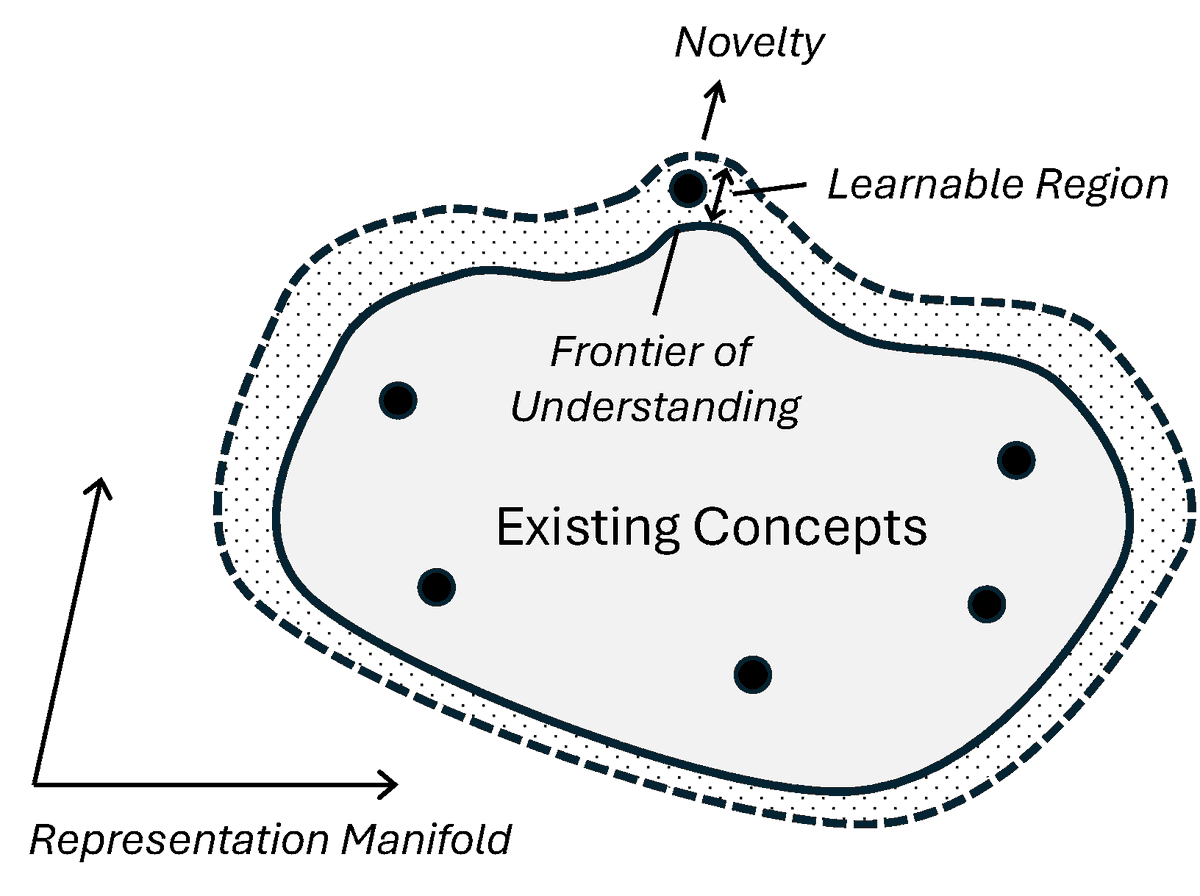
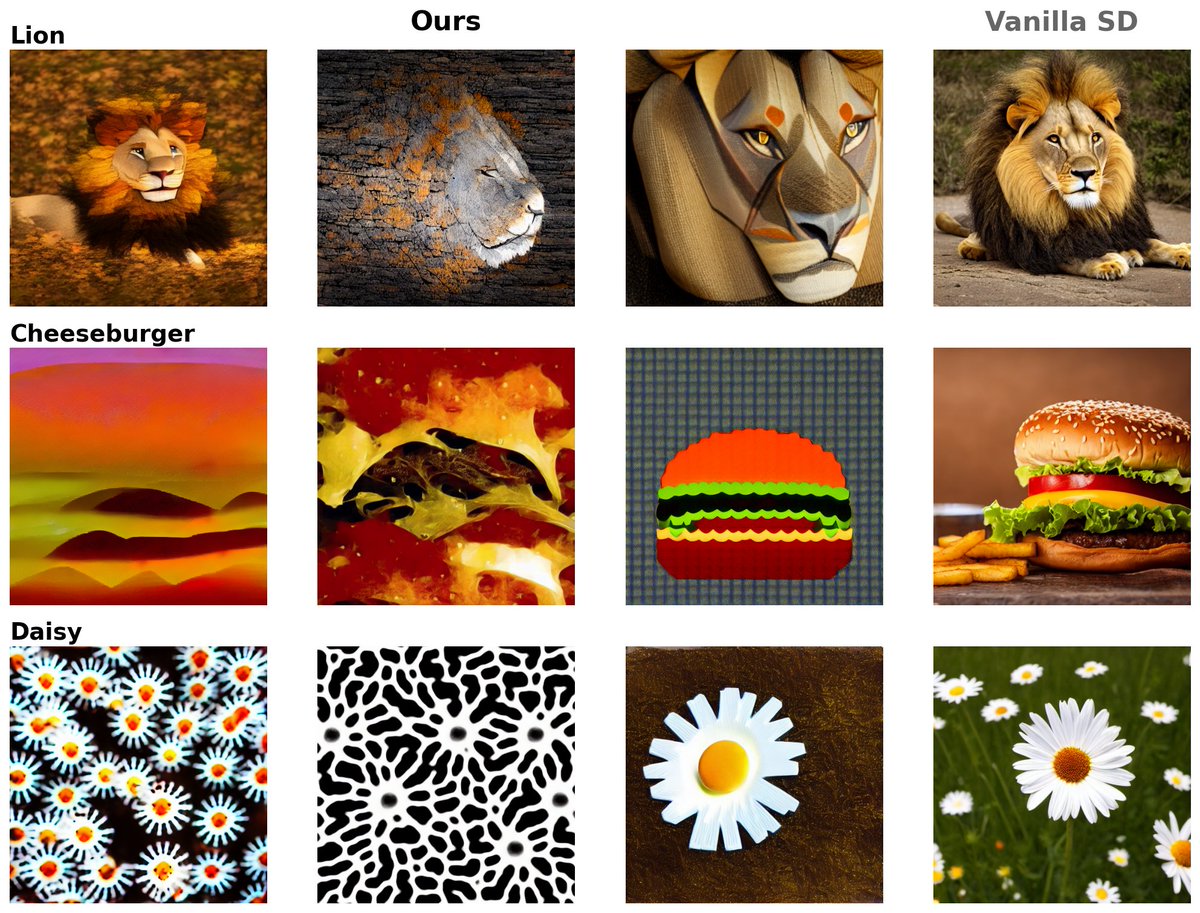
What does it mean to create a new concept rather than retrieve a familiar one?
I propose that creativity is what's unfamiliar at first but quickly learnable by an adaptive observer, and show that meta-learning through a frozen Diffusion model produces stylistic & conceptual creations.
open sourcing Marlin-2B 🐟
a tiny VLM to extract structured information from videos
Marlin is finetuned for two questions devs want to ask in their videos: what is happening, and when?
Best open model in its weight class, competitive with Gemini-2.5-flash at only 2B params 🧵