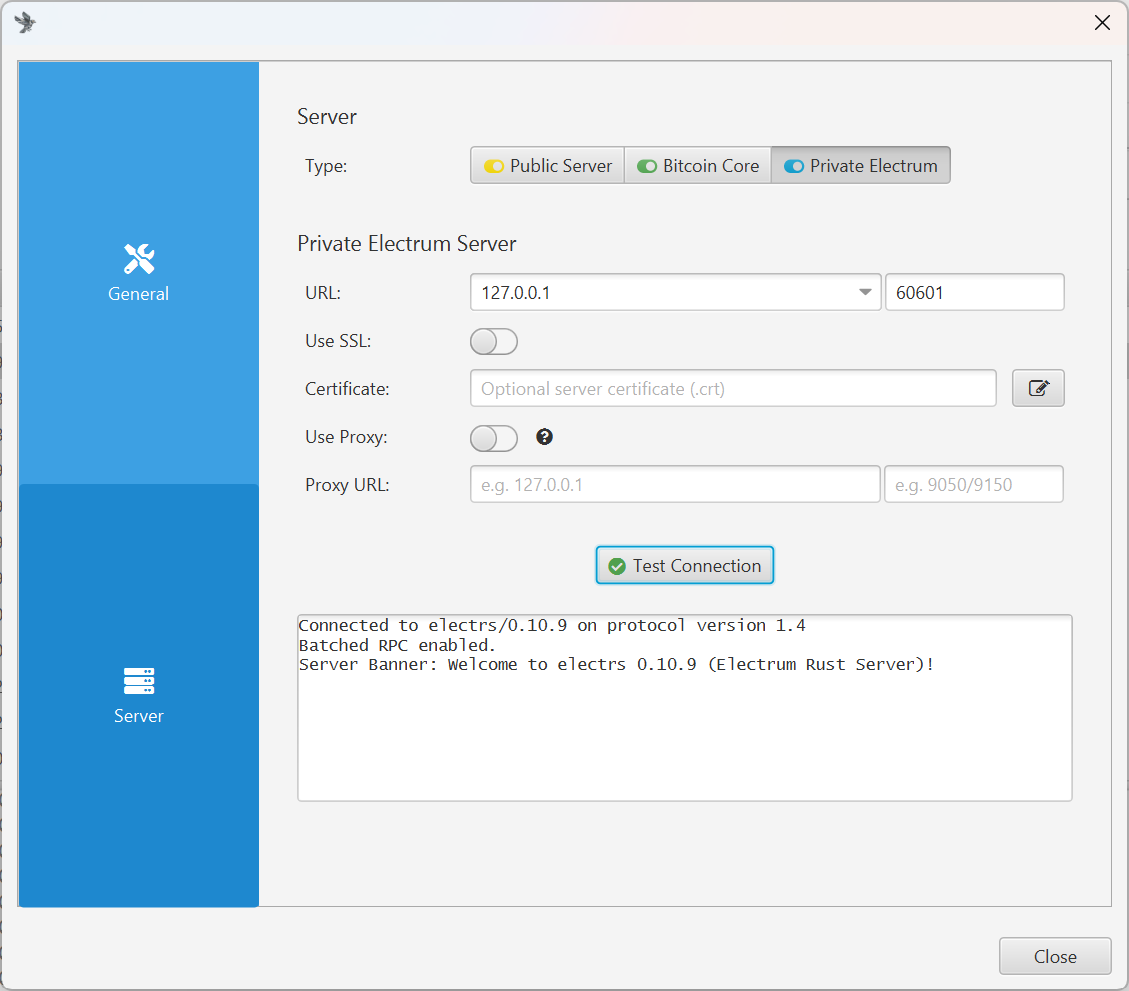
🛠️ New guide: Run your own local Bitcoin signet node with @SparrowWallet
Perfect for educators & testers – safe environment, no real funds at risk, full privacy.
Docker-based setup on Windows. 6 simple steps.
https://t.co/ACdm8G70fC
As someone who contributed to the public analysis¹ of BIP-148 UASF and correctly predicted how that was going to turn out, and later contributed to the public analysis² and creation³ of Libre Relay and correctly predicted how that was going to turn out...
> Now convince me how removing OP_RETURN limit make Bitcoin better & safer ?
The OP_Return limit was not removed. The limit has been unchanged at 1MB for 16 years
Bitcoin Core did not relay large OP_Returns as standard until Oct 2025. However, prior to this, in Feb 2024, a large miner, $MARA announced a service called Slipstream, that allowed direct submission of transactions with large OP_Returns. That is not ideal, as it gave $MARA a competitive advantage over other miners, which can cause mining centralisation. It would be better if the open relay network, which is fair for all miners, is how transactions are sent to miners. Bitcoin Core should work to ensure the open relay network is as competitive as possible, rather than letting closed private services win.
Then there was an OP_Return bot service launched, that had preferential peering, and allowed the submission of large OP_Returns to miners. Then in the summer of 2025, node runners started changing their node configuration settings themselves, to relay large OP_Returns. An alternative client was run by some people, Libre Relay, that relayed large OP_Returns as standard. By the end of the summer, enough people changed the relay settings such that large OP_Returns relayed as standard, despite Bitcoin Core continuing to try to impose the filter.
Bitcoin Core's filter was defeated by node runners. The network conditions changed and Bitcoin Core lost, the default relay setting in Bitcoin Core became worthless. Then finally, in October 2025, Bitcoin Core released a client that relayed large OP_Returns by default, which kept up with the reality on the network. This helped ensure several features of Bitcoin Core work well, such as compact blocks, pre confirmation signature validation caching and fee estimates in certain scenarios.
Now, you may not like the social signals or vibes you believe such a change sent. However, Bitcoin Core is a technical project and the priority should be making sure the nodes work well. Vibes and social signalling can be done by other means, if that is what one wants to do.
Being against spam on Bitcoin doesn't mean you support any idea to attempt to stop the spam, no matter how stupid it is
This is the same trap the large blockers fell into, they wanted a blocksize limit increase, so supported any method of achieving this, no matter how stupid it was
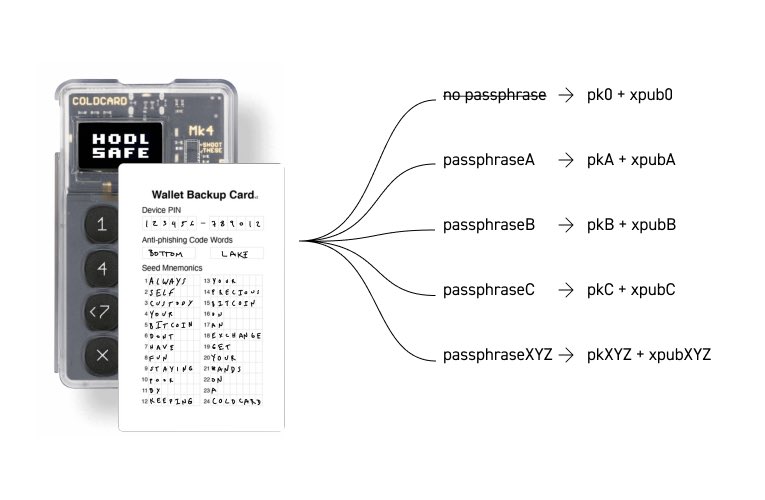
Everything you wanted to know about Passphrases (25th word) and was too afraid to ask!
Fantastic article by @TristanBorgess on our @Coinkite blog
https://t.co/lf0oZRlgw5
Bitcoin gives you 2 ways to program time into your spending conditions, and a lot of people don't understand the difference between the two.
One works like a calendar, the other like an hourglass. They look like they do the same job, but the logic underneath is the polar opposite.
Here's the difference between relative and absolute timelocks, explained from scratch.
🧵👇 1/8
While the Bitcoin community argues about BIP110, our fiat overlords announced the biggest stablecoin coalition the world has ever seen.
While we fight about stupid things like relay policy and content filters, the real enemy grows stronger.
The feds would be proud.
Bitcoin Optech newsletter #412 is here:
- links to benchmarking around SLH-DSA STARK aggregation
- points to discussion of a paper on constructing hybrid strongly-unforgeable signature schemes
- examines lattice-based PQ signatures
- describes a proposal for public key recovery for P2MR EC leaves
- summarizes a thread on aligning privacy incentives in P2MR
- describes and alternative to banning all 64-byte transactions
- summarizes a proposal to trigger EC disabling with a NUMS point spend or hashrate majority
- Optech Newsletter #412 Podcast
BIP-110 supporters say that nobody opposes their fork but I’m opposed to it. I think it’s a terrible idea to add temporary consensus changes that wouldn’t do anything to stop or even reduce spam. And boxing ourselves into yearly debates over a fork renewal or one with updated rules sounds like a fucking nightmare and complete waste of time when we should be focused on actually making Bitcoin better money with updates like CISA, CTV, LNHANCE, etc.
The US money supply just surpassed $23 trillion.
It took nearly 200 years to reach the first trillion.
The last trillion took less than a year.
It's time we fixed our money.
1/ 🚨 SARS just dropped its Draft Guide to the Taxation of Crypto Assets (1 July 2026) while the Reserve Bank and National Treasury are still in court arguing the exact opposite about what Bitcoin even is.
This isn’t policy. This is government schizophrenia at the expense of your property rights.
The Property Rights Defense Group calls it out: SARS is now directly contradicting SARB on Bitcoin.
Bip110 is a counter productive virtue signal.
As I've been continually explaining, they can vary the inscription envelope. If only bip110 people would listen.
It's time to focus on monetary adoption instead of caring about spam on chain.
This is a long post that hopefully bridges some gaps between technical people (devs) and non-technical users and how they look at spam prevention in Bitcoin. I hope that it clarifies why I think that there is such a huge misunderstanding between both camps.
I'll preface this post with first disqualifying any malicious attempts to misrepresent the motives of either camp. Everybody wants to improve Bitcoin as money. Money is Bitcoin's use case. It's not a data storage system. If you think otherwise, there are countless shitcoins to play with.
Alright, let's get into it.
I have worked on anonymous systems for over a decade. I have read tons of research on spam detection, rate-limiting, and I've implemented spam prevention techniques in the real world.
I am very confident to say that there is not a single known method to prevent spam in decentralized anonymous open networks other than proof of work.
This is what Satoshi realized when he designed Bitcoin and it's why only transaction fees can reliably fight spam without sacrificing any of Bitcoin's properties.
Let me explain.
Spam prevention is a cat and mouse game. As a system's architect, your goal is to make the life of a spammer harder (increase the friction). This is why, on the web, you see captchas, sign-ups, or anything that can artificially slow you down. Slowing down is key. This is why Satoshi turned to proof of work.
Let's contrast this to other methods for spam prevention. This is not an exhaustive list but it illustrates the design space of this problem, other methods are often derivatives of these:
CAPTCHAS are a centralized form of proof of work for humans: Google's servers give you a hard-to-solve task (select all bicycles) that will slow you down so that you can't bombard a website with millions of requests. It requires centralization: you need to prove Google that you're human so that you can use another website. If you could host your own CAPTCHA service, why would anyone believe you're not cheating?
LOGINS with email and passwords are most popular way to slow down users. Before you can sign up, you need to get an email address, and to get an email address, you often need a phone number today. The purpose of this is, again, to slow you down (and to track you to be honest). It only works well when emails are hard to get, i.e. in a centralized web where Google controls how hard it is to get an email account. If you could easily use your own email server, why would anyone believe you're not a bot?
The next one is the most relevant to Bitcoin:
AD BLOCK FILTERS are another form of spam prevention but this time the roles are reversed: you as a user fight against the spam from websites and advertising companies trying to invade your brain. Ad blocking works only under certain conditions: First you need to be able to "spell out" what the spam looks like, i.e. what the filter should filter out. Second, you need to update your filters every time someone circumvents them. Have you ever installed a youtube ad blocker and then noticed that it stops working after a few weeks? That's because you're playing cat-and-mouse with youtube. You block, they circumvent, you update your filters, repeat.
The fact that you need to update your filters is critical and that's where it ties back to Bitcoin: Suppose you have a mempool filter for transactions with a locktime of 21 because some stupid NFT project uses that. You maybe slow them down for a few weeks, but then they notice it and change their locktime to 22. You're back at zero, the spam filter doesn't work anymore. What do you do?
You update your filter! But where do you get your new filter from? You need a governing body, or some centralized entity that keeps updating these filters and you need to download their new rules every single day. That's what ad blockers in your web browser do. They trust a centralized authority to know what's best for you, and blindly accept their new filters. Every single day.
I hope you see the issue here. Nobody should even consider this idea of constantly updating filter rules in Bitcoin. This would give the filter providers a concerning level of power and trust. It would turn Bitcoin into a centrally planned system, the opposite of what makes Bitcoin special.
This is why filters do not work for decentralized anonymous systems. They require a central authority. Until now, these rules were determined by Bitcoin Core, but they have realized that these rules do not work anymore. Transactions bypass the filters easily and at some point, carrying them around became a burden to the node runners themselves. Imagine you're using an outdated ad blocker but instead of filtering out ads, it now also filters out legitimate content you might be interested in. That's what mempool filters do, and that's why Bitcoin Core is slowly relaxing these filters. This has been discussed for over two years, it's not a sudden decision.
The goal of this change is not to help transactions to slip through more easily. The goal is to improve your node's prediction of what is going to be in the next block. Most people misrepresent this part. They say "it's to turn Bitcoin into a shitcoin" but that is just a false statement at best, or a manipulation tactic at worst.
Let's tie it back to proof of work and why fees are the actual filter that keeps Bitcoin secure and prevents spam reasonably well: Satoshi realized that there is no technique that could slow down block production and prevent denial of service attacks in a decentralized system other than proof of work. Fees prevent you from filling blocks with an infinite number of transactions. All the other options would introduce some form of trust or open the door for censorship – nothing works other than proof of work.
He was smart enough to design a system where the proof of work that goes into block production is "minted" into the monetary unit of the system itself: You spend energy, you get sats (mining). This slows down block production. How do you slow down transactions within those blocks? You spend the sats themselves, original earned form block production, as fees for the transactions within the block!
This idea is truly genius and it's the only reason why Bitcoin can exist. All other attempts of creating decentralized money have failed to solve this step. Think about it: without knowing who you are, whether you're one person pretending to be a thousand, or a thousand people pretending to be one. Bitcoin defends itself (and anyone who runs nodes in the Bitcoin system) from spam by making you pay for your activity.
People sometimes counter this by saying: the economic demand for decentralized data storage is higher than the monetary use case. First of all, I think that's just wrong. There are way cheaper ways to store data (there are shitcoins for this), and the value of having decentralized neutral internet money is beyond comparison.
However, there's a much deeper concern here. If you truly believe this, I ask you: what is Bitcoin worth to you? If you think Bitcoin can't succeed as money (i.e. be competitive), why do you even care? If you're not willing to pay fees for the use case that we all believe Bitcoin is designed for (money), and you believe that no one is willing to pay for it, how can it even persist into the future?
You can't have it all. If Bitcoin is money (which I believe it is), then we need to pay the price to keep it alive. There is no free lunch.
Either we centralize, or we pay the price of decentralization. I know where I stand.
Peace.